Author: 魚丸
許多業務人員即便英文溝通能力不錯,在處理客戶拒絕或針對不同買家調整銷售話術時,仍常感到力不從心。ELSA Speak 上的 Sales Coach 功能,作為一套智慧練習解決方案應運而生,幫助你強化銷售反應能力、完善產品介紹話術,並在國際職場中自信征服每一個業績目標。跟著 ELSA Speak 立即探索吧!
Sales Coach 是什麼?
Sales Coach 是 ELSA Speak 應用程式生態系中,以 AI 驅動的銷售技能練習工具。每次練習中,AI 系統將扮演買家角色,持續提出問題、疑慮或拒絕,讓學習者直接以語音回應。完成銷售話術演練後,應用程式將針對說服技巧與英文運用能力進行深度評分。

Sales Coach 如何運作?
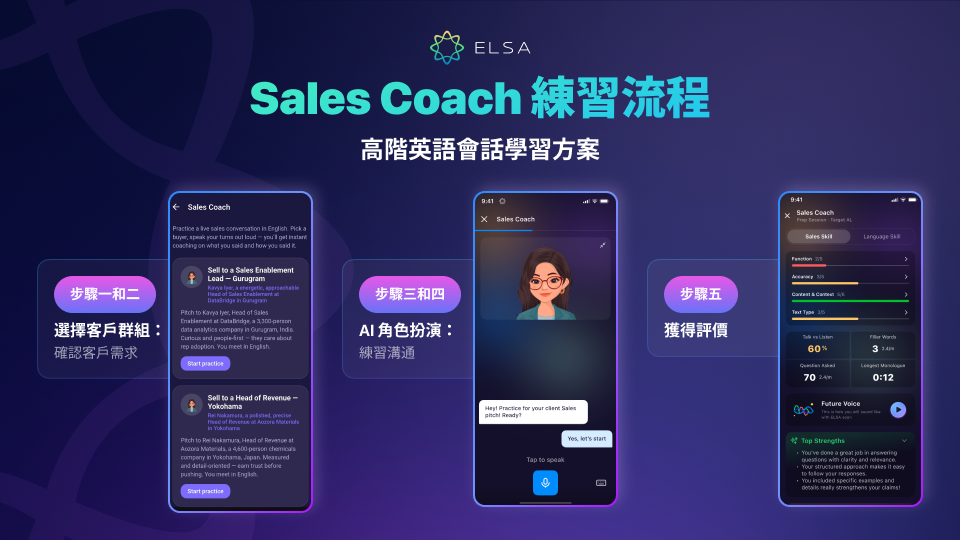
模擬流程依照實際業務接觸客戶的步驟進行優化。
- 步驟一:選擇目標客群:
學習者確定想要接觸的目標買家類型。 - 步驟二:確認需求:
選擇客戶目前關注的產品、服務或具體問題。 - 步驟三:AI角色扮演:
AI系統化身為具有對應心理與需求的客戶。 - 步驟四:實際溝通練習:
學習者以語音全程進行產品介紹並處理各類提問。 - 步驟五:接收評估:
AI分析內容、給出評分並提出需要改善的建議。
Sales Coach 適合哪些人?
此解決方案針對多類在全球商業環境中工作的對象。
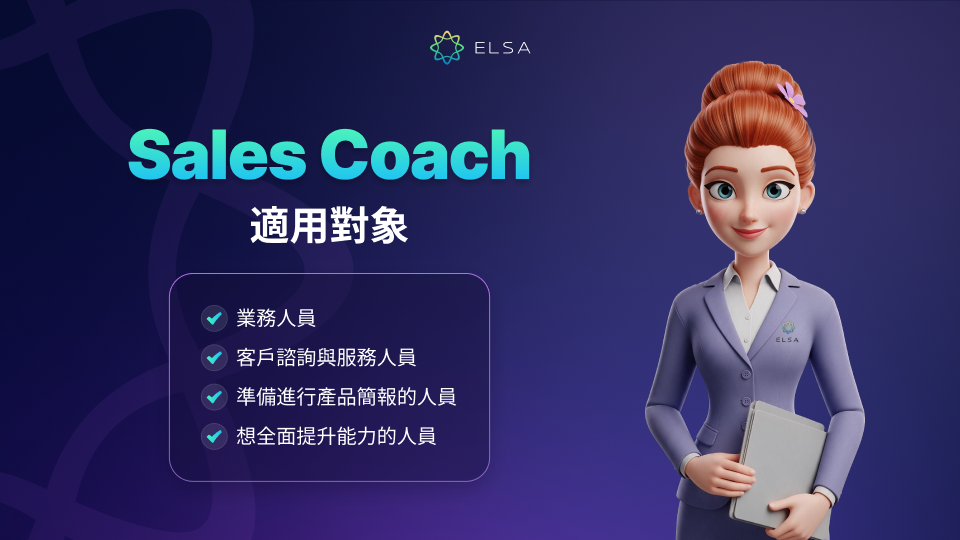
- 業務人員:需要用英文向國際客戶介紹產品、服務或解決方案的人員。
- 顧問與客服專員:零售業務人員、服務顧問,需要頻繁解答疑問與處理客訴。
- 準備產品簡報的人員:需要在海外合作夥伴或投資人面前準備銷售提案(sales pitch)的個人。
- 全面提升能力者:希望同步發展說服客戶技巧與商業英文溝通能力的使用者。
與 AI 一起練習銷售的好處
與人工智慧直接互動,在進入真實商業談判前帶來顯著優勢。
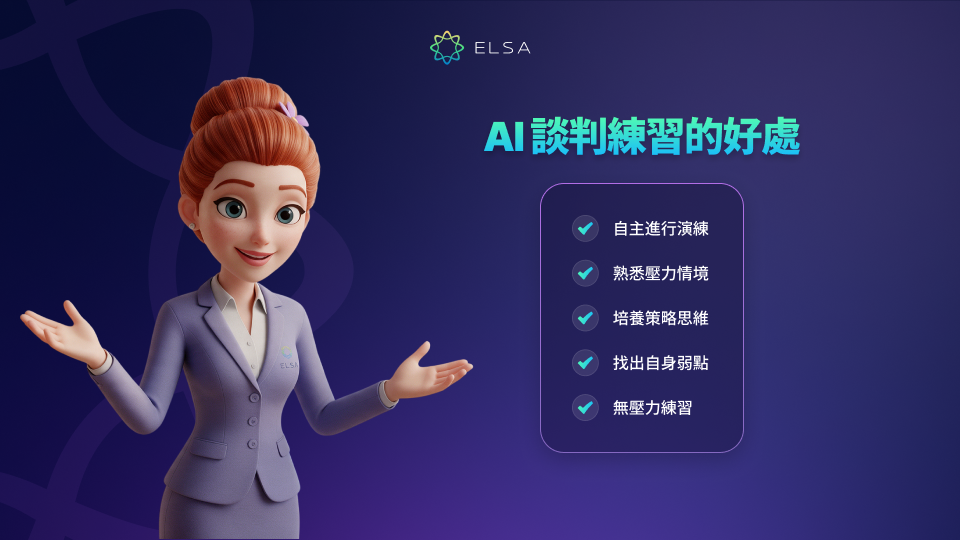
- 試驗銷售話術:在進行真實電話或客戶會面前,預先充分演練介紹內容。
- 熟悉客戶拒絕:面對買家的猶豫、難題與反對意見,訓練穩定的應對心態。
- 提升語言反應速度:在對話過程中專注練習快速、切中要點的回應能力。
- 識別錯誤:辨識傳達產品價值的優勢與不足之處。
- 多元情境練習:與不同目標客群反覆練習口語表達,無需承擔丟失合約的風險壓力。
Sales Coach 的功能特色
各項功能同步整合,提供最貼近實際的系統化練習體驗。
個人化客戶設定
Sales Coach 功能允許精確設定學習者想要接觸的目標客群。學習者可完全自主設定練習情境,選擇目標客群、確認買家正在考慮的產品或需求,再讓 AI 進行對應的角色扮演。
例如,學習者可選擇 Car buyer 人設,練習銷售一輛二手車,重點說明車況、定價與保固政策。
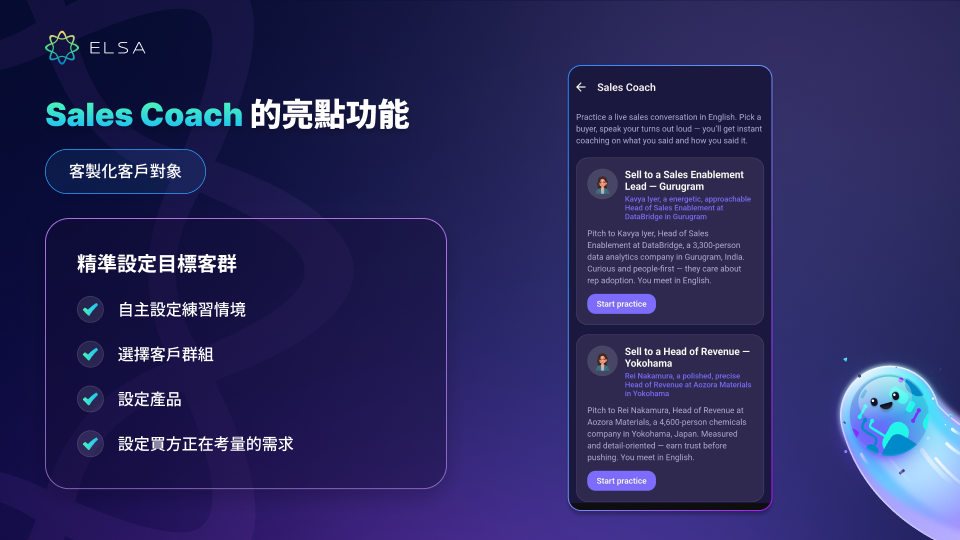
多元真實客戶角色
體驗各種不同類型的客戶,幫助學習者靈活調整銷售策略。
| 客戶角色(Persona) | 實際特徵與需求 |
|---|---|
| Sales Enablement Lead | 直接到店購物的客戶,重視便利性與價格 |
| Head of Revenue | 負責營收的人員,關注 Sales 團隊的績效以及對營收成長的影響。 |
| VP of Sales | Sales 部門的領導者,關注團隊績效與業務成果。 |
| CFO | 負責財務的人員,關注成本、ROI 以及投資效益。 |
| Chief Revenue Officer (CRO) | 負責營收成長的領導者,關注對業務的實際影響以及推動營收成長的能力。 |
| Sales Director | 負責管理 Sales 團隊的人員,關注員工績效以及實際應用能力。 |
每種客戶人設都有各自獨特的心理與期望。學習者需要靈活調整強調產品優勢的方式,而非對所有對象套用同一套話術。
以語音練習銷售話術
有別於閱讀資料或選擇題,學習者直接透過麥克風說出銷售話術。扮演客戶的AI將給出回饋或提出反問。當客戶認為產品定價超出預算時,學習者必須立即以語音解釋產品的卓越價值,說服客戶重新考慮。
模擬買家反應
AI 將根據所選的客戶人設給出自然反應,幫助學習者練習專業的拒絕處理技巧。此對話過程考驗學習者傳達產品價值、解釋核心優勢,以及維持清晰銷售話術結構的能力。學習者可以同一產品搭配不同目標客群進行練習,比較各種接觸方式的效果差異。
智慧反饋機制生動再現客戶常見的猶豫心理與疑慮。
深度銷售話術評分
多維度分析量表幫助學習者詳細評估銷售表現。
- Situation Questions: 評估學習者是否會提出問題,以了解客戶目前的情況與背景。
- Problem Questions: 評估學習者是否會提出問題,以找出客戶目前面臨的問題或困難。
- Implication Questions: 評估學習者是否會提出問題,以釐清客戶目前面臨的問題所帶來的影響或後果。
- Need-Payoff Questions: 評估學習者是否會提出問題,幫助客戶了解解決問題所能帶來的價值與效益。
- Objection Handling: 評估學習者是否能適當地識別、釐清並處理客戶的異議或疑慮。
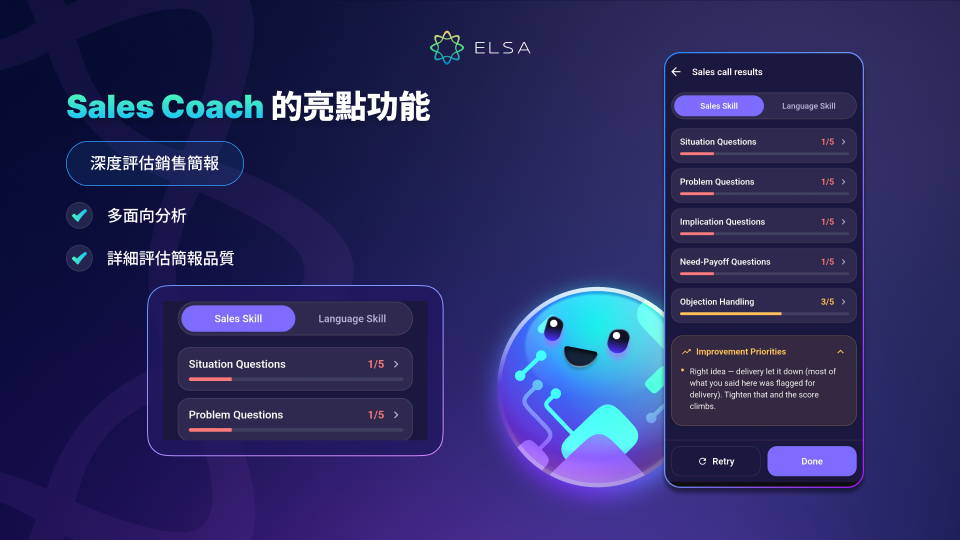
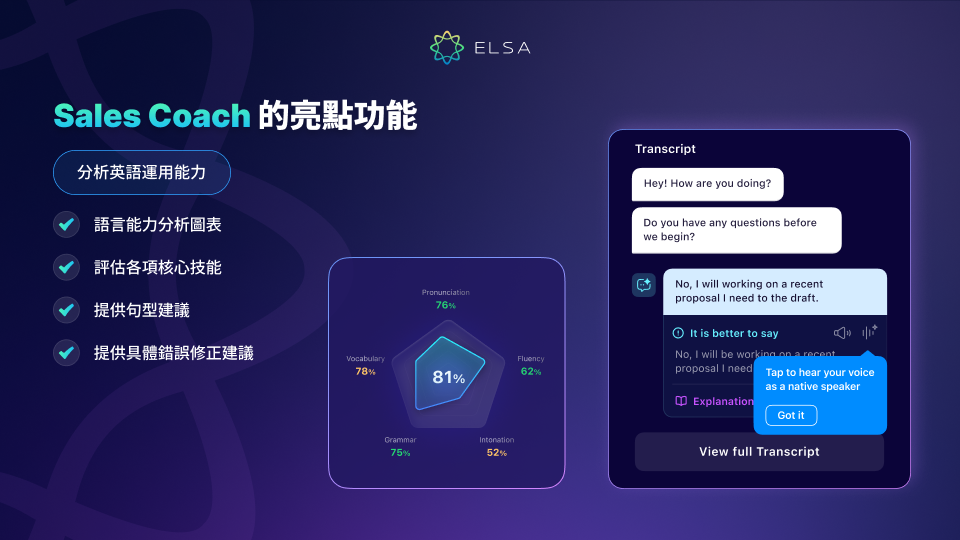
運用英文能力分析
在銷售技能之外,Sales Coach 同步分析5項英文指標,包括發音(Pronunciation)、詞彙(Vocabulary)、流暢度(Fluency)、語法(Grammar)和語調(Intonation)。系統將指出需要改善的單字或句型結構,同時推薦更專業的溝通例句,供學習者聆聽並反覆練習。
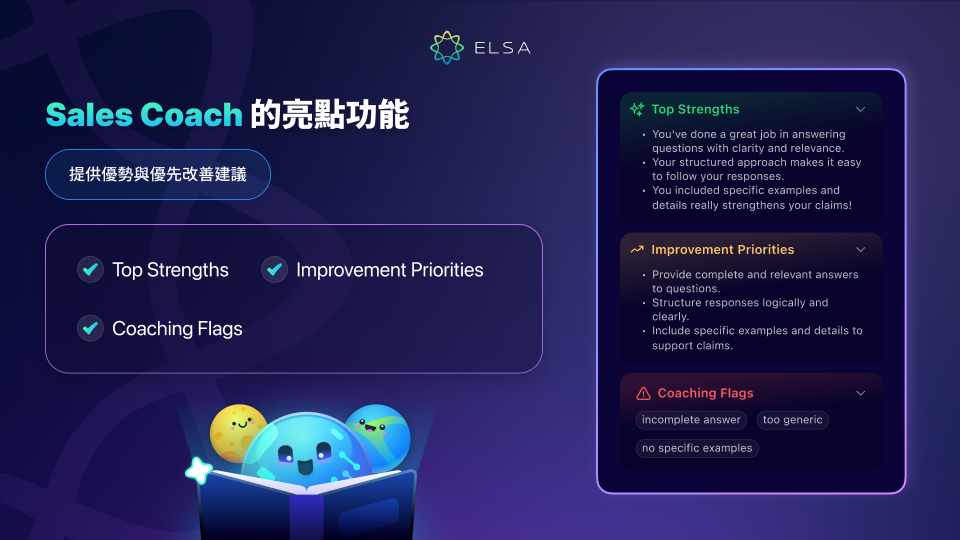
優勢反饋與改善優先項目
系統彙整數據,為後續練習提供具體指引。
- Top Strengths:肯定學習者在對話中表現良好的各項優點。
- Improvement Priorities:指出下次練習時需要重點優化的技能。
- Coaching Flags:標記具體錯誤,如回答不完整(Incomplete answer)、內容過於籠統(Too generic)或缺乏具體實例(No specific examples)。
Sales Coach 包含在哪個學習方案中?
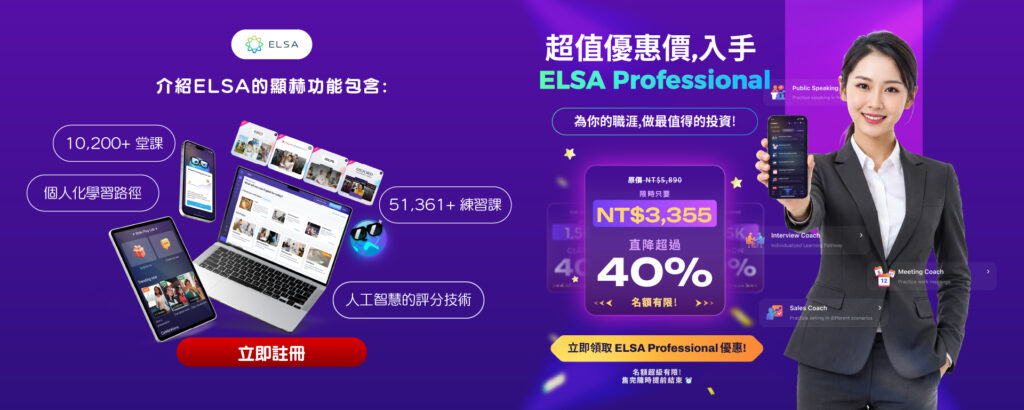
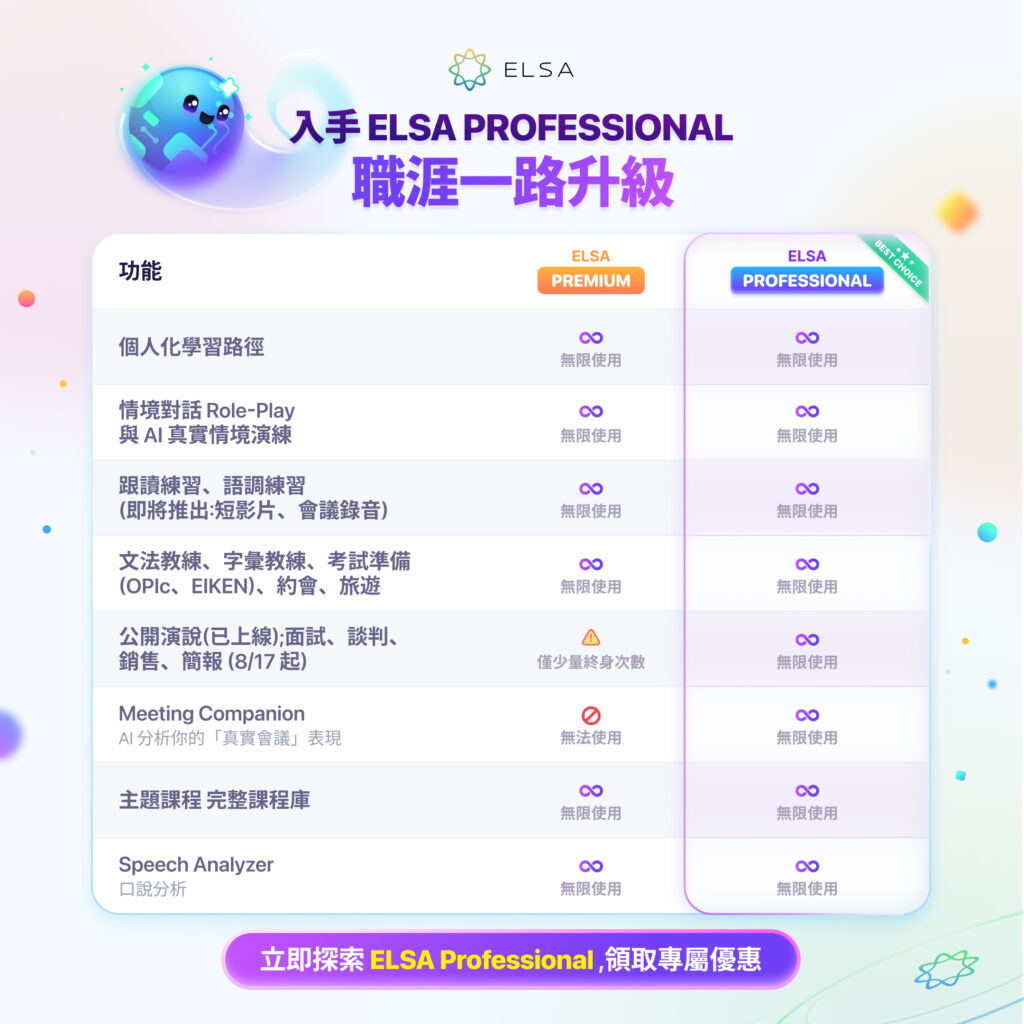
Sales Coach 是最高階學習方案 ELSA Professional 中,六大 AI Coach 工具之一。升級至此學習方案的使用者,將解鎖全部進階溝通情境模擬功能,專項訓練英文能力。
ELSA PROFESSIONAL
專為職場人士打造的職場英文學習方案
原價:5,890 元
優惠價:3,355 元
限時省 49%
Sales Coach使用指南
簡單的啟動步驟,幫助學習者快速開始與AI的練習課程。
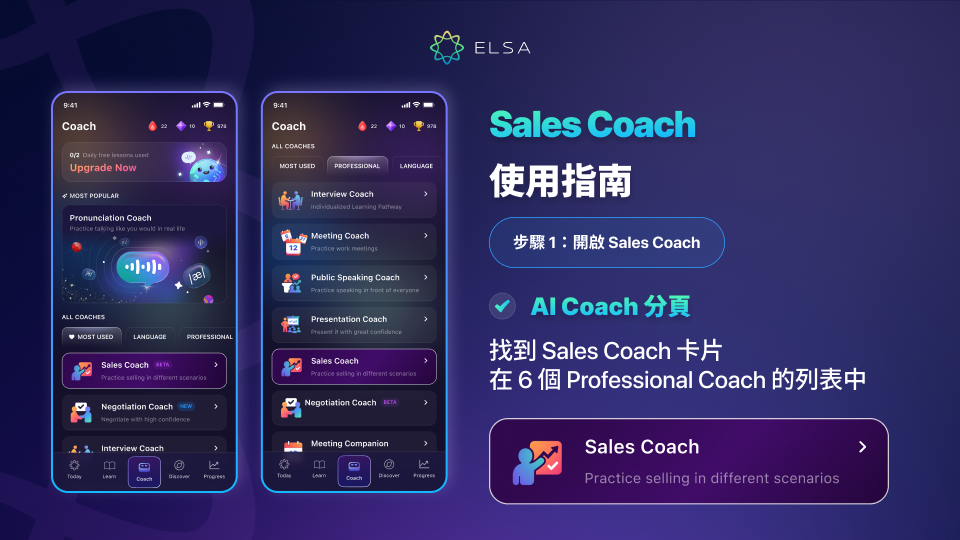
步驟一:開啟 Sales Coach
開啟 ELSA Speak 應用程式,點選畫面下方的 Coach 頁籤,進入 Professional 功能群組,選擇 Sales Coach。
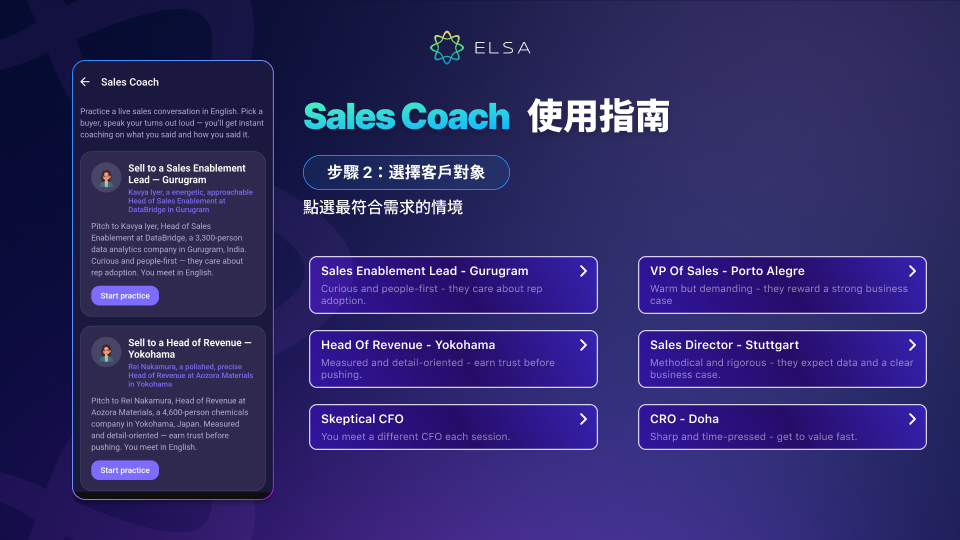
步驟二:選擇目標客戶
在 Whom are you selling to? 介面中,搜尋並點選想要練習的客戶人設,再點選 Start Practice 讓AI系統開始角色扮演。
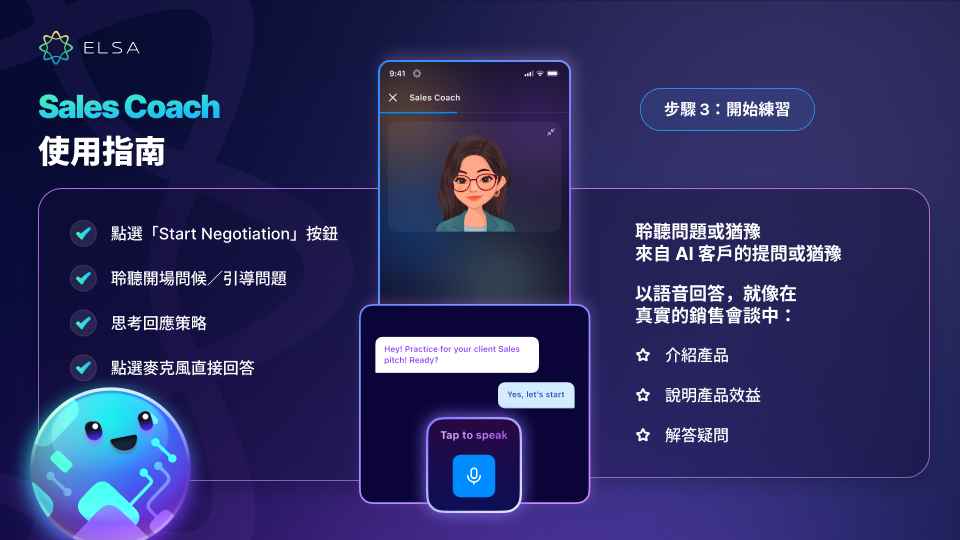
步驟三:與AI練習銷售話術
聆聽AI客戶提出的問題或表達的猶豫,點選麥克風圖示以語音作答。學習者進行產品介紹、解釋優勢並解答疑問,如同一場真實的銷售會面。
步驟四:查看結果並再次練習
完成口語練習後,在 Sales Skill 分頁查看銷售技能評分,並切換至 Language Skill 分頁查看發音、詞彙、文法、流暢度與語調的詳細分析。仔細閱讀評語、被標記的錯誤及 Transcript,再點選 Retry 與同一對象重新練習,或挑戰全新的客戶人設。
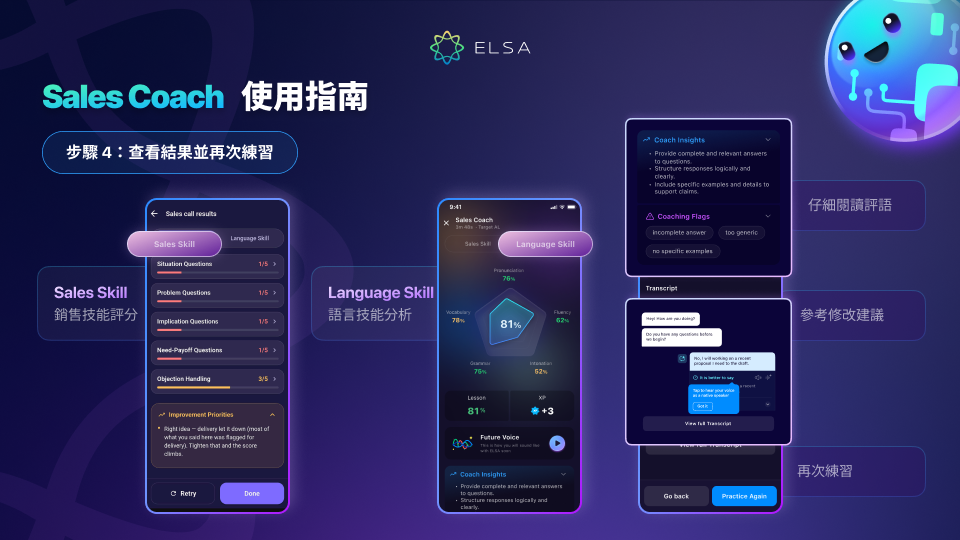
Sales Coach 提供現代化的英文銷售訓練方式,幫助學習者掌握產品簡報話術,並流暢應對各類拒絕情境。定期使用此 AI 工具進行練習,將幫助學習者建立自信、提升說服能力與策略思維,並提高與國際合作夥伴成功成交的比率。立即升級 ELSA Professional 方案,體驗 Sales Coach,與 ELSA Speak 一起掌握國際銷售溝通能力。
你是否曾精心準備了簡報,卻在用英文上台報告時完全僵住?在國際職場中,掌握公開演講技巧從來都不是一件容易的事。Public Speaking Coach 是一項突破性的解決方案,幫助學習者在高度擬真的練習環境中練習口頭表達,精確指出結構、節奏上需要改進之處,並在正式上台前預先訓練Q&A的即時反應能力。
Public Speaking Coach 是什麼?

Public Speaking Coach 是整合於 ELSA Professional 方案中,7大頂級 AI Coach 之一。此功能如同一位個人演講指導專家,讓使用者主動進行口頭表達練習。錄製完簡報後,AI 系統將從演講結構、傳達速度、吸引聽眾的能力,到發音、詞彙與文法等語言面向進行多維度分析,並提供直觀的評分結果。
為何選擇與 AI 一起練習演講?

在眾人面前開口說話,通常需要充分的準備,但大多數學習者目前都面臨以下困難:
- 缺乏客觀回饋的練習環境
- 只能獲得模糊籠統的建議
- 面對群眾時的心理壓力
Public Speaking Coach 提供卓越的優勢,幫助降低職場人士在心理與技能上的障礙,打造一個安全、個人化的練習環境,讓你隨時隨地都能練習,並獲得清晰、實用的具體指導。
Speak Arena – 獨立演講練習

在 Speak Arena 中,你將在預先設定的時間限制內進行口頭表達。此個人練習模式專注於幫助學習者建立並維持流暢、符合完整結構的簡報能力。系統將依據專業演講者的結構標準,即時追蹤並給出評分:
| 評分項目 | 對應加分 | 實際意義與練習目標 |
|---|---|---|
| Hook | +35 分 | 評估開場白的吸引力與能否留下深刻的第一印象。 |
| Signpost your points | +20 分 | 檢視演講者是否使用清晰流暢的轉場詞連接各段落。 |
| Rule of three | +25 分 | 衡量是否運用三點法則提升說服力,幫助聽眾易於記憶。 |
| Story | +45 分 | 鼓勵融入真實故事或生動具體的例子,使簡報不流於枯燥。 |
| Recap at the end | +25 分 | 評估重點摘要的呈現方式,以及結尾是否乾脆有力、令聽眾留下深刻印象。 |
| Strong close | +45 分 | 同上 |
相反地,若演講者出現內容散漫、話語冗長或過度使用填充詞(filler words)等情形,系統將自動直接扣分以提醒注意。
Public Speaking Coach 評估哪些指標與技能?

Public Speaking Coach 的智慧分析系統將對你的簡報進行深度拆解,形成極具多項完整且具體的量化指標。
Structure(演講結構)
此項目衡量你組織資訊的能力,使聽眾能輕鬆掌握演講者的思路脈絡。AI 教練將評估簡報是否具備清晰的開場、正文與結語三大部分,以及觀點與論據是否依照邏輯順序排列,讓聽眾在整個過程中能輕鬆跟上而不迷失。
Delivery(傳達方式)
透過聲音展現的台風,是決定演講者自信與專業度的關鍵。此項目重點分析語速(不過快也不過慢)、發音的清晰度,以及如何運用刻意的停頓來強調重要訊息。
Engagement(吸引力)
連結並留住聽眾的能力,是一場出色演講成功與否的衡量標準。AI 教練將檢視你在最初幾秒鐘吸引聽眾的方式是否真正令人印象深刻。真實故事或具體例子是否被自然融入,以維持聽眾在整場演講中的專注度。
Influence(影響力與論證)
一場有價值的演講必須能改變聽眾的認知或行動。此指標評估你所提出論點的說服力、核心訊息是否真正清晰。 同時,你的結尾方式是否足夠乾脆有力,能為聽眾留下持久的影響。
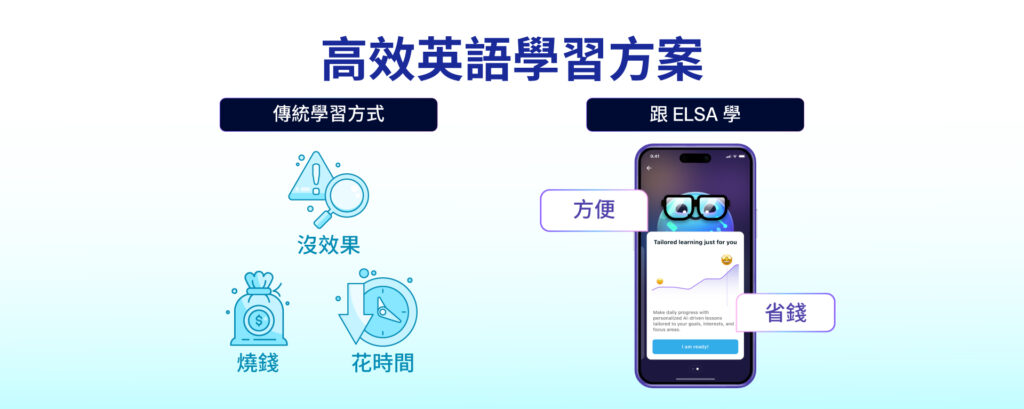
英文技能與填充詞控制
在演講技巧之外,語言基礎始終是 ELSA Speak 精雕細琢的核心要素,透過詳細衡量以下五大語言面向加以評估:
特別值得一提的是,智慧辨識技術將識別演講者在猶豫時常出現的常見的填充詞,如 um、like、you know、actually 或 basically,並指導你以適當的短暫停頓取代這些填充詞 —— 因為一個刻意的停頓,永遠比濫用猶豫音更能展現對局面的掌控力。
每次練習後你將獲得的回饋
學習者不再需要對自己簡報的品質憑空猜測,因為有極為直觀且詳細的報告系統作為依據。
Strengths(主要優勢)

系統的即時肯定,幫助學習者清楚了解自己目前表現良好的面向,以便持續發揮。此項目將具體指出你簡報中的亮點,例如令人印象深刻的開場方式、清晰流暢的結構,或論點分配極具邏輯性且易於理解等。
Focus Next(改善優先項目)

優先集中修正眼前的主要問題,是最快提升學習效率的方式。AI 教練不會同時提出過多要求,而是篩選出最需要立即修正的核心弱點,例如建議你放慢語速,或控制填充詞出現的頻率。
Coaching Flags(教練警示)
可能降低簡報專業性的具體錯誤,將被系統清楚標記警示。開場不夠有力、句尾聲音逐漸減弱、論點缺乏客觀依據,或結尾不夠乾脆俐落等常見錯誤,都將被明確指出,作為後續練習的改進依據。
A Stronger Version(更具說服力的版本)
A Stronger Version 功能能幫助學習者了解如何改善自己的表達方式,讓說話內容更具說服力且更有效果。AI 會根據學習者原本的發言內容,從措辭、論述方式與說服力等方面進行優化,生成一個更具說服力的版本,讓學習者能輕鬆比較並從自己的原始回答中學習。
學習者可以閱讀或聆聽這個優化後的版本,進行練習,並將更有效的表達方式應用到實際的口語表達中。
哪些人適合使用 Public Speaking Coach?

任何希望自信掌控語言表達與上台表現的個人,都能在 Public Speaking Coach 中找到合適的解決方案,因為此功能專為以下對象設計:
- 職場員工需要頻繁向董事會和合作夥伴進行專案簡報、工作進度報告或計劃提案。
- 業務專員需要準備創意提案、產品介紹或向客戶提案服務。
- 管理者與團隊領導(Team Lead)需要與團隊溝通、傳遞激勵並指引工作方向。
- 學生需要準備英文課堂報告、論文答辯或小組討論。
適合練習的情境

此 AI 工具的靈活性,讓學習者能將其應用於工作與學習中各種多元的溝通情境。你可以利用此功能,為以下重要的實際場合預先做好準備:
- 定期的內部會議或專案進度更新會議
- 向客戶提案商業計劃或 proposal
- 向海外投資基金進行募資 pitching
- 參與線上研討會(webinar)或工作坊發言
- 準備重要演講或公開主題演講(keynote speech)
如何在應用程式中使用 Public Speaking Coach
互動流程已被最大程度地簡化,幫助使用者輕鬆上手並維持每日練習習慣。
步驟一:開啟應用程式,進入 Professional 方案的 AI Coach 功能群組,選擇 Public Speaking Coach。
步驟二:選擇 Speak Arena 練習模式(獨立演講練習)

步驟三:選擇你目前需要準備的主題或實際工作情境。
步驟四:以最自然的方式開始口頭表達你的簡報。

步驟五:仔細閱讀評分表,深入分析優勢與弱點,並反覆練習以追蹤每日進步的軌跡。

透過 ELSA Professional 解鎖 Public Speaking Coach
Public Speaking Coach 目前是訂閱 ELSA Professional 方案後才能獨家解鎖的頂級 AI Coach 之一。此功能的加入,是完善當前最頂尖職場溝通解決方案生態系的重要的一環。
不要等到正式上台後才發現自己的簡報還不夠有說服力。立即訂閱 ELSA Professional,開始與 Public Speaking Coach 一起訓練,準備好在每一個國際舞台上自信發光!
ELSA PROFESSIONAL
專為職場人士打造的職場英文學習方案
原價:5,890 元
優惠價:3,355 元
限時省 49%
ELSA Public Speaking Coach 功能的問世,為職場人士帶來新的練習方式,徹底解除在眾人面前用英文發言的恐懼。充分準備且具備專業溝通風範的人才,始終擁有最廣闊的晉升機會與職場地位。ELSA Speak 陪你升級自己的未來,立即升級或報名 ELSA Professional 方案,以最高的自信踏入每一間會議室或大型演講廳!
你是否因為緊張,思緒空白或發音錯誤而對英文求職面試感到不安?許多求職者往往要等到收到企業的婉拒通知後,才發現自己在面試中的盲點。為了幫助求職者提前發現並改善問題,ELSA Speak 全新升級 Interview Coach,提供依照職位與公司客製化的模擬面試練習,幫助你依照不同職位與公司進行精準練習,並即時獲得詳細反饋。
- 依照目標職位與公司進行客製化練習。
- 完整練習不同階段的面試流程。
- 以語音直接回答,如同真實情境。
- 同步評分專業知識與英文能力。
- 明確指出需要改善的具體發音錯誤。
- 提供清楚、具體且能立即採取行動的回饋。
ELSA Interview Coach 是什麼?
ELSA Interview Coach 是 ELSA Speak 英文學習生態系中,由 AI 驅動的英文面試練習功能。此工具扮演虛擬面試官的角色,幫助你進行貼近真實情境的模擬面試(mock interview)。

與其只是在紙上撰寫並背誦答案,使用者將直接以語音進行互動,在限時情境中訓練英文臨場反應。完成英文面試回答後,AI 面試練習系統將在幾分鐘內分析你的語音內容,並針對專業能力與語言技能雙方面給出評分與詳細反饋。

Interview Coach的五大亮點
以下 5 大特色,能幫助你更完整地準備面試所需的知識、表達與臨場反應。
依照你實際應徵的職位與公司進行個人化設定
Interview Coach 能依照每位求職者的目標職位與公司,提供高度個人化的練習內容。正是此解決方案與一般備考方法完全不同的核心優勢。有別於使用千篇一律、一成不變的英文面試題庫,ELSA Interview Coach 允許使用者主動設定專屬情境。
你只需輸入目標職位(例如:Product Manager、Software Engineer、Marketing Specialist)以及目標企業名稱(例如:Meta、Shopee、McKinsey)。人工智慧將立即分析職位需求,建立貼近實際的題目,題目會聚焦在企業最重視的能力與職務需求上。

練習完整的面試流程
跨國企業的招募流程通常包含多個複雜階段,每個環節都需要不同的互動技巧。ELSA Interview Coach 提供完整的備考路徑,透過 5 個模擬面試輪次,真實還原現實中的招募歷程。
此路徑涵蓋:
- Recruiter screen:人資初篩輪次
- Hiring manager:與直屬主管的面談輪次
- Technical Skills:專業能力評估輪次
- Cross-functional:跨部門面試輪次
- Salary Negotiation:薪資與福利談判輪次
在每個輪次中,系統將設定一位具有獨特性格與提問風格的 “AI 面試官”,幫助你練習依照不同面試官與情境,靈活調整回答方式,以適應不同的溝通對象。
延伸閱讀:Speech Analyzer 手機版正式上線!快來看看有什麼新功能!

以語音回答,如同真實面試
在準備與練習英文求職面試對話時,一個常見的錯誤是學習者習慣事先將答案寫在紙上並死記硬背。面對真實面試官時,遇到預料之外的問題時,很容易一時慌張,不知道該怎麼回答。
與其只準備紙上的答案腳本,直接練習口語表達能讓應試者建立更穩固的英文反應能力。透過 ELSA Interview Coach 的 mock interview 體驗,你必須專注聆聽問題,並在真實時間壓力下以語音直接回答。這種訓練方式有助於大腦培養快速用英文組織想法的能力,讓你能夠流暢表達想法,而不依賴任何範本答案。
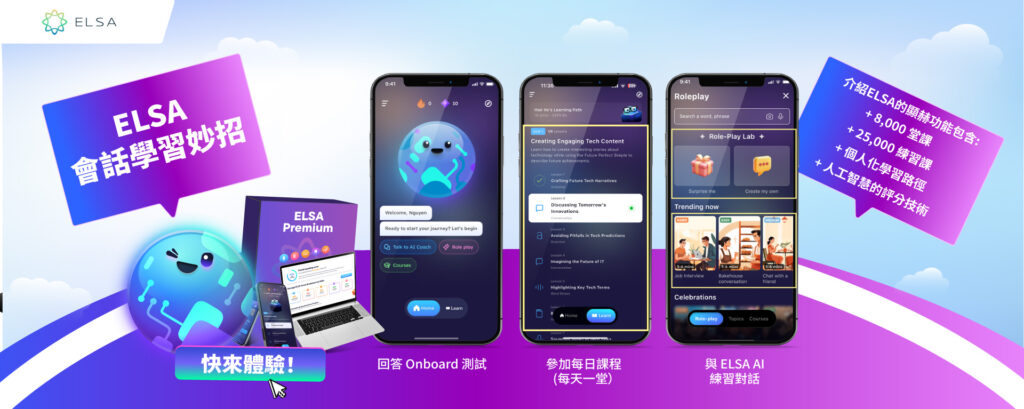
雙重評分:專業能力+英文能力
評估一個具說服力的答案,需要在語言精準度與產業知識之間緊密結合。ELSA Interview Coach 憑藉其獨特的雙重評分機制脫穎而出,同步分析你的專業知識與英文能力。
在專業能力(Competency)方面,系統依據5分制量表及專為各職位設計的合格標準(Pass)進行評分。例如,針對 Product Manager 職位,你將依據產品願景(Product vision)、優先順序思維(Prioritisation)、數據分析(Data & metrics)及利害關係人協調能力(Stakeholder alignment)等標準進行評分。

在語言能力方面,AI面試練習系統將詳細評量5項關鍵技能,包括:
- 英文發音 (Pronunciation)
- 英文語調 (Intonation)
- 流暢度 (Fluency)
- 字彙運用 (Vocabulary)
- 英文文法 (Grammar)
特別值得一提的是,系統可深入分析你的發音細節,並搭配國際音標(IPA)與具體改善建議,讓你的英文面試回答更加專業。

>> 擁有流利的外語能力,不僅有助於你通過艱難的面試關卡,更是長遠職涯晉升的堅實跳板。從現在開始提升英文溝通能力,讓自己隨時能夠主導每一場會議、在面試與職場溝通中展現更好的表現,並開啟職涯新階段。
立即提供改善建議
為使每次練習達到最佳效果,獲得實用且易於應用的反饋至關重要。有別於一般模擬面試僅停留在泛泛評語,ELSA Interview Coach 提供詳細且直觀的報告,呈現你的優勢亮點(Top Strengths),同時明確指出需要優先改善的項目(Top Priorities)。

這些反饋不只是籠統的建議,更是具體的改善建議,讓你清楚知道從哪裡開始著手提升技能。此外,每次練習結束後,工具還會推薦下一步可練習的英文面試題目(Practise next),確保你始終擁有持續且目標明確的英文學習路徑。

哪些人適合使用 Interview Coach?
Interview Coach 功能設計靈活,是一款實用的職場人士學英文app免費,陪伴不同族群的學習者在求職與職涯發展過程中逐步達成目標:
- 求職於外資企業的上班族:協助補充專業領域詞彙,提升與跨國主管自然溝通的反應能力。
- 準備實習面試或 Management Trainee 甄選的學生:幫助全面準備專業回答,在招募委員會面前留下強烈印象並增強自信。
- 希望練習薪資與福利談判的求職者:透過英文情境與具體說法,練習清楚表達期望並爭取合理待遇。
ELSA PROFESSIONAL
專為職場人士打造的職場英文學習方案
原價:5,890 元
優惠價:3,355 元
限時省 49%
三步驟開始面試練習指南
啟動並使用 Interview Coach 的流程非常簡單,幫助你節省備考時間,將精力集中在實際練習上。只需在 ELSA Speak 應用程式上完成3個快速操作步驟,你便能為自己打造一個專業的面試練習環境:
步驟一:設定目標職位與公司資訊
輸入你所嚮往的職位名稱與目標企業名稱。系統將自動彙整資訊,為你建立一場專屬的mock interview。

步驟二:以語音回答面試題目
聆聽虛擬面試官的提問,直接透過麥克風錄製你的語音回答。此過程幫助你持續訓練聽說反應能力,無需依賴預先準備的答案腳本。

步驟三:在幾分鐘內獲得評分與詳細反饋
完成英文面試回答後,AI面試練習系統將全面分析你的回答,幾乎即時提供能力評分量表與具體的改善建議。

常見問題
ELSA Interview Coach 是免費的嗎?
ELSA Interview Coach 是 ELSA Professional 方案中的 AI 導師之一,專為協助學習者練習英文求職面試而設計。
此功能無法單獨購買。若想體驗 Interview Coach,可以參考 ELSA Professional 方案,方案中還包含 Public Speaking Coach、Sales Coach 等多項 AI 導師,協助你練習各種職場溝通情境。
此功能與真人練習或其他 mock interview 應用程式有何不同?
相較於與真人練習往往費用高昂且難以排定時間,此工具最大的優勢在於學習者可隨時隨地練習,且不必擔心答錯或感到尷尬。其最大的特點是能精確分析每個音節,並針對詞彙、文法與流暢度提供全面修正,能提供比一般模擬面試工具更完整的語言分析與改善方向。
學習者需要具備什麼最低英文程度才能使用?
任何程度的學英文者均可參與練習,不會因能力差距而遭遇障礙。人工智慧將根據用戶帳號的現有程度,提供難度相符的面試題目,確保練習過程循序漸進,並有效提升自然溝通反應能力。
透過 ELSA Interview Coach,你可以依照目標職位練習常見面試題目,同時找出英文表達與專業回答中需要改善的地方。先在正式面試前使用 ELSA Speak 反覆練習並修正問題,就能更有自信地展現自己的能力,提高獲得理想工作的機會。
在會議中突然被點名時腦袋一片空白?想到要用英文簡報就緊張得睡不著?對英文溝通的恐懼,可能正悄悄阻礙你的職涯發展。為了解決這些溝通障礙,ELSA Professional 即將正式登場!透過一套專業的 AI 英語教練系統,幫助你提升英文應對力、掌握溝通節奏,自信突破職涯新高度。
ELSA Professional 是什麼?
ELSA Professional 是專為職涯發展與全球化職場需求打造的高階英語溝通方案。不只是一般的發音矯正 App,更是一套結合新一代 AI 技術與專業 Coach 的完整學習系統,透過精準模擬真實職場情境,幫助你提升英語溝通能力,並將所學真正應用於工作中。
如果 ELSA Premium 幫助你建立完整的英語溝通基礎,ELSA Professional 就是將英語能力帶進真實職場的加速器,陪伴你持續提升溝通實力,勇敢迎接每一次職涯成長的機會。
解決職場中的常見英語溝通難題
無論你目前擔任什麼職位,商務英語的溝通障礙都可能成為日常工作的「卡點」。ELSA Professional 提供完整的學習方案,幫助你有效突破職場中常見的英語溝通難題。
- 面試時不知如何應對:幫助你克服用英文回答問題時的不自信,有條理地整理個人經歷、技能與成就,在面試中留下深刻印象。
- 不敢在眾人面前發言:提升公開演說的表達與台風,學習掌握語調、重音與說話速度,自信掌控每一次發言。
- 專案簡報缺乏條理:改善報告內容冗長、缺乏重點的問題,學習清楚組織論點,從吸引人的開場到有說服力的結論,完整掌握簡報架構。
- 談判時缺乏優勢:培養敏銳的批判性思考能力,練習合約協商、薪資談判,以及重要工作條件的溝通與協商。
- 難以促成成交、應對客戶拒絕:幫助 Sales 人員練習流暢介紹產品與服務,面對客戶棘手的回應時,也能靈活應對。
- 在國際會議中不夠主動:不再害怕臨時被提問,學習主動回報進度、提出重點問題,並自信表達自己的觀點。
AI 科技突破,應對各種職場挑戰
ELSA Professional 的優勢,在於結合深度學習技術與獨家語音辨識技術的智慧回饋系統。透過先進的 AI 技術,帶來以下三大學習優勢:
- 提升英語溝通反應力:針對真實職場情境訓練敏捷的語言反應能力,不只停留在日常基礎對話。
- 詳細分析,打造個人化學習體驗:智慧 AI 助理會記錄你的溝通學習進度,分析表達清晰度、詞彙與文法,並提供更專業、得體的表達建議。
- 完整享有 Premium 進階權益:無限使用發音、詞彙、文法課程、IELTS、TOEFL 等證照備考內容,以及 Speech Analyzer 語音分析工具。
準備迎接 ELSA 專業英語教練
ELSA Professional 即將正式登場!準備好體驗全新的職場英語解決方案,全面提升英語溝通實力,自信掌握每一次職涯發展的機會。
別錯過 ELSA Professional 的最新消息,立即前往 ELSA Speak 台灣官網,掌握第一手資訊!
餐廳英文(Restaurant English)包含了一整套從訂位、點餐到結帳的實用字彙、片語與情境對話。無論你是出國用餐還是服務外國賓客,精通這些表達都能讓你溝通無阻。本文彙整了最豐富的餐廳英文單字與道地餐廳英文會話,並標註標準發音,幫助你建立流利的對話自信。快跟著 ELSA Speak 一起探索吧!
餐廳英文是什麼?
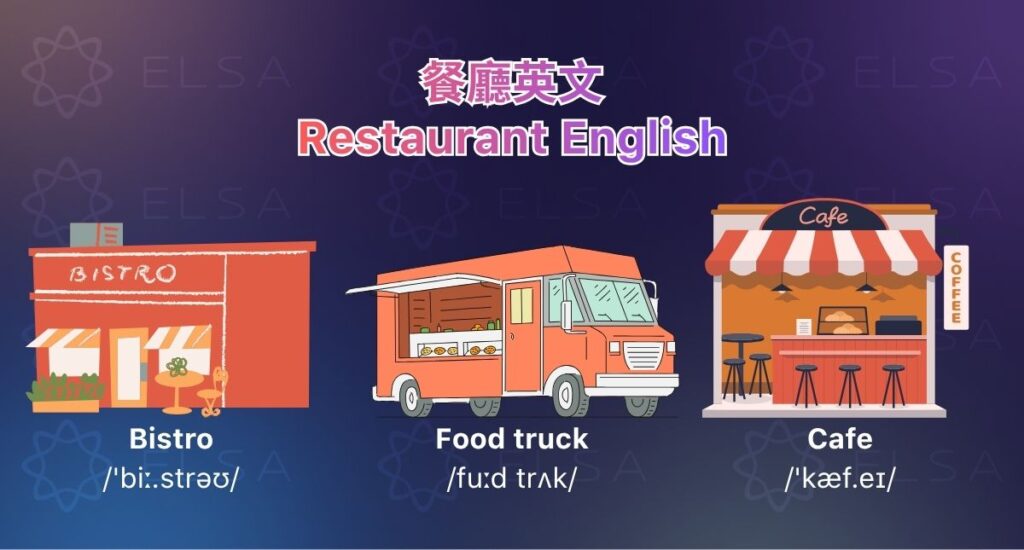
餐廳的英文泛指各種用餐場所。根據規模與服務形式的不同,餐廳英文包含了許多細分名稱,從經典的平價餐廳英文到私密的家裡餐廳英文(私房菜/私廚)都有專屬用語。此外,在家中用餐的空間則稱為飯廳英文(Dining room)。以下為你整理常見的餐廳類型對照表:
| 餐廳類型 | 發音(IPA) | 中文釋義與說明 |
|---|---|---|
| Bistro | /ˈbiː.strəʊ/ | 平價餐廳英文的一種,指提供簡易餐點的法式小館 |
| Home restaurant | /həʊm ˈres.trɒnt/ | 家裡餐廳英文(私房菜/私廚),在私人住宅內提供餐點 |
| Buffet | /ˈbʊf.eɪ/ | 歐式自助餐廳 |
| Cafe | /ˈkæf.eɪ/ | 結合咖啡與簡餐的輕食咖啡館 |
| Canteen | /kænˈtiːn/ | 學校或公司的員工餐廳/食堂 |
| Diner | /ˈdaɪ.nər/ | 美式平價餐廳 |
| Fast-food restaurant | /fɑːst fuːd ˈres.trɒnt/ | 快捷便利的速食餐廳 |
| Fine dining | /faɪn ˈdaɪ.nɪŋ/ | 高檔精緻的餐廳 |
| Food truck | /fuːd trʌk/ | 移動式餐車 |
| Tavern | /ˈtæv.ən/ | 結合餐點與酒類的酒館餐廳 |
Note: 在餐廳英文縮寫中,“Restaurant”通常縮寫為“Rest”。
許多英語學習者常因為不熟悉音節劃分而唸錯 Restaurant。掌握正確的餐廳英文發音(符合 IPA 標準)能讓你的口音聽起來更加自然:
- 英式發音(UK):/ˈres.trɒnt/
- 美式發音(US):/ˈres.tə.rɑːnt/
在日常實際對話中,母語人士常將 Restaurant 的餐廳英文發音簡化為兩個音節(RES-tront)或三個音節(RES-tuh-rahnt)。
主題式餐廳英文單字總整理
以下將餐廳英文單字系統化整理為 6 大主題,幫助你在不同用餐情境下快速查閱與運用:
用餐流程與餐點順序英文單字
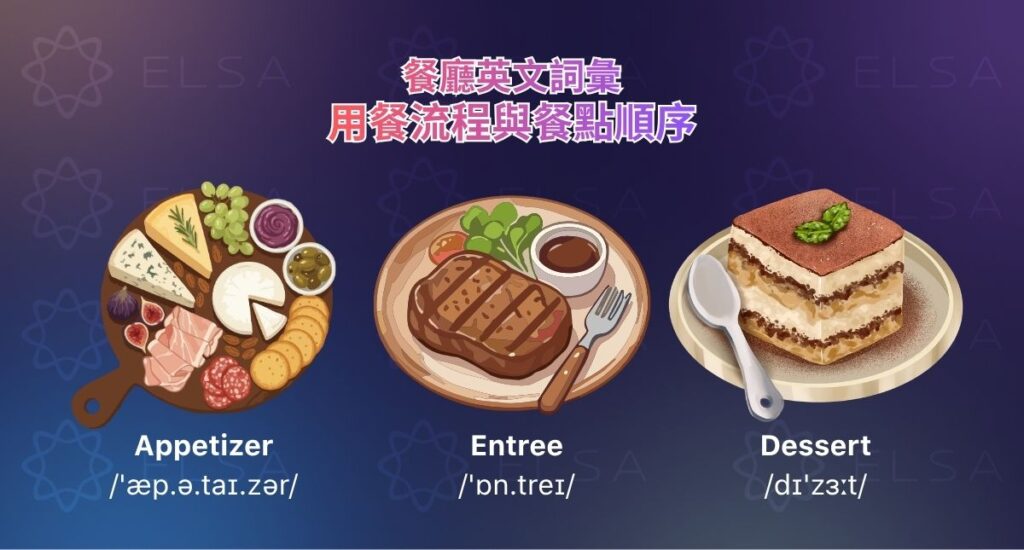
以下為你整理餐廳用餐流程、餐點順序與不同用餐形式的常見餐廳英文單字與專業術語:
| 英文單字 | IPA 國際音標 | 中文釋義 |
|---|---|---|
| Appetizer | /ˈæp.ə.taɪ.zər/ | 開胃菜/前菜 |
| Beverage course | /ˈbev.ər.ɪdʒ kɔːs/ | 飲品出餐階段 |
| Buffet | /ˈbʊf.eɪ/ | 歐式自助餐 |
| Course | /kɔːs/ | 正餐中的一道菜/出餐順序 |
| Dessert | /dɪˈzɜːt/ | 甜點 |
| Digestif | /diː.ʒesˈtiːf/ | 餐後幫助消化的酒類(餐後酒) |
| Entree | /ˈɒn.treɪ/ | 主菜(北美常用)/前菜(法語原意) |
| Family-style dining | /ˈfæm.əl.i staɪl ˈdaɪ.nɪŋ/ | 家庭式分食用餐 |
| Fasting | /ˈfɑː.stɪŋ/ | 禁食/斷食 |
| Feast | /fiːst/ | 盛宴/豐盛大餐 |
| Finger food | /ˈfɪŋ.ɡə fuːd/ | 手指食物/一口吃小點 |
| Full-course meal | /fʊl kɔːs miːl/ | 全套多道式正餐 |
| Main course | /meɪn kɔːs/ | 主菜(套餐中最核心的餐點英文項目) |
| Mealtime | /ˈmiːl.taɪm/ | 用餐時間 |
| Nightcap | /ˈnaɪt.kæp/ | 睡前酒 |
| Side dish | /saɪd dɪʃ/ | 附餐/配菜 |
| Snack | /snæk/ | 點心/零食 |
| Starter | /ˈstɑː.tər/ | 開胃前菜 |
| Supper | /ˈsʌp.ər/ | 宵夜/晚飯 |
| Tasting menu | /ˈteɪ.stɪŋ ˈmen.juː/ | 品嚐菜單/主廚特選小份量套餐 |
常見菜單餐點英文單字

以下為你整理看懂英文菜單時最常見的各式餐點英文單字,幫助你在對照菜單英文時能迅速點選想吃的料理:
| 英文單字 | IPA 國際音標 | 中文釋義 |
|---|---|---|
| Bacon | /ˈbeɪ.kən/ | 培根/煙燻豬肉 |
| Barbecue | /ˈbɑː.bɪ.kjuː/ | 烤肉/燒烤 |
| Beefsteak | /biːf steɪk/ | 牛排 |
| Broth | /brɒθ/ | 高湯/清湯 |
| Burger | /ˈbɜː.ɡər/ | 漢堡 |
| Caesar salad | /ˈsiː.zər ˈsæl.əd/ | 凱薩沙拉 |
| Dumpling | /ˈdʌm.plɪŋ/ | 餃子/點心/包子類 |
| Fish and chips | /fɪʃ ænd tʃɪps/ | 炸魚薯條 |
| Fried rice | /fraɪd raɪs/ | 炒飯 |
| Grilled chicken | /ɡrɪld ˈtʃɪk.ɪn/ | 烤雞 |
| Lasagna | /ləˈzæn.jə/ | 義大利千層麵 |
| Mashed potatoes | /mæʃt pəˈteɪ.təʊz/ | 馬鈴薯泥 |
| Omelet | /ˈɒm.lət/ | 歐姆蛋/美式煎蛋捲 |
| Pasta | /ˈpæs.tə/ | 義大利麵(統稱) |
| Pizza | /ˈpiːt.sə/ | 披薩 |
| Roast pork | /rəʊst pɔːk/ | 烤豬肉/脆皮燒肉 |
| Seafood platter | /ˈsiː.fuːd ˈplæt.ər/ | 綜合海鮮拼盤 |
| Soup | /suːp/ | 湯品 |
| Spaghetti | /spəˈɡet.i/ | 義大利直麵 |
| Stew | /stjuː/ | 燉肉/燉菜 |
拿到菜單後,如果想點牛排並確認喜歡的熟度,也可以先了解 牛排熟度英文,方便用英文向服務員清楚表達需求。
常見飲料與酒類英文單字

在餐廳或咖啡館點飲料時,除了熟悉各種飲品的英文名稱,也可以進一步學習咖啡英文,掌握常見的點餐用語。以下為你整理餐廳常見飲料與酒類的英文單字對照表:
| 英文單字 | IPA 國際音標 | 中文釋義 |
|---|---|---|
| Beer | /bɪər/ | 啤酒 |
| Black coffee | /blæk ˈkɒf.i/ | 黑咖啡 |
| Boba tea | /ˈbəʊ.bə tiː/ | 珍珠奶茶 |
| Cappuccino | /ˌkæp.əˈtʃiː.nəʊ/ | 卡布奇諾 |
| Champagne | /ʃæmˈpeɪn/ | 香檳 |
| Cider | /ˈsaɪ.dər/ | 蘋果酒 |
| Cocktail | /ˈkɒk.teɪl/ | 雞尾酒/調酒 |
| Espresso | /esˈpres.əʊ/ | 義式濃縮咖啡 |
| Fruit juice | /fruːt dʒuːs/ | 鮮果汁 |
| Green tea | /ɡriːn tiː/ | 綠茶 |
| Herbal tea | /ˈhɜː.bəl tiː/ | 花草茶/草本茶 |
| Hot chocolate | /hɒt ˈtʃɒk.lət/ | 熱可可/熱巧克力 |
| Iced tea | /aɪst tiː/ | 冰茶 |
| Latte | /ˈlɑː.teɪ/ | 拿鐵咖啡 |
| Lemonade | /ˌlem.əˈneɪd/ | 檸檬水/檸檬特調 |
| Milkshake | /ˈmɪlk.ʃeɪk/ | 奶昔 |
| Mineral water | /ˈmɪn.ər.əl ˈwɔː.tər/ | 礦泉水 |
| Mocktail | /ˈmɒk.teɪl/ | 仿調酒(無酒精雞尾酒) |
| Red wine | /red waɪn/ | 紅葡萄酒/紅酒 |
| Sparkling water | /ˈspɑː.klɪŋ ˈwɔː.tər/ | 氣泡水 |
餐具與餐桌用品英文單字

以下為你整理餐桌用品、擺設與各式餐具的英文單字對照表:
| 英文單字 | IPA 國際音標 | 中文釋義 |
|---|---|---|
| Bowl | /bəʊl/ | 碗 |
| Chopsticks | /ˈtʃɒp.stɪks/ | 筷子 |
| Coaster | /ˈkəʊ.stər/ | 杯墊 |
| Cup | /kʌp/ | 杯子/茶杯 |
| Cutlery | /ˈkʌt.lə.ri/ | 餐具(刀叉匙統稱) |
| Dishware | /dɪʃ.weər/ | 餐具器皿/盤碗類 |
| Fork | /fɔːk/ | 叉子 |
| Glassware | /ˈɡlɑːs.weər/ | 玻璃器皿/玻璃杯類 |
| Jug | /dʒʌɡ/ | 帶把水壺/水罐 |
| Knife | /naɪf/ | 餐刀 |
| Ladle | /ˈleɪ.dəl/ | 大湯勺 |
| Napkin | /ˈnæp.kɪn/ | 餐巾紙/口布 |
| Pitcher | /ˈpɪtʃ.ər/ | 大水壺/冷水壺 |
| Plate | /pleɪt/ | 盤子/淺盤 |
| Saucer | /ˈsɔː.sər/ | 茶杯托盤/小碟子 |
| Silverware | /ˈsɪl.və.weər/ | 金屬餐具/銀器餐具 |
| Spoon | /spuːn/ | 湯匙 |
| Straw | /strɔː/ | 吸管 |
| Tablecloth | /ˈteɪ.bəl.klɒθ/ | 桌布/餐桌布 |
| Tray | /treɪ/ | 托盤 |
餐廳組織與服務人員英文單字

在餐飲業英文與服務業英文職場中,明確區分各職位名稱能讓團隊溝通更順暢。以下整理餐飲英文職場中常見的餐廳服務生英文職稱與部門人員單字對照表:
| 英文單字 | IPA 國際音標 | 中文釋義 |
|---|---|---|
| Assistant manager | /əˈsɪs.tənt ˈmæn.ɪ.dʒər/ | 餐廳副理/助理經理 |
| Barista | /bəˈriː.stə/ | 咖啡師 |
| Bartender | /ˈbɑːˌten.dər/ | 調酒師 |
| Busser | /ˈbʌs.ər/ | 撤盤人員/勤雜員 |
| Cashier | /kæˈʃɪər/ | 收銀員/結帳員 |
| Chef | /ʃef/ | 主廚/廚師長 |
| Cleaner | /ˈkliː.nər/ | 清潔人員 |
| Cook | /kʊk/ | 廚師 |
| Dishwasher | /ˈdɪʃˌwɒʃ.ər/ | 洗碗人員 |
| Executive chef | /ɪɡˈzek.jə.tɪv ʃef/ | 行政主廚 |
| Head waiter | /hed ˈweɪ.tər/ | 領班服務生 |
| Host | /həʊst/ | 男迎賓員/帶位員 |
| Hostess | /ˈhəʊ.stəs/ | 女迎賓員/帶位員 |
| Kitchen porter | /ˈkɪtʃ.ən ˈpɔː.tər/ | 廚房助手/後勤員 |
| Line cook | /laɪn kʊk/ | 站台廚師/專責廚師 |
| Restaurant manager | /ˈres.trɒnt ˈmæn.ɪ.dʒər/ | 餐廳經理 |
| Server | /ˈsɜː.vər/ | 外場服務生(餐廳服務生英文通用統稱) |
| Sommelier | /səˈmel.i.eɪ/ | 侍酒師 |
| Waiter | /ˈweɪ.tər/ | 男服務生英文名稱 |
| Waitress | /ˈweɪ.trəs/ | 女服務生英文名稱 |
更多職稱:20 多行業職稱英文詞彙與發音指南
常見餐廳英文縮寫與專業用語
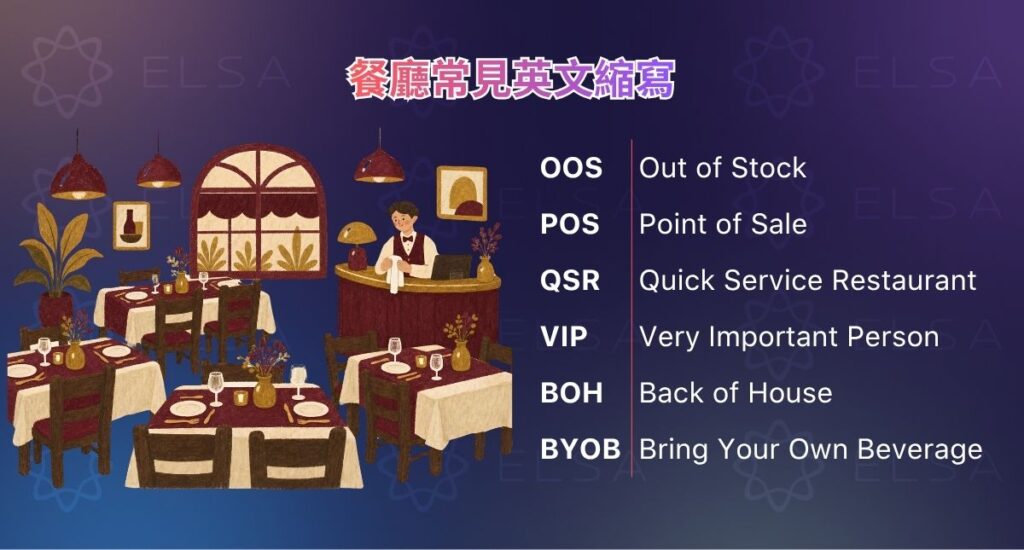
在餐飲業界與職場溝通中,熟記常見的餐廳縮寫 英文與內外場餐廳英文用語能大大提升工作效率。以下為你整理 F&B 領域最常使用的專業縮寫與術語對照表:
| 縮寫/術語 | 完整英文對照 | 中文釋義與說明 |
|---|---|---|
| BOH | Back of House | 廚房與後勤內場區域 |
| BYOB | Bring Your Own Beverage | 允許顧客自備酒水/飲料 |
| CAO | Chief Accounting Officer | 首席會計官 |
| CEO | Chief Executive Officer | 執行長 |
| CFO | Chief Financial Officer | 財務長 |
| CMO | Chief Marketing Officer | 首席行銷官 |
| Comp | Complimentary | 免費招待的餐點或服務 |
| ETA | Estimated Time of Arrival | 預計抵達時間 |
| F&B | Food and Beverage | 餐飲業/餐飲服務部門 |
| FIFO | First In, First Out | 先進先出管理原則(食材管理術語) |
| FOH | Front of House | 外場用餐與接待區域 |
| MICE | Meetings, Incentives, Conventions, Exhibitions | 大型會議、獎勵旅遊與展覽活動 |
| OOS | Out of Stock | 售罄/暫時缺貨 |
| POS | Point of Sale | POS 點餐與收銀系統 |
| QSR | Quick Service Restaurant | 快餐/速食餐廳 |
| RSVP | Répondez s’il vous plaît | 請回覆(確認是否出席活動) |
| SOP | Standard Operating Procedure | 標準作業流程 |
| VIP | Very Important Person | 貴賓/重要顧客 |
| 86 | Eighty-six | 餐點售罄或停售的餐廳業界術語 |
| 2-top / 4-top | Two-top / Four-top | 2 人桌/4 人桌(指容納人數的桌位) |
實用餐廳英文用語與常見動詞片語

以下整理餐廳點餐、服務與溝通時最常使用的餐廳英文用語與動作片語,幫助你在實際對話中能靈活運用:
| 英文片語 | 中文釋義 |
|---|---|
| Take order | 記錄點餐/幫客人點餐 |
| Want a dessert | 想吃甜點/需要甜點 |
| Out of the… | ……賣完了/暫時供應不足 |
| Have the bill | 索取帳單/結帳 |
| Check the bill | 核對帳單明細 |
| Serve the food | 上菜/出餐 |
| Make a reservation | 預訂座位/訂位 |
| Recommend a dish | 推薦菜色 |
| Ask for the menu | 索取菜單 |
| Clean the table | 清理桌面/收拾餐桌 |
| Bring the drinks | 送上飲料 |
| Enjoy your meal | 祝您用餐愉快 |
| Order more food | 加點餐點 |
| Pay with card | 刷卡付款 |
| Special of the day | 今日特餐/本日主廚推薦 |
| Ready to order | 準備好點餐了 |
| Table for two | 兩位用餐的桌位 |
| Cancel the order | 取消點餐 |
| Wait for a table | 等候桌位/候位 |
| Cook to perfection | 烹調得恰到好處 |
餐廳英文對話範例:全流程實用餐廳英文會話

掌握真實情境中的餐廳英文會話,能讓你在出國用餐或服務外賓時更加應答自如。以下按照實際用餐順序,整理顧客角度最常見的情境對話:
顧客用餐角度:餐廳英文會話情境

以下為你整理 5 個顧客視角的餐廳英文會話情境,完全按照真實用餐流程依序呈現:
情境 1:電話預約(餐廳訂位英文對話)
說明:顧客在用餐前致電餐廳進行餐廳訂位英文與餐廳預約英文登記。
| 英文對話 | 中文翻譯 |
|---|---|
| Customer: Hi, I would like to book a table for two for tonight at 7 PM. | 你好,我想預約今晚 7 點兩位的座位。 |
| Staff: Certainly, sir. May I have your name and phone number? | 好的,先生。請問怎麼稱呼您?可以提供您的聯絡電話嗎? |
| Customer: My name is Jay Chen, number 0912-345-678. | 我是 Jay Chen,電話號碼是 0912-345-678。 |
| Staff: Thank you, Mr. Chen. Your table is confirmed for 7 PM. | 謝謝您,Chen 先生。已為您確認晚上 7 點的訂位。 |
情境 2:現場詢問空位與安排入座
說明:顧客未事先預約,直接抵達現場詢問「餐廳還有空位嗎英文」並由服務生帶位。
| 英文對話 | 中文翻譯 |
|---|---|
| Customer: Good evening. Do you have a table for two available? | 晚上好。請問還有兩位的座位嗎? |
| Staff: Yes, we do. Would you prefer a table near the window? | 有的,沒問題。請問您偏好靠窗的座位嗎? |
| Customer: Yes, that would be great. Thank you! | 好的,靠窗的座位很棒,謝謝! |
情境 3:詢問主廚推薦與餐廳點餐英文
說明:顧客瀏覽菜單後詢問招牌餐點,並進行英文點餐(英文點餐對話範例)。
| 英文對話 | 中文翻譯 |
|---|---|
| Staff: Are you ready to order now, sir? | 先生,請問您準備好點餐了嗎? |
| Customer: What do you recommend as today’s special? | 請問今天有推薦的特餐嗎? |
| Staff: Our grilled salmon with lemon sauce is very popular. | 我們的檸檬醬烤鮭魚很受歡迎喔。 |
| Customer: Sounds good. I’ll have that and an iced tea, please. | 聽起來不錯!我要一份這個,再來一杯冰茶,謝謝。 |
情境 4:用餐中要求額外餐具與備品
說明:顧客在用餐途中需要額外的餐巾紙或飲用水。
| 英文對話 | 中文翻譯 |
|---|---|
| Customer: Excuse me, could we get some extra napkins and a glass of water? | 不好意思,可以麻煩您多給我們一些餐巾紙和一杯水嗎? |
| Staff: Of course, sir. I will bring them right away. | 當然可以,先生。我馬上為您送過來。 |
| Customer: Thank you very much. | 非常感謝! |
情境 5:索取帳單與結帳(餐廳結帳英文對話)
說明:顧客用餐完畢索取帳單,並使用信用卡進行餐廳結帳英文對話與付款。
| 英文對話 | 中文翻譯 |
|---|---|
| Customer: Could we get the check, please? | 麻煩給我們帳單,謝謝。 |
| Staff: Here is your bill, sir. The total comes to $50. | 先生,這是您的帳單,總共 50 美元。 |
| Customer: Can I pay with a credit card? | 我可以使用信用卡付款嗎? |
| Staff: Yes, credit card is fine. Please sign here. | 可以的,刷卡沒問題。請您在這裡簽名。 |
相關内容:結帳英文怎麽説? Checkout? Bill? 兩分鐘內找出答案
服務人員角度:餐廳服務生英文會話情境

在餐飲業英文職場中,外場服務人員掌握道地的餐廳服務生英文句型,能大幅提升服務品質與顧客滿意度。以下整理 3 種服務流程中最核心的餐廳服務生英文會話情境:
情境 1:接聽電話訂位(外場服務人員)
說明:服務生英文接聽電話並記錄顧客的預約訂位資訊。
| 英文對話 | 中文翻譯 |
|---|---|
| Staff: Good afternoon! Our Bistro, how may I help you? | 午安!這裡是我家小館,很高興為您服務! |
| Customer: Hi, I’d like to reserve a table for four for this Friday at 8 PM. | 你好,我想預約這週五晚上 8 點 4 位的座位。 |
| Staff: Let me check… Yes, we have a table available. Under what name, please? | 好的,我為您確認一下……沒問題,目前還有空位。請問訂位大名是? |
| Customer: Under Amber Lin, please. | 登記 Amber Lin,謝謝。 |
記得區分 first name 和 last name:first name, last name 是什麽? 意義、用法及正確填寫方式
情境 2:接待迎賓與引導入座
說明:外場服務生英文於門口接待顧客並引導至指定桌位在餐廳內用。
| 英文對話 | 中文翻譯 |
|---|---|
| Staff: Good evening, welcome to Our Bistro! Do you have a reservation? | 晚上好,歡迎光臨我家小館!請問您有預約嗎? |
| Customer: Yes, reservation for two under Lin. | 有的,預約兩位,登記姓 Lin。 |
| Staff: Ah yes, Ms. Lin. Right this way, please. Here are your menus. | 啊,是的,林小姐。請跟我往這邊走,這是您的菜單。 |
如果想學會更多在餐廳點餐時表達想法與意見的英文說法,可以參考 認為 英文,讓對話更自然流暢。
情境 3:幫顧客點餐與餐點確認
說明:餐廳服務生英文為顧客記錄點餐內容並進行二次確認。
| 英文對話 | 中文翻譯 |
|---|---|
| Staff: May I take your order now, or do you need a few more minutes? | 請問現在可以為您點餐了嗎?還是您需要再稍等幾分鐘呢? |
| Customer: We’ll have one seafood pasta and one Caesar salad. | 我們要一份海鮮義大利麵和一份凱薩沙拉。 |
| Staff: So that’s one seafood pasta and one Caesar salad. Anything to drink? | 好的,為您確認餐點:一份海鮮義大利麵與一份凱薩沙拉。請問需要喝點什麼嗎? |
| Customer: Two glasses of mineral water, please. | 請給我們兩杯礦泉水,謝謝。 |
情境 4:上菜與詢問顧客滿意度
說明:外場服務人員送上餐點並主動關心顧客用餐體驗。
| 英文對話 | 中文翻譯 |
|---|---|
| Staff: Here is your seafood pasta and Caesar salad. Enjoy your meal! | 這是您的海鮮義大利麵與凱薩沙拉,請慢慢享用! |
| Customer: Thank you, it looks delicious. | 謝謝你,看起來真好吃。 |
| Staff: Is everything to your satisfaction, sir? | 先生,請問餐點還符合您的口味嗎? |
| Customer: Yes, the food is wonderful! | 非常好,餐點真的很美味! |
情境 5:幫客人結帳與送客
說明:餐廳服務生英文在幫客人結帳英文情境中遞交帳單、收取費用並親切致謝送客。
| 英文對話 | 中文翻譯 |
|---|---|
| Staff: Here is your bill, sir. The total is $45. How would you like to pay? | 先生,這是您的帳單,總共 45 美元。請問您想怎麼付款呢? |
| Customer: Here is $50 in cash. Keep the change. | 這裡是 50 美元現金,不用找了。 |
| Staff: Thank you so much for your generosity! Have a great evening! | 非常感謝您的慷慨!祝您今晚愉快! |
常見問題
平價餐廳英文是什麽?
→ Casual restaurant 或者 local eatery
家庭 / 家裡餐廳英文是什麽?
→ Home restaurant 或者 homestyle restaurant
Restaurant – 餐廳英文發音該怎麼唸?
→ Restaurant 的標準 IPA 發音,英式發音為 /ˈres.trɒnt/,美式發音為 /ˈres.tə.rɑːnt/。在日常口語對話中,母語人士最自然通俗的簡讀唸法為 RES-tront。
餐飲業英文中的 Take order 是什麼意思?
→ Take order 是指服務人員「幫客人點餐」或「記錄點餐內容」的動作。
餐廳分開結帳/拆帳英文該怎麼說?
→ 如果想要求分開付款,可以使用禮貌句型:Could we split the bill, please?(我們可以分開付帳嗎?)或 Can we pay separately?(我們可以各自結帳嗎?)。
Waiter、Waitress 與 Server 有何差別?
Waiter 專指男服務生英文,Waitress 專指女服務生英文;而 Server 則是性別中立的通用單字,泛指任何性別的外場服務人員。
熟練掌握上述餐廳英文單字、實用片語與情境餐廳英文會話,能讓你無論是在國外餐廳用餐還是擔任外場服務人員,都能自信應對各種餐飲場合。想要口音更道地?請在 ELSA Speak 主頁,了解更多實用的溝通交流英語技巧!
想提升多益成績,卻不知道該從哪裡開始?一份依主題整理的多益單字大全,可以幫助你優先掌握考題中最常出現的字彙。跟著 ELSA Speak 一起認識常考多益單字、多益單字表,以及更有效率的背英文單字與複習方法,讓備考更有方向。
新制多益單字大全
在 TOEIC – 多益測驗中,多益單字經常出現在真實商務英語情境裡。與其零散地背單字,不如依主題做多益單字 分類,把新字和實際使用情境連結起來,通常更容易理解、記住,也更有助於提升分數。
以下整理 15 個重要的多益單字主題,包含考試常見字彙、多益單字表與 IPA 發音,適合做為多益單字 線上複習或日常多益單字 練習使用。
商務會議(Meetings & Conferences)
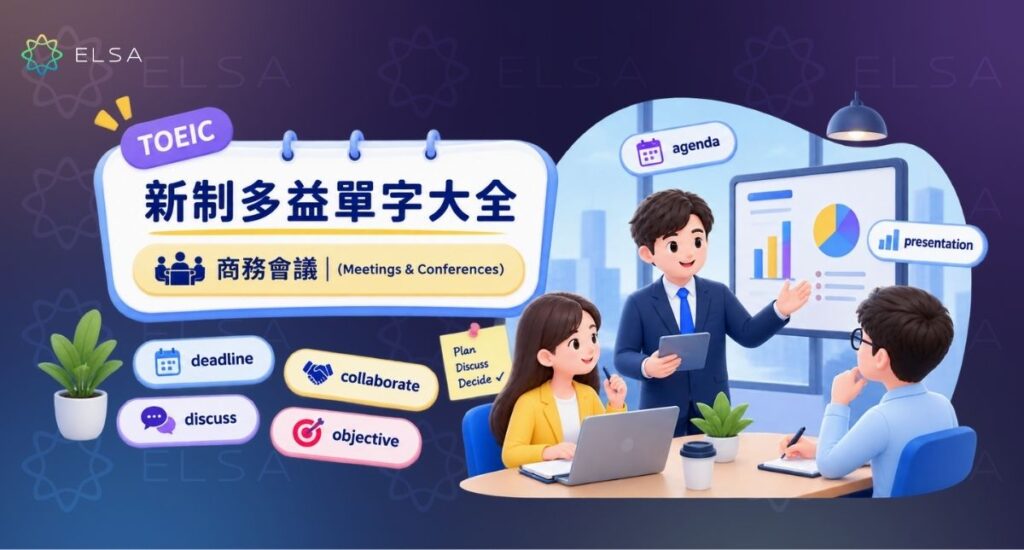
商務會議是 TOEIC Listening 與 Reading 常見主題之一。熟悉相關字彙,可以幫助你更快掌握會議安排、決策流程,以及職場中的溝通內容。
| 多益單字 | 發音(IPA) | 中文意思 |
|---|---|---|
| agenda (n.) | /əˈdʒendə/ | 議程;會議內容 |
| conference (n.) | /ˈkɒnfərəns/ | 會議;研討會 |
| attendee (n.) | /əˈtendiː/ | 與會者;出席者 |
| presentation (n.) | /ˌprezənˈteɪʃn/ | 簡報;發表 |
| proposal (n.) | /prəˈpəʊzl/ | 提案;建議方案 |
| deadline (n.) | /ˈdedlaɪn/ | 期限;截止日 |
| reschedule (v.) | /riːˈʃedjuːl/ | 重新安排時間 |
| postpone (v.) | /pəˈspəʊn/ | 延期;延後 |
| adjourn (v.) | /əˈdʒɜːn/ | 暫停;休會;結束會議 |
| facilitate (v.) | /fəˈsɪlɪteɪt/ | 促進;協助進行 |
| collaborate (v.) | /kəˈlæbəreɪt/ | 合作;協作 |
| negotiate (v.) | /nɪˈɡəʊʃieɪt/ | 協商;談判 |
| confirm (v.) | /kənˈfɜːm/ | 確認 |
| discuss (v.) | /dɪˈskʌs/ | 討論 |
| participate (v.) | /pɑːˈtɪsɪpeɪt/ | 參與 |
| implement (v.) | /ˈɪmplɪment/ | 執行;實施 |
| objective (n.) | /əbˈdʒektɪv/ | 目標;目的 |
| outcome (n.) | /ˈaʊtkʌm/ | 結果;成果 |
不要錯過具有大量功能的英語學習包
ELSA Premium 終身 – 十月優惠
原價:7,150元 現在 4,215 元
ELSA Premium 還有另外以下的學習包:
ELSA Premium 一年:原價:5,250元 現在 2,199 元
ELSA Premium 三個月:原價:2,100元 現在 1,140 元
人力資源(Human Resources)

人力資源管理是現代企業的重要職能。招募、培訓、績效評估與員工福利等相關字彙,在 TOEIC 中都相當常見。掌握人資主題的多益單字,可以幫助你更容易理解職場情境,也能提升作答效率。
| 多益單字 | 發音(IPA) | 中文意思 |
|---|---|---|
| recruitment (n.) | /rɪˈkruːtmənt/ | 招募;徵才 |
| candidate (n.) | /ˈkændɪdət/ | 候選人;應徵者 |
| interview (n./v.) | /ˈɪntəvjuː/ | 面試;訪談 |
| resume (n.) | /ˈrezjuːmeɪ/ | 履歷;履歷表 |
| qualification (n.) | /ˌkwɒlɪfɪˈkeɪʃn/ | 資格;條件;學經歷 |
| promotion (n.) | /prəˈməʊʃn/ | 升遷;晉升 |
| employee (n.) | /ɪmˈplɔɪiː/ | 員工 |
| supervisor (n.) | /ˈsuːpəvaɪzə/ | 主管;督導 |
| performance (n.) | /pəˈfɔːməns/ | 績效;工作表現 |
| training (n.) | /ˈtreɪnɪŋ/ | 培訓;訓練 |
| benefits (n.) | /ˈbenɪfɪts/ | 福利 |
| salary (n.) | /ˈsæləri/ | 薪資 |
| contract (n.) | /ˈkɒntrækt/ | 合約 |
| terminate (v.) | /ˈtɜːmɪneɪt/ | 終止;解雇 |
| evaluate (v.) | /ɪˈvæljueɪt/ | 評估 |
| compensate (v.) | /ˈkɒmpenseɪt/ | 補償;給付報酬 |
| resign (v.) | /rɪˈzaɪn/ | 辭職;離職 |
行銷與廣告(Marketing & Advertising)

行銷策略與廣告活動對企業成長相當重要。這類多益單字 一般商務篇常涵蓋市場分析、品牌推廣、廣告活動與客戶管理等概念,能幫助你理解 TOEIC 中常見的商務情境。
| 多益單字 | 發音(IPA) | 中文意思 |
|---|---|---|
| campaign (n.) | /kæmˈpeɪn/ | 活動;行銷活動 |
| target (n./v.) | /ˈtɑːɡɪt/ | 目標;鎖定 |
| market (n./v.) | /ˈmɑːkɪt/ | 市場;行銷;推廣 |
| survey (n./v.) | /ˈsɜːveɪ/ | 調查;問卷調查 |
| launch (v./n.) | /lɔːntʃ/ | 推出;上市 |
| segment (n./v.) | /ˈseɡmənt/ | 區隔;細分 |
| distribute (v.) | /dɪˈstrɪbjuːt/ | 分銷;配送 |
| merchandise (n./v.) | /ˈmɜːtʃəndaɪz/ | 商品;推廣商品 |
合約與談判(Contracts & Negotiations)

商務合約與談判能力是企業運作的重要基礎。這組多益單字聚焦法律文件、商務協議與協商流程,有助於理解 TOEIC 常見的合約與談判情境。
| 多益單字 | 發音(IPA) | 中文意思 |
|---|---|---|
| agreement (n.) | /əˈɡriːmənt/ | 協議;同意 |
| negotiate (v.) | /nɪˈɡəʊʃieɪt/ | 協商;談判 |
| breach (n./v.) | /briːtʃ/ | 違約;違反 |
| terminate (v.) | /ˈtɜːmɪneɪt/ | 終止;結束 |
| comply (v.) | /kəmˈplaɪ/ | 遵守;依從 |
| authorize (v.) | /ˈɔːθəraɪz/ | 授權;核准 |
財務與會計(Finance & Accounting)
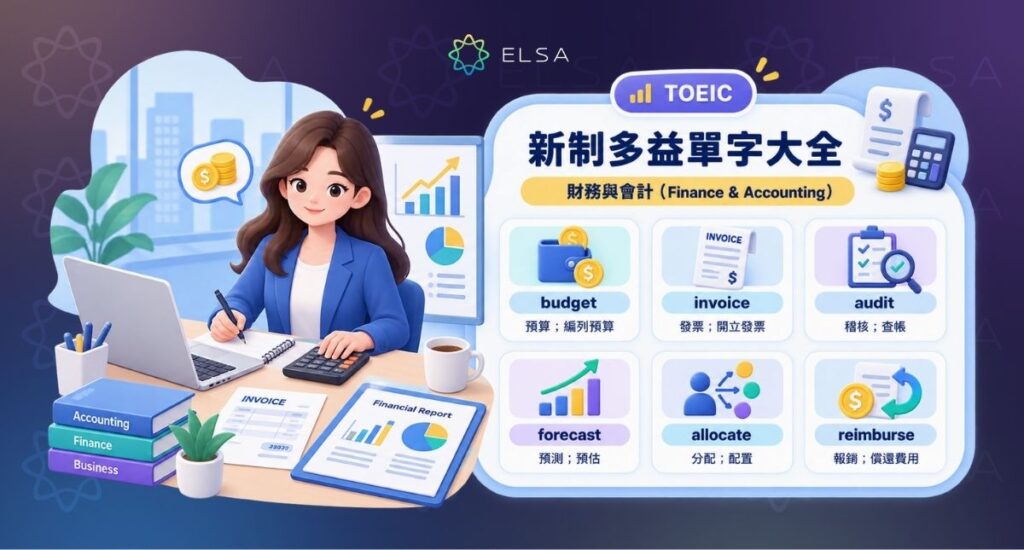
財務管理與會計作業是企業決策的重要依據。這組多益單字涵蓋預算編列、財務報表、稽核與投資分析等常見概念,能幫助你掌握 TOEIC 裡的財務商務情境。
| 多益單字 | 發音(IPA) | 中文意思 |
|---|---|---|
| budget (n./v.) | /ˈbʌdʒɪt/ | 預算;編列預算 |
| invoice (n./v.) | /ˈɪnvɔɪs/ | 發票;開立發票 |
| audit (n./v.) | /ˈɔːdɪt/ | 稽核;查帳 |
| reconcile (v.) | /ˈrekənsaɪl/ | 核對;調節帳目 |
| forecast (n./v.) | /ˈfɔːkɑːst/ | 預測;預估 |
| allocate (v.) | /ˈæləkeɪt/ | 分配;配置 |
| reimburse (v.) | /ˌriːɪmˈbɜːs/ | 報銷;償還費用 |
採購與訂購(Purchasing & Ordering)
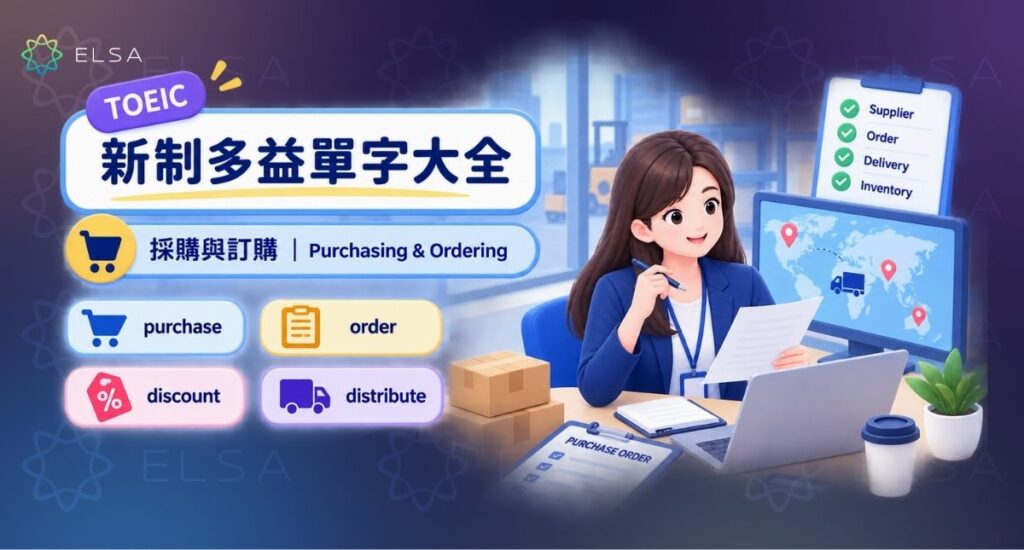
採購流程與訂單管理是供應鏈管理的重要環節。這組多益單字包含採購、庫存管理、產品配送與供應商關係等概念,都是 TOEIC 常見考題情境。
| 多益單字 | 發音(IPA) | 中文意思 |
|---|---|---|
| purchase (n./v.) | /ˈpɜːtʃəs/ | 購買;採購 |
| order (n./v.) | /ˈɔːdə/ | 訂單;訂購 |
| discount (n./v.) | /ˈdɪskaʊnt/ | 折扣;打折 |
| distribute (v.) | /dɪˈstrɪbjuːt/ | 配送;分銷 |
閲讀更多:結帳英文怎麽説? Checkout? Bill? 兩分鐘內找出答案
辦公室生活與工作流程(Office Life & Procedures)
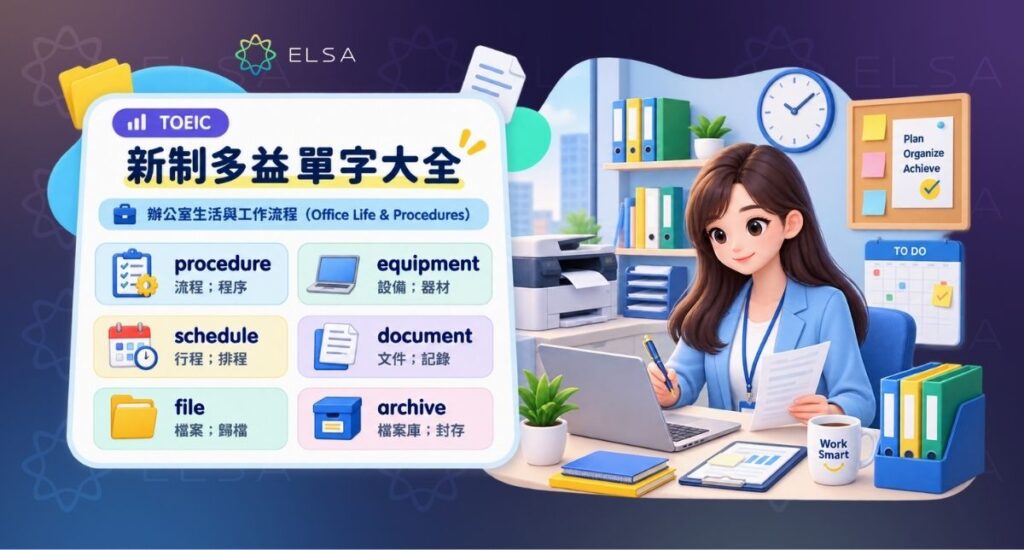
辦公環境與日常流程是職場生活的重要一部分。這組多益單字涵蓋工作程序、辦公設備、文件管理與行政作業,可幫助你理解 TOEIC 裡常見的辦公室情境。
| 多益單字 | 發音(IPA) | 中文意思 |
|---|---|---|
| procedure (n.) | /prəˈsiː.dʒər/ | 流程;程序 |
| equipment (n.) | /ɪˈkwɪp.mənt/ | 設備;器材 |
| facility (n.) | /fəˈsɪl.ə.ti/ | 設施;設備 |
| maintenance (n.) | /ˈmeɪn.tən.əns/ | 維護;保養 |
| schedule (n./v.) | /ˈʃedjuːl/ | 行程;排程 |
| document (n./v.) | /ˈdɒkjumənt/ | 文件;記錄 |
| file (n./v.) | /faɪl/ | 檔案;歸檔 |
| copy (n./v.) | /ˈkɒpi/ | 副本;複製 |
| distribute (v.) | /dɪˈstrɪbjuːt/ | 分發;分送 |
| archive (n./v.) | /ˈɑːkaɪv/ | 檔案庫;封存 |
| access (n./v.) | /ˈækses/ | 存取;使用權限 |
| supply (n./v.) | /səˈplaɪ/ | 供應;用品 |
| organize (v.) | /ˈɔːɡənaɪz/ | 整理;安排 |
資訊科技與電腦(IT & Computer)
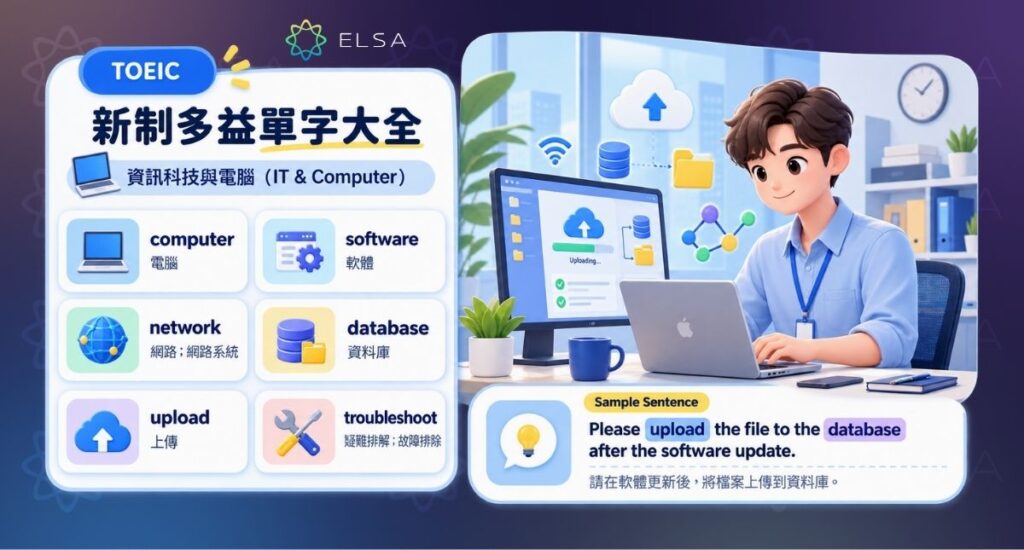
資訊科技在現代商務環境中扮演重要角色。這組多益單字聚焦電腦操作、軟體、網路與資料管理等概念,讓你更容易掌握 TOEIC 中的科技情境。
| 多益單字 | 發音(IPA) | 中文意思 |
|---|---|---|
| computer (n.) | /kəmˈpjuː.tər/ | 電腦 |
| software (n.) | /ˈsɒft.weər/ | 軟體 |
| hardware (n.) | /ˈhɑːd.weər/ | 硬體 |
| network (n.) | /ˈnet.wɜːk/ | 網路;網路系統 |
| database (n.) | /ˈdeɪ.tə.beɪs/ | 資料庫 |
| download (v./n.) | /ˌdaʊnˈləʊd/ | 下載 |
| upload (v./n.) | /ˌʌpˈləʊd/ | 上傳 |
| update (n./v.) | /ˌʌpˈdeɪt/ | 更新 |
| upgrade (n./v.) | /ˈʌpɡreɪd/ | 升級 |
| troubleshoot (v.) | /ˈtrʌbəlʃuːt/ | 疑難排解;故障排除 |
| encrypt (v.) | /ɪnˈkrɪpt/ | 加密 |
旅遊與交通(Travel & Transportation)
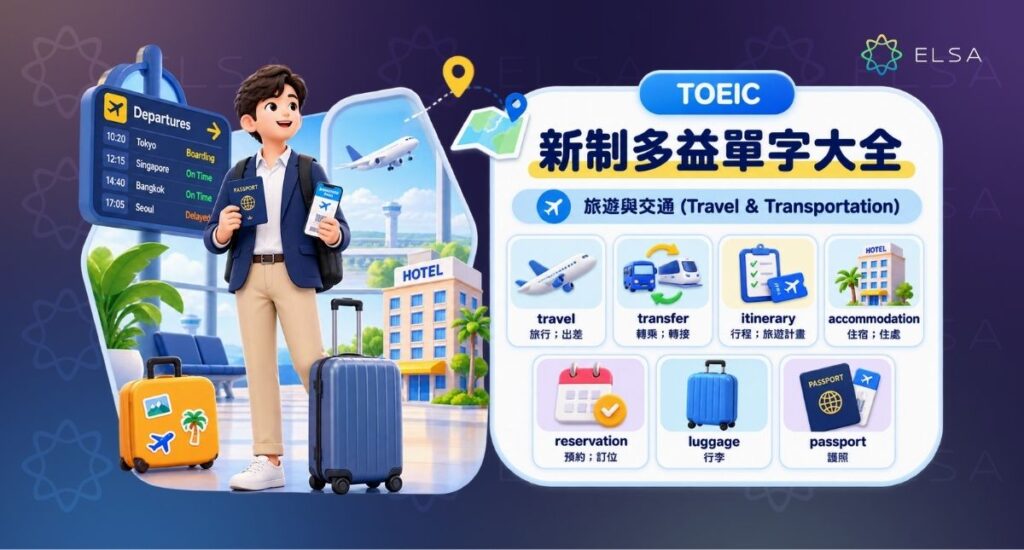
商務旅行與交通安排是國際商務中常見的情境。這組多益單字涵蓋行程規劃、交通工具、訂位與住宿等內容,都是 TOEIC 常出現的主題。旅遊英文
| 旅遊英文單字 | 發音(IPA) | 中文意思 |
|---|---|---|
| travel (n./v.) | /ˈtrævəl/ | 旅行;出差 |
| transfer (n./v.) | /ˈtrænsfə/ | 轉乘;轉接 |
| itinerary (n.) | /aɪˈtɪnərəri/ | 行程;旅遊計畫 |
| accommodation (n.) | /əˌkɒməˈdeɪʃən/ | 住宿;住處 |
| reservation (n.) | /ˌrezəˈveɪʃən/ | 預約;訂位 |
| luggage (n.) | /ˈlʌɡɪdʒ/ | 行李 |
| passport (n.) | /ˈpɑːspɔːt/ | 護照 |
飯店與住宿(Hotels & Accommodation)
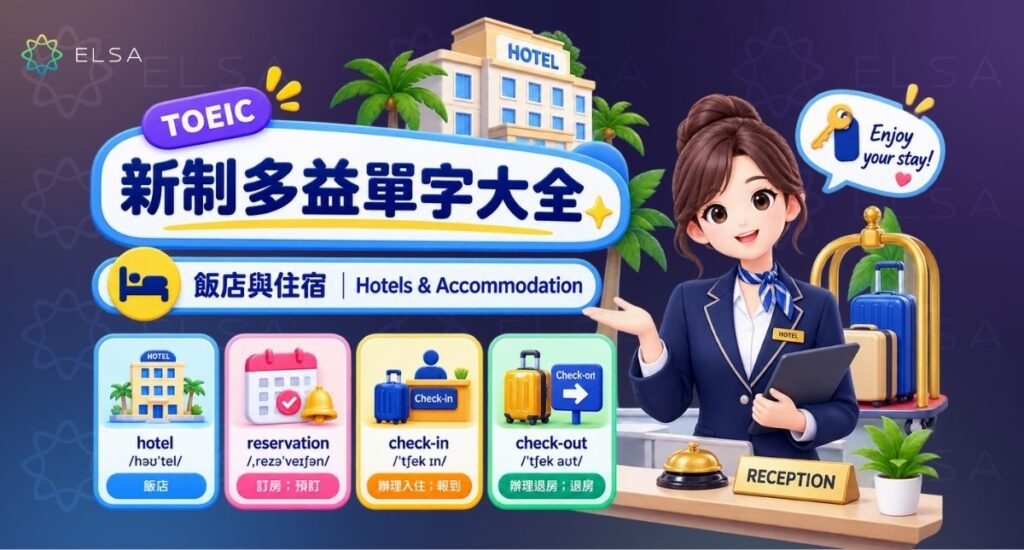
飯店服務與住宿安排是商務旅行的重要環節。這組多益單字包含飯店服務、客房設施、訂房,以及入住與退房流程等常見考題情境。
| 多益單字 | 發音(IPA) | 中文意思 |
|---|---|---|
| hotel (n.) | /həʊˈtel/ | 飯店 |
| reservation (n.) | /ˌrezəˈveɪʃən/ | 訂房;預訂 |
| check-in (n./v.) | /ˈtʃek ɪn/ | 辦理入住;報到 |
| check-out (n./v.) | /ˈtʃek aʊt/ | 辦理退房;退房 |
閲讀更多:餐廳英文:詞彙、對話和最標準的溝通句型
醫療與保險(Health & Insurance)
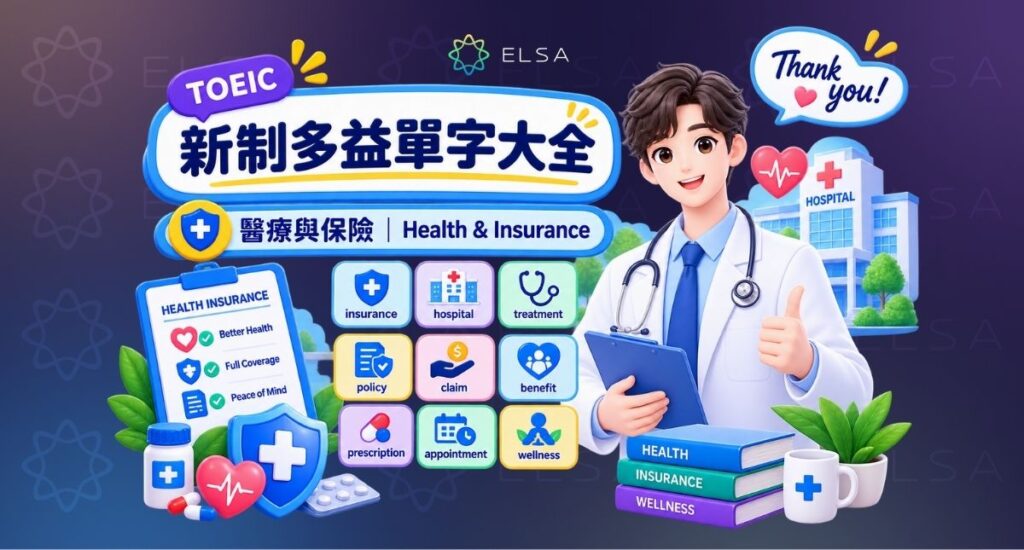
健康照護與保險制度是員工福利的重要部分。這組多益單字涵蓋健康管理、投保、醫療服務與員工權益等概念,有助於理解 TOEIC 中常見的醫療與保險情境。
| 多益單字 | 發音(IPA) | 中文意思 |
|---|---|---|
| insurance (n.) | /ɪnˈʃʊərəns/ | 保險 |
| premium (n.) | /ˈpriːmiəm/ | 保費 |
| coverage (n.) | /ˈkʌvərɪdʒ/ | 保障範圍;保險給付範圍 |
| policy (n.) | /ˈpɒləsi/ | 保單;政策 |
| claim (n./v.) | /kleɪm/ | 理賠申請;索賠 |
| deductible (n.) | /dɪˈdʌktəbl/ | 自付額 |
| benefit (n.) | /ˈbenɪfɪt/ | 福利;給付 |
| treatment (n.) | /ˈtriːtmənt/ | 治療 |
| medical (adj.) | /ˈmedɪkl/ | 醫療的 |
| hospital (n.) | /ˈhɒspɪtl/ | 醫院 |
| appointment (n.) | /əˈpɔɪntmənt/ | 預約;約診 |
| prescription (n.) | /prɪˈskrɪpʃən/ | 處方;處方箋 |
| diagnosis (n.) | /ˌdaɪəɡˈnəʊsɪs/ | 診斷 |
| wellness (n.) | /ˈwelnəs/ | 健康;身心健康 |
| emergency (n.) | /ɪnˈmɜːdʒənsi/ | 緊急狀況 |
| prevention (n.) | /prɪˈvenʃən/ | 預防 |
| physician (n.) | /fɪˈzɪʃən/ | 醫師 |
| rehabilitation (n.) | /ˌriːəˌbɪlɪˈteɪʃən/ | 復健;復健治療 |
| liability (n.) | /ˌlaɪəˈbɪləti/ | 責任;法律責任 |
| compensation (n.) | /ˌkɒmpənˈseɪʃən/ | 補償;賠償金 |
零售與客戶服務(Retail & Customer Service)
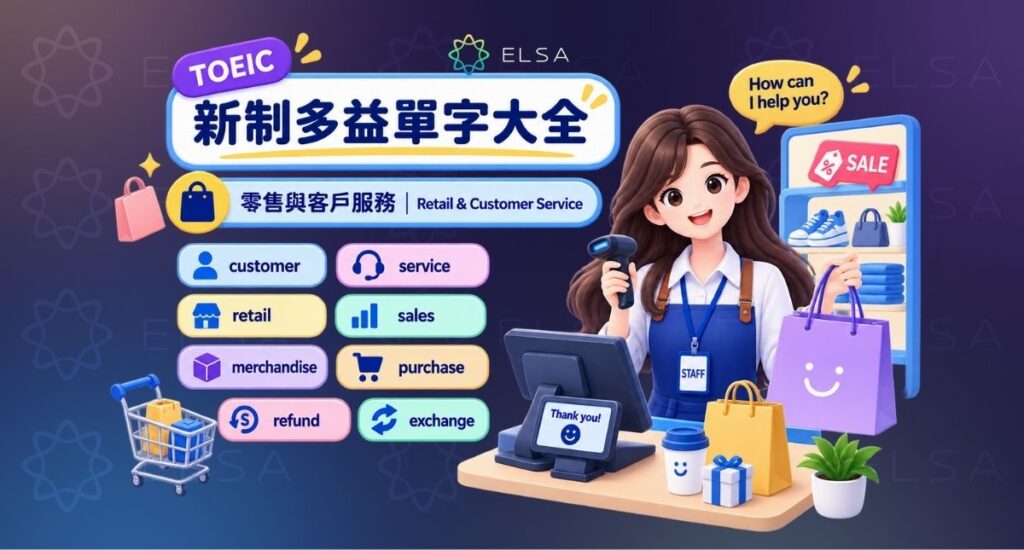
零售與客戶服務是影響企業成敗的重要環節。這組多益單字包含銷售流程、客戶關係管理與服務品質等概念,都是 TOEIC 常見的商務情境。
| 多益單字 | 發音(IPA) | 中文意思 |
|---|---|---|
| customer (n.) | /ˈkʌstəmə/ | 顧客;客戶 |
| service (n.) | /ˈsɜːvɪs/ | 服務 |
| retail (n./adj.) | /ˈriːteɪl/ | 零售;零售的 |
| sales (n.) | /seɪlz/ | 銷售;業績 |
| merchandise (n.) | /ˈmɜːtʃəndaɪz/ | 商品;貨品 |
| purchase (n./v.) | /ˈpɜːtʃəs/ | 購買;採購 |
| refund (n./v.) | /ˈriːfʌnd/ | 退款;退款款項 |
| exchange (n./v.) | /ɪksˈtʃeɪndʒ/ | 換貨;交換 |
製造與品質管理(Manufacturing & Quality Control)
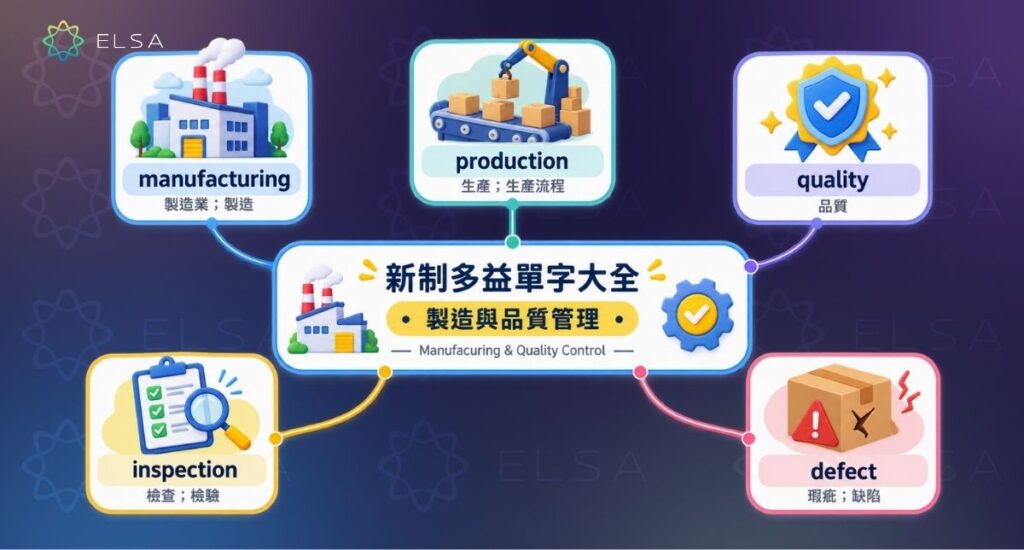
製造與品質控管是確保產品成功的重要基礎。這組多益單字涵蓋生產流程、品質標準、製造技術與產品檢驗等概念,幫助你理解 TOEIC 常見的製造業情境。
| 多益單字 | 發音(IPA) | 中文意思 |
|---|---|---|
| manufacturing (n.) | /ˌmænjuˈfæktʃərɪŋ/ | 製造業;製造 |
| production (n.) | /prəˈdʌkʃən/ | 生產;生產流程 |
| quality (n.) | /ˈkwɒləti/ | 品質 |
| process (n./v.) | /ˈprəʊses/ | 流程;處理 |
| assembly (n.) | /əˈsembli/ | 組裝 |
| inspection (n.) | /ɪnˈspekʃən/ | 檢查;檢驗 |
| equipment (n.) | /ɪˈkwɪpmənt/ | 設備 |
| machinery (n.) | /məˈʃiːnəri/ | 機械設備 |
| component (n.) | /kəmˈpəʊnənt/ | 零組件;元件 |
| material (n.) | /məˈtɪəriəl/ | 原料;材料 |
| specification (n.) | /ˌspesɪfɪˈkeɪʃən/ | 規格;技術規格 |
| standard (n.) | /ˈstændəd/ | 標準 |
| defect (n.) | /ˈdiːfekt/ | 瑕疵;缺陷 |
| efficiency (n.) | /ɪˈfɪʃənsi/ | 效率;生產力 |
| output (n.) | /ˈaʊtpʊt/ | 產量 |
| capacity (n.) | /kəˈpæsəti/ | 產能;生產能力 |
| batch (n.) | /bætʃ/ | 批次;生產批次 |
| testing (n.) | /ˈtestɪŋ/ | 測試;檢驗 |
| compliance (n.) | /kəmˈplaɪəns/ | 合規;符合規範 |
| improvement (n.) | /ɪmˈpruːvmənt/ | 改善;改進 |
在製造與品質管理的工作中,經常需要按照順序說明生產流程、檢查步驟與產品規格。若想更準確地用英文表達「第一、第二、第三」等順序,可以進一步了解英文序數的用法,讓工作中的英文溝通更加清楚。
閱讀詳細文章: 序數 英文 (Ordinal Numbers): 1 到 1000 英文寫法, 讀法與序數表
投資與銀行(Investment & Banking)
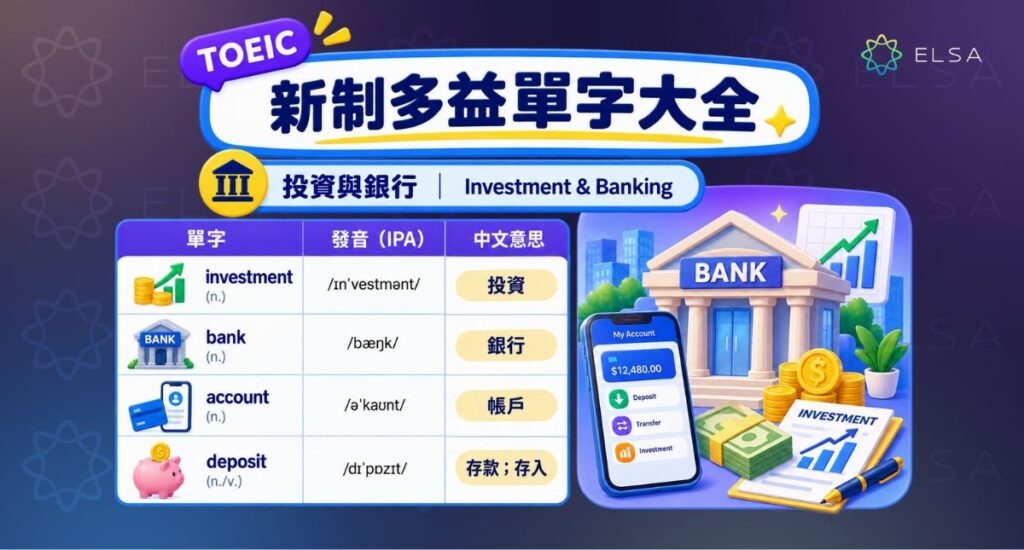
金融投資與銀行服務是現代經濟的重要部分。這組多益單字涵蓋金融市場、投資策略與銀行服務等常見概念,有助於理解 TOEIC 裡的金融商務情境。
| 多益單字 | 發音(IPA) | 中文意思 |
|---|---|---|
| investment (n.) | /ɪnˈvestmənt/ | 投資 |
| bank (n.) | /bæŋk/ | 銀行 |
| account (n.) | /əˈkaʊnt/ | 帳戶 |
| deposit (n./v.) | /dɪˈpɒzɪt/ | 存款;存入 |
更多内容:匯款 英文是什麼? wire、remit、bank transfer 的最準確用法
電子郵件與商務往來(Email & Correspondence)
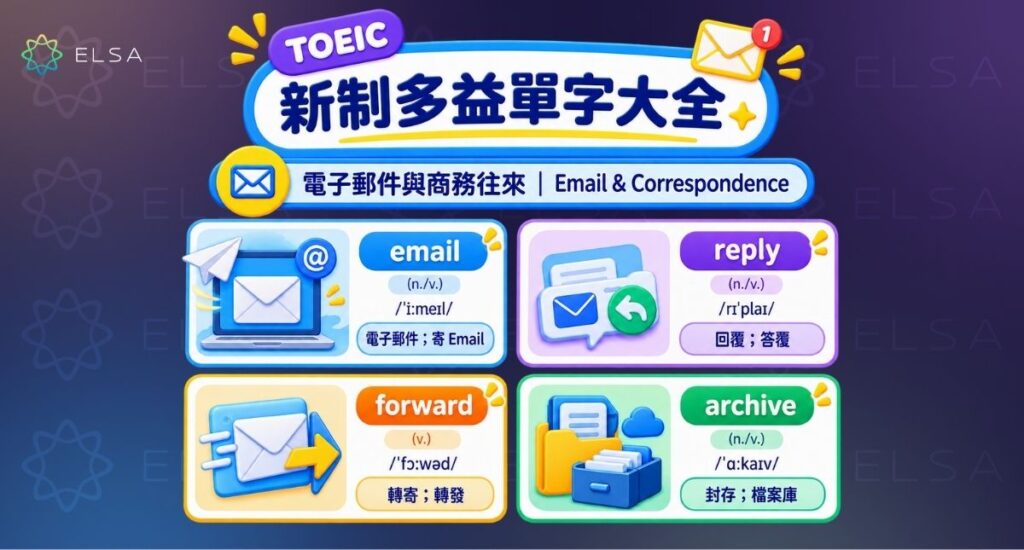
電子郵件與職場溝通是現代辦公環境中重要的資訊交換方式。這組多益單字涵蓋商務郵件撰寫、溝通禮儀與資訊傳遞等內容,都是 TOEIC 常見題材。
| 多益單字 | 發音(IPA) | 中文意思 |
|---|---|---|
| email (n./v.) | /ˈiːmeɪl/ | 電子郵件;寄 Email |
| reply (n./v.) | /rɪˈplaɪ/ | 回覆;答覆 |
| forward (v.) | /ˈfɔːwəd/ | 轉寄;轉發 |
| archive (n./v.) | /ˈɑːkaɪv/ | 封存;檔案庫 |

多益考試中常見的成語

| 英文成語(Idiom) | 意思 |
|---|---|
| Take the bull by the horns | 不畏艱難 |
| Be on the same page | 與某人對某個問題或意見達成一致 |
| Think out of the box | 創新思維,無限制思考 |
| Shoot from the hip | 魯莽行事 |
| See eye to eye | 同意某人的觀點或問題 |
| Bend over backwards | 竭盡全力幫助或達成目標 |
| Lay it on the line | 直言不諱,清楚明了 |
| Give and take | 雙方的妥協與付出 |
| Meet someone halfway | 妥協或接受某人的意見 |
| Cut the/a deal | 達成協議或妥協 |
| Water under the bridge | 已成往事 |
| A win-win situation | 雙方皆受益的局面 |
| On one’s plate | 面對許多事情或責任要處理 |
| Know the ropes | 熟悉某個領域並具有經驗 |
| A dry run | 進行實際執行前的測試或嘗試 |
例句:
- When the project was falling behind schedule, Jane decided to take the bull by the horns and reorganize the team.
大致翻譯:當專案延遲時,Jane 決定果斷面對困難的情況,並重新組織團隊。
- His decision to change the project scope without consulting anyone was a classic example of shooting from the hip.
大致翻譯:他的決定在沒有諮詢任何人情況下改變了專案範圍,這是典型的例子,說明了不經深思熟慮就行動或說話的後果。
- During the meeting, the CEO laid it on the line about the company’s financial situation.
大致翻譯: 在會議中,CEO 直接而明確地講述了公司的財務狀況。
查看更多: 100+英文諺語大全 (Proverb):最經典的生活、愛情與勵志英語箴言
TOEIC 需要多少多益單字?不同分數目標的多益單字量
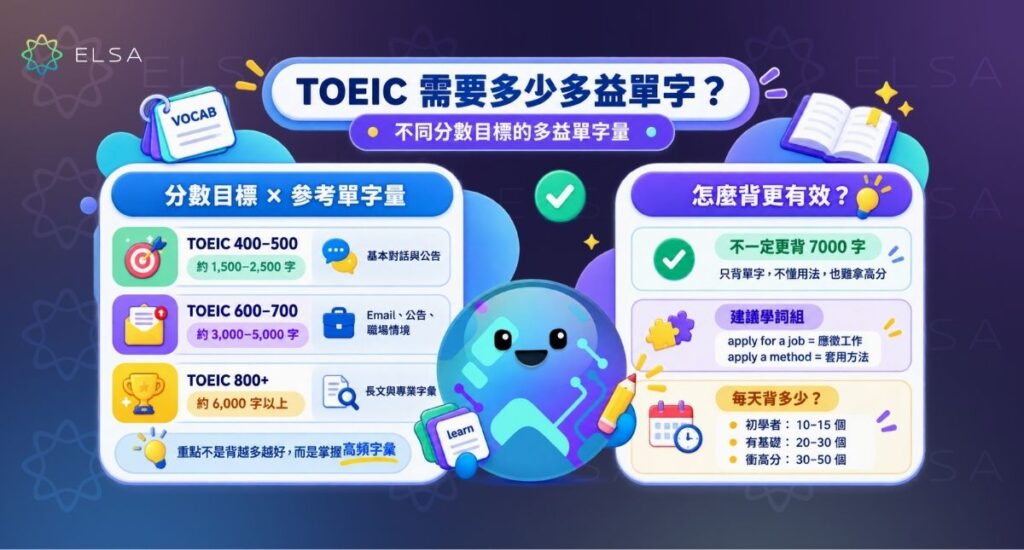
TOEIC 600、700 或 800 分,需要多少單字?
不少人在剛開始準備 TOEIC 時,會先搜尋需要多少多益單字量,認為只要背得夠多,就一定能提高分數。但其實 TOEIC 並沒有規定要認識多少單字,才能達到特定分數。
實際上,你需要的多益單字量應該依目標分數,以及個人的聽力與閱讀理解程度來調整。
以下可作為大致參考:
| TOEIC 目標 | 參考單字量 | 大致能力 |
|---|---|---|
| TOEIC 400–500 | 約 1,500–2,500 字 | 理解基本對話與公告 |
| TOEIC 600–700 | 約 3,000–5,000 字 | 閱讀 Email、公告與常見職場情境 |
| TOEIC 800+ | 約 6,000 字以上 | 處理較長文章與專業字彙 |
比起一味背很長的清單,更建議優先掌握高頻多益單字,以及辦公室、商務與日常溝通中常出現的字彙。
一定要背多益7000單字才能拿高分嗎?
搜尋多益單字時,很多人會看到數千字的清單,甚至以「多益7000單字」為目標,因而好奇是不是全部都要背完。
有些教材會提到背 7,000 字有助於衝高分,但實際上,如果只記單一字義、卻不知道怎麼使用,就算記住大量單字,也不代表能有效提升成績。
例如:
與其只背:apply = 應用
更建議連常用搭配一起記:
- apply for a job(應徵工作)
- apply a method(套用方法)
用詞組的方式學英文,可以幫助你:
- 做 TOEIC Reading 時更快理解句意
- 在 Listening 中更容易辨認單字
- 實際溝通時更自然地使用字彙
每天應該背多少多益單字?
沒有一個數字適合所有學習者,建議依每天可投入的時間與目標分數調整。
參考方式:
- 初學者:每天 10–15 個
- 已有英文基礎:每天 20–30 個
- 希望短期衝高分:每天 30–50 個
如何有效學習並記住多益單字?
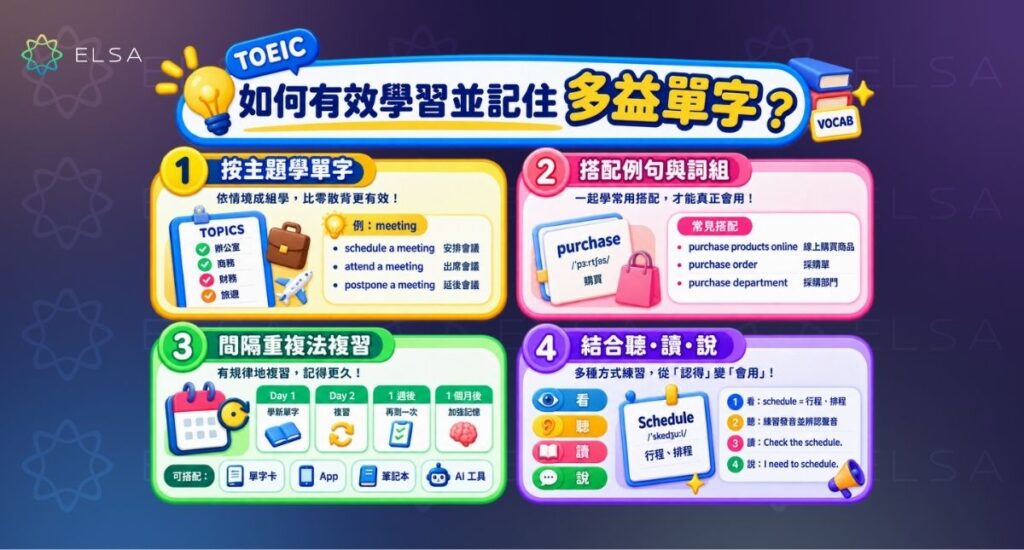
按主題學多益單字,不要只背零散單字
學多益單字時,一個常見錯誤就是只背彼此沒有連結的單字清單。TOEIC 字彙經常依情境成組出現,例如:辦公室與工作、商務、財務、行銷、旅遊、科技、客戶服務等。
例如:
與其只背 meeting = 會議
更建議一起學:
- schedule a meeting(安排會議)
- attend a meeting(出席會議)
- postpone a meeting(延後會議)
- meeting agenda(會議議程)
這樣能建立聯想,比單獨背字更容易記得久。
單字搭配例句與常用詞組一起學
同一個字在 TOEIC 商務情境中可能有不同用法。
例如 Purchase:
不要只背 purchase = 購買
也可以一起學:
- purchase products online(線上購買商品)
- purchase order(採購單)
- purchase department(採購部門)
這種方式也能幫助你更順利處理 Part 5、Part 6 與 Part 7 的字彙題。
用間隔重複法複習,避免背了又忘
很多人會搜尋多益單字pdf、多益單字pdf下載或多益單字表下載,希望快速取得完整資料。但真正的問題往往不是資料不夠,而是缺乏固定的複習節奏。
間隔重複可以這樣安排:
- 第 1 天:學新單字
- 第 2 天:複習
- 1 週後:再測一次
- 1 個月後:加強記憶
可搭配使用:
- 單字卡
- 學英文app免費 – 多益單字app
- 個人筆記本
- AI 複習工具
如果偏好手機學習,也可以比較多益單字 app與多益單字app免費資源,選擇有例句、發音與複習機制的工具,而不是只看單字清單。
更多高效學習英文工具:TOP 10 最佳免費線上英文學習平台含聽、說、讀、寫 4 種技能
學多益單字時結合聽、讀、說
很多人只記中文意思,真正聽到或要開口時卻認不出來、也用不出來。建議一個字至少透過幾種方式練習。
例如 Schedule:
- 看:schedule = 行程、排程
- 聽:練習發音並辨認聲音
- 讀:Please check the schedule before the meeting.
- 說:I need to schedule an appointment.
當你把多種技能結合起來,單字就會從「考試時認得」變成「真的會用」。
多益單字學習資源:書籍、App 與線上教材
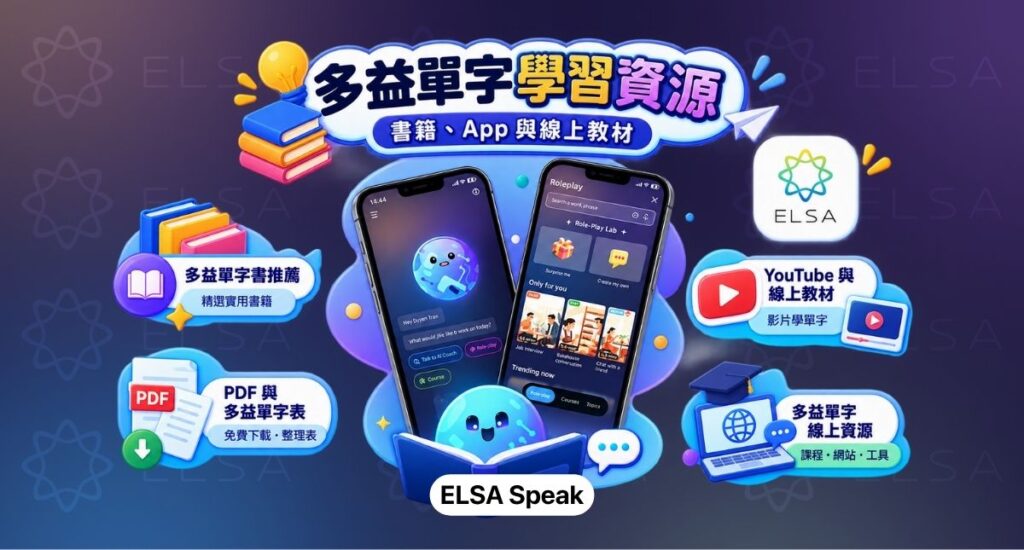
ELSA Speak:實用的多益單字學習 App
學了很多單字,卻還是發音不準、說話不自然,或根本不知道自己錯在哪裡?ELSA Premium 透過 AI 回饋與專門的口說練習,幫助學習者把「記住的字彙」真正轉化成「能使用的英文」。此外,ELSA 還有豐富英文字典以及背單詞的特殊功能 「Study set」,打開 ELSA Speak APP 查看更多有趣功能。
- 發音錯了卻沒發現:AI 會指出不準確的音、重音與需要調整的語調。
- 知道意思但說不出來:透過對話、面試、會議與簡報等真實情境練習單字和句子。
- 說很多但文法還是錯:Speech Analyzer 會分析口說內容,找出文法上需要改善的地方。
- 字彙量不足、容易重複用字:獲得字彙使用評估,以及更合適的表達建議。
- 說話不夠流暢、停頓不自然:追蹤語速、流暢度、語調與停頓方式。
- 不知道 TOEIC Speaking 該練什麼:可練習 TOEIC Speaking,以及 IELTS、TOEFL、PTE 等國際考試相關內容。
- 學得很零散、看不出進步:取得個人化學習路徑、每次練習後的回饋,並追蹤各項能力的改善。
ELSA 的功能支援即時回饋、真實情境對話,以及發音、流暢度、語調、文法與字彙等面向的分析。目前也提供 TOEIC Speaking 與多項國際考試的專屬練習內容。
多益單字書推薦:怎麼挑適合自己的多益單字書?
很多人在準備 TOEIC 時,仍會把多益單字書當作主要學習資源。一本好的多益 單字書,應該依主題分類字彙,提供實際例句、應用練習,以及聽力或發音內容,讓學習者更容易記憶並實際運用。
如果你正在搜尋多益單字書推薦,初學者可優先選擇:
- 基礎字彙
- 考題高頻字彙
目標 700–800+ 的學習者則可優先加強:
- 商用英文字彙
- 固定搭配
- 同義字
- TOEIC 常見易混淆字
閲讀更多:英文自學方法綜合指南:從 A 到 Z 的有效學習路線圖
PDF 與多益單字表資源怎麼選?
搜尋新制多益單字大全pdf、多益單字大全、新制多益單字下載或新制多益單字大全電子書下載時,建議不要只看「單字數量」,更應確認教材是否具備:
- 依主題分類
- 例句
- 發音說明
- 實作練習
如果下載的是多益單字pdf或多益單字表,最好搭配固定複習計畫,避免只收藏不複習。也建議確認教材版本與內容來源,避免使用年代過久或與現行題型落差太大的資料。
YouTube 與多益單字 線上資源
這些資源能補強聽力,也能幫助你理解單字在真實情境中的用法。若想集中複習,可將線上內容整理成自己的多益單字總整理,再搭配多益單字 練習反覆測驗。除了書籍與 App,也可以善用:
- 主題式多益單字影片
- TOEIC 聽力練習
- 英文 Podcast
- 免費練習網站
準備 TOEIC 時,也常會看到「多益 單字」這類不同搜尋寫法。無論你使用的是書籍、App、PDF 或線上教材,重點都不是蒐集越多越好,而是挑選符合自己程度、能持續複習的資源。
掌握多益單字有助於提升 Listening 與 Reading。與其一次死背大量單字,不如先鎖定高頻字彙,依主題與情境學習,再搭配多益單字書、多益單字app、多益單字表或其他線上資源持續複習。請關注 ELSA Speak 的其他文章!各課程/考試專欄裏還有許多精彩内容等你探索喲!
除了最常見的 Happy Birthday,其實還有許多不同風格的生日快樂英文祝福可以表達心意。ELSA Speak 整理 100+ 句實用的生日快樂英文祝福語,包含簡短英文生日祝福、溫馨的生日祝福英文、特別的生日祝福英文、有創意的生日祝福英文,以及常見的生日快樂英文縮寫,幫助你輕鬆找到最適合的生日祝福表達方式。
簡短英文生日祝福語(適合訊息、卡片)

如果想快速傳送訊息或寫在社群貼文上,簡短英文生日祝福會是最方便的選擇。除了基本的 Happy Birthday,也可以使用簡潔又有心意的生日快樂英文祝福詞,讓對方感受到你的祝福。
| 英文生日祝福 | 大致翻譯 |
|---|---|
| HPBD | 生日快樂英文縮寫 |
| It’s time to celebrate! | 現在是慶祝的時刻了! |
| All the best on your special day! | 祝你在這特別的日子裡一切順利! |
| I hope you have a nice day! | 希望你有美好的一天! |
| May your birthday be filled with laughter! | 祝你的生日充滿笑聲! |
| Wishing you a day that is as special as you are! | 祝你度過一個像你一樣特別的日子! |
| Happy birthday! May all your dreams come true. | 生日快樂!希望你所有的夢想成真。 |
| Wishing you a day filled with love and happiness. | 祝你的一天充滿愛和幸福。 |
| Happy birthday! May this year bring you success and fulfillment. | 生日快樂!願你今年成功和成就。 |
| Sending you warm birthday wishes and lots of joy on your special day. | 在你特別的日子裡送上溫暖的生日祝福和很多快樂。 |
| Happy birthday! May your life be as bright and beautiful as you are. | 生日快樂!願你的生活像你一樣光明美麗。 |
| Wishing you a year filled with love, laughter, and blessings. | 祝你一年充滿愛、笑聲和幸運。 |
| Happy birthday! May all your wishes come true and bring you happiness. | 生日快樂!願你所有的願望成真,帶給你快樂。 |
| Sending you birthday hugs and kisses. Have a wonderful day! | 送你生日的擁抱和親吻。祝你有美好的一天! |
| Wishing you good health, happiness, and success on your birthday. | 祝你生日健康、幸福和成功。 |
| Happy birthday! May you always be surrounded by love and laughter. | 生日快樂!願你永遠被愛和笑聲圍繞。 |
| Wishing you a year filled with adventures, opportunities, and love. | 祝你一年充滿冒險、機會和愛。 |
| Wishing you endless joy and happiness on your birthday. | 祝你生日無盡的快樂和幸福。 |
| Happy birthday! May this day bring you lots of love and unforgettable memories. | 生日快樂!願這一天給你帶來許多愛和難忘的回憶。 |
幽默的生日快樂英文祝福語

查看一些幽默又不缺心意的生日英文祝福語,像生日快樂英文祝福語等祝福。
| 英文生日祝福 | 大致翻譯 |
|---|---|
| Happy birthday! Remember, age is just a number. In your case, a really big number! | 祝你生日快樂!請記住,年齡只是一個數字而已。在你的情況下,這個數字真是驚人! |
| Happy birthday! You’re not getting older, you’re just increasing in value like a fine wine. | 祝你生日快樂!你並沒有變老,你只是像一瓶好酒一樣升值! |
| Congratulations on surviving another year of your life! Here’s to many more and even more gray hairs. | 恭喜你又熬過了一年!祝未來還有更多精彩歲月(以及更多白頭髮)。 |
| Happy birthday! Don’t worry about your age, it’s not like you can do anything to change it. Just embrace the wrinkles and enjoy the ride! | 祝你生日快樂!別擔心年齡,反正也無法改變。接受皺紋,享受人生旅程吧! |
| Congratulations on reaching the age where it takes longer to recover from a night out than it does to complete a marathon. Happy birthday! | 恭喜你到了這個年紀:熬夜玩樂後恢復精神的時間,比完成一場馬拉松還久。生日快樂! |
| Happy birthday! Remember, you’re not getting older, you’re just becoming a classic, like a vintage car or a collectible toy. | 祝你生日快樂!記住,你不是變老了,而是變得經典,就像復古車或珍藏玩具一樣。 |
| Congratulations on turning age! You’re now officially old enough to complain about the younger generation and their music. Enjoy your oldies playlist! | 恭喜你又長大一歲!現在你已經正式有資格抱怨年輕一代和他們的音樂了。好好享受你的老歌清單吧! |
| Congratulations on reaching the age where it takes longer to scroll down to your birth year. Happy birthday! | 恭喜你到了需要花更久時間滑動才能找到出生年份的年紀。生日快樂! |
| You’re older today than yesterday but younger than tomorrow, happy birthday! | 今天的你比昨天更成熟,但比明天更年輕。生日快樂! |
充滿靈感的生日快樂英文祝福語

| 英文生日祝福 | 大致翻譯 |
|---|---|
| Count your life by smiles, not tears. Count your age by friends, not years. Happy birthday! | 用微笑來計算你的人生,而不是眼淚。用朋友來計算你的年齡,而不是歲數。祝你生日快樂! |
| A wish for you on your birthday, whatever you ask may you receive, whatever you seek may you find, whatever you wish may it be fulfilled on your birthday and always. Happy birthday! | 生日那天送給你一個願望,願你所求皆能得到、所尋皆能找到、所願皆能實現。祝你生日快樂! |
| Another adventure-filled year awaits you. Welcome it by celebrating your birthday with pomp and splendor. Wishing you a very happy and fun-filled birthday! | 又一年充滿冒險的旅程正在等待你。用華麗的方式迎接它吧。祝你生日快樂,充滿歡樂! |
| May the joy that you have spread in the past come back to you on this day. Wishing you a very happy birthday! | 願你過去帶給他人的快樂,在今天回到你的身邊。祝你生日快樂! |
| Happy birthday! Your life is just about to pick up speed and blast off into the stratosphere. Wear a seat belt and be sure to enjoy the journey. Happy birthday! | 祝你生日快樂!你的人生即將加速起飛,邁向更高的境界。繫好安全帶,盡情享受這段旅程吧! |
| I wish you full of happiness and love. May all your dreams come true and may lady luck visit you every day. Happy birthday to one of the greatest people I’ve ever known. | 願你永遠充滿幸福與愛。願所有夢想成真,幸運每天都陪伴著你。祝我認識的最棒的人之一生日快樂! |
| Your birthday is the first day of another 365-day journey. Be the shining thread in the beautiful tapestry of the world to make this year the best ever. | 你的生日是另一段365天旅程的第一天。願你成為世界美好畫卷中閃耀的一絲光芒,讓這一年成為最精彩的一年。 |
| Blowing out another candle on your cake means that you have lived another year of joy and made this world a better place. I wish you a delightful birthday! | 吹熄蛋糕上的另一根蠟燭,代表你又度過了充滿歡樂的一年,也讓這個世界變得更美好。祝你生日快樂! |
| Here is my birthday wish for you: I hope you will never stop enjoying every small thing in life. Because that’s what makes life worth living. I hope that you take time to enjoy the present while working for a better future. I hope your year will be full of memories, happiness, and adventure. | 這是給你的生日祝福:願你永遠享受生活中的每一份小美好,因為那正是生活的意義。願你珍惜當下,也努力創造更好的未來。願新的一年充滿回憶、幸福與冒險。 |
閲讀更多:總結 100+ 最經典、最有意義的英文短句唯美關於生活、愛情
給愛人的生日快樂英文祝福語

給自己心愛的人送上祝福,含有生日快樂英文草寫供參考。
| 英文生日祝福 | 大致翻譯 |
|---|---|
| Wishing happy birthday to the best person I’ve ever met in this world. | 祝世界上我遇到最棒的人生日快樂。 |
| Thank you for all the memories we have. Without you the world would have been colorless to me. | 感謝你帶給我們所有的回憶。沒有你,世界對我來說將失去色彩。 |
| Dear sweetheart, you are the reason why I smile every day. Our flames of passion will never be extinguished and may our love shine brightly to bring you a wonderful birthday. I love you and Happy Bday! | 親愛的,你是我每天微笑的原因。我們的愛火永遠不會熄滅,願我們的愛閃耀,帶給你美好的生日。我愛你,生日快樂! |
| To the world, you may just be one person. But to me, you are the world. Wonderful Birthday, my darling! | 對世界而言,你可能只是某個人;但對我而言,你就是我的全世界。生日快樂,親愛的! |
| I just want to say how grateful I am to have you in my life. Best birthday to you and thank you for always being there for me. I love you so much! | 我只想說,我很感激生命中有你的存在。祝你生日快樂,謝謝你一直陪伴在我身邊。我非常愛你! |
| Sweetheart, may you receive everything that you have wished for on your birthday! I love you to infinity and beyond! | 親愛的,願你生日那天得到所有想要的一切!我對你的愛無限延伸! |
| Happy birthday to the love of my life! Every moment with you is a blessing. | 生日快樂,我生命中的摯愛!和你度過的每一刻都是一份祝福。 |
| Happy birthday, my love! Thank you for filling my life with so much love and happiness. | 生日快樂,我的愛!謝謝你讓我的生活充滿愛與幸福。 |
| To the one who makes my heart skip a beat, happy birthday! May this year bring us even closer and make our love stronger. | 送給讓我心跳加速的人,生日快樂!願新的一年讓我們更加靠近,讓我們的愛更加深厚。 |
| Happy birthday, my sweetheart! You are the reason behind my smile and my happiness. I love you more than words can express. | 生日快樂,我的親愛!你是我微笑與幸福的原因。我對你的愛無法用言語表達。 |
| To the love of my life, happy birthday! You bring sunshine and warmth to my world every day. | 給我生命中的愛人,生日快樂!你每天都為我的世界帶來陽光與溫暖。 |
| Happy birthday, my darling! May your day be as lovely and handsome as you are. | 生日快樂,我親愛的!願你度過像你一樣美好的一天。 |
給父母的有意義的生日快樂英文祝福語

給爸爸和媽媽生日快樂英文以表達孝心與感謝:
| 英文生日祝福 | 大致翻譯 |
|---|---|
| Happy birthday, Mom Dad! Wishing you a day filled with love, joy, and wonderful memories. | 祝爸爸媽媽生日快樂!願你們擁有充滿愛、快樂和美好回憶的一天。 |
| To the best parents in the world, happy birthday! Thank you for always being there for me and for your unconditional love. | 送給世界上最棒的父母,生日快樂!感謝你們一直陪伴我,給予我無條件的愛。 |
| On your special day, I want to express my deep love and appreciation for all that you’ve done for me. Happy birthday, Mom and Dad! | 在這特別的日子裡,我想表達對你們深深的愛與感謝。爸爸媽媽,生日快樂! |
| To my wonderful Mom, happy birthday! You are my role models and my biggest source of inspiration. May your day be filled with love and joy. | 給我最棒的媽媽,生日快樂!您是我的榜樣,也是我最大的靈感來源。願您的日子充滿愛與快樂。 |
| Happy birthday to my incredible Dad! Thank you for always supporting me and believing in me. Have a fantastic day filled with wonderful surprises. | 祝我最棒的爸爸生日快樂!感謝您一直支持我、相信我。願您度過充滿驚喜的美好一天。 |
| Happy birthday to the most loving Mom Dad! Your love and guidance have shaped me into who I am today. Enjoy your special day! | 祝我最愛的爸爸媽媽生日快樂!你們的愛與指引成就了今天的我。好好享受這個特別的日子吧! |
| When asked who my favorite real-life superhero is, I always say “It’s my mom.” Have an amazing birthday, Wonder Mom! | 當有人問我最喜歡的現實生活超級英雄是誰,我總是回答:「是我的媽媽。」祝超級媽媽生日快樂! |
| To the world you may be one person, but to me you are the whole world. Happy Birthday Mom! | 對世界而言,您可能只是一個人;但對我而言,您就是全世界。媽媽生日快樂! |
| You are my first friend, my best friend, and my forever friend. I can’t wait to help you celebrate your birthday! | 您是我的第一個朋友、最好的朋友,也是永遠的朋友。我迫不及待想陪您慶祝生日! |
| Happy birthday to the best father ever. I remember when you cleaned up my skinned knees, held my hand across the street, taught me how to reach for the stars. You are my inspiration and my hero. | 祝世界上最棒的爸爸生日快樂。我記得您曾為我處理膝蓋上的傷口、牽著我的手過馬路、教我勇敢追求夢想。您是我的靈感來源,也是我的英雄。 |
| All your life, you’ve worked towards making our wishes come true. Today, it’s your turn to make some wishes. Happy Birthday, Dad! | 這一生中,您一直努力讓我們的願望成真。今天換您許下自己的願望。爸爸生日快樂! |
>>閲讀相關:
給自己的生日快樂英文祝福語

生日不只是祝福別人的日子,也可以用英文為自己送上一句生日祝福。如果你正在找祝我生日快樂英文、祝我生日快樂 英文或祝自己生日快樂英文,可以參考以下不同風格的句子,從簡單的 Happy Birthday to me,到更有個人想法的生日宣言都可以。
| 英文生日祝福 | 大致翻譯 |
|---|---|
| Happy birthday to the most amazing person in the world – me! | 祝世界上最棒的人生日快樂——我! |
| Wishing a very happy birthday to myself. May I continue to grow and achieve my dreams. | 祝自己生日快樂。希望自己能繼續成長並實現自己的夢想。 |
| Happy birthday to me! Cheers to another year of adventures and growth. | 祝我生日快樂!為新的一年充滿冒險與成長乾杯。 |
| Happy birthday to the one and only me. May I always be surrounded by positivity and success. | 祝獨一無二的自己生日快樂。希望自己永遠被正能量與成功圍繞。 |
| Here’s to another year of learning, growing, and becoming a better version of myself. Happy birthday to me! | 祝我生日快樂!願新的一年持續學習、成長,成為更好的自己。 |
| Happy birthday to the incredible person that I am. May I continue to shine and make a positive difference in the world. | 祝這個了不起的自己生日快樂。願自己持續閃耀,為世界帶來正面的影響。 |
| Sending warm wishes and self-love on my special day. Happy birthday to me! | 在這特別的日子裡,送給自己溫暖的祝福與愛。祝我生日快樂! |
| Happy birthday to the amazing person that I am becoming. May this year bring me closer to my dreams and aspirations. | 祝正在努力成為更好的自己生日快樂。願新的一年讓我更接近夢想。 |
| Wishing myself a birthday filled with laughter, love, and unforgettable moments. | 祝自己生日充滿笑聲、愛與難忘的回憶。 |
| Happy birthday to the strong and resilient person that I am. May I always find the courage to overcome challenges and achieve greatness. | 祝堅強又有韌性的自己生日快樂。願自己永遠有勇氣克服挑戰並取得成功。 |
| Happy birthday to the fabulous person that I am. May I continue to sparkle and inspire those around me. | 祝這個閃耀的自己生日快樂。願自己持續發光並激勵身邊的人。 |
給兄弟姐妹的生日快樂英文祝福語

| 英文生日祝福 | 大致翻譯 |
|---|---|
| Happy birthday to my wonderful brother! May your special day bring you happiness, love, and endless joy. | 祝我最棒的哥哥生日快樂!願這個特別的日子帶給你幸福、愛與無盡的快樂。 |
| Wishing you the happiest of birthdays, dear my sister. May all your dreams and wishes come true. | 送給我親愛的姐姐,最幸福的生日祝福。願你的夢想與願望都能成真。 |
| Happy birthday to my amazing sibling! Thank you for always being there for me. May your day be filled with unforgettable moments and good times. | 祝我最棒的兄弟姐妹生日快樂!感謝你一直陪伴我。願你的生日充滿難忘的回憶與美好時光。 |
| Wishing you a fantastic birthday, my dear sibling! May this year be filled with love, success, and endless opportunities for you. | 祝我親愛的兄弟姐妹生日快樂!願新的一年充滿愛、成功與無限機會。 |
| Happy birthday to my wonderful sister! May your day be filled with laughter, joy, and precious memories. | 祝我最棒的妹妹生日快樂!願你的生日充滿笑聲、快樂與珍貴回憶。 |
| Happy birthday to my cute sister! Thank you for being my best friend and constant support. May your special day be as amazing as you are. | 祝我可愛的妹妹生日快樂!感謝你成為我最好的朋友並一直支持我。願你的特別日子像你一樣美好。 |
| Wishing my dear sibling a birthday filled with blessings, success, and a lifetime of happiness. You deserve all the best. | 祝我親愛的兄弟姐妹生日快樂!願你的生日充滿祝福、成功與一生的幸福。你值得擁有最好的一切。 |
| It’s my brother’s birthday. Now you’ve grown up more. Every year you’re becoming more perfect. Happy birthday, my brother! | 今天是弟弟的生日。你又長大了一歲,每一年都變得更加優秀。弟弟生日快樂! |
| Wishing my brother a very happy birthday and I hope you get what you wished for. Love you, my dear brother. | 祝我親愛的哥哥生日快樂!願你的願望都能實現。愛你的哥哥。 |
| It’s your birthday. Now you’ve grown up more. Every year you’re becoming more perfect. Happy birthday, my sister! | 今天是你的生日,你又成長了一歲。願每一年你都變得更加優秀。姐姐生日快樂! |
| You are a person who always deserves the best and obviously nothing less. Wish your birthday celebration will be as fantastic as you are. Happy birthday. | 你永遠值得擁有最好的一切。願你的生日慶祝活動像你一樣精彩。生日快樂! |
| Let’s light the candles and celebrate this special day of your life. Happy birthday. | 讓我們點燃蠟燭,慶祝你生命中特別的一天。生日快樂! |
給好朋友的生日快樂英文祝福語

| 英文生日祝福 | 大致翻譯 |
|---|---|
| Wishing my dearest friend a year filled with happiness, laughter, and love. Have an amazing birthday! | 祝我親愛的朋友生日快樂!願新的一年充滿幸福、笑聲與愛。 |
| To my lifelong friend, happy birthday! I am grateful for your presence in my life. | 給我一生的朋友,生日快樂!感謝你出現在我的生命中。 |
| Wishing my incredible friend the happiest of birthdays! You bring so much joy and laughter into my life. | 祝我最棒的朋友生日快樂!你為我的生活帶來許多歡樂與笑聲。 |
| To my amazing friend, happy birthday! You make every day brighter with your presence. Here’s to another year of unforgettable memories. | 給我最棒的朋友,生日快樂!你的存在讓每一天更加美好。祝新的一年創造更多難忘回憶。 |
| Happy birthday! May your Facebook wall be filled with messages from people you never talk to. | 生日快樂!願你的 Facebook 動態牆充滿來自平常不聯絡的人的祝福留言。 |
| You’re older today than yesterday but younger than tomorrow, happy birthday! | 今天的你比昨天年長,但比明天年輕。生日快樂! |
| Happy birthday to one of the few people whose birthday I can remember without a Facebook reminder. | 祝你生日快樂!你是少數幾個不用 Facebook 提醒,我也能記住生日的人。 |
| Happy Birthday! You know, you don’t look that old. But then, you don’t look that young, either. | 生日快樂!你知道嗎?你看起來沒有那麼老,但也沒有那麼年輕啦。 |
| You are only young once, but you can be immature for a lifetime. Happy birthday! | 人只能年輕一次,但可以永遠保持孩子般的不成熟。生日快樂! |
| People say that heroes are one in many thousands, but I say that a friend like you is one in a lifetime. Happy Birthday to you! | 人們說英雄千里挑一,但像你這樣的朋友一生只有一個。祝你生日快樂! |
| Hey, I just wanted you to know that whenever you have a crazy idea, my only question will be: What time? Have a great birthday! | 我只是想讓你知道,每當你有瘋狂想法時,我唯一的問題就是:什麼時候開始?祝你生日快樂! |
| You understand me like nobody else. Thank you for always being there to listen. I have a sibling in you, my friend. Happy birthday! | 你比任何人都了解我。謝謝你一直傾聽我,就像我的家人一樣。朋友,生日快樂! |
| My best friend is even sweeter than cakes, more colorful than confetti, and hotter than candles. And today is her birthday. Happy birthday! | 我的朋友比蛋糕更甜美,比彩紙更繽紛,比蠟燭更耀眼。今天是她的生日,生日快樂! |
| We’re different in many ways, but that’s what makes us such good friends. Puzzle pieces need to be different to fit together! Happy birthday to my favorite piece! | 我們有很多不同之處,但正因如此才成為好朋友。就像拼圖需要不同形狀才能拼在一起。祝我最喜歡的拼圖夥伴生日快樂! |
如果你正在為一位住在遠方、許久未見的朋友寫生日卡片,除了送上溫暖的英文生日祝福,也可以用一些自然的英文問候來表達「好久不見」的心情。除了常見的 Long time no see!,其實還有許多更道地、更有溫度的說法,可以讓你的祝福更加自然。
閲讀更多:200+ 酷炫英文文案:IG、愛、酷炫、可愛與特殊場合
給女性的生日快樂英文祝福語

| 英文生日祝福 | 大致翻譯 |
|---|---|
| Sending you smiles for every moment of your special day… Have a wonderful time and a very happy birthday! | 願你在這個特別的日子裡,每一刻都充滿笑容。祝你度過美好時光,生日快樂! |
| Hope your special day brings you all that your heart desires! Here’s wishing you a day full of pleasant surprises! Happy birthday! | 願你的特別日子帶給你心中所渴望的一切!祝你度過充滿驚喜的一天。生日快樂! |
| On your birthday, we wish for you that whatever you want most in life comes to you just the way you imagined it or even better. Happy birthday! | 在你的生日,願你人生中最渴望的一切都能如你所想,甚至比想像中更美好地實現。生日快樂! |
| Sending your way a bouquet of happiness… To wish you a very happy birthday! | 送你一束幸福之花,祝你生日快樂! |
| Words alone are not enough to express how happy I am that you are celebrating another year of your life! My wish for you on your birthday is that you are, and will always be, happy and healthy. Don’t ever change! Happy birthday, my dear. | 言語無法表達我為你迎來人生新一年的喜悅!生日的祝福是願你現在和未來都永遠幸福健康。永遠保持現在的自己!親愛的,生日快樂。 |
給男性的生日快樂英文祝福語

| 英文生日祝福 | 大致翻譯 |
|---|---|
| Just like a fine wine, you seem to get better with age. Happy birthday, handsome guy! | 就像一瓶美酒,你似乎隨著年齡增長而變得更加迷人。生日快樂,帥哥! |
| Sending some love to the most charming man in my life. You always bring the best out of me. I do not know how you do it, but I love you for that. Happy Birthday. | 將愛送給我生命中最迷人的男人。你總能讓我展現最好的一面。我不知道你是如何做到的,但我因此更加愛你。生日快樂! |
| Happy Birthday to a great guy! You do so much for others. I hope you can take some time for yourself on your big day. You deserve it as much as anyone, and more than most. | 祝一位很棒的男人生日快樂!你總是為他人付出很多。希望在這特別的日子裡,你也能留一些時間給自己。你值得擁有這份美好,甚至比大多數人更值得。 |
| I am blessed to have a buddy like you. Happy birthday, dear friend. May your special day be loaded with happiness and love. | 我很幸運能擁有你這樣的朋友。親愛的朋友,生日快樂!願你的特別日子充滿幸福與愛。 |
| Today is your day, live it like you are the king of the world and don’t mind what others say, this day is just for you! Happy birthday. | 今天是屬於你的日子,像世界之王一樣盡情享受吧,不必在意別人的看法,這一天只為你而存在!生日快樂。 |
給同事,領導的生日快樂英文祝福語

| 英文生日祝福 | 大致翻譯 |
|---|---|
| Hey, it’s your birthday today and I just wanted to let you know that you’ll never have to face problems alone. I may not be able to solve every problem, but I’ll always be there for you when you need me. | 嘿,今天是你的生日,我想讓你知道,你永遠不必獨自面對困難。也許我無法解決所有問題,但當你需要時,我永遠都會陪在你身邊。 |
| When I think back to all the things we’ve been through, I’m so thankful that I got to go through them with you by my side. Happy birthday to you, it has always been great to work with you. | 當我回想起我們一起經歷的一切,我很感謝一路上有你陪伴。祝你生日快樂,很高興能一直與你一起工作。 |
| Every candle on your cake represents another year I’ve been lucky to know you! Happy Birthday to the most wonderful colleague I’ve known! | 你蛋糕上的每一根蠟燭,都代表著我幸運認識你的一年。祝我認識過最棒的同事生日快樂! |
| If your birthday is half as amazing as you are, it’s going to be epic. Happy birthday to the best friend and colleague that a person could ask for! | 如果你的生日有你一半精彩,那一定會非常棒。祝一個人能擁有的最佳朋友與同事生日快樂! |
| Hey, thanks for just being you. You are one of a kind and my best friend. Happy birthday, and I hope we can have more chances to work together. | 嘿,謝謝你一直做最真實的自己。你是獨一無二的,也是我最好的朋友。生日快樂,希望我們未來有更多一起工作的機會。 |
| Happy birthday to the coolest boss ever! May your leadership continue to inspire and guide us towards success. | 祝最棒的老闆生日快樂!願您的領導力持續激勵我們,引領我們走向成功。 |
| Wishing our awesome boss a fabulous birthday! May you always be surrounded by loyal and hardworking employees like us. | 祝我們優秀的老闆生日快樂!願您永遠有像我們一樣忠誠又努力的員工陪伴。 |
| Happy birthday to the boss with the best sense of humor! Your wit and charm make the workplace so much more enjoyable. | 祝擁有最佳幽默感的老闆生日快樂!您的智慧與魅力讓工作環境更加愉快。 |
| Happy birthday to the most dynamic and innovative boss! Your leadership style is truly inspiring and pushes us to think outside the box. | 祝最有活力與創新精神的老闆生日快樂!您的領導方式令人鼓舞,也激勵我們跳脫框架思考。 |
| Wishing our boss a birthday filled with love, happiness, and appreciation. Thank you for being an exceptional leader! | 祝老闆生日充滿愛、幸福與感謝。感謝您成為一位卓越的領導者! |
| Happy birthday to our visionary boss! Your guidance and strategic thinking have taken our team to new heights. | 祝我們有遠見的老闆生日快樂!您的指導與策略思維帶領團隊達到新的高度。 |
給老師的生日快樂英文祝福語

| 英文生日祝福 | 大致翻譯 |
|---|---|
| A great teacher is one who knows their students, motivates them, and helps them evolve. You are definitely one of the greatest. Thank you for all your guidance and all you have taught me. I wish you a happy birthday and many more birthdays to come. | 一位優秀的老師,不僅了解學生,也能激勵他們並幫助他們成長。您絕對是其中最偉大的老師之一。感謝您的指導與教導。祝您生日快樂,未來也有更多美好的生日。 |
| Thank you for teaching me how to read and write, for guiding me to distinguish between what is wrong and what is right. For allowing me to dream and soar as a kite, thank you for being my friend, mentor, and light. Happy birthday! | 感謝您教導我閱讀與書寫,引導我分辨是非。感謝您讓我勇敢追逐夢想,像風箏一樣飛翔。謝謝您成為我的朋友、導師與人生中的光芒。祝您生日快樂! |
| Happy birthday to you. I always hope you have lots of luck and lots of smiles on your lips. Even if we misbehave and make you sad, we honestly love you. | 祝您生日快樂!我一直希望您擁有滿滿的幸運,臉上永遠帶著笑容。即使我們有時調皮搗蛋讓您難過,我們仍然真心愛您。 |
| A great thanks to you! You are our teacher who gives us a voice, an image, and a thought to help build our lives. | 向您獻上最誠摯的感謝!您給予我們表達的能力、方向與想法,幫助我們建立更好的人生。 |
| We would like to send our sincere and deepest gratitude to you, the second parent in our life. We wish you a healthy, happy, lucky, and wonderful new year of life! | 我們想向您表達最真摯、最深的感謝。您就像我們生命中的第二位父母。祝您新的一歲健康、幸福、幸運,一切順利! |
| I wish that I could show my gratitude to you. However, it is hard to express it in words. I just hope this little card can show a part of my warmest appreciation from the bottom of my heart. | 我希望能表達對您的感激之情,但這份感謝很難用言語描述。希望這張小卡片能傳達我發自內心最溫暖的謝意。 |
閲讀相關:最美,最有意義代替 happy teachers day 的祝福語
特殊年齡的生日快樂英文祝福語

不同年齡階段的生日代表著不同的人生里程碑,因此除了基本的 Happy Birthday 外,也可以根據年齡選擇更有紀念意義的英文生日祝福。無論是一歲生日快樂英文、18歲生日快樂英文、20歲生日快樂英文、21歲生日快樂英文,或是30歲生日快樂英文,都能透過合適的祝福語表達對成長、夢想與未來的美好期待。
| 英文生日祝福 | 大致翻譯 |
|---|---|
| Happy 1st Birthday! One year of smiles, cuddles, and precious little moments. Hope your days are always filled with love and happiness. | 一歲生日快樂!一年來充滿笑容、擁抱與珍貴的小時光,願你的每一天都充滿愛與幸福。 |
| Happy Golden Birthday! Today is extra special because it’s a milestone you’ll always remember. | 金色生日快樂!今天格外特別,因為這是一個值得永遠記住的重要里程碑。 |
| 18 looks amazing on you! Happy Birthday and welcome to this exciting new chapter of life. | 18歲的你看起來真棒!生日快樂,歡迎開啟人生精彩的新篇章。 |
| Happy 20th! Your twenties are just getting started — enjoy every adventure, every lesson, and every unforgettable moment. | 20歲生日快樂!你的20歲才剛開始,享受每一次冒險、每份成長與每個難忘時刻。 |
| Cheers to 21 years! Hope this birthday brings you all the fun, freedom, and happiness you deserve. | 為21年喝采!願這個生日帶給你應得的快樂、自由與幸福。 |
| Quarter-century club unlocked! Happy 25th Birthday — here’s to new dreams and exciting possibilities. | 歡迎加入25歲俱樂部!生日快樂,願你迎來新的夢想與精彩可能。 |
| Happy 30th Birthday! Welcome to the 30s — where confidence grows, dreams evolve, and life gets even better. | 30歲生日快樂!歡迎進入30歲階段,這是一個更有自信、夢想更成熟、生活更精彩的時期。 |
| Thirty and thriving! Keep shining, keep growing, and enjoy everything this new decade has to offer. | 30歲正是精彩開始!繼續閃耀、持續成長,享受這個新十年帶來的一切。 |
| Fabulous at 40! Four decades of memories, lessons, and stories worth celebrating. | 40歲精彩依舊!四十年的回憶、經歷與故事都值得慶祝。 |
| Happy 50th Birthday! Half a century of amazing moments — and the best is still yet to come. | 50歲生日快樂!半世紀的精彩時光,而最好的故事還在未來。 |
| Happy 60th Birthday! May this chapter be filled with slow mornings, happy moments, and time with the people you love. | 60歲生日快樂!願這個階段有悠閒的早晨、幸福時刻,以及與摯愛相伴的時光。 |
除了準備特別的生日祝福,也可以加入星座相關話題,並學習星座 英文的名稱與性格表達,讓 lời chúc trở nên thú vị hơn.
生日快樂英文新單詞

以下是文章中的一些生日快樂英文祝福詞,您可以在閱讀之前參考:
| 英文單字 | 發音(IPA) | 翻譯 |
|---|---|---|
| Celebrate | /ˈsel.ə.breɪt/ | 慶祝 |
| Fantastic day | /fænˈtæs.tɪk/ | 美好的一天 |
| Filled | /-fɪld/ | 充滿 |
| Laughter | /ˈlɑːf.tər/ | 笑聲 |
| Happiness | /ˈhæp.i.nəs/ | 幸福 |
| Fulfillment | /fʊlˈfɪl.mənt/ | 圓滿 |
| Bright | /braɪt/ | 光明 |
| Moment | /ˈməʊ.mənt/ | 時刻 |
| Passed | /pɑːs/ | 過去 |
| Opportunity | /ˌɒp.əˈtʃuː.nə.ti/ | 機會 |
| Present | /ˈprez.ənt/ | 現在 |
| Reach | /riːtʃ/ | 達到 |
| Receive | /rɪˈsiːv/ | 收到 |
| Remember | /rɪˈmem.bər/ | 記得 |
| Scroll | /skrəʊl/ | 捲軸 |
| Seek | /siːk/ | 尋找 |
| Special | /ˈspeʃ.əl/ | 特別 |
| Still | /stɪl/ | 仍然 |
| Success | /səkˈses/ | 成功 |
| Treasure | /ˈtreʒ.ər/ | 寶藏 |
| Turn | /tɜːn/ | 轉變 |
| Unconditional | /ˌʌn.kənˈdɪʃ.ən.əl/ | 無條件的 |
| Until | /ənˈtɪl/, /ʌnˈtɪl/ | 直到 |
| Wish | /wɪʃ/ | 希望 |
| Confetti | /kənˈfet.i/ | 花朵紙彩 |
| Blessing | /ˈbles.ɪŋ/ | 幸運 |
| Surround | /səˈraʊnd/ | 圍繞 |
| Unforgettable | /ˌʌn.fəˈɡet.ə.bəl/ | 難忘 |
| Memories | /ˈmem.ər.i/ | 回憶 |
| Embrace | /ɪmˈbreɪs/ | 擁抱 |
| Wrinkles | /ˈrɪŋ.kəl/ | 皺紋 |
| Collectible | /kəˈlektəbl/ | 收藏品 |
| Flame of passion | /fleɪm/, /ˈpæʃ.ən/ | 激情的火焰 |
| Pomp | /pɒmp/ | 華麗 |
| Splendor | /ˈsplen.dər/ | 光輝 |
| Stratosphere | /ˈstræt.ə.sfɪər/ | 平流層 |
| Express | /ɪkˈspres/ | 表達 |
| Appreciation | /əˌpriː.ʃiˈeɪ.ʃən/ | 感激 |
| Epic | /ˈep.ɪk/ | 壯麗 |
| Incredible | /ɪnˈkred.ə.bəl/ | 不可思議 |
| Inspiration | /ˌɪn.spɪˈreɪ.ʃən/ | 靈感 |
| Sibling | /ˈsɪb.lɪŋ/ | 弟弟 |
| Reminder | /rɪˈmaɪn.dər/ | 提醒 |
| Whenever | /wenˈev.ər/ | 無論何時 |
| Achieve | /əˈtʃiːv/ | 實現 |
| Adventure | /ədˈven.tʃər/ | 冒險 |
| Aspiration | /ˌæs.pɪˈreɪ.ʃən/ | 抱負 |
| Resilient | /rɪˈzɪl.i.ənt/ | 堅韌 |
| Courage | /ˈkʌr.ɪdʒ/ | 勇氣 |
| Sparkle | /ˈspɑː.kəl/ | 閃耀 |
| Colorless | /ˈkʌl.ə.ləs/ | 無色 |
| Whatever | /wɒtˈev.ər/ | 無論什麼 |
| Spread | /spred/ | 傳播 |
| Desire | /dɪˈzaɪər/ | 渴望 |
| Skinned knees | /-skɪnd/, /niː/ | 擦傷的膝蓋 |
| Deserve | /dɪˈzɜːv/ | 值得 |
| Guide | /ɡaɪd/ | 指導 |
| Evolve | /ɪˈvɒlv/ | 發展 |
| Motivate | /ˈməʊ.tɪ.veɪt/ | 激勵 |
| Distinguish | /dɪˈstɪŋ.ɡwɪʃ/ | 區分 |
| Mischief | /ˈmɪs.tʃɪf/ | 惡作 |
| Sincere | /sɪnˈsɪər/ | 真誠 |
| Deepest | /diːp/ | 最深的 |
一句簡單的生日祝福,也能傳達滿滿的心意。除了 Happy Birthday 之外,選擇適合對象與場合的生日快樂英文祝福,能讓你的祝福更加自然且有溫度。希望以上 ELSA Speak 所整理的生日快樂英文大全、英文生日祝福語與常用表達,能幫助你在每個重要時刻,用英文送出真誠又難忘的祝福。更多精彩内容可以點進溝通交流英語專欄!
在學習 1-12月份英文縮寫 時,許多人會先從常見的幾個月份開始記,例如在日常文章或行程表中常看到像 feb 月份、may月份、jul 月份 或 oct月份 這類寫法;熟悉這些縮寫形式後,就能更容易理解英文日期的表達方式,也能在閱讀或書寫時更自然地運用。
月份英文日期怎麼寫?美式與英式寫法差異
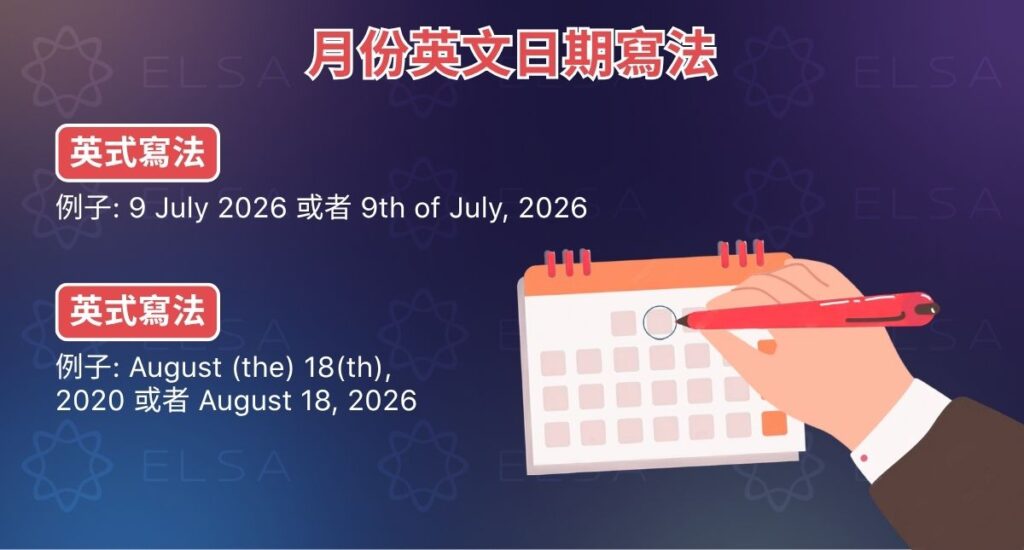
英式寫法
日期通常在月份前面,序數放在日期後面(例如:st、th…)可以有也可以沒有。介詞 “of” 在月份之前可以有也可以沒有。
例子: 9 July 2020 hay 9th of July, 2021
美式寫法
月份通常寫在日期前面,並在日期前面帶有冠詞。逗號用於年份前面。
例子: August (the) 18(th), 2020 hay August 18, 2021
月英文以及日期英文怎麼記?

在學習 月份英文 時,很多人也會同時查詢 月份英文縮寫,例如 一月英文 或 1月英文、二月英文 或 2月英文、3月英文 與 三月英文 等。像 feb幾月、feb、mar 月份、aug 月份、dec 月份 這些縮寫也很常見。此外,像 七月英文、八月英文、11月英文、12月英文 等內容,也都是學習 月份 英文 時經常會搜尋的關鍵詞。以下是1-12月份英文縮寫、發音和縮寫的詳細總表:
月份 英文由來、例句與記憶技巧
ELSA Speak 以為你總結成英文月份表格,内含1-12月份英文縮寫如11月英文縮寫等,大家可以參考一下:
| 月份 | 月份 英文 | 縮寫 | 起源與含義說明 |
|---|---|---|---|
| 一月 | January | Jan | 源自古羅馬的時間之神 Janus(Ja-nuc),象徵新開始,因此成為新年的第一個月。 |
| 二月 | February | Feb | 來自拉丁語 Februarius,意指「淨化」。羅馬習俗中此月為處決罪犯的時期,亦象徵誠實與自我反省。 |
| 三月 | March | Mar | 源自拉丁語 Mars,為羅馬戰神。也是傳說中羅馬創建者 Romulus 和 Remus 的父親。 |
| 四月 | April | Apr | 來自拉丁語 Aprillis,意指「發芽」,象徵春天萬物生長的開始。 |
| 五月 | May | May | 以女神 Maia 命名,她是大地與生長之神,象徵自然與繁榮。 |
| 六月 | June | Jun | 以女神 Juno 命名,她是主神 Jupiter 的妻子,希臘神話中的赫拉女神,象徵婚姻與女性。 |
| 七月 | July | Jul | 以 Julius Caesar 命名,為紀念他改革陽曆的貢獻。 |
| 八月 | August | Aug | 以 Augustus 皇帝命名,為紀念其修訂曆法並在此月增加一天,使之與七月同為31天。 |
| 九月 | September | Sep | 來自拉丁語 Septem,意指「七」,原為羅馬曆法的第七個月。 |
| 十月 | October | Oct | 來自拉丁語 Octo,意指「八」,原為羅馬曆法的第八個月。 |
| 十一月 | November | Nov | 來自拉丁語 Novem,意指「九」,原為羅馬曆法的第九個月。 |
| 十二月 | December | Dec | 來自拉丁語 Decem,意指「十」,原為羅馬曆法的第十個月。 |
例如:Snow usually falls in December every year (每年十二月下雪。)
=> Snow usually falls in Dec every year
閲讀更多:【Abbreviation】最常用且最完整的英文縮寫大全!
月份相關的英文單字與慣用語
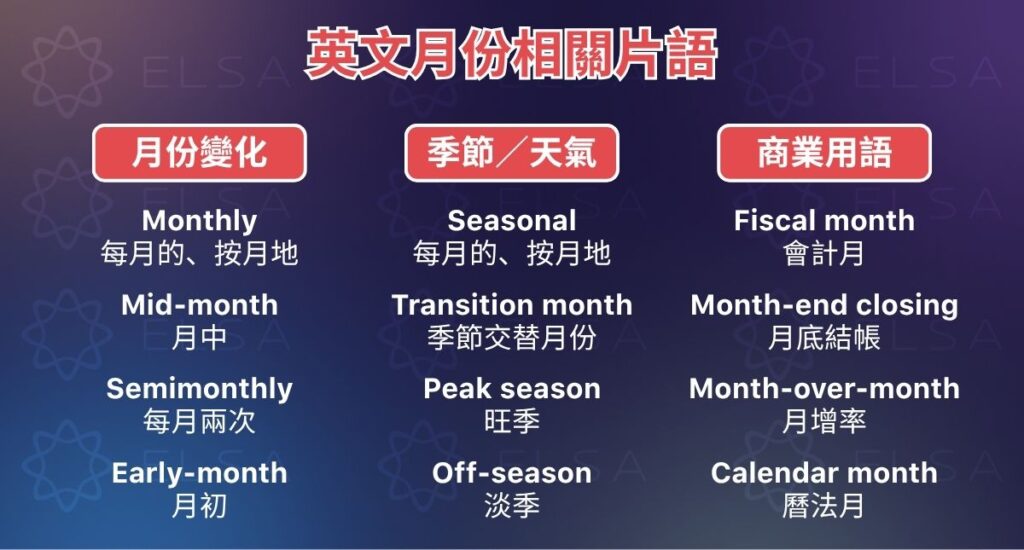
月份英文不只會出現在日期中,也常延伸應用在合約、財務、旅遊和商業報告等不同情境中。除了學習 1-12月份英文縮寫,了解常見的月份相關英文單字,也能幫助您更容易理解英文文件中的時間安排,例如租約、訂閱方案、公司報表或旅遊資訊。
月份變化相關英文單字
| 英文單字 | 意思 | 用法 |
|---|---|---|
| Monthly | 每月的、按月地 | 常用於會議、付款、訂閱和報表 |
| Month-to-month | 按月續約、逐月計算 | 常用於合約或租賃情境 |
| Early-month | 月初 | 常用於財務、行銷活動與工作安排 |
| Mid-month | 月中 | 常用於專案時程與活動安排 |
| End-of-month | 月底 | 常用於付款、結算與報表 |
| Bimonthly | 每兩個月一次 / 每月兩次 | 需根據上下文判斷 |
| Semimonthly | 每月兩次 | 通常指固定每月兩次,例如每月15日與月底 |
例句:
- We have a monthly meeting on the first Friday of every month.(我們每個月第一個星期五會舉行月度會議。)
- I’m currently on a month-to-month lease.(我目前是按月續約的租約。)
- We have a product launch scheduled for mid-month.(我們計畫在月中推出新產品。)
與月份有關的季節/天氣英文用語
| 英文單字 | 意思 | 用法 |
|---|---|---|
| Seasonal | 季節性的 | 常用於描述商品、工作、天氣或旅遊需求 |
| Transition month | 季節交替月份 | 指季節變化期間的月份,例如三月或九月 |
| Peak season | 旺季 | 常用於旅遊、飯店、機票和商業活動 |
| Off-season | 淡季 | 指需求較低的季節或期間 |
例句:Hotel prices are higher during the peak season of July and August.(七、八月旺季期間,飯店價格通常較高。)
你可能在找天氣英文主題:天氣 英文 (Weather): 會話中的常用單字與句型
商業與時間管理用語
| 商用英文 | 意思 | 用法 |
|---|---|---|
| Fiscal month | 會計月 | 用於財務報告,不一定與一般曆法月份相同 |
| Month-end closing | 月底結帳 | 常見於會計、財務與行政工作 |
| Month-over-month (MoM) | 月增率 / 與上月相比 | 用於分析業績、流量、成本或訂單變化 |
| Calendar month | 曆法月 | 指每月1日至月底的完整月份 |
in on at – 月份英文的介係詞用法
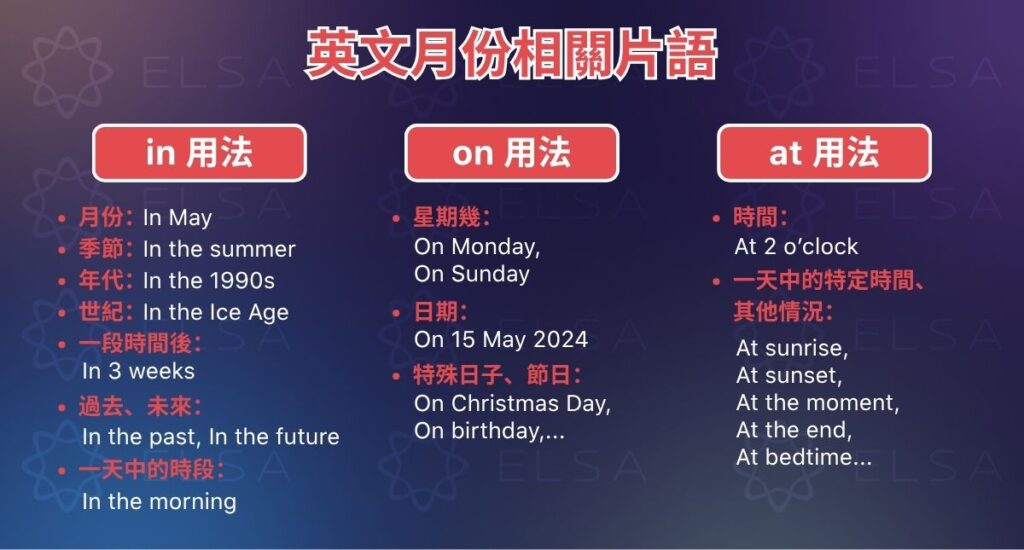
在學習月份英文和英文日期時,很多人容易混淆 in on at 用法。三者都可以用來表示時間,但使用情境不同:
- in:用於較長的時間範圍,如月份、年份、季節
- on:用於較具體的日期或星期
- at:用於精確的時間點或特定節日
介詞 in 的用法
In 用於表示較長的時間段,例如月份、年份、季節或一段未明確的時間。
| 用法 | 例子 | 中文 |
|---|---|---|
| 搭配月份 | in May / in July | 五月、七月 |
| 搭配年份 | in 2022 / in the 1990s | 2022年、90年代 |
| 搭配季節 | in summer / in winter | 夏季、冬季 |
| 搭配一天中的時間 | in the morning / afternoon / evening | 早上、下午、晚上 |
| 表示未來一段時間後 | in two weeks / in a month | 兩週後、一個月後 |
介詞 on 的用法
On 用於表示較短且明確的時間,例如星期或具體日期。
| 用法 | 例子 | 中文 |
|---|---|---|
| 搭配星期 | on Monday / on Tuesday | 星期一、星期二 |
| 搭配具體日期 | on 15th May / on September 27th | 5月15日、9月27日 |
| 搭配特定一天的時間 | on the afternoon of April 2nd | 4月2日下午 |
介詞 at 的用法
At 用於表示精確的時間點,也可用於部分節日或特殊時期。
| 用法 | 例子 | 中文 |
|---|---|---|
| 搭配具體時間 | at 6 o’clock / at 7 pm / at midnight | 六點、晚上七點、午夜 |
| 搭配一天中特定時刻 | at night / at sunrise / at lunch | 夜晚、日出時、午餐時間 |
| 搭配節日 | at Christmas / at Easter | 聖誕節、復活節 |
在特殊假期中使用介詞的方法
很多人會混淆 at on 用法,主要差別在於是否指「節日整體」或「節日中的特定一天」。
| 用法 | 例子 | 中文 |
|---|---|---|
| at + 節日(泛指節日期間) | I will travel to Paris at Christmas. | 我會在聖誕節期間去巴黎。 |
| on + 節日 Day(特定日期) | I received a present on Christmas Day. | 我在聖誕節當天收到禮物。 |
其他常見時間介詞用法

| 時間介詞 | 中文意思 | 用法 |
|---|---|---|
| Before | 在……之前 | 表示某件事情發生前的時間 |
| After | 在……之後 | 表示某件事情發生後的時間 |
| By | 在……之前(截止時間) | 表示某件事情最晚需在某時間點前完成 |
| Between | 在兩個時間之間 | 表示事情發生於兩個時間點之間 |
| Since | 自從……開始 | 表示從某個時間點開始持續到現在 |
| For | 持續……時間 | 表示一段時間的長度 |
| Till / Until | 直到…… | 表示持續到某個具體時間點 |
| Up to | 直到…… | 表示直到現在或較廣泛的時間 |
| During | 在……期間 | 表示某件事情發生於某段時間內 |
| Within | 在……之內 | 表示事情需要在某時間範圍內完成 |
例句:
- I go swimming before going to school.(我在上學前去游泳。)
- My family always have dinner after 6.30 pm.(我家通常在晚上6點半後吃晚餐。)
- I will finish my homework by 11 pm.(我會在晚上11點前完成作業。)
- I have lived here for 5 years.(我已經住在這裡5年。)
透過以上的秘訣,ELSA Speak 希望您能夠輕鬆、迅速地記住 1-12月份英文及月份英文縮寫。立即應用這些方法,熟悉各月份的英文名稱、月份英文發音與常見的英文縮寫,讓您在日常交流中更自然地表達日期與時間!此外,ELSA Speak 還提供了許多相關的精彩內容,大家可以點進溝通交流英語專欄觀看!
Would 是英文中最常用的情態動詞之一,但也容易與 will、could 或 used to 混淆。在本文中,ELSA Speak 將帶你了解 would 意思、would後面加什麼、would 用法、would like用法、would you用法,並透過易懂的例句區分 can could will would 用法。
Would 是什麼?
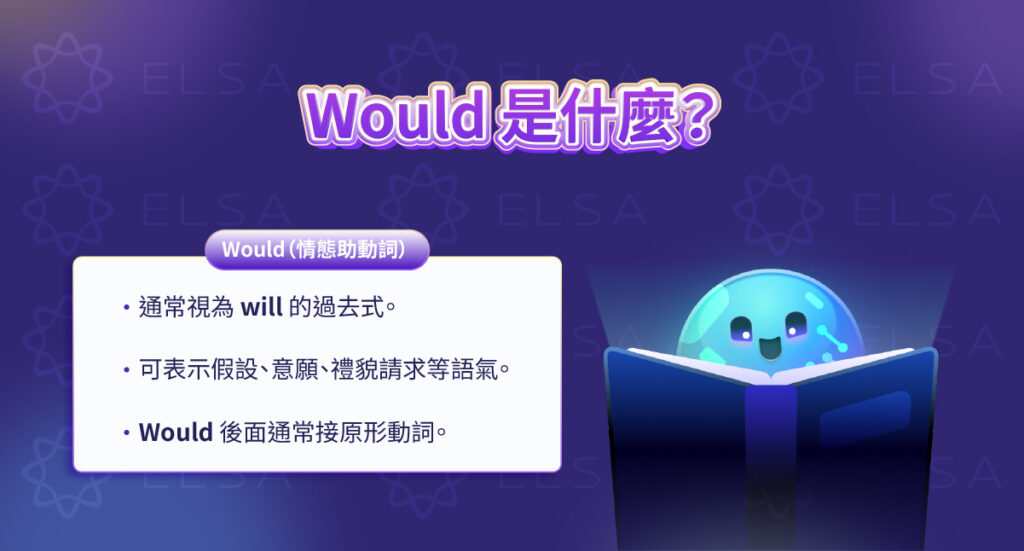
would 作為情態動詞的基本意思,以及假設、禮貌、願望和過去習慣等常見用法。Would是一個情態動詞(modal verb),通常被視為will的過去式。然而,在現代英文中,would不僅用於表達”過去的未來”,還可用於表達假設、禮貌性提議、願望、過去的習慣等多種情境。
例句:
- She said she would come tomorrow. (她說她明天會來。)
- Would you help me? (你能幫我嗎?)
- If I had more time, I would travel around the world. (如果有更多時間,我會環遊世界。)
Would後面加什麼?
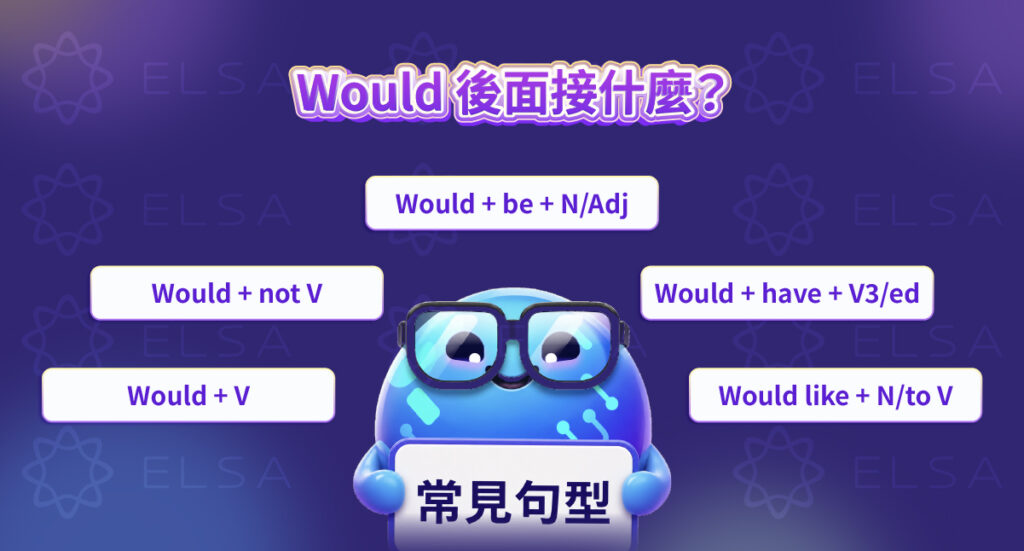
Would 後面必須接不加 to 的原形動詞(bare infinitive)。根據不同語境,would會搭配不同結構,用於表達過去未來式、假設、願望或過去未發生的事情。
| 結構 | 用法 |
|---|---|
| Would + V (原形動詞) | 表達過去未來式、假設或禮貌性提議 |
| Would + not + V | would的否定句 |
| Would + be + N/Adj | 在假設或過去未來式情境中表達狀態或職業 |
| Would + have + V3/ed | 表達過去未發生的事(第三條件句、遺憾) |
| Would + like + N/to V | 表達願望或禮貌性邀請 |
注意:would後面不接 to + V或V-ing。一律使用原形動詞(固定結構如 would like to + V 或 would have + V3/ed 除外)。
英文 would 用法
Would是英文中用法最多的情態動詞之一。根據不同語境,would可用於表達過去的未來、條件句、禮貌性提議、願望或過去的習慣。以下是你需要熟練掌握的would常見用法。
Would 作為 will 的過去式 (Future in the Past)
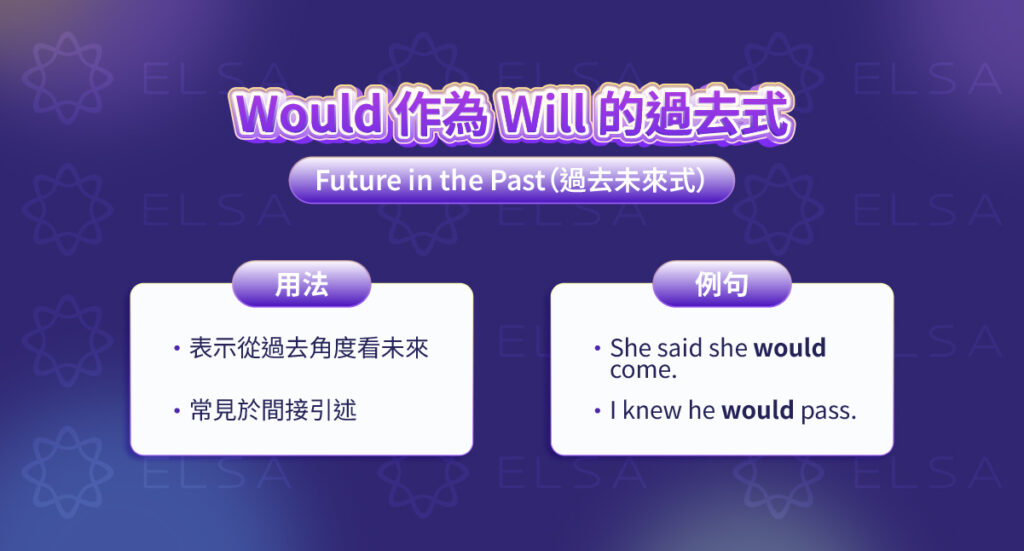
Would用於描述從過去某時間點看來屬於未來的動作或計劃。
句型結構:
| S + would + V (原形動詞) |
例句:
- She said she would come the next day. (她說她隔天會來。)
- I knew he would pass the exam. (我知道他會通過考試。)
Would 表達預測或可能性
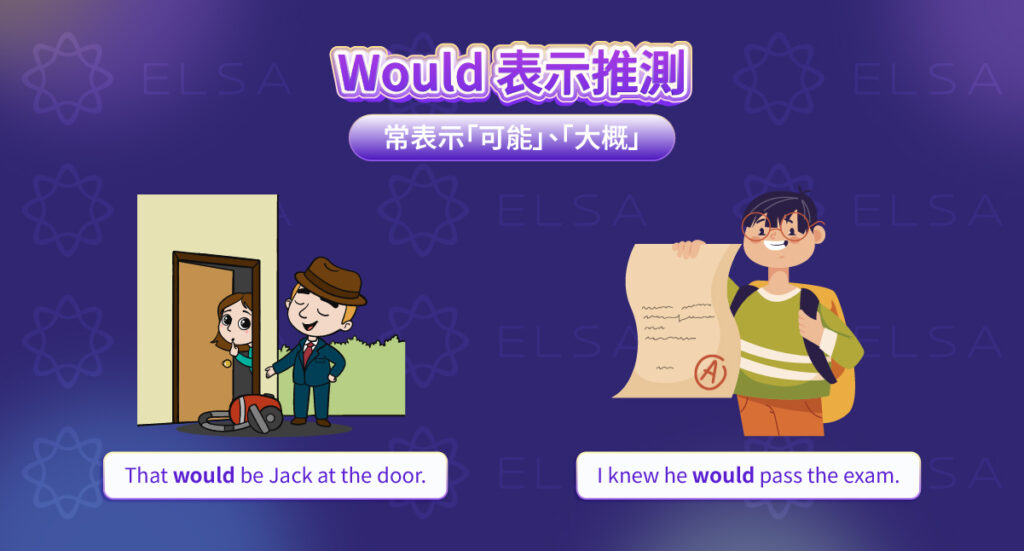
Would 可用於作出預測或推測,確定程度低於 will,通常帶有“或許”、“大概”的含義。
例句:
- That would be Jack at the door. (應該是 Jack 在門外。)
- She would probably agree with you. (她大概會同意你的看法。)
Would 表達過去的習慣
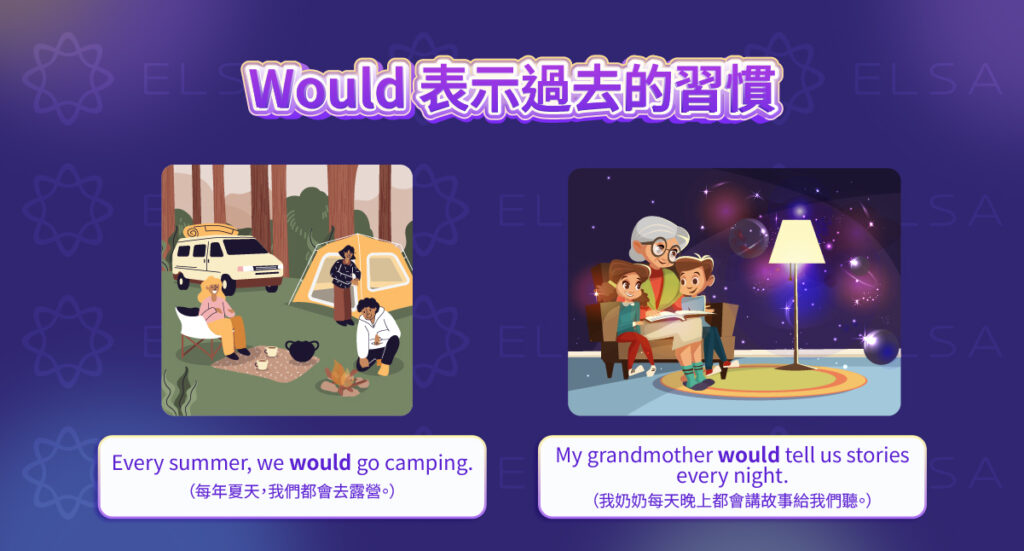
Would可用於表達過去反覆發生的動作,類似 used to 用法。
句型結構:
| S + would + V (原形動詞) |
例句:
- Every summer, we would go camping. (每個夏天,我們通常會去露營。)
- My grandmother would tell us stories every night. (我奶奶每天晚上都會給我們講故事。)
注意:would 僅表達習慣或反覆發生的動作,而 used to 可同時表達過去的習慣與狀態。
Would 用於提出禮貌性提議或請求
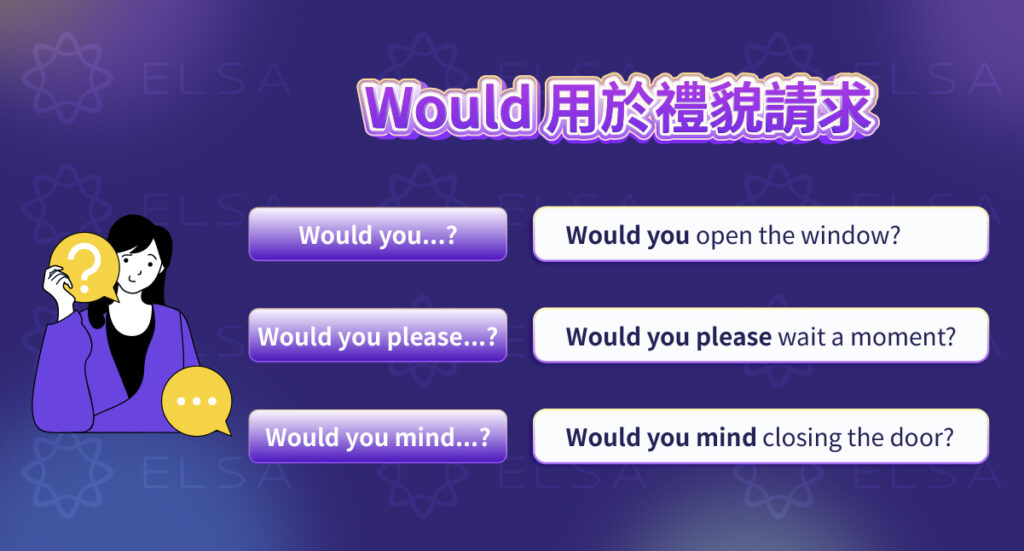
Would you用法是使用 Would you……?結構,以禮貌的方式提出請求、邀請或提議。這在日常溝通與職場環境中都是常見的表達方式。 相較於直接使用動詞原形開頭的祈使句,透過這種結構開口請求會顯得更有禮貌且委婉。
| 句型結構 | 例句 |
|---|---|
| Would you + V…? | Would you open the window? (你能幫我開窗嗎?) |
| Would you mind + V-ing…? | Would you mind closing the door? (你介意幫我關門嗎?) |
| Would you please + V…? | Would you please wait a moment? (你能稍等一下嗎?) |
Would 用於表達願望
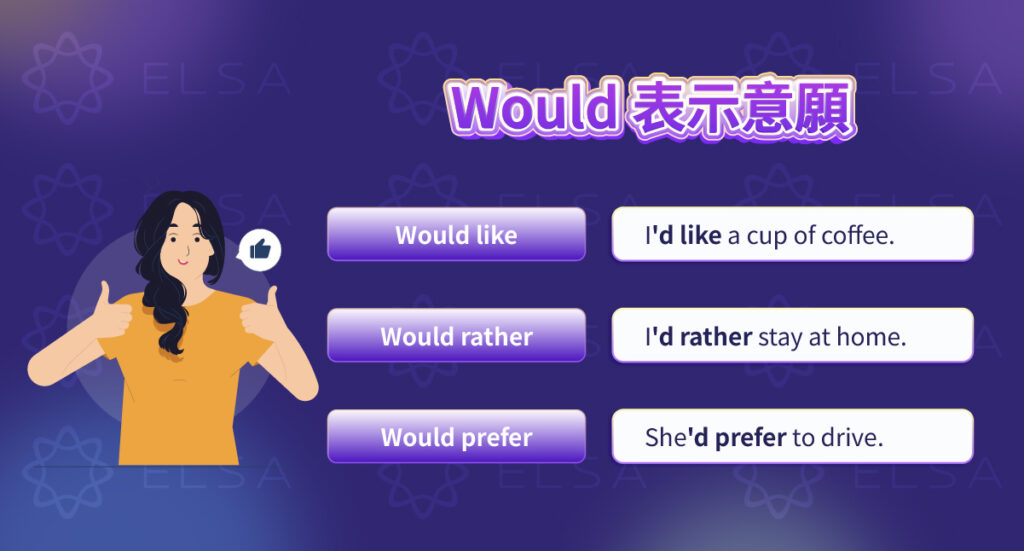
要表達願望或偏好,would 常與多種不同結構搭配使用。以下 ELSA Speak 將說明 would like用法與 would rather用法,並附結構、例句及詳細區分。
| 句型結構 | 用法 | 例句 |
|---|---|---|
| Would like + N | 想要某樣東西 | I’d like a cup of tea. (我想要一杯茶 。) |
| Would like + to V | 想做某事 | We’d like to travel to Japan. (我們想去日本旅遊 。) |
| Would rather + V | 比較喜歡做…… | I’d rather stay at home. (我比較想待在家 。) |
| Would prefer + to V | 想要或偏好…… | She’d prefer to drive. (她比較想自己開車 。) |
10月特別優惠 —— ELSA 大促銷
ELSA PREMIUM 1 年
原價: 5,250
2,199
ELSA PREMIUM 終身
原價: 7,150
4,215
ELSA PRO 1 年
原價: 2,450
1,715
ELSA PRO 終身
原價: 6,150
2,568
Would 在 if條件句中
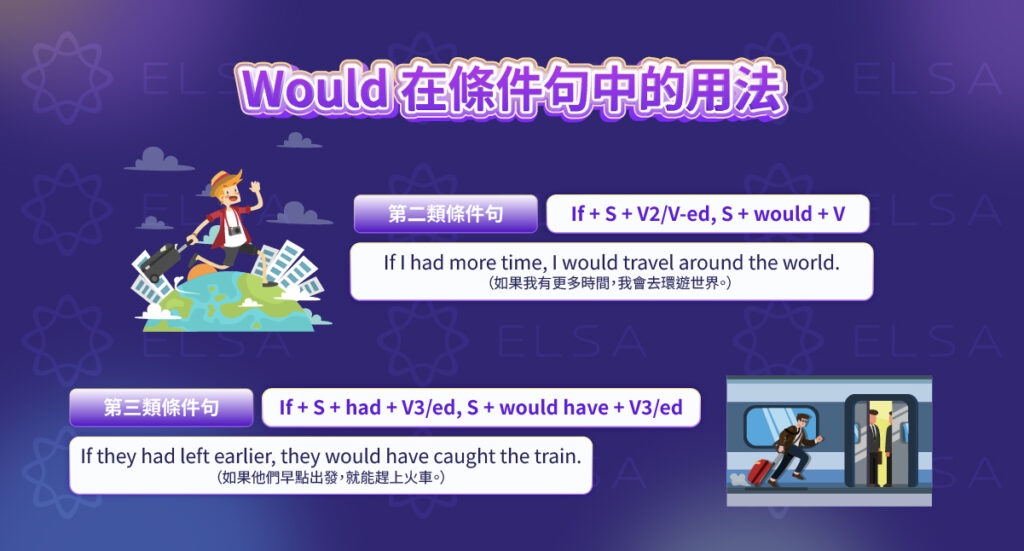
了解 would 的正確位置與使用方法如果出現在 if 用法裏:
If would用法:第二條件句
用於描述現在或未來不真實的情境。
句型結構:
| If + S + V2/V-ed, S + would + V |
例句:If I were you, I would accept the offer. (如果我是你,我會接受這個提議。)
If would用法:第三條件句
用於描述過去未曾發生的事情,if 子句用的就是過去完成式(had + V3)。
句型結構:
| If + S + had + V3/ed, S + would have + V3/ed |
例句:If they had left earlier, they would have caught the train. (如果他們早點離開,就能趕上那班火車了。)
Would 在間接引語中
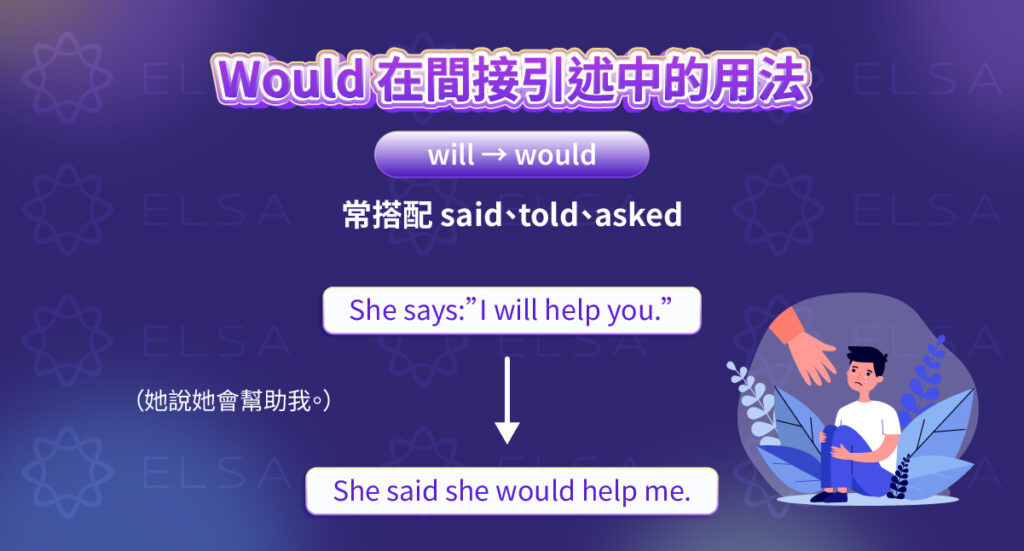
將直接引語轉換為間接引語時,will 通常改為 would。
句型結構:
| S + said (that) + S + would + V |
例句:
- She said she would help me. (她說她會幫我。)
- They told us they would arrive on Friday. (他們告訴我們他們星期五會來。)
Would與其他情態動詞的區分
區分 will would 用法
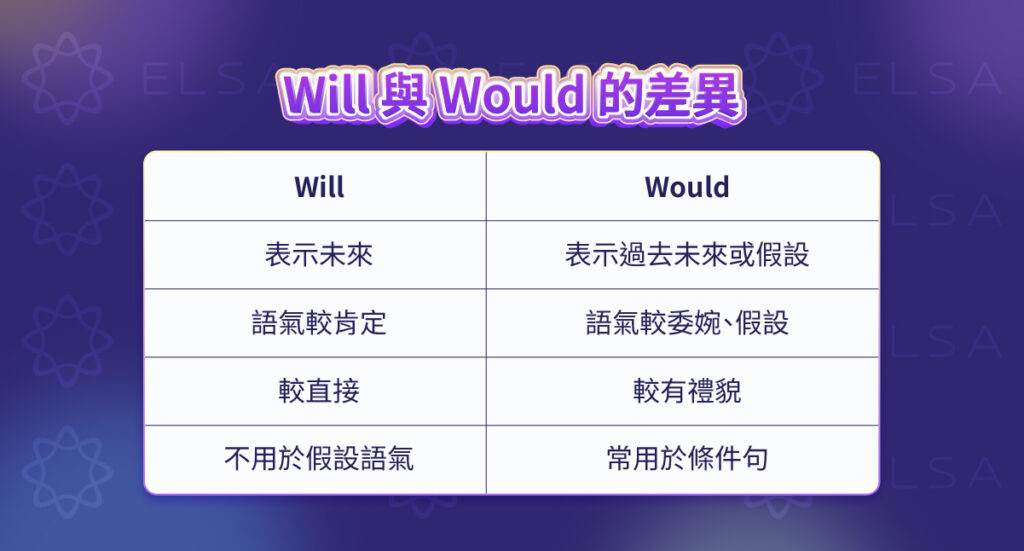
儘管兩者都可用於描述未來,will 與 would 在確定程度、時間與使用語境上有所不同。
| Will | Would | |
|---|---|---|
| 確定程度 | 確定、預測程度高 | 較不確定,帶有假設性 |
| 未來 | 表達未來 | 過去的未來或假設 |
| 過去 | 不使用 | 在間接引語中作為will的過去式 |
| 禮貌程度 | 語氣較直接 | 提出請求或提議時更禮貌 |
| 假設 | 不使用 | 常用於條件句 |
例句:
- I will call you tomorrow. (我明天會打電話給你。)
- I would call you if I had your number. (如果我有你的號碼,我會打電話給你。)
區分 could should would 用法
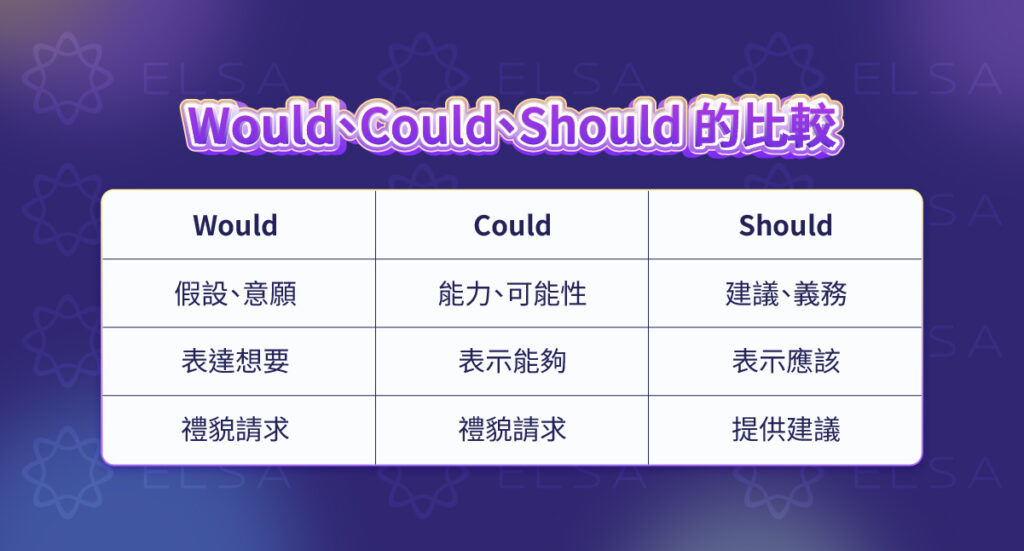
| Would | Could | Should | |
|---|---|---|---|
| 主要意思 | 願望、假設、禮貌 | 能力、可能性 | 建議、義務、期望 |
| 表達願望 | ✔️ | ✖️ | ✖️ |
| 表達可能性 | ✖️ | ✔️ | ✖️ |
| 禮貌性提議/請求 | ✔️ | ✔️ (強調可能性 ) | ✖️ |
| 給予建議 | ✖️ | ✖️ | ✔️ |
| 用於條件句 | ✔️ 常用 | ✔️ 表達可能性 | 較少使用 |
例句:
- I would like some coffee. (我想要一些咖啡。)
- She could speak French when she was young. (她小時候會說法語。)
- You should study harder. (你應該更認真學習。)
區分 used to would用法
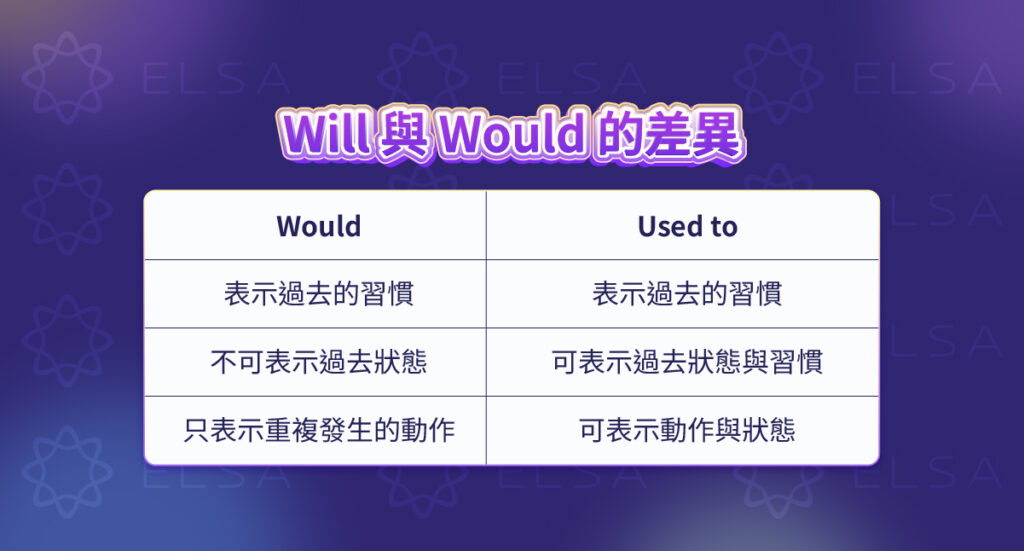
Would 與 used to 都可表達過去的習慣,但用法並不完全相同。
| Would | Used to | |
|---|---|---|
| 過去的習慣 | ✔️ | ✔️ |
| 過去的狀態 | ✖️ | ✔️ |
| 反覆發生的動作 | ✔️ | ✔️ |
注意:Would 僅用於反覆發生的動作,而 used to 可同時用於過去的狀態與習慣。
例句:
- When I was a child, I would play outside every afternoon. (小時候,我每天下午都會在戶外玩耍。)
- My grandfather used to live in the countryside. (我爺爺以前住在鄉村。)
區分 can could will would 用法
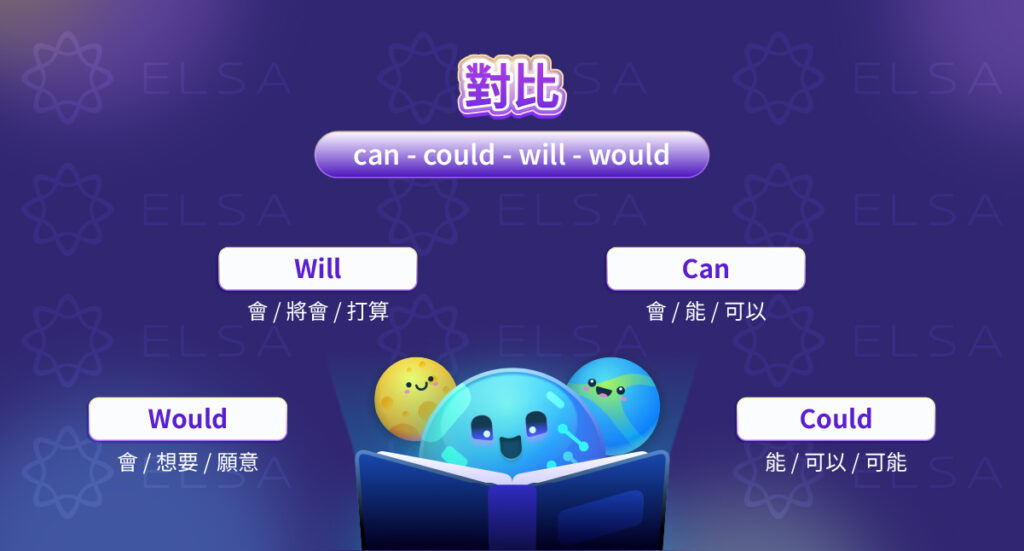
以下表格幫助你依功能與用法區分這四個常用情態動詞。
| 動詞 | 主要意思 | 常見用法 | 例句 |
|---|---|---|---|
| Can | 可以、有能力 | 現在的能力、請求許可 | I can swim. (我會游泳。) |
| Could | 可以(過去)、可能性 | 過去的能力、禮貌性提議 | Could you help me? (你能幫我嗎?) |
| Will | 將會 | 預測、決定、未來 | I will call you later. (我等一下打電話給你。) |
| Would | 將會(假設)、想要 | 條件句、禮貌性邀請、過去的未來 | I would go if I had time. (如果有時間我會去。) |
你可能會感興趣: 附加問句 (Tag Question):結構、用法和應用練習
Would練習題附解答(Multiple Choice)
練習題
題目:選出正確答案完成句子。
1. If I had enough money, I ________ buy a new car.
A. will
B. would
C. can
D. should
2. She said she ________ call me later.
A. will
B. would
C. can
D. could
3. ________ you like a cup of coffee?
A. Will
B. Would
C. Shall
D. Must
4. When we were children, we ________ play football every afternoon.
A. would
B. will
C. should
D. must
5. If they had left earlier, they ________ have caught the train.
A. will
B. would
C. would have
D. had
6. I ________ rather stay at home tonight.
A. would
B. will
C. could
D. can
7. ________ you please close the window?
A. Can
B. Would
C. Shall
D. Must
8. He knew the meeting ________ start at 9 a.m.
A. will
B. would
C. can
D. should
9. If I were you, I ________ apologize to her.
A. will
B. would
C. should have
D. can
10. They ________ often visit their grandparents during summer vacations.
A. would
B. should
C. must
D. may
11. I ________ like to order a pizza.
A. would
B. will
C. shall
D. can
12. She ________ never tell anyone the secret.
A. would
B. had
C. has
D. is
13. If he studied harder, he ________ pass the exam.
A. will
B. would
C. can
D. must
14. My grandmother ________ always tell us bedtime stories.
A. would
B. will
C. could have
D. should
15. ________ you mind opening the door?
A. Will
B. Would
C. Must
D. Shall
16. I thought the weather ________ be sunny today.
A. will
B. would
C. must
D. shall
17. We ________ have gone with you if you had invited us.
A. will
B. would
C. would have
D. had
18. She asked if I ________ help her move house.
A. will
B. would
C. should
D. can
19. If I had more free time, I ________ learn Spanish.
A. will
B. would
C. must
D. am
20. They ________ always sit by the lake after school.
A. would
B. should
C. must
D. have
答案
| 題號 | 1 | 2 | 3 | 4 | 5 |
| 答案 | B | B | B | A | C |
| 題號 | 6 | 7 | 8 | 9 | 10 |
| 答案 | A | B | B | B | A |
| 題號 | 11 | 12 | 13 | 14 | 15 |
| 答案 | A | A | B | A | B |
| 題號 | 16 | 17 | 18 | 19 | 20 |
| 答案 | B | C | B | B | A |
熟練掌握 would 用法後,你將知道 would後面加什麼,正確使用 would like、would you,並避免混淆would 與 will、could 或 used to。請透過例句與練習題勤加練習,讓 would 在口語與英文寫作中都能自然、精準地運用。歡迎在 ELSA Speak 英語文法專區探索更多精彩文章!
蔬菜英文是日常對話、購物和烹飪中的重要詞彙主題。與 ELSA Speak 一起學習蔬菜英文怎麼說 、其發音和50種蔬菜英文,以及涵蓋十字花科蔬菜、瓜類蔬菜、有機蔬菜等類別的相關英文單字以及各種實際例子,助你輕鬆記憶。
蔬菜英文怎麽説?
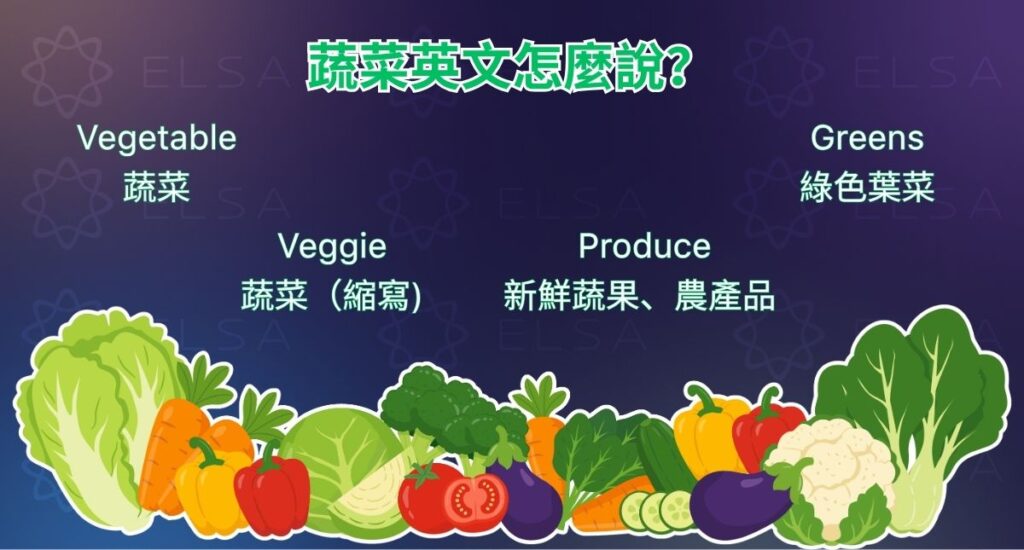
蔬菜 英文是 vegetable,指的是用作食物的植物或植物部位,例如葉、根、莖、花和果實。
區分 vegetable, veggie, greens 和 produce
| 詞彙 | 意思 | 用法 |
|---|---|---|
| vegetable | 蔬菜,一種蔬菜 | 正式、一般的說法 |
| veggie | 蔬菜 | vegetable 的口語 |
| greens | 綠色蔬菜、葉菜類蔬菜 | 通常僅指羽衣甘藍和菠菜等綠葉蔬菜 |
| produce | 新鮮農產品 | 泛指市場或超市販售的新鮮蔬果 |
蔬菜英文大全
若想記住蔬菜英文名,最好的方法是按類別學習——例如葉菜類蔬菜、根莖類蔬菜、瓜類蔬菜、十字花科蔬菜、豆類以及菌菇類。以下是蔬菜英文名大全,包括日常蔬菜英文和常見蔬菜英文,旨在幫助你在購物、閱讀菜單或參考食譜時,能夠輕鬆查閱並使用這些詞彙。
葉菜類蔬菜(Leafy vegetables)
| 詞彙 | 意思 |
|---|---|
| Amaranth greens | 莧菜 |
| Arugula | 芝麻葉 |
| Celery | 芹菜 |
| Chinese celery | 芹菜/本土芹菜 |
| Crown daisy | 茼蒿 |
| Endive | 菊苣 |
| Lettuce | 萵苣 |
| Malabar spinach | 落葵 |
| Pea shoots | 豌豆苗 |
| Perilla leaves | 紫蘇葉 |
| Romaine lettuce | 蘿蔓生菜 |
| Spinach | 菠菜 |
| Sweet potato leaves | 地瓜葉 |
| Swiss chard | 瑞士甜菜 |
| Water spinach | 空心菜 |
十字花科蔬菜(Cruciferous vegetables)
十字花科蔬菜富含維生素、纖維和抗氧化劑,常被推薦納入日常飲食中。如果你正在學習十字花科蔬菜英文,以下列出了一些最常見的種類。
| 詞彙 | 意思 |
|---|---|
| Bok choy | 小白菜 |
| Broccoli | 青花菜 |
| Brussels sprouts | 球芽甘藍 |
| Cabbage | 高麗菜 |
| Cauliflower | 白花椰菜 |
| Chinese broccoli / Chinese kale | 芥蘭 |
| Chinese cabbage | 大白菜 |
| Collard greens | 寬葉羽衣甘藍 |
| Daikon | 白蘿蔔 |
| Gai choy / Chinese mustard greens | 芥菜 |
| Kale | 羽衣甘藍 |
| Kohlrabi | 球莖甘藍 |
| Mizuna | 水菜 |
| Radish | 蘿蔔 |
| Tatsoi | 塌棵菜 |
| Turnip | 蕪菁 |
| Watercress | 西洋菜 |
根莖類蔬菜(Root vegetables)
| 詞彙 | 意思 |
|---|---|
| Asparagus | 蘆筍 |
| Bamboo shoot | 竹筍 |
| Beetroot / Beet | 甜菜根 |
| Bell pepper | 甜椒 |
| Burdock root | 牛蒡根 |
| Carrot | 胡蘿蔔 |
| Cassava / Yuca | 木薯 |
| Celeriac | 芹菜根 |
| Chili pepper | 辣椒 |
| Corn | 玉米 |
| Daikon | 白蘿蔔 |
| Eggplant | 茄子 |
| Garlic | 大蒜 |
| Ginger | 薑 |
| Horseradish | 辣根 |
| Jerusalem artichoke | 菊芋 |
| Jicama | 豆薯 |
| Kohlrabi | 球莖甘藍 |
| Lotus root | 蓮藕 |
| Okra | 秋葵 |
| Onion | 洋蔥 |
| Parsnip | 歐防風 |
| Potato | 馬鈴薯 |
| Radish | 櫻桃蘿蔔 |
| Red onion | 紅洋蔥 |
| Rutabaga / Swede | 瑞典蕪菁 |
| Shallot | 紅蔥頭 |
| Sweet potato | 地瓜 |
| Taro | 芋頭 |
| Tomato | 番茄 |
| Turmeric | 薑黃 |
| Turnip | 蕪菁 |
| Water chestnut | 荸薺 |
| Yam | 山藥 |
10月特別優惠 —— ELSA 大促銷
ELSA PREMIUM 1 年
原價: 5,250
2,199
ELSA PREMIUM 終身
原價: 7,150
4,215
ELSA PRO 1 年
原價: 2,450
1,715
ELSA PRO 終身
原價: 6,150
2,568
瓜類蔬菜英文(Gourd Vegetables)
| 詞彙 | 意思 |
|---|---|
| Pumpkin | 南瓜 |
| Cucumber | 小黃瓜 |
| Zucchini | 櫛瓜 |
| Bitter melon | 苦瓜 |
| Winter melon | 冬瓜 |
| Loofah | 絲瓜 |
| Chayote | 隼人瓜/佛手瓜 |
豆類(Beans & Legumes)
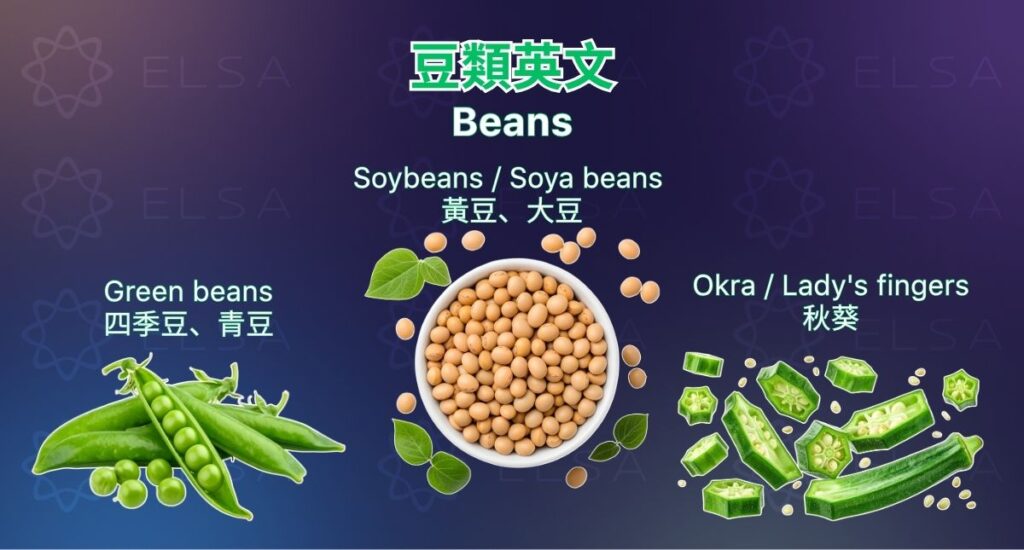
| 詞彙 | 意思 |
|---|---|
| Green bean | 四季豆 |
| Pea | 豌豆 |
| Soybean | 黃豆 |
| Edamame | 毛豆 |
| Kidney bean | 紅腰豆 |
| Chickpea | 鷹嘴豆 |
| Lentil | 小扁豆 |
| Bean sprouts | 豆芽 |
菌菇類英文詞彙(Mushrooms)
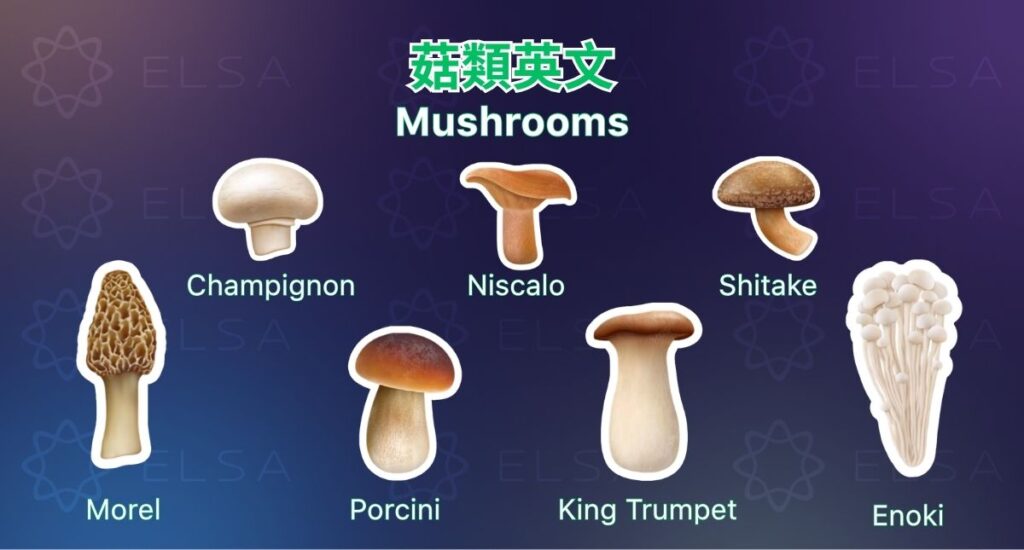
| 詞彙 | 意思 |
|---|---|
| Mushroom | 蘑菇 |
| Button mushroom | 洋菇 |
| Shiitake | 香菇 |
| Enoki mushroom | 金針菇 |
| Oyster mushroom | 秀珍菇/平菇 |
| King oyster mushroom | 杏鮑菇 |
香草類(Herbs & Seasonings)
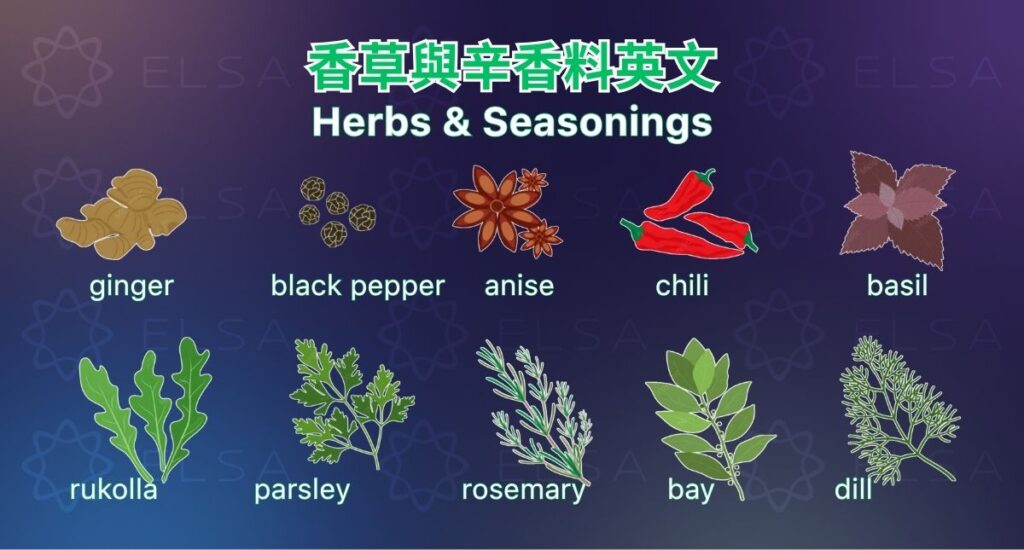
| 詞彙 | 意思 |
|---|---|
| Garlic | 大蒜 |
| Ginger | 薑 |
| Basil | 羅勒 |
| Parsley | 巴西里/洋香菜 |
| Cilantro | 香菜 |
| Coriander | 香菜/芫荽籽(根據不同的語境) |
| Mint | 薄荷 |
| Rosemary | 迷迭香 |
| Thyme | 百里香 |
| Chive | 韭菜 |
| Leek | 韭蔥 |
英語中蔬菜的烹調與處理方式
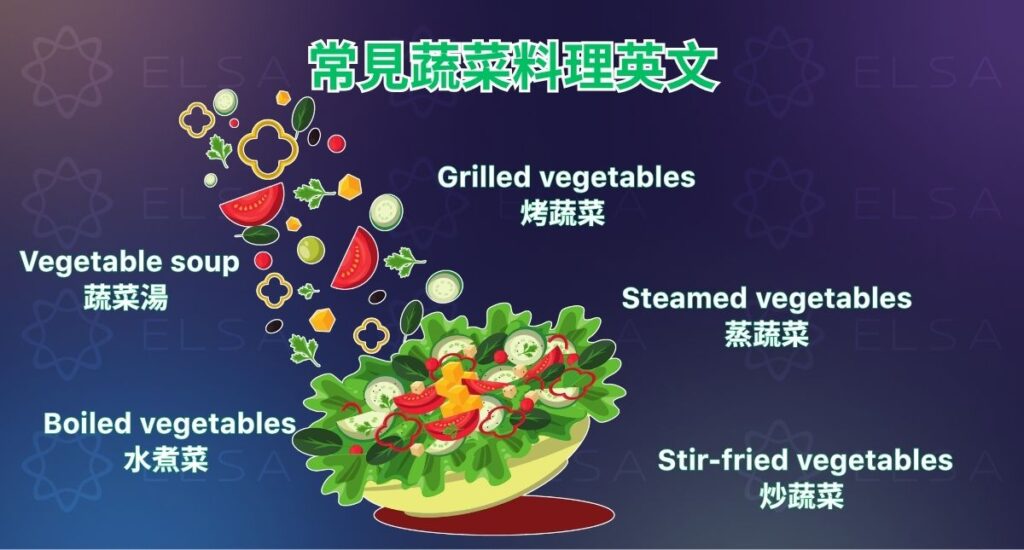
除了具體的蔬菜名稱外,你還應掌握常見蔬菜菜餚英文表達。這些詞彙常出現在餐廳菜單和食譜中,能幫助你描述諸如綜合蔬菜 英文、三色蔬菜 英文菜或五種蔬菜 英文之類的菜餚。
| 詞彙/片語 | 意思 |
|---|---|
| Boiled vegetables | 水煮蔬菜 |
| Grilled vegetables | 烤蔬菜 |
| Roasted vegetables | 烤蔬菜 |
| Steamed vegetables | 蒸蔬菜 |
| Stir-fried vegetables | 炒蔬菜 |
| Vegetable salad | 蔬菜沙拉 |
| Vegetable soup | 蔬菜湯 |
英語常與蔬菜搭配使用的動詞
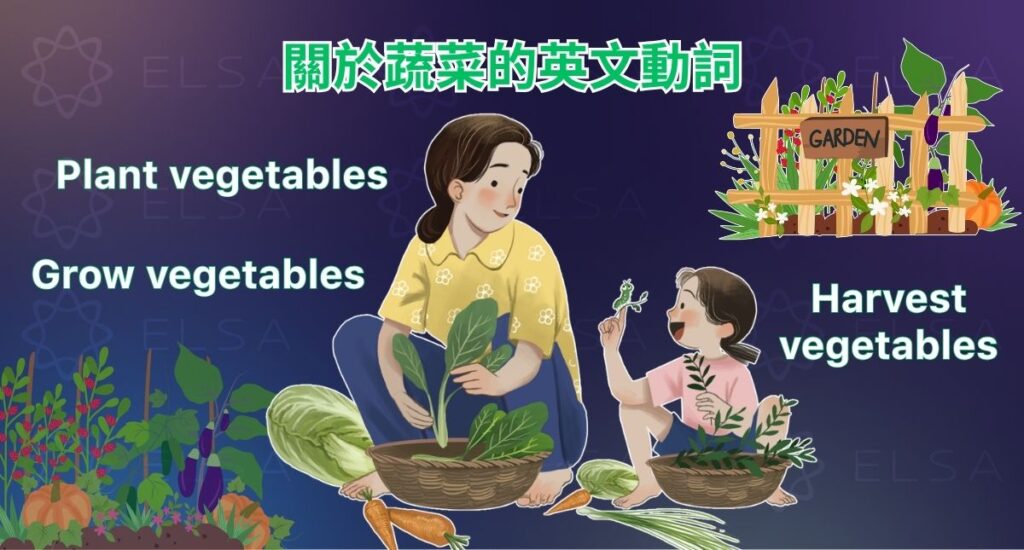
| 片語 | 意思 |
|---|---|
| Grow vegetables | 種植蔬菜 |
| Plant vegetables | 種菜 |
| Harvest vegetables | 採收蔬菜 |
| Wash vegetables | 清洗蔬菜 |
| Peel vegetables | 削皮 |
| Cut vegetables | 切蔬菜 |
| Chop vegetables | 切碎蔬菜 |
| Slice vegetables | 切片蔬菜 |
| Dice vegetables | 把蔬菜切成丁 |
| Cook vegetables | 烹調蔬菜 |
與蔬菜相關的短語
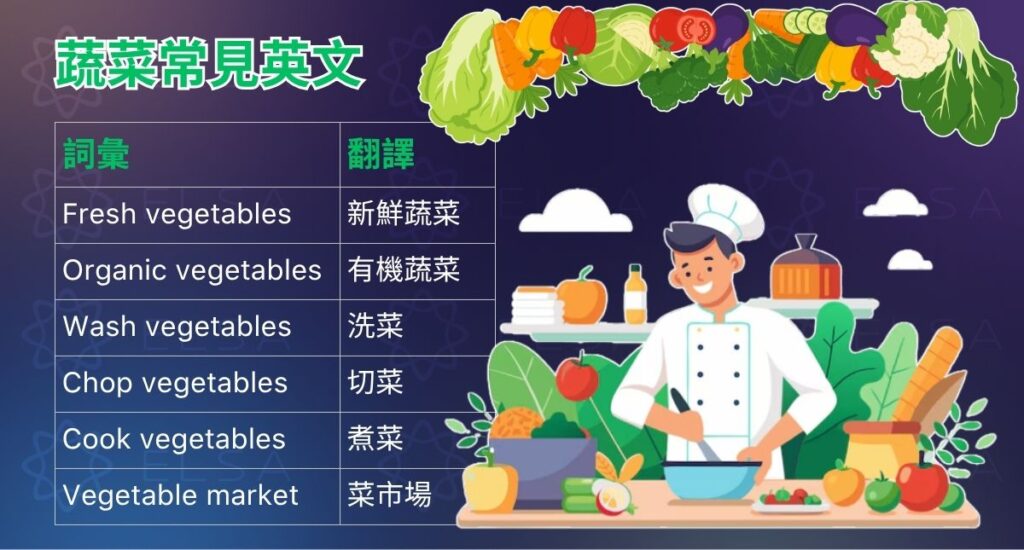
| 詞彙/片語 | 意思 |
|---|---|
| Fresh vegetables | 新鮮蔬菜 |
| Frozen vegetables | 冷凍蔬菜 |
| Organic vegetables | 有機蔬菜 |
| Green vegetables | 綠色蔬菜 |
| Leafy vegetables | 葉類菜類 |
| Root vegetables | 根莖類蔬菜 |
| Cruciferous vegetables | 十字花科蔬菜 |
| Mixed vegetables | 綜合蔬菜 英文 |
| Three-color vegetables | 三色蔬菜 英文 |
| Seasonal vegetables | 當季蔬菜 |
| Local vegetables | 在地蔬菜 |
| Fresh produce | 新鮮農產品 |
| Organic produce | 有機農產品 |
| Pesticide-free vegetables | 無農藥蔬菜 |
| Vegetable section | 蔬菜區 |
| Vegetable market | 蔬菜市場 |
| Vegetable garden | 菜園 |
談論蔬菜時的實用短語
去超市時
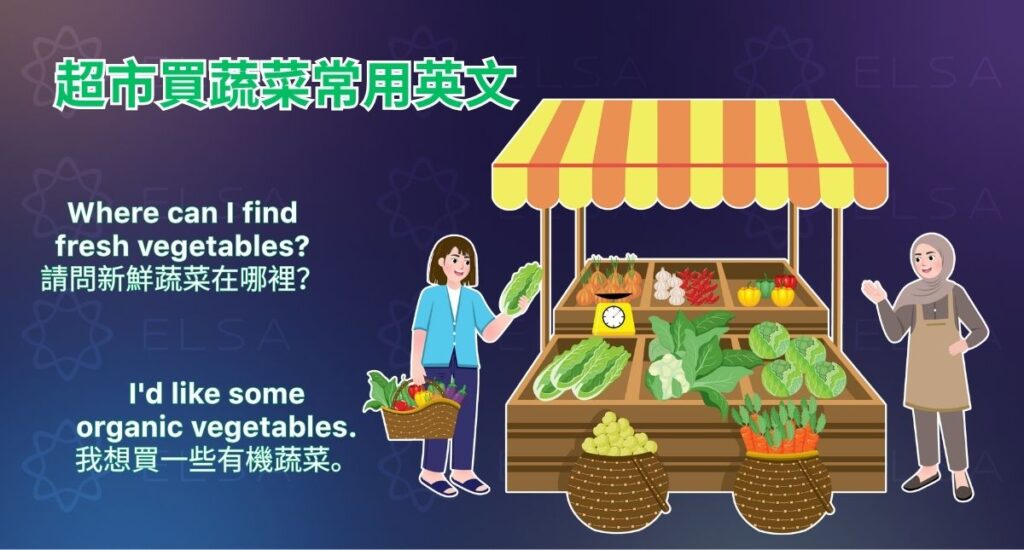
| 句子 | 意思 |
|---|---|
| Where can I find fresh vegetables? | 哪裡可以找到新鮮蔬菜? |
| I’d like some organic vegetables. | 我想要一些有機蔬菜。 |
| How much is the broccoli? | 青花菜多少錢? |
| Do you have any fresh spinach? | 你有新鮮菠菜嗎? |
| Are these vegetables locally grown? | 這些蔬菜是在地種植的嗎? |
在餐廳用餐時
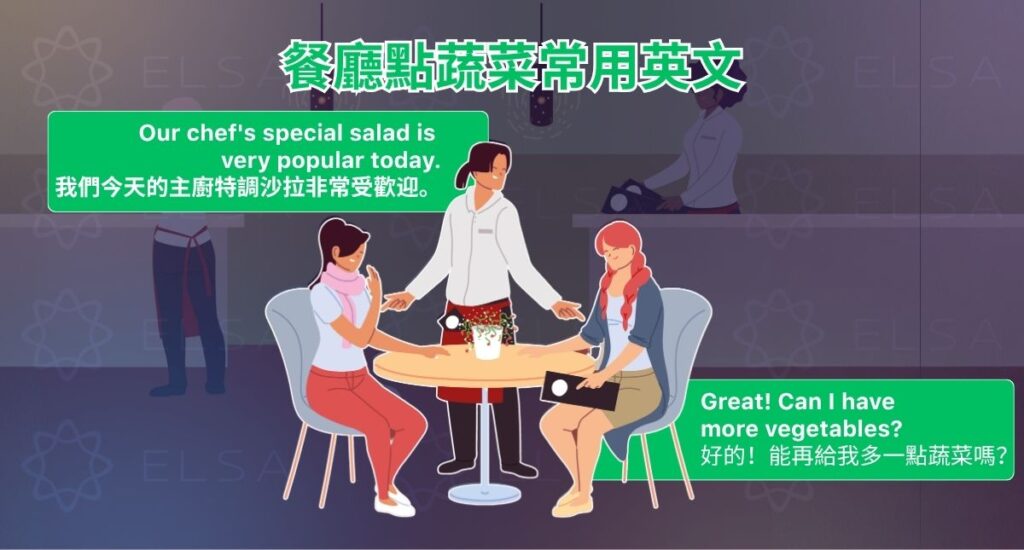
| 句子 | 意思 |
|---|---|
| Can I have more vegetables? | 我可以再來點蔬菜嗎? |
| I’d like steamed vegetables. | 我想要蒸蔬菜。 |
| Can I replace fries with vegetables? | 我可以把薯條換成蔬菜嗎? |
| Does this dish come with vegetables? | 這道菜配有蔬菜嗎? |
| Could I have a vegetable salad, please? | 請給我一份蔬菜沙拉,好嗎? |
談論對吃蔬菜的喜好
| 句子 | 意思 |
|---|---|
| I eat vegetables every day. | 我每天都吃蔬菜。 |
| My favorite vegetable is broccoli. | 我喜歡的蔬菜是青花菜。 |
| I don’t like bitter melon. | 我不喜歡苦瓜。 |
| Vegetables are good for your health. | 蔬菜對健康有益。 |
| I try to eat more green vegetables. | 我盡量多吃綠葉蔬菜。 |
常見問題(FAQ)
蔬菜英文發音如何?
→ Vegetable 在英式英語和美式英語的發音是 /ˈvedʒ.tə.bəl/。
蔬菜英文複數是什麽?
→ 有複數。vegetable 的複數是 vegetables.
蔬菜英文縮寫是什麽?
→ 有縮寫. Veg.是菜單或產品標籤上常見的縮寫。在日常對話中,英語母語人士通常使用 veggie 或 veggies。
五種蔬菜 英文是什麽?
→ 五種蔬菜包括葵、韭 、薤、藿和葱, 分別為英文 mallow, Chinese chives, Chinese onion, bean leaves 和 scallion.
掌握與蔬菜英文相關的詞彙,能讓你在日常交流、超市購物、餐廳點餐或進行主題式英語學習時更有自信。請務必定期複習蔬菜英文名、練習發音、擴充詞彙量,並將所學應用到實際生活中,以加深記憶。歡迎在 ELSA Speak 上探索更多日常溝通交流英語主題,以獲得更多實用知識吧!