Author: 魚丸
十年前,ELSA Speak 帶著一個簡單卻重要的使命誕生:通過人工智慧技術,幫助更多人能自信地開口說英語。
從一間教育科技新創公司開始,ELSA 一步步成長,如今已發展成為全球知名的 AI 英語口說學習平台,服務遍及 195 個以上國家與地區,陪伴數百萬學習者提升英語口說能力。
而今年,ELSA 即將迎來成立 10 週年。為了感謝長期支持的用戶,ELSA Speak 特別推出史上最大優惠活動,讓更多人能以更優惠的價格體驗 AI 英語學習。如果你一直想提升發音或加強英語口說能力,這次絕對是入手的好時機。
一起回顧 ELSA 的 10 年旅程
ELSA Speak 的誕生,來自一個很多英語學習者都遇過的問題:很多人英文文法其實不差,但因為發音不夠準確,在開口說英語時常常缺乏自信。為了解決這個問題,ELSA 團隊研發了 AI 語音辨識技術(AI Speech Recognition),能夠分析使用者的發音,並針對每個音節提供即時回饋與修正建議。
十年過去,ELSA 已累積超過 9,000 萬次全球下載量,並在全球 195 個以上國家與地區被廣泛使用。在台灣,ELSA Speak 也成為許多學生與上班族提升發音與英語溝通能力的熱門學習工具。
ELSA 不僅專注於發音修正,也持續推出更多創新學習功能,例如:
- AI 英語會話導師(AI Tutor)
- 情境式角色扮演對話練習(AI Role-play)
- 長句語音分析與即時語境回饋(Speech Analyzer)
透過這些功能,學習者不僅能夠「說得正確」,更能在不同情境中 自然、流暢且靈活地使用英語進行溝通。
與企業與教育機構的合作
在這 10 年的發展中,ELSA 也逐漸成為許多國際企業與教育機構的 AI 英語訓練合作夥伴,例如:NashTech、Rice University、Mercedes-Benz、YOLA、IDP、ATA、CMRU、Shinhan Bank 等超過 300 家國際企業與機構。透過這些合作,ELSA 協助企業員工與學生提升英語溝通能力,也讓更多人在職場與國際環境中能更自信地使用英語。
名人與學習者的信任與支持
除了企業與教育機構的合作之外,ELSA 也獲得許多英語學習者與內容創作者的關注與分享。過去在官方活動與社群合作中,也曾與多位創作者合作,例如 Chen Lily、Howard、Benzi 等,透過社群平台分享使用 ELSA 的學習體驗。
此外,也有許多語言學習內容創作者與學生族群在社群平台上分享實際使用心得,讓更多人了解 ELSA 在發音練習與口說訓練上的效果。
同時,在 Google Play、App Store 以及官方網站上,ELSA 也累積了大量正面評價,許多使用者分享透過 ELSA 改善發音與提升英語口說自信的經驗。
十年,是科技不斷突破與創新的歷程。
十年,是全球學習者信任與支持的累積。
十年,更是邁向下一個成長階段的重要基礎。
ELSA 十週年紀念影片
本次優惠適用方案
ELSA Speak 十週年優惠活動將適用於平台最受歡迎的學習方案:
| 套餐 | 期限 | 優惠價格 |
|---|---|---|
| ELSA Pro | 1 年 | 1,XXX 元 |
| ELSA Pro | 終身 | 2,XXX 元 |
| ELSA Premium | 1 年 | 2,XXX 元 |
| ELSA Premium | 終身 | 4,XXX 元 |
注意:最終折扣與詳細價格將在活動正式開始時公布。

活動時間與搶購方式
ELSA Speak 十週年優惠活動將於 3 月 5 日 14:00 正式開放 並持續至 3 月 8 日
本次優惠名額有限,若優惠名額提前售罄,活動將可能提前結束。
如何搶先取得優惠?
這次優惠只會在十週年期間推出,機會相當難得。
建議先收藏這篇文章,或在活動開始時點擊下方 「立即購買」 按鈕,就能第一時間取得優惠價格。
與 ELSA 一起邁向下一個十年
經過十年的發展,ELSA Speak 已成為全球廣受信賴的 AI 英語口說學習平台之一。而這段旅程的每一步,都離不開數百萬學習者的支持與陪伴。
十週年不僅是一個里程碑,更是一份對全球用戶的真誠感謝。
本次超級優惠活動,正是邀請更多人一起加入 ELSA 的下一段旅程——在這個旅程中,AI 技術將持續進化,讓英語學習變得更加 個人化、高效率且更容易開始。這個機會只會在短時間內出現。
準備好在今年以 最優惠的價格 開啓你的英語學習之旅吧!
在英文中,due to 是一個常見的片語,意思是“因為、由於”。然而,許多學習者仍然常常使用錯誤的結構,或混淆 because of 與 due to 的用法。ELSA Speak 將幫助你清楚理解什麼是 due to、如何依照文法正確使用 due to、什麼時候可以放在句首、應該搭配名詞還是 V-ing,以及透過簡單易懂的例子,讓你能立即在實際中運用。
| Key Takeaways |
| Due to 的結構用來解釋某個行為或事件的理由或原因。 – 意義: Due to 的意思是“因為”或“由於” 。 – 用法: + 通常Due to放在名詞或名詞片語前,而不是子句 + 可以放在句首或句中,意思不變 + Due to + N / N phrase → 用來表示原因 + Due to the fact that + S + V → 在需要接子句時使用 + Be due to + V → 預定的/ 即將發生的 (意義不同於“因為”) + Be due to + N → 因為 / 由於 |
Due to 是什麼?
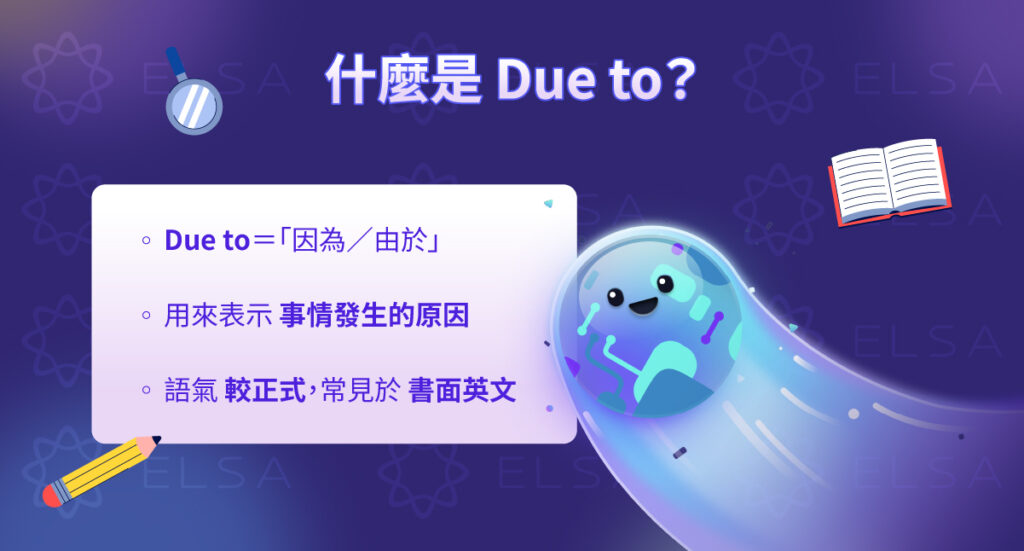
Due to 中文中有“因為、由於”的意思,用來表示導致某個行動或事件發生的原因或理由。這個片語多半出現在書面語中,當想要簡潔、直接地說明原因時經常使用。
Due to 例句:
- Due to bad weather, we couldn’t go camping together. (由於天氣不好,我們無法一起去露營。)
- I won’t trust him due to the fact that he once cheated on me. (我不會相信他,因為事實是他曾經欺騙過我。)
>>因為 英文的其他英文詞語,點擊看看吧!
Due to 用法
你可能會好奇:due to 用法 句首 要怎麼用?或是 due to 後面加什麼?讓我們一起跟著 ELSA Speak 來了解,due to 開頭 或句中時,如何才符合文法規則吧!
Due to 的結構
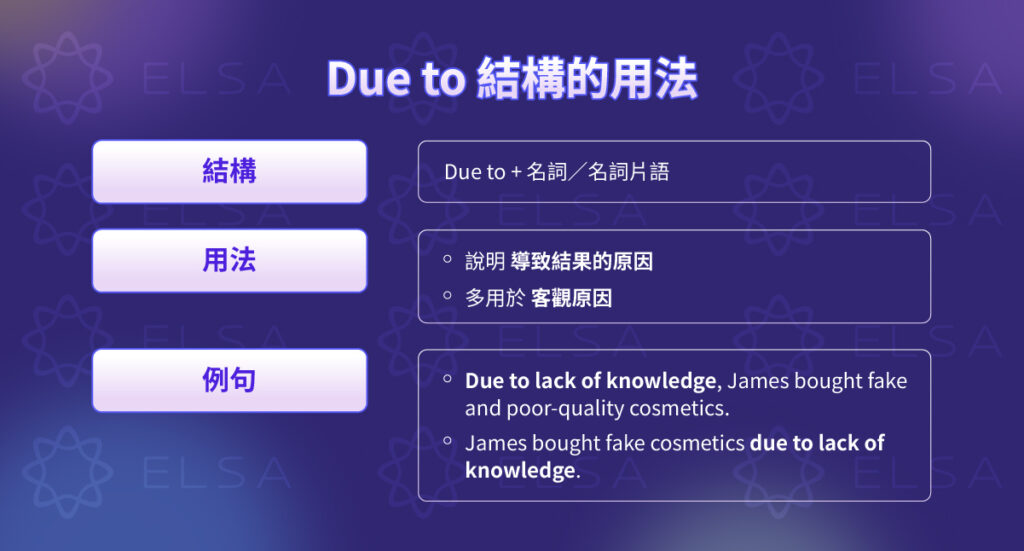
Due to 用來解釋某件事情的原因或理由。在英文中,有兩種常見且意義相近的用法結構。
結構 1: Due to 開頭 或句中
| – Due to + Noun / Noun phrase, S + V – S + V … due to + Noun / Noun phrase |
→ 當 due to 後面接名詞或名詞片語時使用。
例句:
- Due to lack of knowledge, James bought fake and poor-quality cosmetics. (由於缺乏了解,James 買到了假冒、品質低劣的化妝品。)
- James bought fake cosmetics due to lack of knowledge. (James 因為缺乏了解而買了假冒的化妝品。)
結構 2:
| – Due to the fact that + S + V, S + V – S + V … due to the fact that + S + V |
→ 當 due to 後面接一個完整的子句時使用。
例句:
- Due to the fact that I was sick, I had to take the day off from work.
- I had to take the day off due to the fact that I was sick.
(因為生病了,所以我必須請一整天的假。)
Be due to 的結構
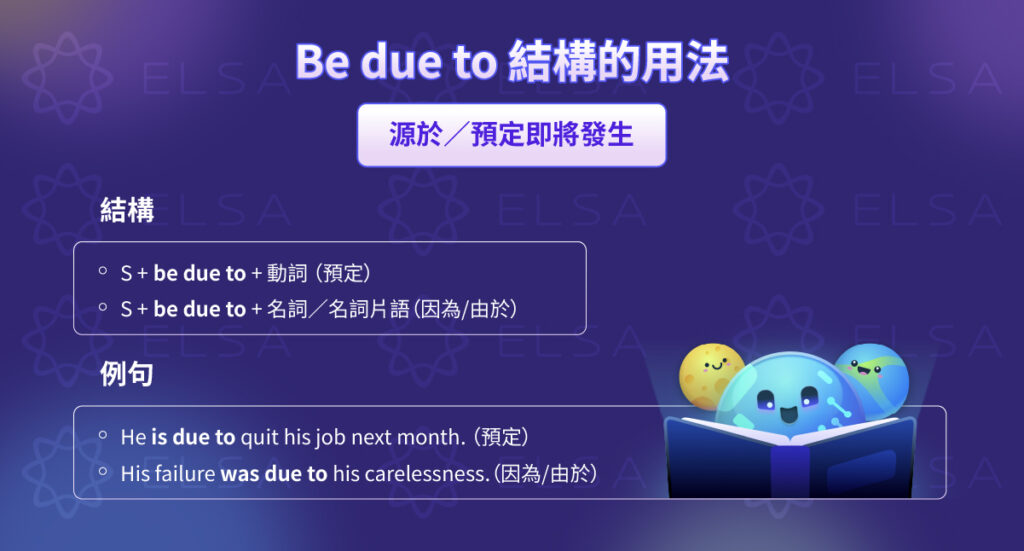
與表示 “因為、由於”的 due to 不同,be due to 具有完全不同的意思,通常用來表示計畫、打算,或即將在不久的將來發生的事情。
結構 1: 用來表示計畫、打算或即將發生的事情
| S + be + due to + V |
例句:
- The engagement ceremony is due to take place soon. (訂婚儀式預計將很快舉行。)
- He is due to quit his job next month. (他計畫在下個月辭職。)
結構 2: 仍然表示“因為/由於”的意思
| – S + be + due to + N / N phrase – S + be + due to + the fact that + S + V |
例句:
- His failure was due to his carelessness. (他的失敗是由於粗心大意。)
- Her late arrival is due to the fact that the train arrived late. (她遲到是因為火車晚點。)
due to because of 差異
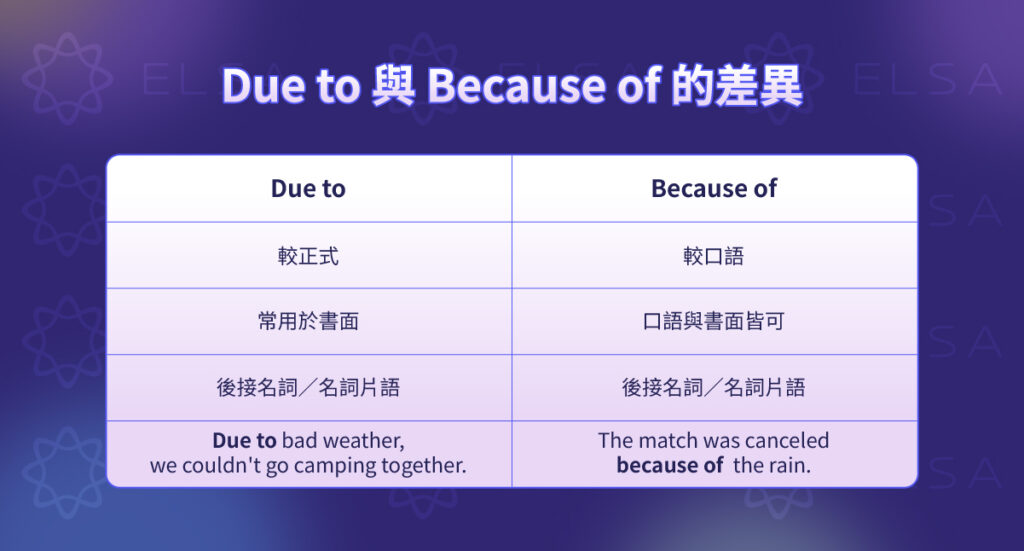
一起來了解 because of due to 用法,避免在溝通中使用錯誤吧!
| Due to | Because of | |
|---|---|---|
| 意義 | 因為、由於 | 因為、由於 |
| 功能 | 強調導致結果的原因 | 表達一般性的原因 |
| 色彩 | 常用於結果較為負面 / 不理想的情況 | 適用於所有情況(正面與負面) |
| 後接詞類 | 名詞/名詞片語 | 名詞/名詞片語 |
| 使用程度 | 較正式,多見於書面語 | 較常用,口語靈活使用 |
>>相關内容:因此 英文: So, thus, therefore, hence 的用法
Due to 同義詞

| 單字/片語 | 意思 | 例句 |
|---|---|---|
| because of | 因為、由於 | The match was canceled because of the rain. (比賽因為下雨而取消。) |
| owing to | 由於、因為 | The delay was owing to technical issues. (延誤是由於技術故障。) |
| as a result of | 作為……的結果 | The accident occurred as a result of carelessness. (事故的發生是因為疏忽大意。) |
| thanks to | 多虧 | She succeeded thanks to her hard work. (她因為勤奮而獲得成功。) |
| on account of | 因為、由於 | The flight was delayed on account of fog. (航班因為大霧而延誤。) |
| resulting from | 源自於 | Problems resulting from poor planning. (問題源自於不良的規劃。) |
| caused by | 由……造成 | The damage was caused by the storm. (損失是由暴風雨造成的。) |
| stem from | 起源於 | His success stems from years of practice. (他的成功源自於多年的訓練。) |
| attributable to | 可歸因於 | The growth is attributable to new policies. (成長可以歸因於新的政策。) |
>>閲讀更多:然而英文是什麼?如何使用 however、nevertheless 和具體代替單詞
due to 練習題
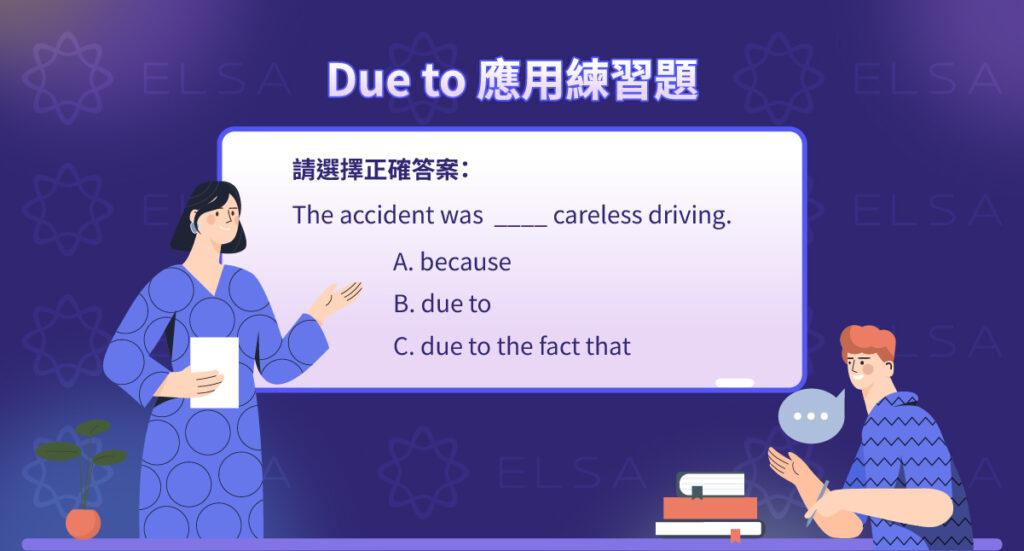
練習
練習 1: 選擇正確答案
- _____ the fog, the boat arrived late. (Due / Because of / Because)
- The improvement was _____ a higher level of gold treated during the period. (Due to/ Because of/ In view of)
- His car troubles are ______ a problem with the alternator. (Due to/ Owing to/ In account of)
- _____ the law in Ireland, they had to work out a way of getting her over to Britain. (Due/ Because)
- Minh missed her light _____ to a traffic hold – up. (Due/ Because/ Owing to)
練習 2: 在不改變句意的情況下改寫句子
- I couldn’t hear what she said. It’s too noisy here.
- My brother lost his phone today. He is unable to contact his family.
- My father is having a meeting with his company. He can’t have dinner with my family.
- It rained heavily. I’m 1 hour late for work.
- Bring your umbrella. It will rain tonight.
答案
練習 1:
- Because of
- Due to
- Due to
- Because of
- Due
練習 2:
- I couldn’t hear what she said because It’s too noisy here.
- Due to the fact that my brother lost his phone today, he is unable to contact his family.
- Because my father is having a meeting with his company, he can’t have dinner with my family.
- Due to heavy rainy, I’m 1 hour late for work
- Bring your umbrella due to the fact that It will rain tonight
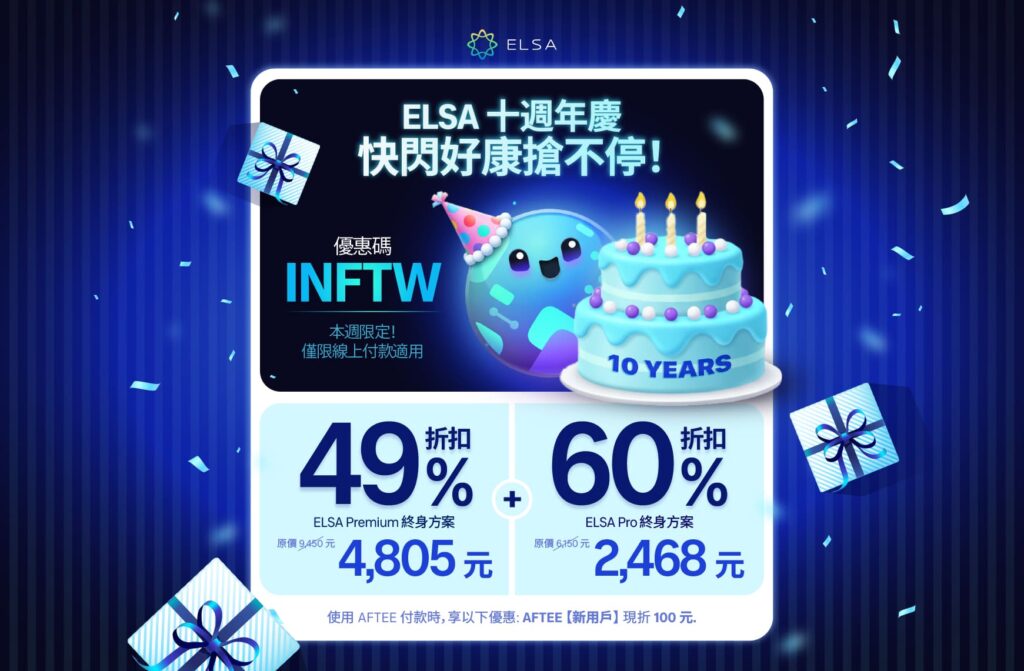
不要錯過具有大量功能的英語學習包
ELSA Premium 終身 – 十周年限定
原價:9,450元 現在 4,805 元
ELSA Premium 還有另外以下的學習包:
ELSA Premium 一年:原價:5,250元 現在 2,192 元
ELSA Premium 三個月:原價:2,100元 現在 1,100 元
總結來說,due to 用來表示原因,通常接在動詞 to be 之後,其後應接名詞或名詞片語,而不是完整的子句。歡迎到 ELSA Speak 了解更多實用的英語文法文章,讓你每天都能學到更多新知識!
閱讀英文雜誌是提升詞彙量、語法和閱讀理解能力最有效的方法之一。 ELSA Speak 會提供熱門英文雜誌推薦,比較它們的難度級別,並介紹免費的線上閱讀資源,方便你選擇適合自己程度的雜誌。
通過雜誌學習英語的好處
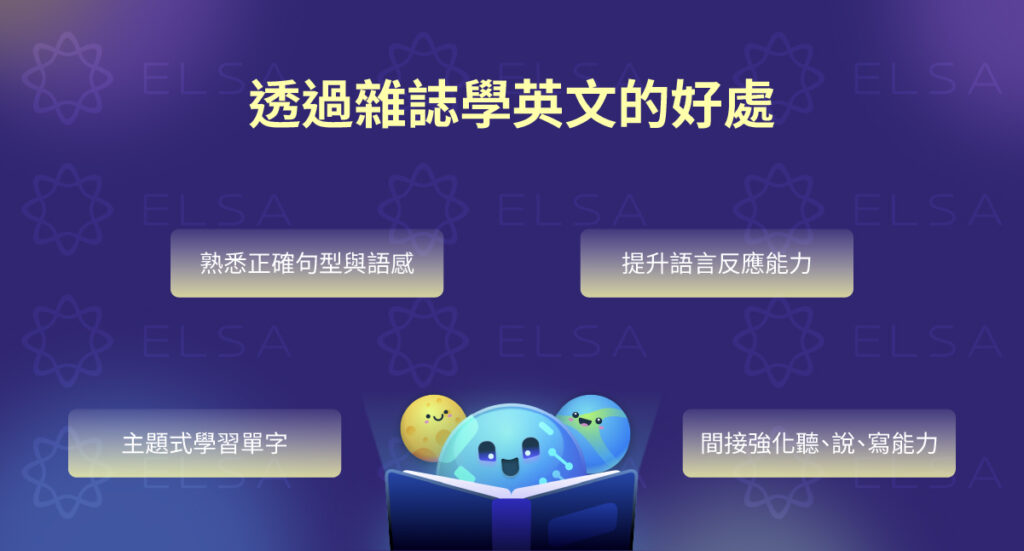
- 拓展詞彙量:在真實脈絡中接觸涵蓋經濟、文化、科學等多個領域的豐富詞彙。
- 提升社會認知:用英语更新全球新闻、趋势和问题。
- 增強語言反應能力:熟悉句型結構和自然表達,提升閱讀理解能力。
- 提升綜合技能:透過日常閱讀習慣,間接提升聽、說、寫能力。
>>增强詞彙:40+個常見主題的常用英語詞彙總結:7000英文單字版本
英文雜誌推薦合集(國際版)
以下推薦含有英文雜誌免費線上看版,可隨時觀看,方便又省時間。
New Scientist – 探索科學與技術
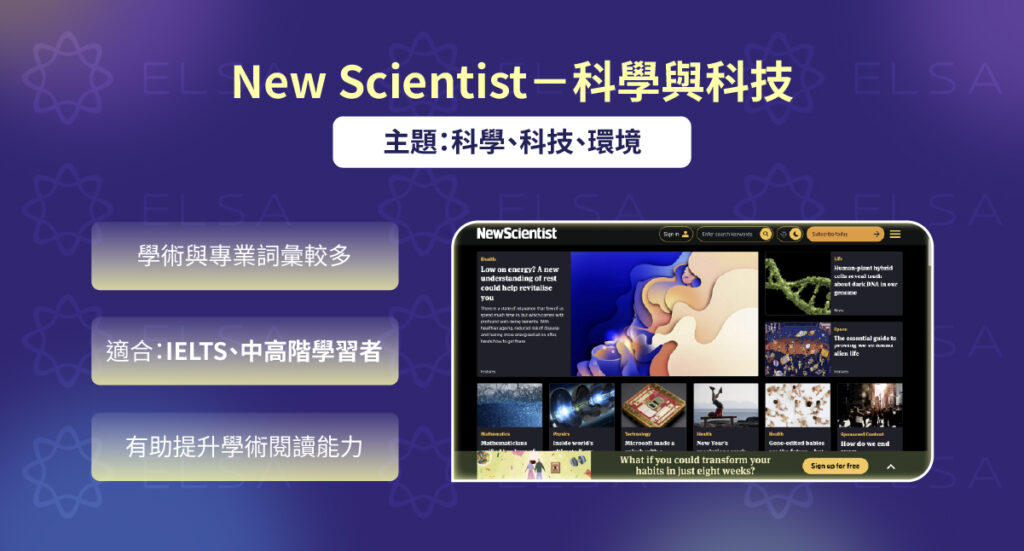
New Scientist 是一本總部位於英國的知名科學雜誌,專門提供有關現代科學技術的深度文章。該雜誌關注各領域的新發現、突破性研究和發展趨勢,幫助讀者了解最新的科學知識,同時提升學術英語閱讀能力。這也是雅思學習者練習詞彙和閱讀技巧的熱門資源。
New Scientist 的主要特點:
- 深入探討科學技術的內容
- 涵蓋廣泛的主題:科技、物理、空間、心理學、健康、環境
- 使用學術性和專業性的英語詞彙
- 適合雅思學習者和英語能力較高的人
- 有助於拓展科學知識,培養深度閱讀能力
>>了解雅思相關:雅思分數範圍及 2025 年最準確的 4 項技能計算方法
The Economist – 專攻經濟學和政治學
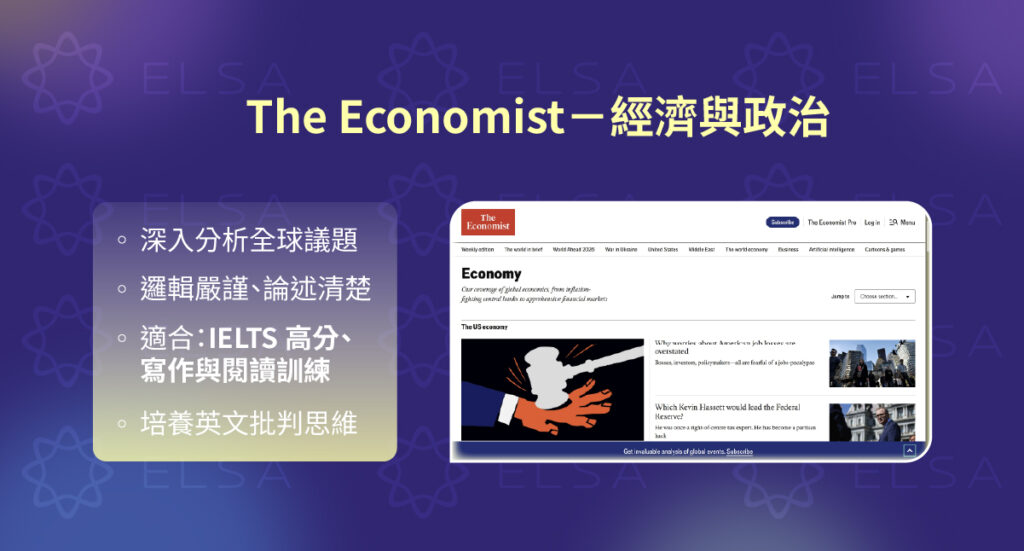
The Economist是全球最有盛譽的雜志,自1843年起在英國出版,專門提供對經濟、政治和全球問題進行深入分析。該雜誌以其邏輯嚴謹的寫作風格、犀利的論證和全球視野,不僅讓讀者及時了解國際新聞,也是學習學術英語的寶貴資源,尤其適合準備考雅思考試的人。
The Economist 的主要特點:
- 內容涵蓋經濟、政治和國際時事。
- 深入分析北美、歐洲及全球議題。
- 學術寫作風格,論證嚴謹,注重批判性思考。
- IELTS Reading 與 Writing的常用參考資料。
- 有助於提升英語閱讀、論文寫作和分析能力。
Fast Company – 技術創新與領導力
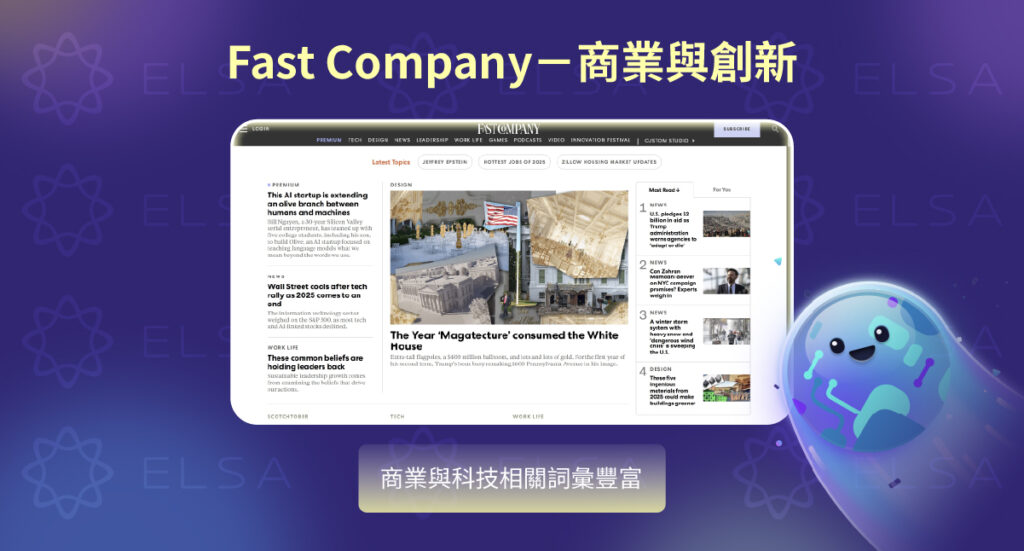
Fast Company 是一本廣受歡迎的美國商業雜誌,專注於科技創新、商業、領導力和設計。該雜誌以現代視角展現了先鋒企業如何運用科技和創新來塑造未來。對於那些希望了解最新商業和科技趨勢,同時提升專業英語詞彙量的人來說,這是理想的閱讀資源。
Fast Company 的主要特點:
- 聚焦技術創新、商業和領導力
- 分析現代商業環境中的新趨勢
- 涵蓋眾多專業商業和技術術語及詞彙
- 適合希望在國際工作環境中發展的英語學習者
- 內容實用,易於應用於新創企業和管理者。
The New York Times – 綜合新聞
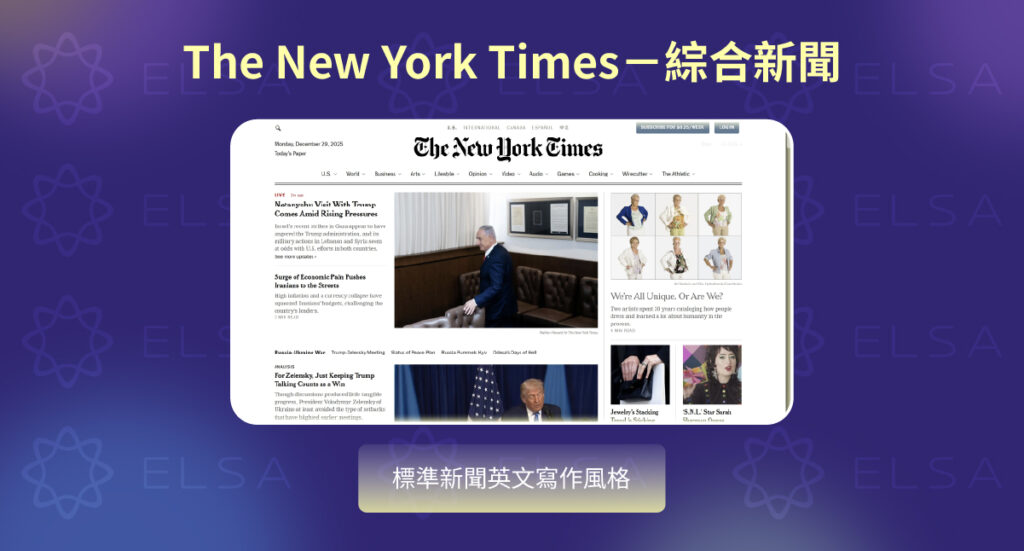
The New York Times是美國一份領先且享有盛譽的日報,以其深入的內容和高品質的分析而聞名。雖然是日報,但其許多版塊都採用雜誌式風格,涵蓋經濟、科技、科學、健康、體育以及國內外政治等廣泛領域。對於希望了解時事並提升英語能力的英語學習者來說,這是一個理想的閱讀資源。
The New York Times 的主要特點:
- 內容全面,涵蓋國內外最新資訊
- 大量雜誌風格的深度分析文章
- 主題廣泛:經濟、科技、科學、健康、政治
- 有助於提升實際英語閱讀能力
- 適合希望熟悉不同寫作風格、豐富詞彙的學習者
TIME For Kids – 一本專門為兒童設計的雜誌
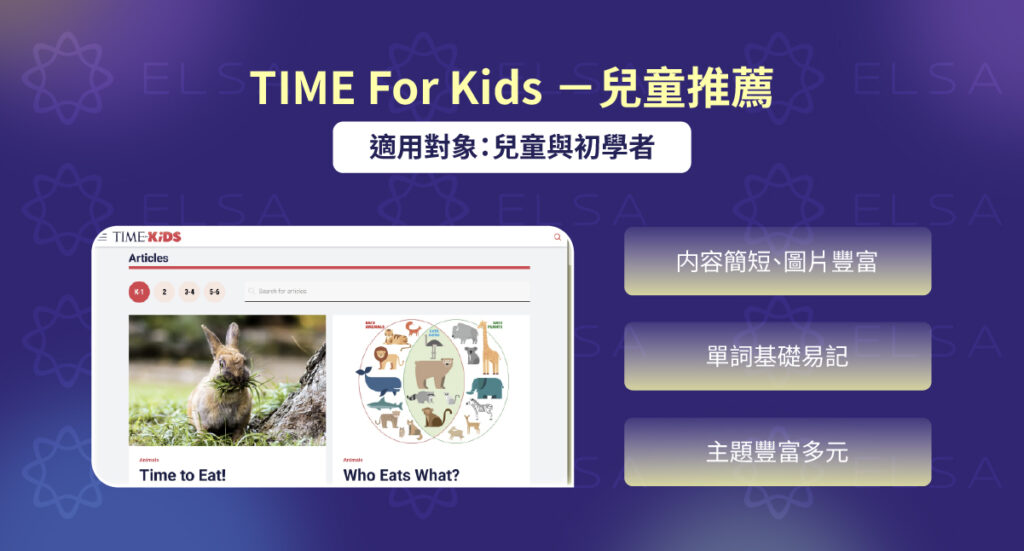
TIME For Kids是一本專為兒童和英語初學者設計的英文雜誌,通過簡化、易懂且圖文並茂的時事、科學和生活主題,幫助他們熟悉英語。
主要特點:
- 內容簡潔,句式簡單,易於理解
- 附有大量生動插圖,讓閱讀更具吸引力
- 有助於擴展基礎詞彙和社交知識
- 主題豐富多樣:科學、自然、人物、我們周遭的世界
- 適合兒童、小學生或英語初學者
National Geographic – 探索自然與文化世界
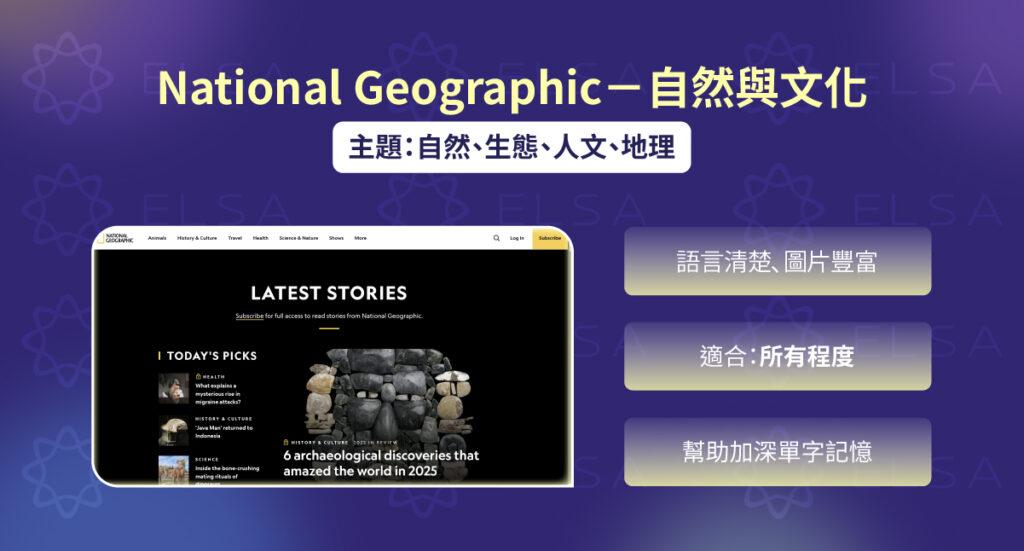
National Geographic 是由美國國家地理學會出版的權威雜誌,以其高品質的文章和圖片而聞名,內容涵蓋世界各地的自然、野生動物、人物和文化。該雜誌內容極具教育意義,既提供科學知識,也激發人們探索和學習周遭世界的熱情。、
National Geographic 的主要特點:
- 深入探討自然、環境與文化
- 涵蓋野生動物、歷史、地理、人類學等多元主題
- 運用與科學和生活相關的英語詞彙
- 採用簡單易懂、科學的寫作風格,適合不同程度的讀者
- 配有高品質插圖,有助於記憶和理解
Time Magazine – 全球事件分析
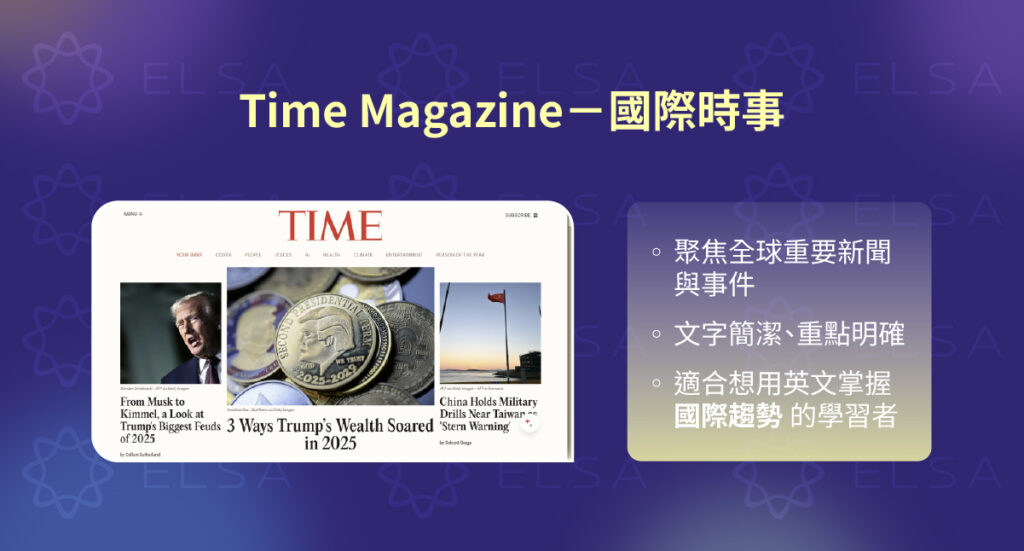
Time Magazine是美國一份享譽全球的週刊新聞雜誌,具有重要的全球影響力。該雜誌專注於報導和深度分析國際政治、社會、商業、文化和娛樂事件。憑藉其清晰簡潔的新聞寫作風格,Time雜誌幫助讀者了解時事,同時也有助於提升他們的英語閱讀理解能力。
Time Magazine 的主要特點:
- 全球事件及國際新聞分析
- 涵蓋政治、社會、商業、文化、娛樂等多個領域
- 標準英語語言,新聞寫作風格
- 有助於拓展時事詞彙量,提升閱讀理解能力
- 適合希望用英語了解國際新聞的學習者
台灣内地流行的英文雜誌推薦合集
AMC 空中美語系列
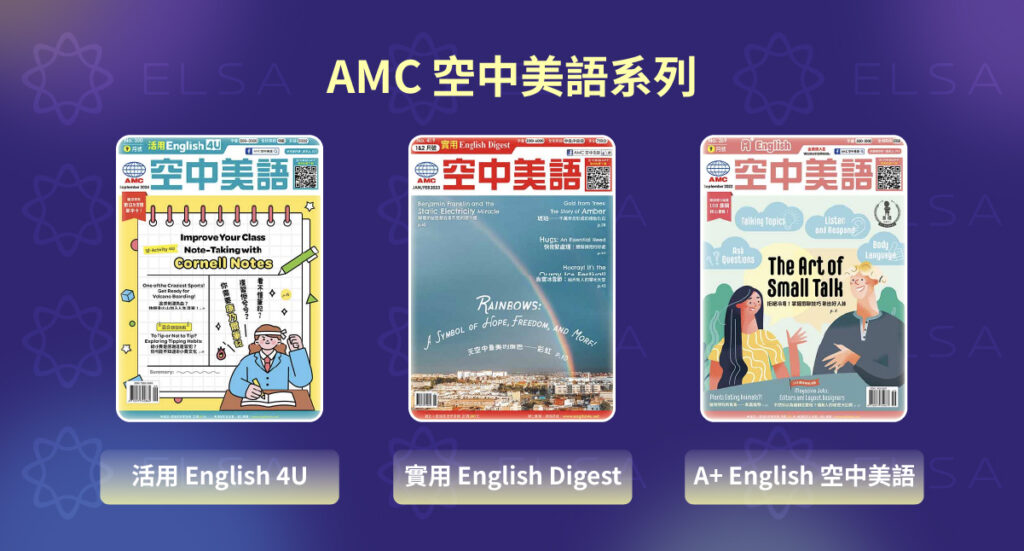
AMC 空中美語集團 以其直觀生動的設計脫穎而出,精美的插圖讓讀者愛不釋手。每期內容都十分豐富,緊貼現實生活和時事熱點。
活用 English 4U
English 4U 是一本英文雜誌,內容新穎多樣,非常適合想要學習英語並了解最新潮流的高中生。
主要特點:
- 涵蓋時事、趨勢和熱門話題等豐富內容。
- 許多文章配有Graphic Organizer,幫助讀者培養資訊綜合和組織能力。
- 4U Chat 版塊提出與閱讀材料相關的問題,幫助讀者拓展思維。
- Pocket Phrase收錄常用片語和慣用語。
- News 4U更新國內外新聞。
- 包含綜合閱讀理解題,旨在培養邏輯思考與分析能力。
實用 English Digest
English Digest 適合專注於考試準備和學術提升的學習者,特別是準備參加重要考試的學生。
主要特點:
- 大量練習與學業成績和系所考試形式緊密結合(cloze test、填空題、段落結構)
- 擴展詞彙表包括關鍵詞彙和用法範例。
- TOEIC 部分包含情境對話、閱讀和聽力
- News Digest提供時事和全球熱門新聞
- 按主題寫作部分包含範文和練習題
- 中英翻譯部分模擬主要考試形式,並提供詳細解釋
- Grammar Review系統化講解關鍵語法點
A+ English 空中美語
A+ English 空中美語 是一本內容豐富、編輯方法創意的英語學習雜誌,適合想要全面提升閱讀和詞彙技能的學習者。
主要特點:
- 課程內容豐富多樣,結構清晰,易於理解。
- 學術內容與真實生活情境結合,使學習不再枯燥乏味。
- 適合希望拓展詞彙量和提升閱讀理解能力的中級學生。
空中英語系列
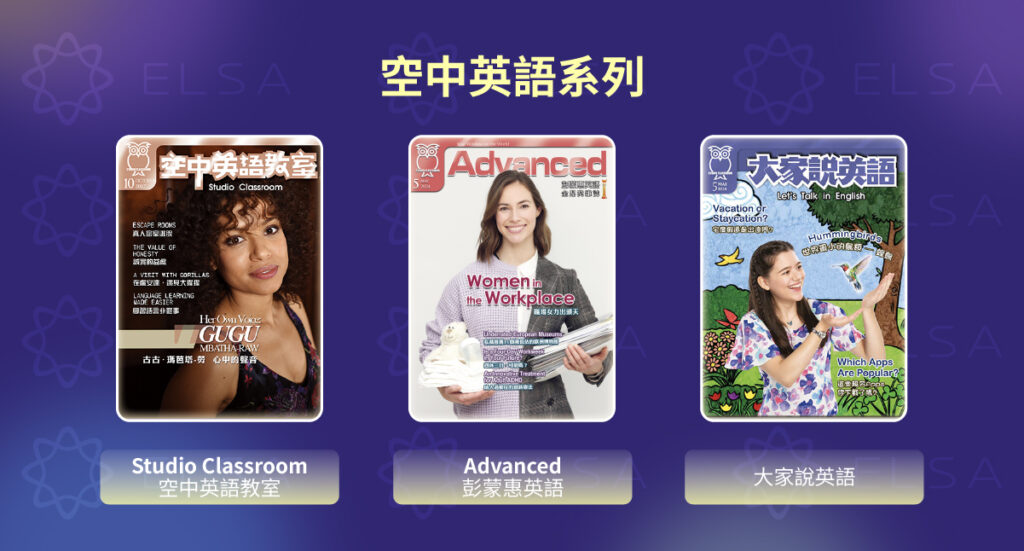
空中英語教室是一個歷史悠久的英語學習品牌,提供線上程度測試,幫助學習者選擇適合自己需求的雜誌。
Studio Classroom 空中英語教室
Studio Classroom 專注於篇幅較長、結構完整的閱讀材料,以幫助學生打下堅實的閱讀和寫作基礎。
主要特點:
- 正式、結構嚴謹的文章
- Talk About It:思考問題及範例答案
- 結合表格和開放式問題的練習閱讀理解練習
- Writing Skills:寫作技巧指導,附範文參考
- Tips for Learning English:分享學習詞彙和自然口語的技巧
Advanced 彭蒙惠英語
Advanced English 適合中級到高級以上程度的學習者,注重深入的內容。
主要特點:
- 本文分析當前國際事件、科學及新知識。
- 詞彙和主題難度較高。
- 本文並非著重於應試準備,而是著重於閱讀理解和學術思維。
- 適合大學生及在職人閱讀。
大家說英語
大家說英語是一本注重溝通技巧的雜誌,適合自學者。
主要特點:
- 內容圍繞日常對話展開。
- 有助於提高聽說反應能力。
- 自學者也能有顯著進步。
Live 互動英語系列
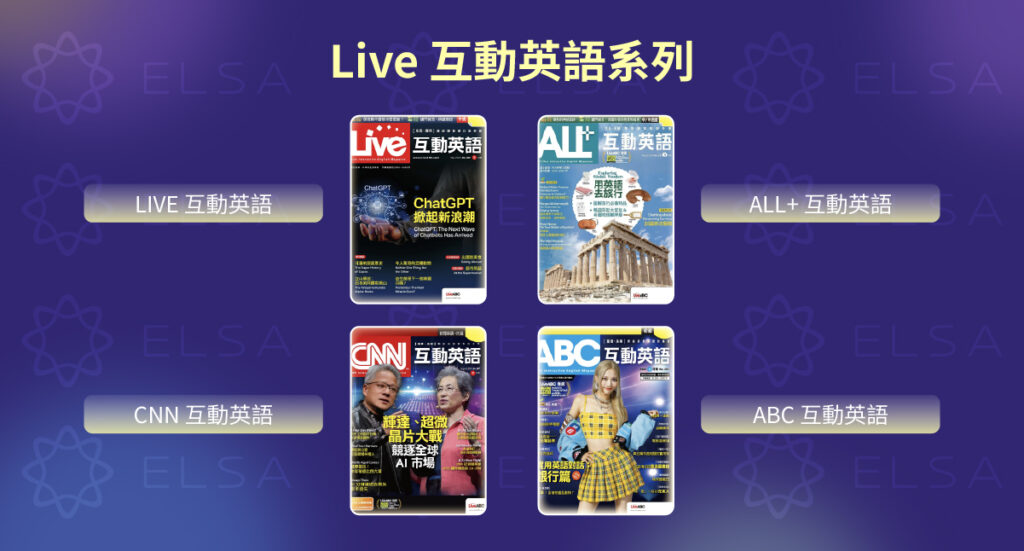
LiveABC以其高度互動的學習材料而聞名,這些材料結合了印刷和多媒體內容。
LIVE 互動英語
LIVE 互動英語適合學習 108 門課程的學生,該課程強調閱讀理解和批判性思考能力。
主要特點:
- Live News Briefs總結重要新聞
- 閱讀理解部分-閱讀技巧、應考策略指南
- 基於新課程的綜合閱讀理解練習
- 模擬考題的翻譯練習,附詳細解析
- 包含跨學科議題,培養核心能力
>>閲讀更多:Interact — 互動 英文以及溝通時如何使用!
ALL+ 互動英語
ALL+ 互動英語 專注於透過時事新聞學習英語,並按主題進行寫作。
主要特點:
- 英語學習新聞版塊
- 閱讀技巧指南:辨識作者的態度和觀點
- 中英考試題型翻譯
- 主題寫作作業,附範文。
- 每週作文練習題
- 包含跨學科能力題
CNN 英文雜誌
CNN 互動英語 使用CNN官方授權的內容,適合想要接觸真實英語的學習者。
主要特點:
- 新聞涵蓋廣泛領域:政治、經濟、科技、娛樂、旅遊
- 大量文章採訪談和對話形式,口語性
- 提供多種聲音的音訊版本
- 眾多大學講師推薦
- 適合高級學習者、托業及托福考生備考。
>>閲讀更多:旅遊英文:依實際情境彙整詞彙、句型與會話範例
ABC 英文雜誌
ABC 互動英語關注娛樂和日常生活,有助於提升閱讀和學習英語的動機。
主要特點:
- 內容輕鬆易懂,貼近日常生活。
- 有助於培養閱讀習慣。
- 適合初級到中級程度的學習者。
常春藤英語
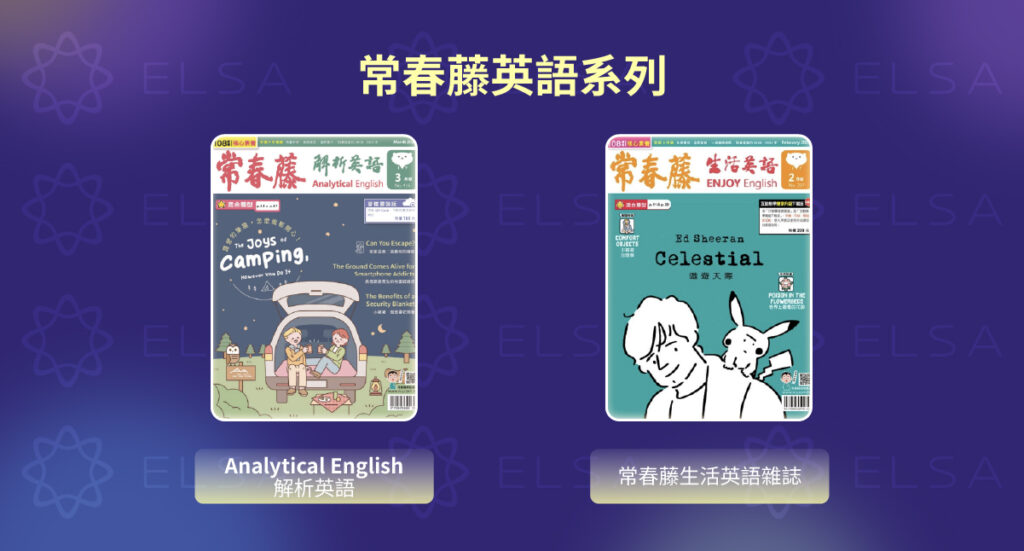
常春藤英語 以其高強度的考前輔導和極其詳細的講解的風格而聞名。
Analytical English 解析英語
解析英語 專注於幫助學生準備大學入學考試和托福考試,結合了雜誌和廣播節目。
主要特點:
- 練習題講解詳盡全面。
- 包含大量綜合練習和基於能力的題目。
- More to Learn部分擴展詞彙量和關鍵短語。
- Vocabulary Test 部分緊扣新詞彙表。
- 提供主題寫作作業,並附有不同程度的範文。
- 翻譯部分模擬考試題型,並提供詳細分析。
- Grammar analysis系統性回顧關鍵語法點。
常春藤生活英語雜誌
常春藤生活英語是一本連結初級和中級程度的雜誌,幫助學習者穩定進步。
主要特點:
- 內容恰當易懂
- 注重日常生活中的實用英語
- 幫助學英文者在升級過程中避免落後
英文雜誌難度比較表
國際英文雜誌
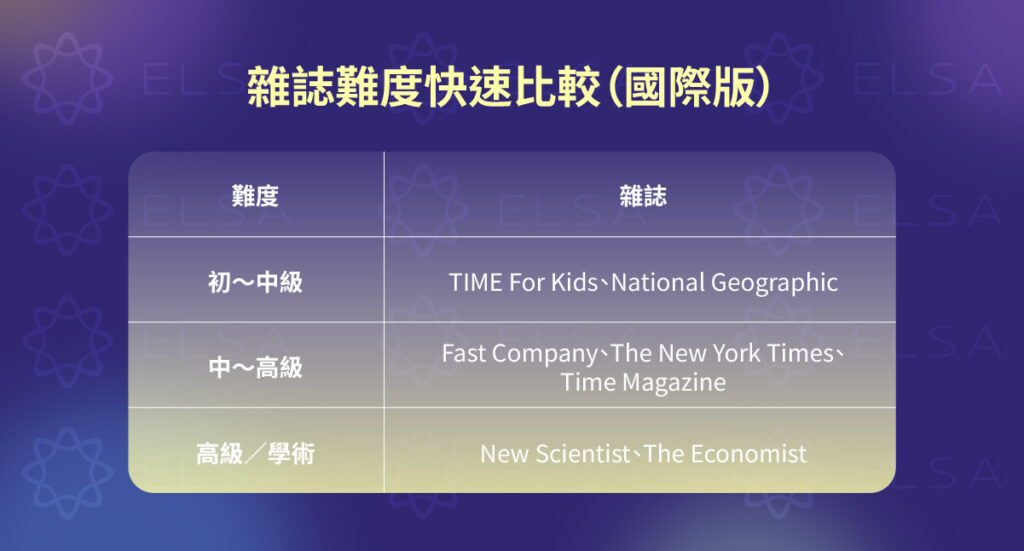
| 英文雜誌 | 主要內容領域 | 適合學習者 |
|---|---|---|
| New Scientist | 現代科學、技術與研究 | 高階學習者,理科學生 |
| The Economist | 經濟學、政治學和全球分析。 | 高級、學術界、在工作的人 |
| Fast Company | 技術創新、商業和領導力。 | 中高級-高級 |
| The New York Times | 綜合新聞、社會議題、政治 | 高級 |
| TIME For Kids | 兒童時事與科學。 | 兒童,英語初學者 |
| National Geographic | 自然、科學與世界文化 | 中高級-高級 |
| Time Magazine | 國際事件和時事分析。 | 高級 |
台灣流行的英文雜誌
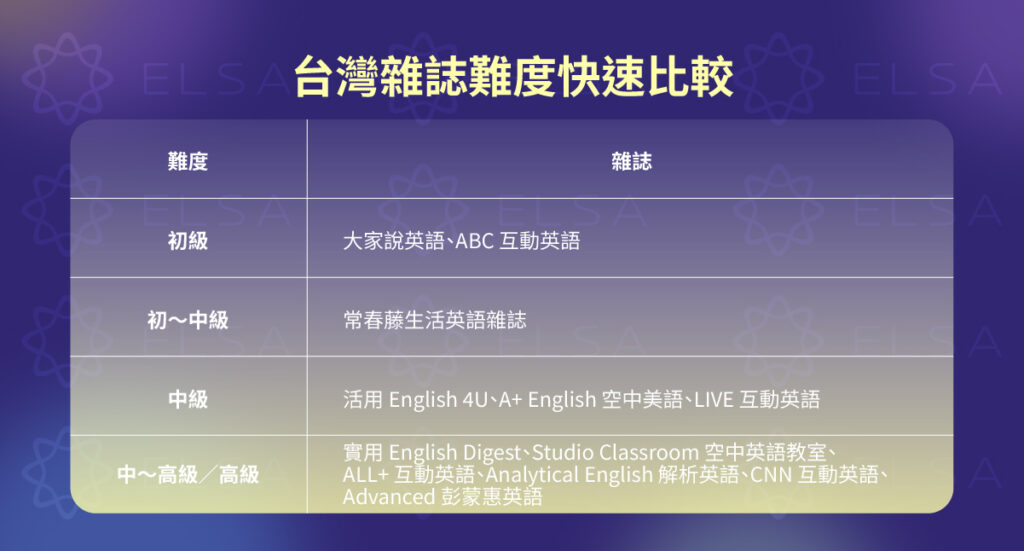
| 英文雜誌 | 主要內容領域 | 適合學習者 |
|---|---|---|
| 活用 English 4U | 時事、文化、閱讀能力 | 中級 |
| 實用 English Digest | 學術英語、托業考試英語、商務英語 | 中級 – 中高級 |
| A+ English 空中美語 | 涵蓋多個主題的詞彙量和閱讀能力。 | 中級 |
| Studio Classroom 空中英語教室 | 時事、社會議題、標準閱讀材料 | 中級 – 中高級 |
| Advanced 彭蒙惠英語 | 國際時事分析 | 高級 |
| 大家說英語 | 對話,日常交流 | 初學者 |
| LIVE 互動英語 | 閱讀,時事 | 中級 |
| ALL+ 互動英語 | 時事、寫作、分析 | 中級 – 中高級 |
| CNN 英文雜誌 | 國際新聞,收聽和閱讀。 | 中高級-高級 |
| ABC 英文雜誌 | 娛樂、生活 | 初學者 |
| Analytical English 解析英語 | 句子分析,考試準備 | 中高級 |
| 常春藤生活英語雜誌 | 日常英語 | 初級 – 中級 |
除了閱讀英文雜誌拓展詞彙量外,學習者也應該結合使用ELSA Speak練習口語,正確發音。 ELSA Speak採用人工智慧語音辨識技術,能夠幫助你詳細糾正發音錯誤,快速提升溝通反應能力,從而在學習和工作中更自然、更自信地使用英語。
不要錯過具有大量功能的英語學習包
ELSA Premium 終身 – 十周年限定
原價:9,450元 現在 4,805 元
ELSA Premium 還有另外以下的學習包:
ELSA Premium 一年:原價:5,250元 現在 2,192 元
ELSA Premium 三個月:原價:2,100元 現在 1,100 元
ELSA Speak 的優勢和突出特點:
- 人工智慧技術能夠識別語音並精確到音節地進行發音評分。
- 詳細的錯誤分析,清楚地指出你的錯誤之處以及如何像本地人一樣糾正它們。
- 豐富的課程庫,涵蓋生活、工作和學術等相關主題。
- 根據每個人的程度和目標量身定制的個人化學習路徑。
- 每天只需幾分鐘的練習,即可同時提升你的口說、聽力和反應能力。
- 適合英語自學者、練習溝通技巧、面試或準備雅思口說考試的人。
透過這些英文雜誌推薦,選擇合適的英文雜誌將使英語學習過程更有效率和輕鬆。養成每日閱讀的習慣,結合查閱生詞和記錄常用結構,就能在短時間內看到英語程度的顯著提升。造訪 ELSA Speak 網站,閱讀更多分享經驗學習方法的文章吧!
在英語中,in on at 用法一直是許多學習者容易混淆的主題,尤其是在用於表示 in on at 地點 用法 與時間。以下文章將幫助你全面掌握英語中in on at 的用法,依不同語境加以區分,並透過實際練習加深理解。
| Key takeaways |
| in on at 用法如下: – In: 用來表示較長的時間範圍,如年、月、十年、世紀,或泛指一段時間。 例句: “I was born in 2001.” (我出生於 2001 年。) – On: 用來表示特定的日期或節日。 例句: “My birthday is on March 24.” (我的生日在 3 月 24 日。) – At: 用來表示具體的時間或精確的時間點。 例句: “The meeting is at 3 PM.” (會議在下午 3 點舉行。) – 此外: “in” 通常用於表示廣泛地點或在內部, “on” 表示在表面上或大型交通工具上, 而 “at” 表示精確、具體的位置。 |
in on at 用法 時間
關於 in on at 日期,下面的表格可幫助你在進入詳細說明前,快速區分這三個介系詞:
| 介詞 | 用途 | 例句 |
|---|---|---|
| in | 較長的時間範圍 | in 1990, in summer, in the morning |
| on | 有具體日期的時間點 | on Monday, on July 14th, on the weekend |
| at | 具體、精確的時間點 | at 7 PM, at noon, at night |
in 用法(較長的時間範圍)
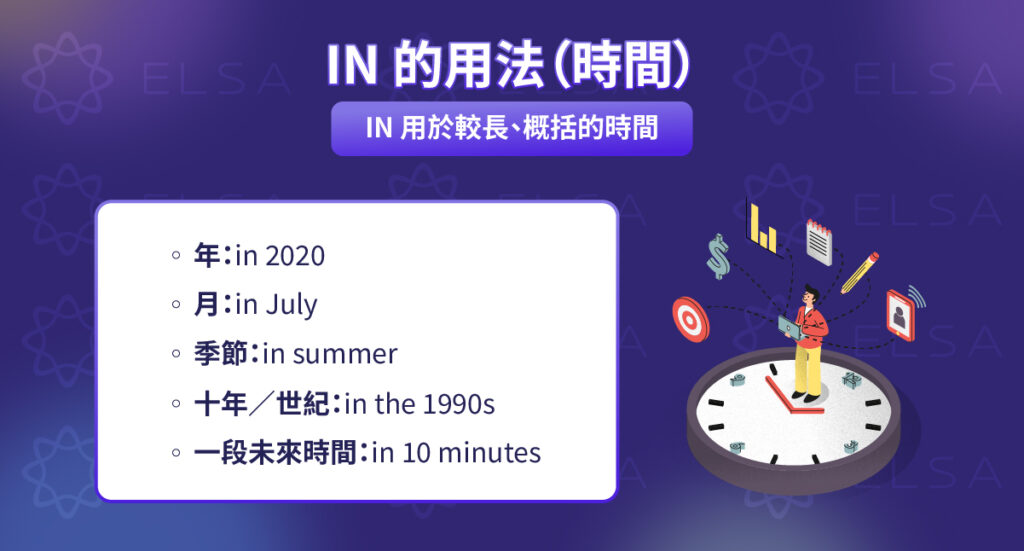
| in 用法 | 代表性搭配 | 例句 |
|---|---|---|
| In + 一天中的時段 | in the morning, in the afternoon, in the evening, in the middle of the night | She finished her work in the late afternoon. |
| In + 月份 | in January, in July, in December | She was born in July. |
| In + 季節 | in spring, in summer, in autumn, in winter | The leaves change color in autumn. |
| In + 年份 | in 1975, in 2020 | The war ended in 1975. |
| In + 十年 | in the ’90s, in the 1990s | The internet boomed in the 1990s. |
| In + 世紀 | in the 21st century | We live in the 21st century. |
| In + 未來時間 | in a few days, in 10 minutes | I’ll be back in a few days. |
on 用法(日期/具體時間點)
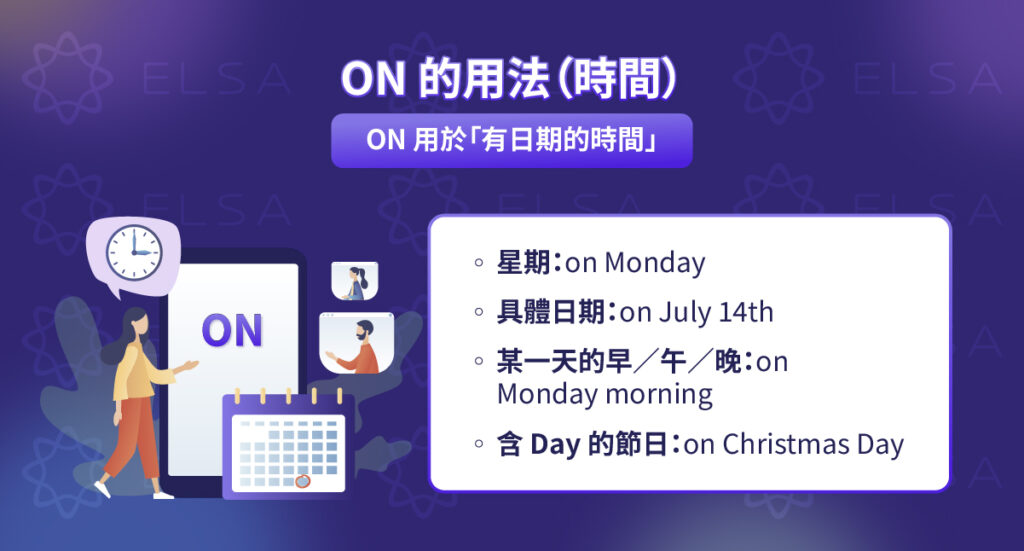
| on 用法 | 代表性搭配 | 例句 |
|---|---|---|
| On + 日期/星期 | on Monday, on Sunday | The meeting is on Wednesday. |
| On + 日期 | on July 14th, on the 14th of July | My birthday is on July 14th. |
| On + 特定一天的某個時段 | on the morning of July 14th | I saw her on Wednesday morning. |
| On + 特定場合/日子 | on the weekend, on the anniversary | She gets paid on a monthly basis. |
| On + 含有“Day”的節日名稱 | on New Year’s Day, on Labor Day | We partied on New Year’s Eve. |
at 用法 (短暫、精確的時間點)
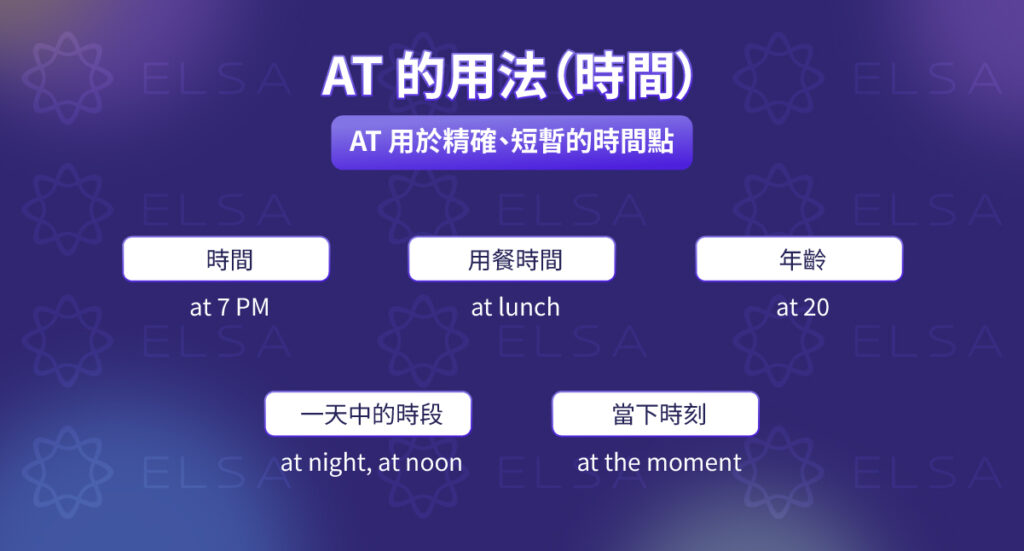
| at 用法 | 代表性搭配 | 例句 |
|---|---|---|
| At + 一天中的時間點 | at night, at noon, at midnight, at sunrise | I like walking at night. |
| At + 具體時刻 | at 9 o’clock, at 9:05 AM | The show starts at 9 o’clock. |
| At + 用餐時間 | at breakfast, at lunch, at dinner | She reads newspapers at breakfast. |
| At + 年齡 | at 20, at the age of retirement | He started working at 20. |
| At + 某一階段中的特定時間點 | at the beginning of…, at the end of…, at the moment | I’m busy at the moment. |
in on at 用法 地方
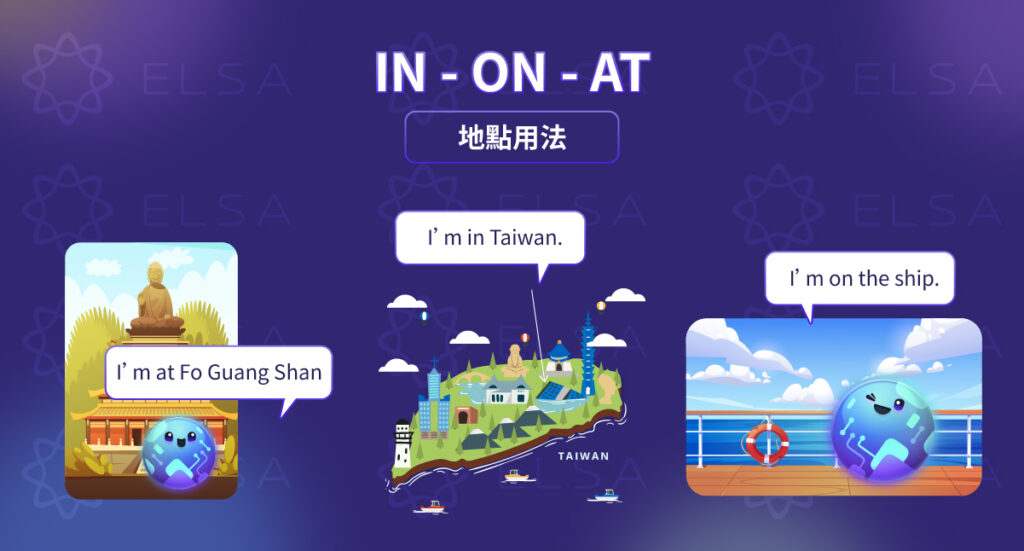
當談到 place(地點/場所) 時,三個介詞 in – on – at 所表達的範圍由 “寬 → 具體 → 精確” 有所不同:
| 介詞 | 主要用法 | 例句 |
|---|---|---|
| in | 廣泛的地點、區域、被包圍或位於某個空間內 | She lives in Taipei. The kids are in the pool. |
| on | 在表面上、在道路上、在大型交通工具上、沿著某一位置 | The book is on the table. He is on the bus. |
| at | 精確的地點、地址、具有特定功能的場所 | She is at the theater now. I work at Google. |
>>閲讀更多:台湾地址和英文地址的寫法有什么区别?
in 用法表示廣泛地點或在內部
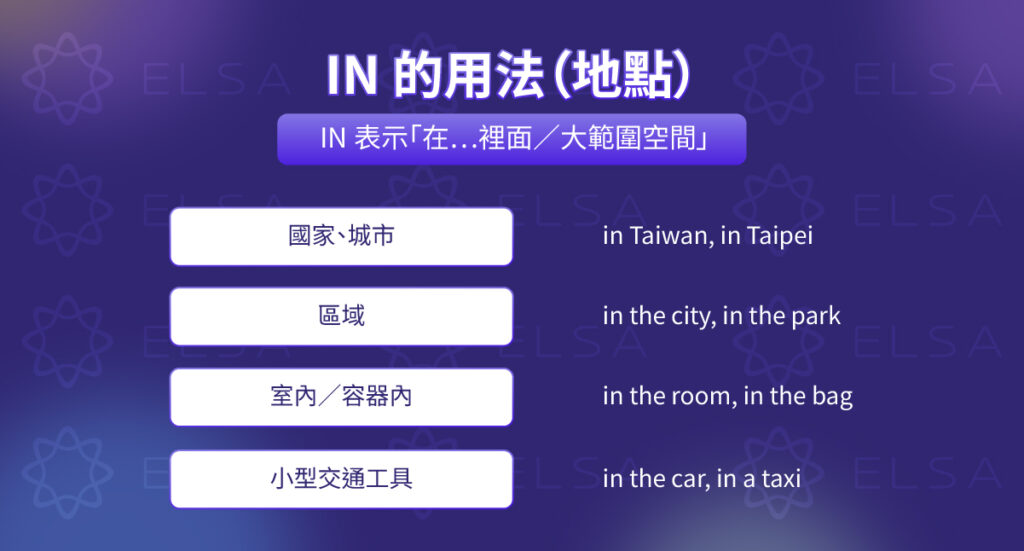
| in 用法 | 代表性搭配 | 例句 |
|---|---|---|
| In + 大型地理區域(宇宙、大洲、國家、城市區域、行政區) | in the universe, in Asia, in Taipei, in Taiwan, in the city, in the western region of the country | I live in a small town in the countryside. |
| In + 表示方向的詞 | in the north, in the south, in the west, in the east | I currently live in the south of France. |
| In + 建築物/房間/可容納、盛裝之物 | in the building, in the drawer, in the kitchen | The classroom is in the main building, room 205. |
| In + 小型汽車或計程車 | in the car, in the taxi | I’m in my mom’s car and on my way to the supermarket. |
| In + 某些特定區域 | in the park, in the pool | The swimmers are training in the pool. |
on 用法 表示在表面上或大型交通工具上
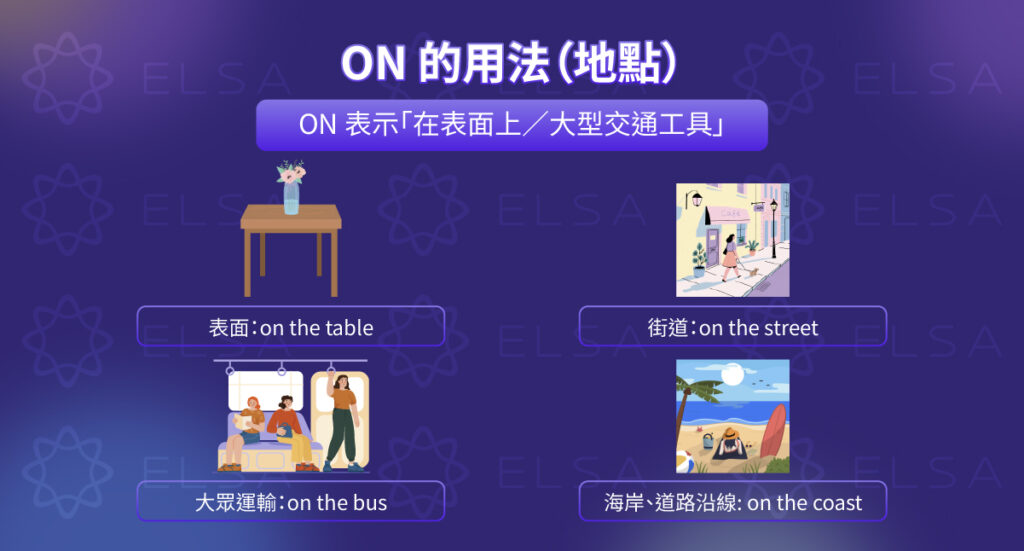
| on 用法 | 代表性搭配 | 例句 |
|---|---|---|
| On + 街道/路線名稱 | on the street, on the trail, on the tracks | The hikers are walking on the trail. |
| On + 某物 = 某物的表面上 | on the table, on the bed, on the finger | The cat is sleeping on the bed. |
| On + 樓層 | on the fifth floor | I live on the fifth floor. |
| On + 大型交通工具/ 大眾運輸工具(非汽車) | on the plane, on the bus, on the motorcycle, on the boat | The passengers are on the plane waiting for takeoff. |
| On + 沿著道路、河岸或靠近海邊、湖邊的位置 | on the road, on a lake, on the coast | Dublin is on the east coast of Ireland. |
at 用法 表示精確、具體的位置
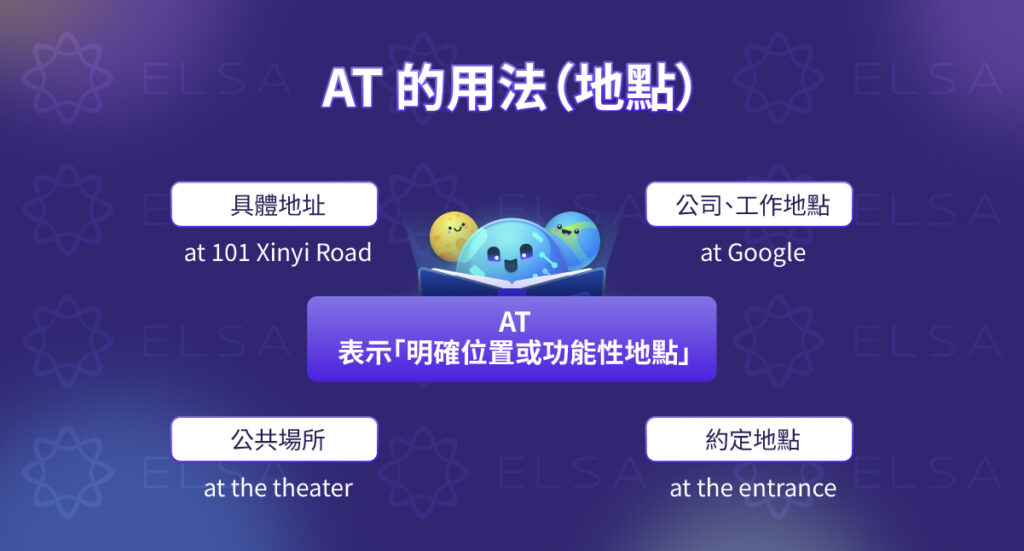
| at 用法 | 代表性搭配 | 例句 |
|---|---|---|
| At + 具體地址 | at 101 Shifu Road | The tourism office is at 101 Shifu Road. |
| At + 有多人活動的詳細場所 | at Stanford University, at the theater | The concert will be held at the theater. |
| At + 工作場所/營運據點 | at Google, at my company’s headquarter | I am doing an internship at Google. |
| At + 店鋪/公共場所:如理髮店、醫院等 | at the hairdresser’s, at the doctor’s surgery | My wife is at the hairdresser’s at the moment. |
| At + 明確的參照點(在某物的起點/終點/邊緣) | at the bottom of…, at the edge of… | The mountain stands at the edge of the forest. |
in on at 的一些特殊用法
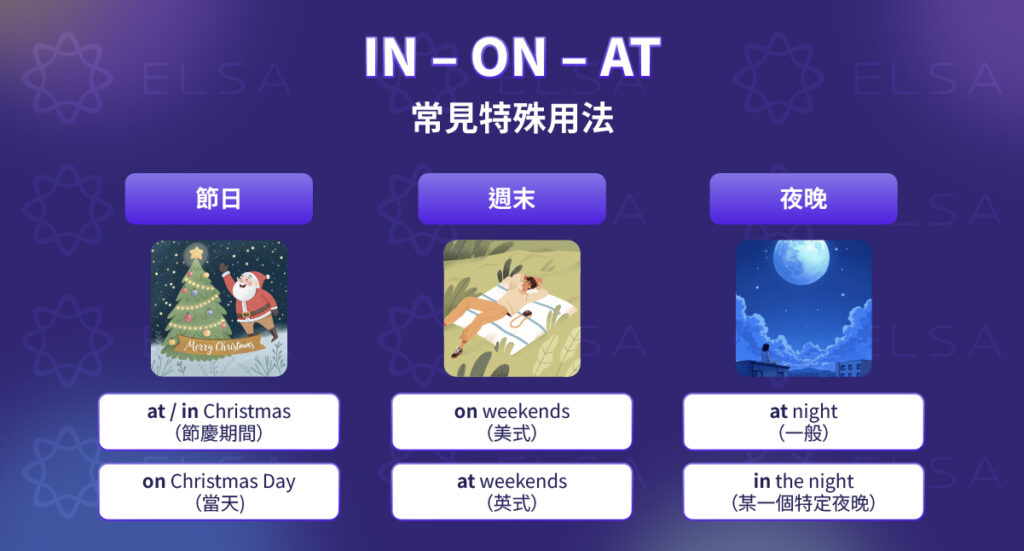
in – on – at 表示時間時的特殊情況
| 特殊情況 | 說明 | 例句 |
|---|---|---|
| 節日/慶典 | – At/In + 節日名稱 → 指整個節慶期間。 – On + 節日名稱 → 指當天那一天。 | – At/In Lunar New Year (在農曆新年假期期間) – At Christmas (在聖誕節期間) – On Christmas Day (在 12 月 25 日) – On New Year’s Eve (在除夕夜) |
| Weekend | 三個介系詞皆可使用: – At weekends → 英式英語 – On weekends → 美式英語 – On the weekend/At weekend/In the weekend → 皆表示 “在週末”. | – We usually stay home on weekends. – She studies English at weekends. |
| Night | – At night → 泛指所有夜晚(概括)。 – In the night → 指某一個特定的夜晚,有事情發生。 | – Don’t go out at night. (泛指夜晚) – I heard a noise in the night. (某一個特定的夜晚) |
in – on – at 表示地點時的特殊情況
| 特殊情況 | 說明 | 例句 |
|---|---|---|
| 同一地點但意義不同 | In → 在內部 On → 在表面上 At → 在某一位置 | – The puzzle pieces are scattered in the table. (在抽屜裡) – The puzzle pieces are scattered on the table. (在桌面上) – We are sitting at the table. (在餐桌旁) |
| 交通工具 | In + 小型~中型車輛On + 大眾交通工具或非封閉式交通工具 (如腳踏車、機車等)By + 所有交通工具 (移動方式) | – In a taxi – On the MRT/bus/motorbike – By car → 乘汽車 – By plane → 乘飛機 |
>>閲讀更多:關係代名詞 (Relative Pronouns): who、which、that 用法和區分
in on at 練習
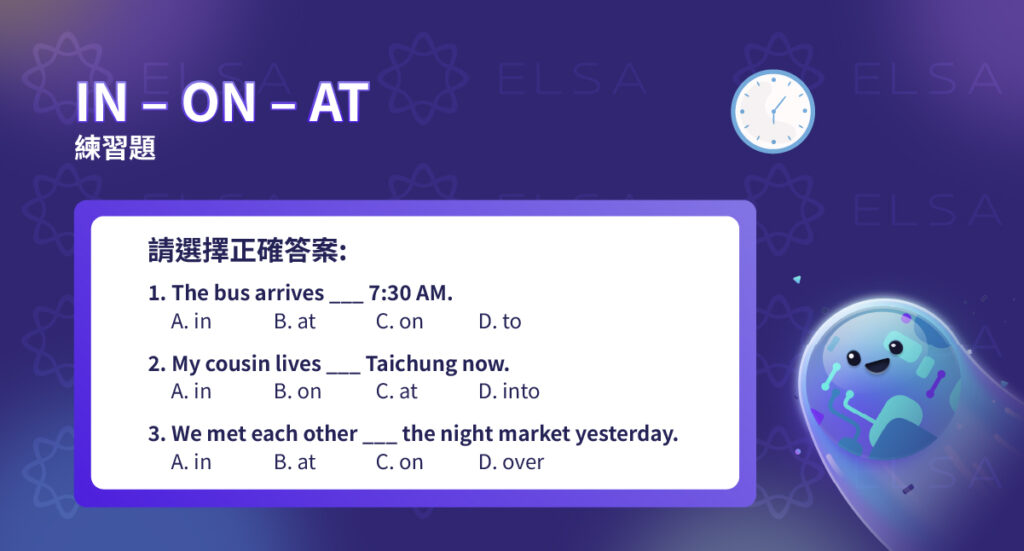
一起和 ELSA Speak 來做練習,將 in on at 的用法應用得最準確吧!
練習題
練習 1:選出最正確的答案
1. The bus arrives ___ 7:30 AM.
A. in B. at C. on D. to
2. My cousin lives ___ Taichung now.
A. in B. on C. at D. into
3. We met each other ___ the night market yesterday.
A. in B. at C. on D. over
4. I usually study ___ the evening.
A. in B. at C. on D. during
5. The picture is hanging ___ the wall.
A. in B. at C. on D. over
6. Our company was founded ___ 2005.
A. on B. in C. at D. during
7. The concert will be held ___ Xinyi District.
A. on B. in C. at D. along
8. My birthday is ___ September 12th.
A. in B. on C. at D. during
9. Taipei 101 is located ___ Xinyi Road.
A. on B. at C. in D. to
10. Let’s meet ___ the MRT station entrance.
A. on B. in C. at D. Near
練習 2:在適當的空格中填入 in on at
- The movie starts ___ 9 PM.
- She arrived ___ the airport very early.
- I usually walk my dog ___ the morning.
- My keys are ___ my backpack.
- We will travel home ___ Lunar New Year.
- There are many food stalls ___ the street.
- He lives ___ the east coast of Taiwan.
- The meeting will be ___ the conference room.
- I’ll see you ___ Friday afternoon.
- The kids are playing ___ the playground.
答案
練習 1:
| 題號 | 1 | 2 | 3 | 4 | 5 |
| 答案 | B | A | B | A | C |
| 題號 | 6 | 7 | 8 | 9 | 10 |
| 答案 | B | B | B | A | C |
練習 2:
| 題號 | 1 | 2 | 3 | 4 | 5 |
| 答案 | at | at | in | in | at/in |
| 題號 | 6 | 7 | 8 | 9 | 10 |
| 答案 | on | on | in | on | in |

練習英語
ELSA Pro 終身 – 優惠特價!
原價 6,150元 現價 2,368 元
- ELSA 字典
- 課程内容持續更新
- 220+ 關於工作和生活的主題
- 9600+ 課程
- 學習時間無限制
此外:ELSA PRO 一年套餐以優惠價出售 – 1,515元 (-30%)
常見問題
in on at 日期用哪一個才正確?
→ 日期應使用 “on”。
例句: on July 15th, on September 12th, on Monday.
希望本文能幫助你清楚理解 in on at 用法 地點與時間。透過經常練習例句與 in on at 練習,能幫助你加深記憶,並在各種溝通情境中正確運用。歡迎前往 ELSA Speak 的英語文法專區,探索更多有趣又實用的文章!
學習英語時,-ed 發音是最重要的知識點之一,因為大多數動詞的過去式都是 -ed 發音。然而,許多學習者很容易讀錯或混淆 /t/、/d/ 和 /ɪd/ 這三種發音。 ELSA Speak 將幫助你理解英文 -ed 發音的所有規則,掌握每種情況的發音方法,並在日常交流中準確運用它們。
| Key Takeaways |
| 英語中以 -ed 結尾的單字有三種主要發音: – /id/: 當動詞以 /t/ 或 /d/ 結尾時 – wanted (/ˈwɒntɪd/), needed (/ˈniːdɪd/) – /t/: 以清子音結尾時,例如 /p/、/k/、/f/、/s/、/ʃ/、/tʃ/ – stopped (/stɒpt/), looked (/lʊkt/) – /d/: 對於所有其他以濁輔音結尾的情況,例如 /b/、/g/、/v/、/z/,濁音 – played (/pleɪd/), loved (/lʌvd/), called (/kɔːld/) |
以-ed結尾的音是什麼?
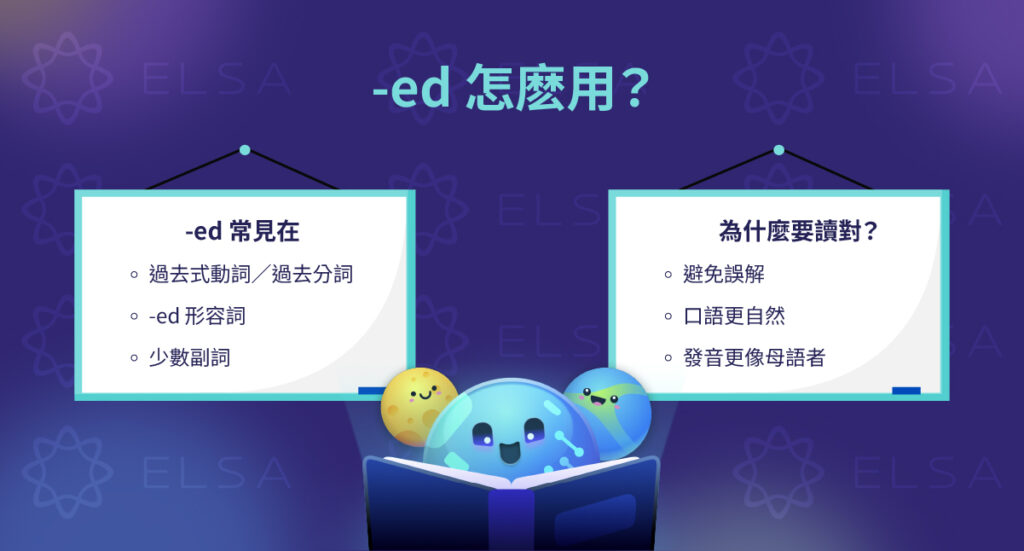
後綴 -ed 是英語中常見的後綴,可以添加到動詞、形容詞或副詞後以表達各種含義:
- 動詞的過去式或過去分詞 – walked(走過),played(玩過)…
- 形容詞 – bored(無聊),excited(興奮)…
- 副詞 – supposedly(據說),unexpectedly(出乎意料的是)…
→ 所以并非所有過去式加ed發音都是對的,-ed 後綴還在別的英文詞性出現哦!
>>閲讀更多:12 種英文時態:結構、識別標誌、用法、記憶技巧與應用練習
為什麼正確念 ed 發音很重要?
- 能幫助你清晰溝通,避免誤解。
- 能展現你的專業素養,尤其是在學術或工作環境中。
- 能增強你的口語自信,使你的發音更接近本地人的程度。
>>閲讀更多:used to 用法:區別 used to, be used to 與 get used to 和練習示例

區分清音和濁音(與 -ed 發音有關)
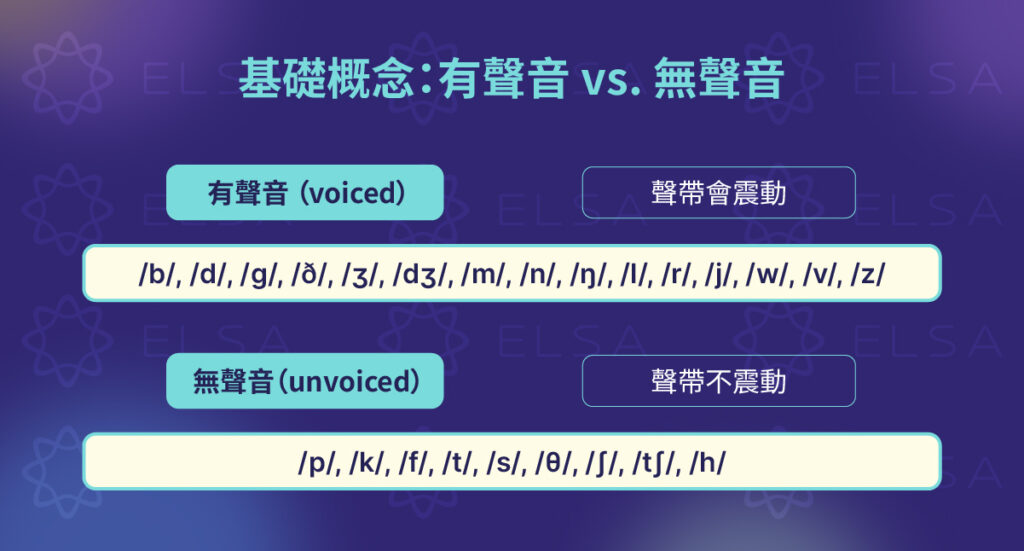
要正確發音動詞 ed 發音,最重要的是區分清濁音。這是因為動詞、形容詞和副詞的 -ed 詞尾發音規則有三條,都直接取決於前面單字的最後一個音。
濁音 (Voiced sounds)
濁音或元音是指發音時聲帶振動的聲音。
測試方法很簡單:輕輕地將手指放在喉嚨上,發出/r/音…如果你感覺到喉嚨振動,那就是濁音。
英文有15個濁音: /b/, /d/, /g/, /ð/, /ʒ/, /dʒ/, /m/, /n/, /ŋ/, /l/, /r/, /j/, /w/, /v/, /z/
| 濁音 (Voiced sounds) | 英文單字 | 發音 | 意思 |
|---|---|---|---|
| /b/ | bag | /bæɡ/ | 包包 |
| /d/ | dog | /dɔɡ/ | 狗 |
| /g/ | go | /ɡoʊ/ | 去 |
| /v/ | van | /væn/ | 小型卡車 |
| /ð/ | this | /ðɪs/ | 這個 |
| /z/ | zoo | /zuː/ | 動物園 |
| /ʒ/ | measure | /mɛʒər/ | 量測 |
| /dʒ/ | judge | /dʒʌdʒ/ | 法官 |
| /m/ | moon | /muːn/ | 月亮 |
| /n/ | nose | /noʊz/ | 鼻子 |
| /ŋ/ | sing | /sɪŋ/ | 唱歌 |
| /l/ | lake | /leɪk/ | 湖 |
| /r/ | red | /rɛd/ | 紅色 |
| /w/ | wet | /wɛt/ | 濕 |
| /j/ | yes | /jɛs/ | 是的 |
注意:所有元音都是濁音,因此這會直接影響 d ed 發音。
清音 (Unvoiced sounds)
相反,清音是指發聲時聲帶不振動的聲音,通常涉及用力釋放空氣,聽起來像風聲或嘶嘶聲。
英語中有九個清輔音。: /p/, /k/, /f/, /t/, /s/, /θ/, /ʃ/, /tʃ/, /h/
| 清音 (Unvoiced sounds) | 英文單字 | 發音 | 意思 |
|---|---|---|---|
| /p/ | top | /pɑːp/ | 頂部 |
| /t/ | talk | /tɑːk/ | 溝通 |
| /k/ | cake | /keɪk/ | 蛋糕 |
| /f/ | safe | /feɪf/ | 安全 |
| /θ/ | thin | /θɪn/ | 薄,瘦 |
| /s/ | salt | /sɒlt/ | 鹽 |
| /ʃ/ | she | /ʃiː/ | 她 |
| /tʃ/ | chat | /tʃæt/ | 聊天 |
| /h/ | hat | /hæt/ | 帽子 |
英語中 ed 結尾 發音規則(-ed 最準確的發音)
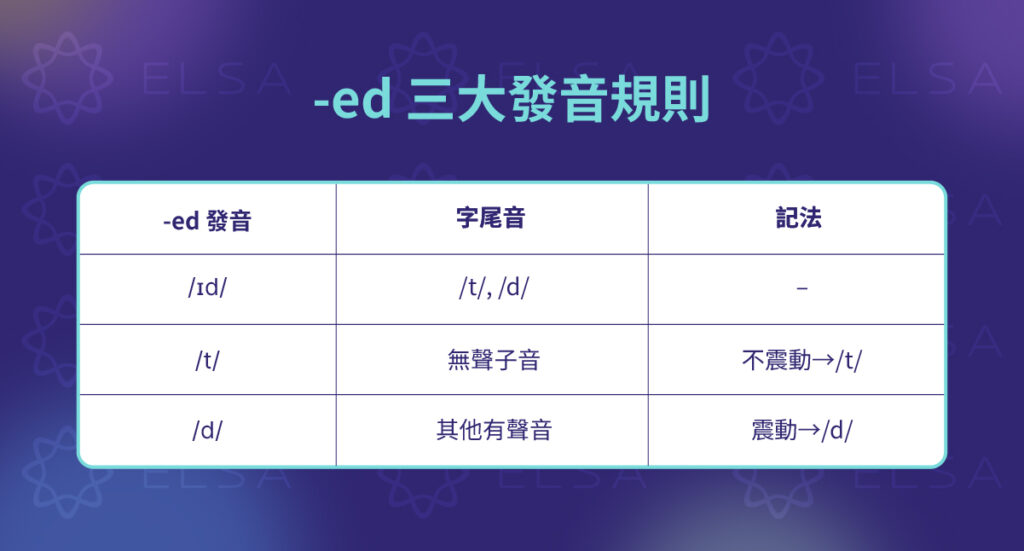
英文 ed 發音出現在動詞的過去式、過去分詞(規則動詞)或 -ed 形容詞。要正確發音,你需要知道以下三條黃金法則。
-ed 發音的 3 個規則總結(超級容易記住)
| 以聲音結束 | -ed 發音 | 記憶技巧 |
|---|---|---|
| /t/ 或者 /d/ | /ɪd/ | 添堵 |
| 清音: /p/, /f/, /k/, /s/, /ʃ/, /tʃ/, /θ/ | /t/ | 無聲音 = 沒震動 |
| 其餘狀況(濁音) | /d/ | 有聲音 = 有震動 → 讀 /d/ |
-ed 的發音為 /ɪd/
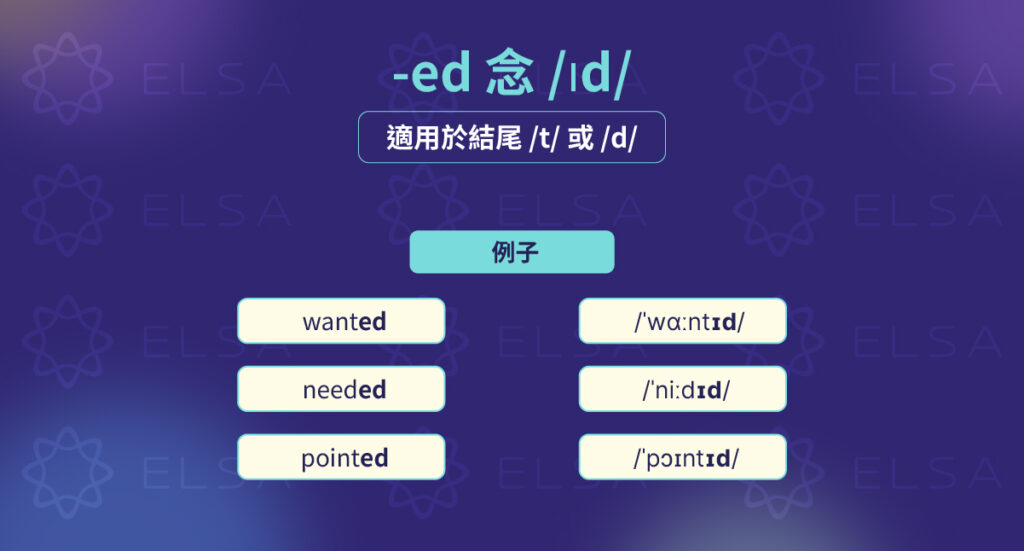
當動詞以 /t/ 或 /d/ 結尾時,就適用此規則。這是最簡單的情況:如果看到詞尾音為 /t/ 或 /d/,則將其發音為 /ɪd/。
| 動詞 | 發音 | 意思 |
|---|---|---|
| wanted | / wɑːntɪd / | 想 |
| added | / ædɪd / | 加上 |
| needed | / niːdɪd / | 需要 |
| pointed | / pɔɪntɪd / | 指出 |
練習英語
ELSA Pro 終身 – 優惠特價!
原價 6,150元 現價 2,368 元
- ELSA 字典
- 課程内容持續更新
- 220+ 關於工作和生活的主題
- 9600+ 課程
- 學習時間無限制
此外:ELSA PRO 一年套餐以優惠價出售 – 1,515元 (-30%)
當 -ed 發音為 /t/ 時
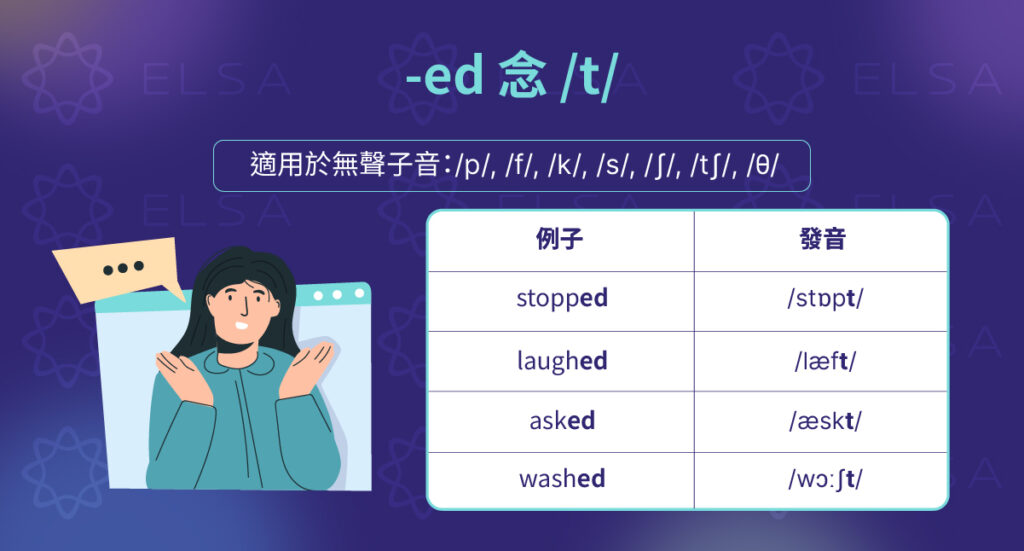
當動詞以清音結尾時,此規則適用: /p/, /f/, /k/, /s/, /ʃ/, /tʃ/, /θ/
(送氣音-無喉部振動)
| 清音 | 動詞 | 發音 | 意思 |
|---|---|---|---|
| /p/ | stopped | /stɒpt/ | 停止 |
| /f/ | coughed | /kɒft/ | 咳嗽 |
| /k/ | asked | /æskt/ | 問 |
| /s/ | mixed | /mɪkst/ | 混合 |
| /ʃ/ | washed | /wɔːʃt/ | 洗 |
| /tʃ/ | watched | /wɑːtʃt/ | 看 |
當 -ed 發音為 /d/ 時
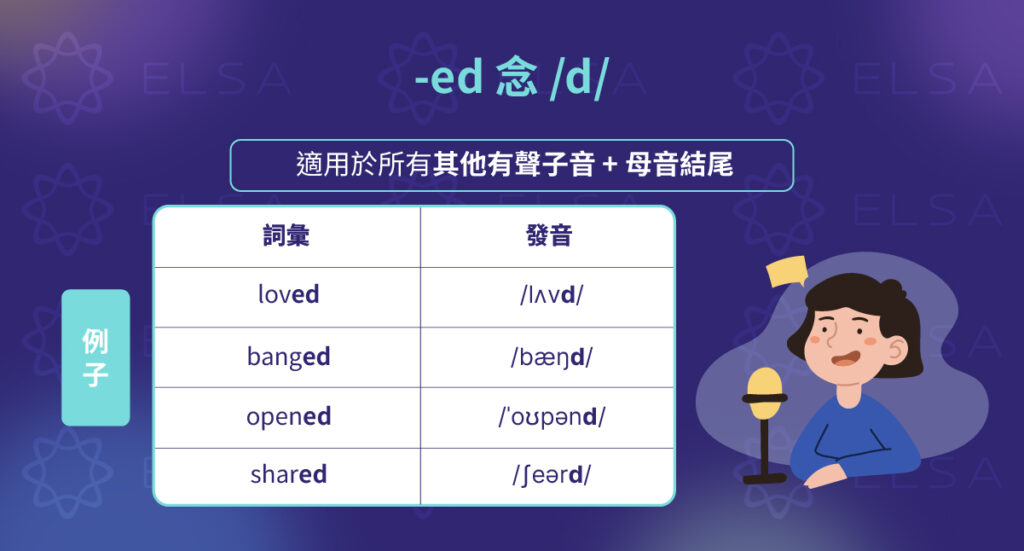
適用於所有剩餘情況。
→ 也就是說,除了 /d/ 之外,最後一個音都是濁音(顫音)。
記住:母音也是濁音,所以大多數以母音結尾的單字發音為 /d/。
| 濁音 | 動詞 | 發音 | 意思 |
|---|---|---|---|
| /b/ | robbed | /rɑːbd/ | 搶劫 |
| /v/ | loved | /lʌvd/ | 愛 |
| /z/ | buzzed | /bʌzd/ | 嗡嗡作響 |
| /m/ | screamed | /skriːmd/ | 喊 |
| /n/ | opened | /ˈoʊ.pənd/ | 開 |
| /ŋ/ | banged | /bæŋd/ | 砰的一聲 |
| /l/ | filled | /fɪld/ | 填滿 |
| /r/ | shared | /ʃeərd/ | 分享 |
| /g/ | hugged | /hʌɡd/ | 擁抱 |
| /ʒ/ | massaged | /ˈmæs.ɑːʒd/ | 按摩 |
| /dʒ/ | dodged | /dɒdʒd/ | 躲避 |
| /ð/ | breathed | /briːðd/ | 呼吸 |
| 濁音 | worried | /ˈwʌr.id/ | 擔心 |
-ed 發音的特殊(非常規)情況
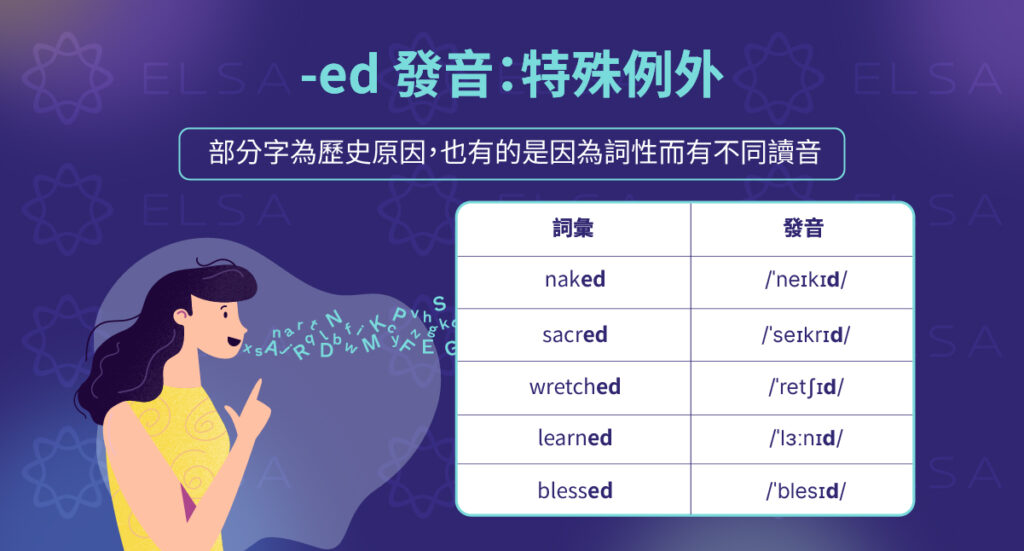
以下單字的發音不符合通常的 /t/、/d/、/ɪd/ 這三個規則。大多數以 -ed 結尾的單字由於歷史和語音原因發音為 /ɪd/,但有些單字根據其含義(形容詞或動詞)有兩種發音。
| 英文單字 | 發音 | 意思 |
|---|---|---|
| naked (adj) | /ˈneɪkɪd/ | 裸露的 |
| wicked (adj) | /ˈwɪkɪd/ | 邪恶 |
| beloved (adj) | /bɪˈlʌvd/ | 心愛 |
| sacred (adj) | /ˈseɪkrɪd/ | 神聖 |
| hatred (n) | /ˈheɪtrɪd/ | 仇恨 |
| wretched (adj) | /ˈretʃɪd/ | 可憐 |
| rugged (adj) | /ˈrʌɡɪd/ | 崎岖 |
| ragged (adj) | /ˈræɡɪd/ | 破烂 |
| dogged (adj) | /ˈdɒɡɪd/ | 顽强 / 坚持 |
| learned (adj) | /ˈlɜːnɪd/ | 有学问 / 博学 |
| blessed (adj) | /ˈblesɪd/ | 蒙福 |
| blessed (v) | /ˈblest/ | 賜予祝福,賜予福祉 |
| cursed (adj) | /ˈkɜːsɪd/ | 被诅咒 |
| cursed (v) | /kɜːst/ | 诅咒 |
| crabbed (adj) | /ˈkræbɪd/ | 难讀,字小 |
| crabbed (v) | /kræbd/ | 抱怨 |
| crooked (adj) | /ˈkrʊkɪd/ | 弯曲 / 不直 |
| used (adj) | /juːst/ | 習慣 |
| used (v) | /juːsd/ | 已用過 |
| aged (adj) | /ˈeɪdʒɪd/ | 年紀大 |
>>閲讀相關:動詞三態是什麽? 動詞三態的區別和最準確的用法。
關於 -ed 發音的練習
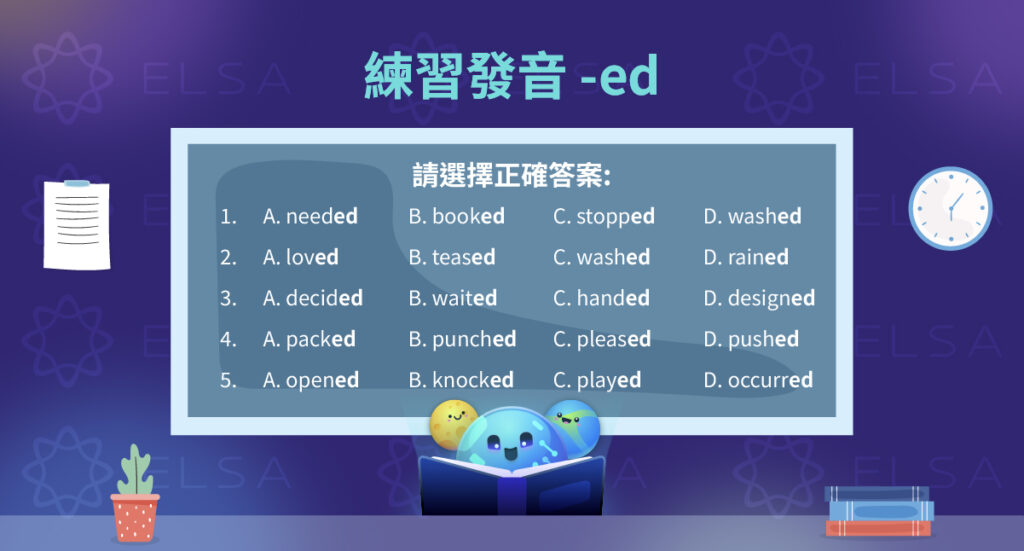
練習題
選擇加粗部分發音不同的單字
- A. needed B. booked C. stopped D. washed
- A. loved B. teased C. washed D. rained
- A. decided B. waited C. handed D. designed
- A. packed B. punched C. pleased D. pushed
- A. opened B. knocked C. played D. occurred
- A. talked B. watched C. lived D. stopped
- A. covered B. installed C. described D. decorated
- A. claimed B. warned C. occurred D. existed
- A. carried B. looked C. managed D. opened
- A. pleased B. smoked C. stopped D. missed
- A. pleased B. erased C. increased D. amused
- A. arrived B. believed C. received D. hoped
- A. opened B. knocked C. played D. occurred
- A. killed B. hurried C. regretted D. planned
- A. visited B. showed C. wondered D. studied
- A. sacrificed B. finished C. fixed D. seized
- A. painted B. provided C. protected D. equipped
- A. hurried B. decided C. planned D. wondered
- A. posted B. added C. managed D. arrested
- A. dreamed B. neglected C. denied D. admired
答案
| 句子 | 1 | 2 | 3 | 4 | 5 |
| 答案 | A | C | D | C | B |
| 句子 | 6 | 7 | 8 | 9 | 10 |
| 答案 | C | C | D | A | A |
| 句子 | 11 | 12 | 13 | 14 | 15 |
| 答案 | D | D | B | C | B |
| 句子 | 16 | 17 | 18 | 19 | 20 |
| 答案 | D | D | C | C | C |
>>相關發音文章:
希望這篇文章能幫助你理解 ed 發音,並記住在各種情況下都能正確運用的三個基本規則。正確 +ed 發音,能讓你的英語口語更加自然流暢,並顯著提升你的溝通能力。歡迎在 ELSA Speak 上閱讀更多關於溝通交流英語的精彩文章!
從屬連接詞是重要的語法成分,用來連接子句並表達時間、原因或條件等關係。像 as、when、because、if、that、whether 等詞彙出現頻率極高,但也容易引起混淆。本文將搭配 ELSA Speak,以最淺顯易懂的方式彙整從屬連接詞用法。
| Key Takeaways |
| 從屬連接詞 (subordinating conjunctions) 是用來將一個從屬子句 (dependent clause) 與主句 (main clause) 連接起來的詞或片語,常見於複合句中。 功能與用法連接子句: 通常位於從屬子句的開頭,使該子句依附於主句。補充語意: 建立兩個子句之間的邏輯關係(如時間、原因、條件等)。 常見的從屬連接詞類型: – 時間: After, before, when, while, since, until, as soon as (在……之後、在……之前、當……時、同時、自從……以來、直到……、一……就……)。 – 原因/理由: Because, since, as (因為、由於)。 – 條件: If, unless, provided (that), as long as (如果、除非、只要)。 – 讓步: Although, though, even though (雖然)。 – 地點: Where, wherever (在……的地方、無論在哪裡)。 – 目的: So that, in order that (為了)。 句中位置: 從屬子句可以位於主句之前或之後,但從屬連接詞一定與從屬子句一起出現。 |
從屬連接詞 (Subordinating Conjunctions) 是什麼?
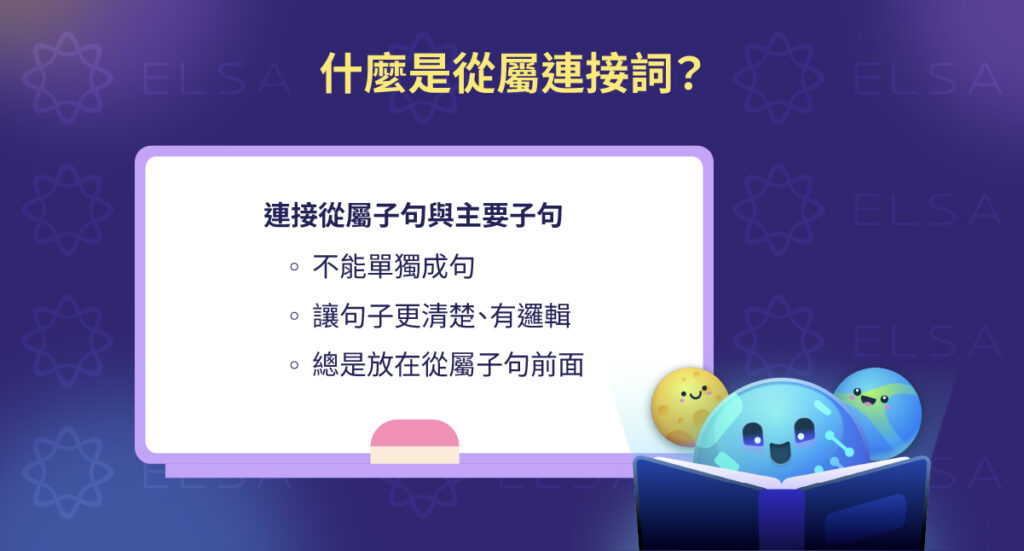
從屬連接詞 (Subordinating Conjunctions) 是用來連接從屬子句與主句的詞語,使句子中形成含有從屬連接詞 子句。這是複合句中的重要組成部分,因為從屬子句不能單獨存在,必須依附於主句才能表達完整的意思。
這類連接詞常用於從屬連接詞 副詞子句中,用來表達兩個動作之間的時間、條件、原因、目的、比較、對立等關係。此外,在將子句加以省略或簡化,使句子更加精煉時,也經常出現在從屬連接詞 分詞構句,使語句自然流暢,同時保持語意清楚。
由於有了從屬連接詞,文章表達更為連貫,語義關係也更加精確。
例句:
- I will call you when I get home. (我回到家時會打電話給你。)
- I will go to the beach if the weather is nice. (如果天氣好,我會去海邊。)
>>閲讀更多:in on at 用法:時間與地點的區別及應用練習
從屬連接詞整理
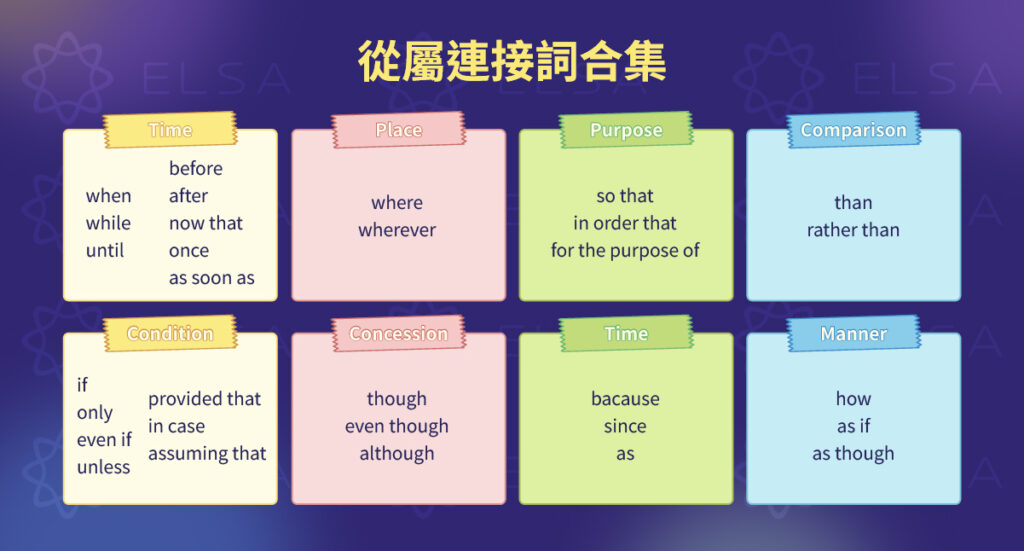
從屬連接詞英文常見可分為 8 種主要類型,包括:
- 表示時間的從屬連接詞: when, while, until, before, after, now that, once, as soon as
- 表示地點的從屬連接詞: where, wherever
- 表示目的的從屬連接詞: so that, in order that, for the purpose of
- 表示比較的從屬連接詞: than, rather than, whether
- 表示條件的從屬連接詞: if, even if, only if, unless, provided that, in case, assuming that
- 表示對立的從屬連接詞: though, even though, although
- 表示原因的從屬連接詞: because, as, since
- 表示狀態的從屬連接詞: how, as if, as though
>>閲讀更多:頻率副詞 (Adverbs of Frequency): 位置, 用法與詳細例句
從屬連接詞用法
表示時間的從屬連接詞
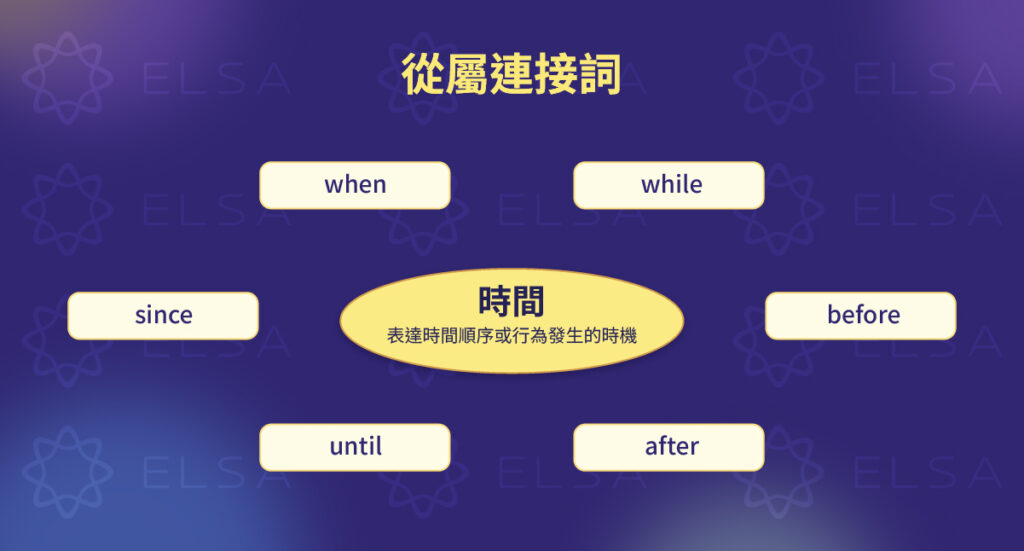
表示時間的從屬連接詞用來連接兩個子句,以表達時間關係,常見的連接詞包括 when、while、until、before、after、now that、once、as soon as。它們能幫助讀者或聽者判斷動作發生的時間點。
| 連接詞 | 意義 | 例句 |
|---|---|---|
| when | 當……時 | I always read a book when I’m on the train. (我在搭火車時總是看書。) |
| while | 在……期間 | She listened to music while she was cooking dinner. (她一邊做晚餐,一邊聽音樂。) |
| until | 直到……為止 | I’ll wait here until you finish your meeting. (我會在這裡等,直到你開完會。) |
| before | 在……之前 | Please check your work before you submit it. (在交作業之前,請檢查你的工作。) |
| after | 在……之後 | We went for a walk in the park after the rain stopped. (雨停之後,我們在公園裡散步。) |
| now that | 既然/現在…… | Now that she has a job, she can afford to travel. (既然她現在有工作了,她就有能力去旅行。) |
| once | 一旦…… | Once you press the button, the machine will start. (你一按下按鈕,機器就會啟動。) |
| as soon as | 一……就…… | I’ll call you as soon as I arrive at the airport. (我一到機場就會打電話給你。) |
表示地點的從屬連接詞
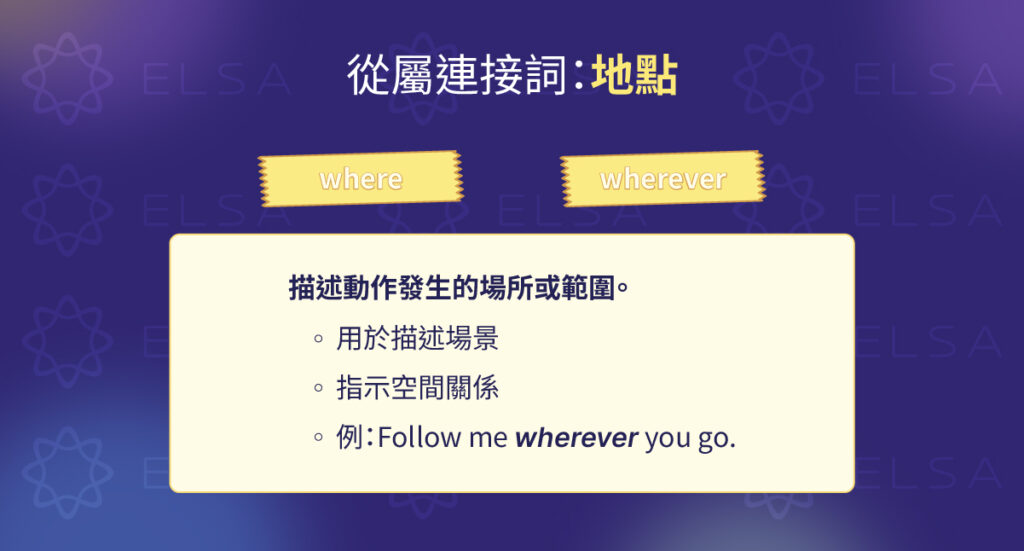
表示地點的從屬連接詞用來連接兩個子句,描述動作發生的地點或空間。藉由這類連接詞,句子能清楚表達事情發生的場所或相關的空間範圍。
常見連接詞如下: where, wherever.
| 連接詞 | 意義 | 例句 |
|---|---|---|
| where | ……的地方 | This is the restaurant where we had our first date. (這是我們第一次約會的那家餐廳。) |
| wherever | 無論在哪裡 | You can sit wherever you like in the theater. (在電影院裡,你可以坐在任何你想坐的地方。) |
表示比較的從屬連接詞
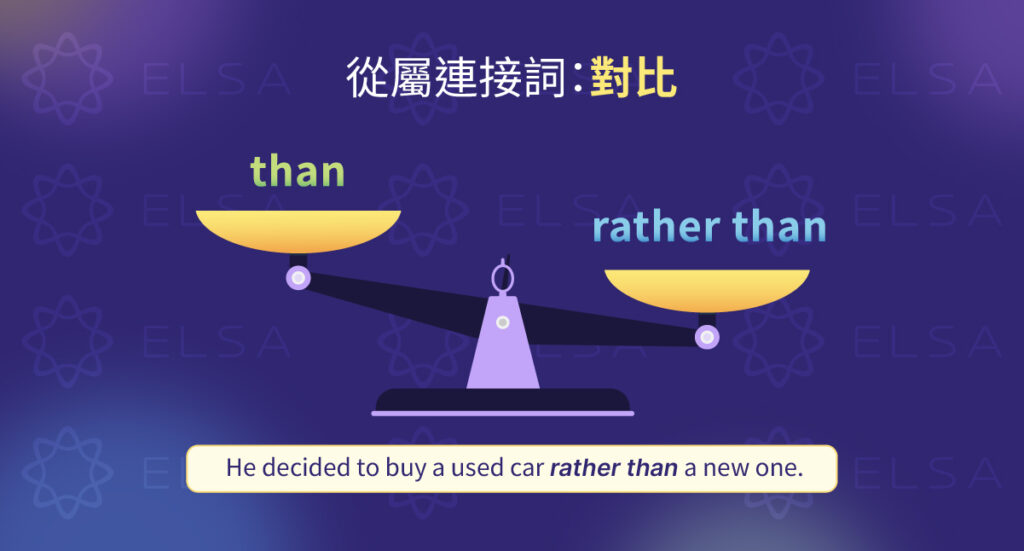
表示比較的從屬連接詞用來連接兩個子句或兩種選擇,以表達較高、較低,或取代的關係。這類連接詞用來說明說話者正在比較兩個對象,或偏好其中一個選項勝於另一個。
常見連接詞如下: than, rather than.
| 連接詞 | 意義 | 例句 |
|---|---|---|
| than | 比……更 | He is taller than his sister. (他比他的妹妹高。) |
| rather than | 而不是 | He decided to buy a used car rather than a new one. (他為了省錢,決定買二手車而不是新車。) |
>>閲讀更多:2025 年最標準英語發音規則全集
表示條件的從屬連接詞
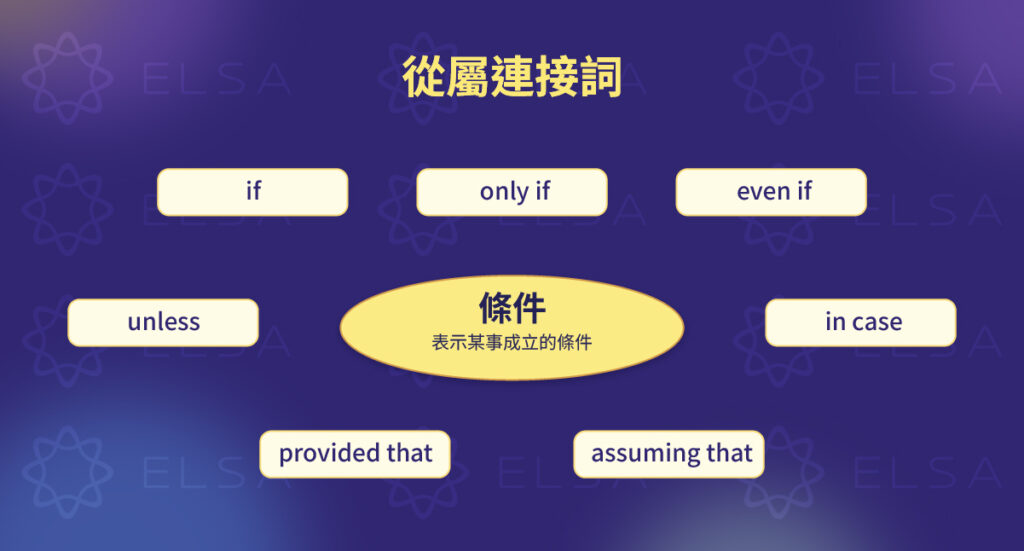
表示條件的從屬連接詞用來連接兩個子句,說明某個動作發生所需的條件或必要情境。這類連接詞常出現在從屬連接詞 子句中,使句子表達更自然、語意更清楚。
常見連接詞如下: if, only if, even if, unless, provided that, in case, assuming that.
| 連接詞 | 意義 | 意義 |
|---|---|---|
| if | 如果 | I will go to the park if the weather is nice. (如果天氣好,我會去公園。) |
| only if | 只有在……時 | You can enter the contest only if you are over 18 years old. (只有你滿 18 歲,才能參加比賽。) |
| even if | 即使 | I will help you with your homework even if it takes all night. (即使要花一整晚,我也會幫你做作業。) |
| unless | 除非/否則 | You won’t get a discount unless you show your membership card. (除非你出示會員卡,否則無法享有折扣。) |
| provided that | 只要 | You can use my computer provided that you don’t download unauthorized software. (只要不下載非法軟體,你就可以使用電腦。) |
| in case | 萬一 | I brought an extra umbrella in case it rains. (我隨身帶著雨傘,以防下雨。) |
| assuming that | 假如/假設 | I will attend the meeting assuming that it doesn’t conflict with my schedule. (如果時間不衝突,我會參加會議。) |
>>相關内容:If 用法,概念,結構與練習: 一、二、三,混合
表示對立的從屬連接詞
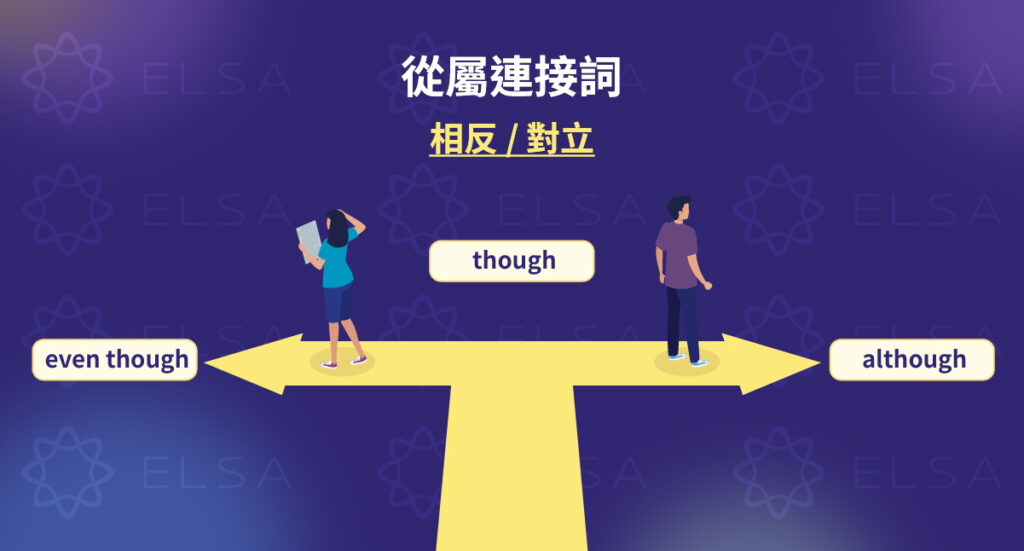
表示對立的從屬連接詞用來連接意義相反的兩個子句,表達對比關係,相當於雖然、即使、儘管等意思。
常見連接詞如下: though, even though, although.
| 連接詞 | 意義 | 例句 |
|---|---|---|
| though | 雖然 | He always makes time for his family though he’s very busy. (雖然他非常忙碌,仍然總是抽時間陪伴家人。) |
| even though | 即使 | Even though it was late, Jane continued working on her project. (即使已經很晚了,Jane 仍然繼續進行專案。) |
| although | 雖然 | She went to the party although she didn’t know many people there. (她去參加派對,儘管在那裡認識的人不多。) |
>>相關用法:although 用法:詳細解釋、例句與應用練習
表示原因的從屬連接詞
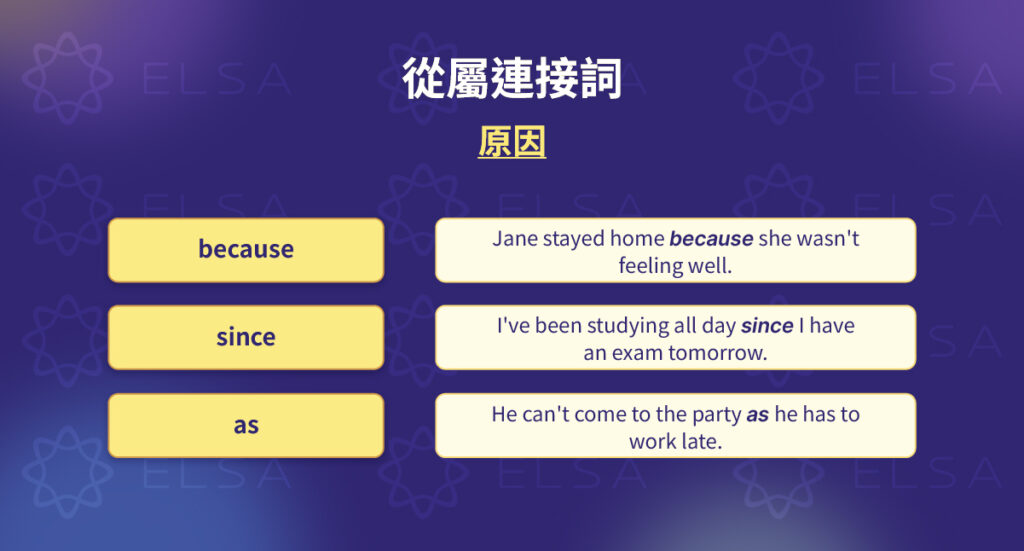
表示原因的從屬連接詞用來說明某個行為或事件發生的原因,幫助讀者理解事情為什麼會發生。
常見連接詞如下: because, since, as.
| 連接詞 | 意義 | 例句 |
|---|---|---|
| because | 因為 | Jane stayed home because she wasn’t feeling well. (Jane 待在家裡,因為她覺得身體不太舒服。) |
| since | 因為 | I’ve been studying all day since I have an exam tomorrow. (我整天都在讀書,因為明天有考試。) |
| as | 因為 | He can’t come to the party as he has to work late. (他無法參加派對,因為他必須加班。) |
表示狀態的從屬連接詞
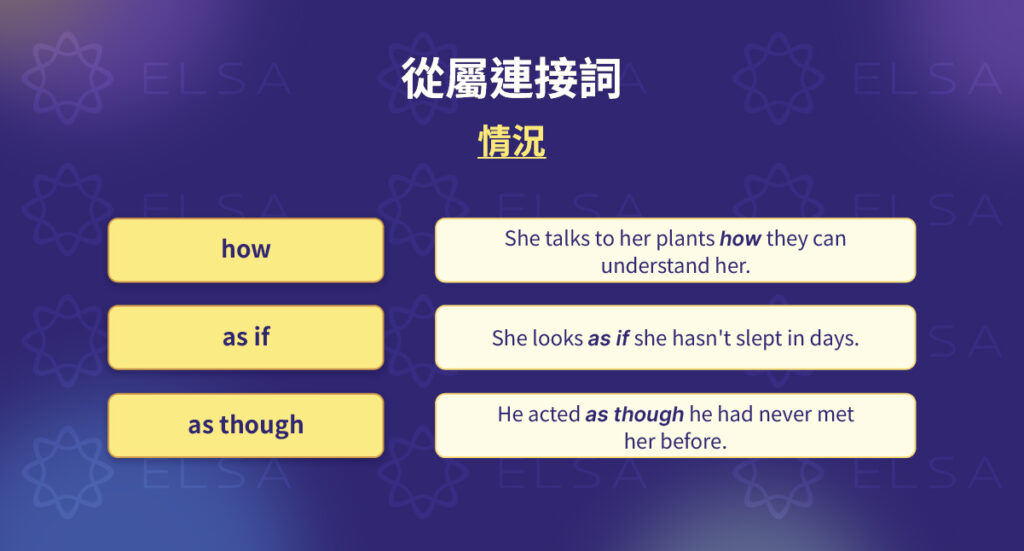
表示狀態的從屬連接詞用來描述動作發生時的狀態、感受或方式,使句子在表達像是、看起來好像、以某種方式發生時更加自然流暢。
常見連接詞如下: how, as if, as though.
| 連接詞 | 意義 | 例句 |
|---|---|---|
| how | 如何 | She talks to her plants how they can understand her. (她和樹說話,彷彿它們能聽懂她的話。) |
| as if | 彷彿 | She looks as if she hasn’t slept in days. (她看起來好像已經好幾天沒睡覺了。) |
| as though | 好像 | He acted as though he had never met her before. (他的行為就好像以前從未見過她一樣。) |
使用從屬連接詞時的注意事項
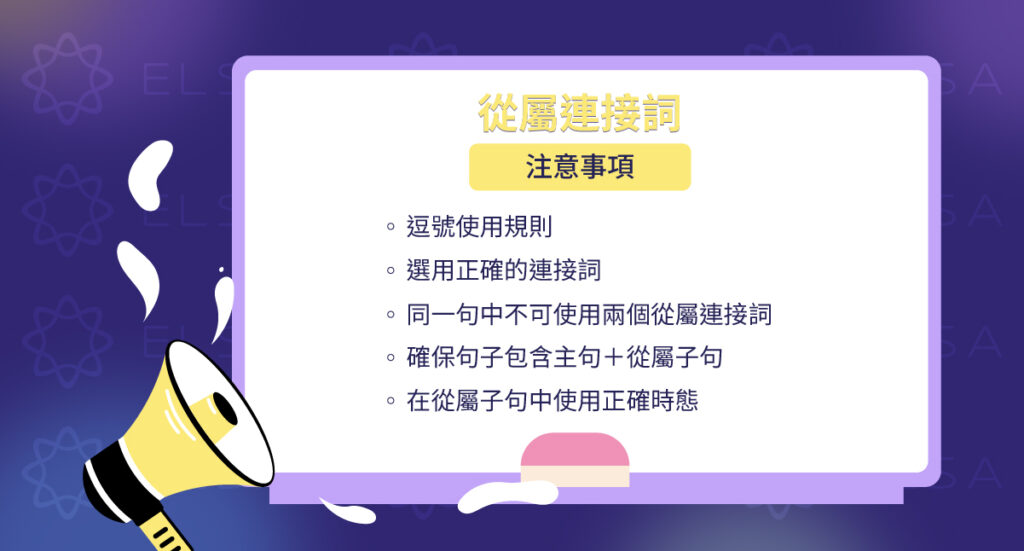
逗號使用規則
規則一: 當從屬連接詞位於主句之後時,不需使用逗號。
- 錯誤例句: She will receive an award, if she makes a medical breakthrough.
- 正確例句: She will receive an award if she makes a medical breakthrough.
規則二: 當從屬連接詞置於句首時,必須在從屬子句後加上逗號。
- 錯誤例句: If she finishes her research successfully she will receive a bonus.
- 正確例句: If she finishes her research successfully, she will receive a bonus.
>>閲讀更多:Through 是什麼?含義、發音、用法、例句與常用片語
選擇正確的從屬連接詞
選錯連接詞會使句子語意不通或表達錯誤。
錯誤例句: I will go to the store unless I have time.
(錯誤原因:”unless” 表示 “除非”,語意不適合。)
正確例句:
- I won’t go to the store unless I have time.
- (或) I will go to the store if I have time.
避免在同一句中使用兩個連接詞
不要將 “because…so” 或 “although…but” 這是從中文直譯過來的常見錯誤。
- 錯誤: Because I was sick, so I didn’t go to the party.
- 正確: Because I was sick, I didn’t go to the party.
- 錯誤: Although it rained hard, but I still went to school.
- 正確: Although it rained hard, I still went to school.
確保句子包含主句與從屬子句
從屬子句必須包含:連接詞 + 主語 + 動詞,不能單獨成句。
- 錯誤: Because I hate you.
- 正確: I don’t want to see you because I hate you.
- (或) Because I hate you, I don’t want to see you.
從屬連接詞時態使用正確
- 錯誤: I went to the store if I have time. (兩個子句的時態不一致。)
- 正確: I will go to the store if I have time.
快速說明: If + 現在簡單式 → 主句使用未來簡單式
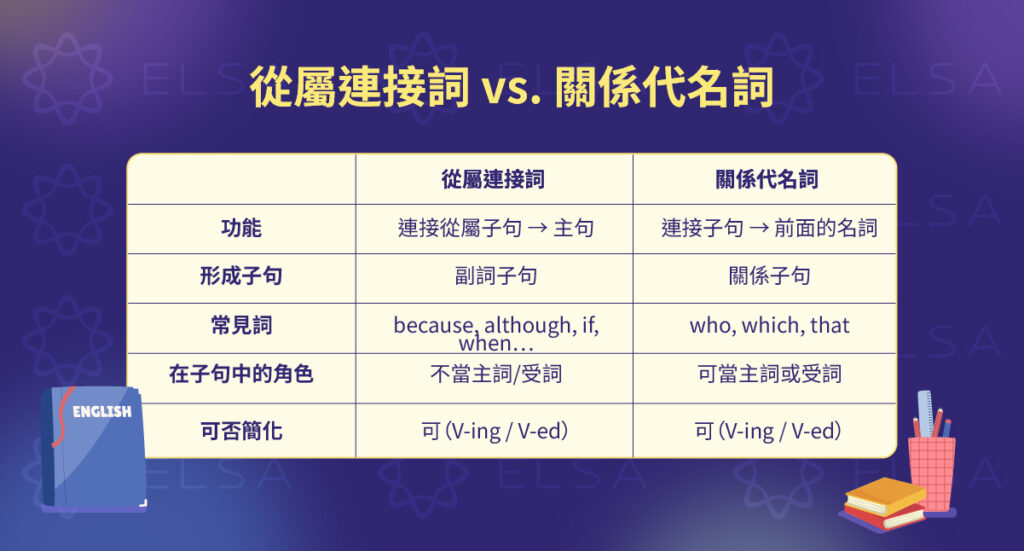
從屬連接詞與關係代名詞的區別
| 從屬連接詞 (Subordinating Conjunctions) | 關係代名詞 (Relative Pronouns) | |
|---|---|---|
| 功能 | 連接從屬子句與主句,表達時間、條件、原因、對立、目的等關係 | 將關係子句與前面的名詞連接起來,用於描述或限定該名詞 |
| 形成的子句 | 副詞子句 (Adverbial clause) | 關係子句 (Relative clause) |
| 常見詞彙 | because, although, if, when, while, before, after, unless, since, as… | who, whom, whose, which, that |
| 從屬句中的角色 | 不擔任主語或受詞,只起連接作用 | 可在關係子句中擔任主語或受詞 |
| 是否可以省略? | 可以(副詞子句可簡化為 V-ing 或過去分詞) | 可以(關係子句可簡化為 V-ing 或 V-ed) |
| 例句 | I stayed home because it rained. | The girl who is standing there is my sister. |
>>閲讀更多:過去進行式(Past Continuous Tense): 用法、結構、對比與例子
從屬連接詞練習(附答案)
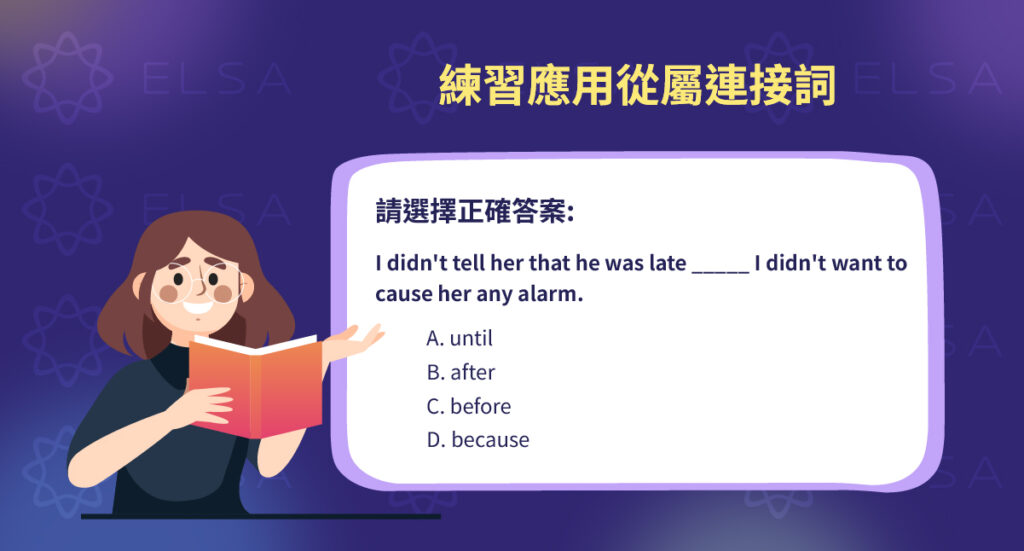
練習
練習 1: 從以下四個選項中選出正確答案
1. You should always check your oil, water and tyres _____ taking your car on a long trip.
A. when
B. where
C. before
D. unless
2. I didn’t tell her that he was late _____ I didn’t want to cause her any alarm.
A. until
B. after
C. before
D. because
3. Students are not allowed to handle these chemicals _____ they are under the supervision of a teacher.
A. unless
B. than
C. though
D. while
4. I am studying hard _____ I can pass the exam.
A. when
B. only if
C. how
D. so that
5. The fast train to London takes less _____ an hour.
A. than
B. even though
C. unless
D. as if
6. We do not know exactly _____ life first began.
A. how
B. if
C. because
D. though
7. He blurted everything out about the baby, _____ we’d agreed to keep it a secret for a while.
A. though
B. even if
C. as
D. since
8. I’ve been meaning to ask you _____ you get your hair cut.
A. when
B. where
C. until
D. so that
9. You can borrow my car _____ you promise to drive carefully.
A. although
B. in order that
C. as soon as
D. unless
10. He left the party _____ the cake was served.
A. where
B. as
C. since
D. before
練習 2: 填入適當的詞語於空格中
- She lived in Rome for a couple of years, _____ she taught English.
- You make wine by leaving grape juice to ferment _____ all the sugar has turned to alcohol.
- It was farther to the shops _____ I expected.
- I have the greatest respect for his ideas, _____ I don’t agree with them.
- We can’t go to Julia’s party _____ we’re going away that weekend.
- They arrived early _____ they could secure good seats at the concert.
- I’ll pay you double _____ you get the work finished by Friday.
- I don’t care about fashion, I dress _____ I please.
答案
練習 1:
| 題目 | 1 | 2 | 3 | 4 | 5 |
| 答案 | C | D | A | D | A |
| 題目 | 6 | 7 | 8 | 9 | 10 |
| 答案 | A | A | B | D | D |
練習 2:
| 題目 | 1 | 2 | 3 | 4 |
| 答案 | where | until | than | although |
| 題目 | 5 | 6 | 7 | 8 |
| 答案 | because | in order that | if | how |
希望本文能幫助你更清楚地了解從屬連接詞、其用法,以及如何與並列連接詞加以區分。當你熟練掌握從屬連接詞整理後,寫英文句子將會更加自然且精準。歡迎到 ELSA Speak 網站探索更多有趣的英語文法文章!
在餐廳裡,英語經常出現在許多熟悉的場景中,例如預訂座位、點餐、詢問菜餚資訊或與服務員溝通。因此,掌握餐廳英文能幫助你更自然、更準確地應對各種對話。 ELSA Speak 整合了餐廳中的核心詞彙、常用句型和實際的餐廳英文會話,讓你在任何餐廳都能立即運用自如。
餐廳英文是什麽?

在英文中,餐廳並非只有“restaurant“這一個字。根據服務類型、空間大小和風格,英語中還會使用其他一些詞彙,例如 cafe, bistro, diner, buffet hay food court。以下總結了英語中各種餐廳的類型,並附餐廳英文發音,方便你直觀理解和實際運用。
| 英文單字 | 發音(IPA) | 意思 |
|---|---|---|
| Restaurant | /ˈrestərɑːnt/ | 餐廳 |
| Cafe | /kæˈfeɪ/ | 咖啡店 |
| Bistro | /ˈbiːstroʊ/ | 歐式小酒館/酒吧 |
| Diner | /ˈdaɪnər/ | 美式餐廳 |
| Buffet | /ˈbʊfeɪ/ 或 /bʊˈfeɪ/ | 自助餐廳 |
| Food court | /ˈfuːd kɔːrt/ | 美食廣場 |
| Roadside stall | /ˈroʊdsaɪd stɔːl/ | 路邊餐廳 |
Note: 在餐廳英文縮寫中,“Restaurant”通常縮寫為“Rest”。
餐廳英文單字
餐廳英文詞彙:食物

| 詞彙 | 發音 | 意思 |
|---|---|---|
| Starter | /ˈstɑːr.t̬ɚ/ | 開胃菜 |
| Main course | /ˌmeɪn ˈkɔːrs/ | 主菜 |
| Dessert | /dɪˈzɝːt/ | 甜點 |
| Roast food | /roʊst fuːd/ | 烤製菜餚 |
| Grilled food | /ɡrɪld fuːd/ | 烤菜 |
| Fried food | /fraɪd fuːd/ | 油炸食品 |
| Saute | /sɔːˈteɪ/ | 煎炸菜餚 |
| Stew | /stuː/ | 燉菜 |
| Steam food | /stiːm fuːd/ | 蒸菜 |
| Beef | /biːf/ | 牛肉 |
| Pork | /pɔːrk/ | 豬肉 |
| Lamb | /læm/ | 羊肉 |
| Chicken | /ˈtʃɪk.ɪn/ | 雞肉 |
| Goose | /ɡuːs/ | 鵝肉 |
| Duck | /dʌk/ | 鴨肉 |
| Seafood | /ˈsiː.fuːd/ | 海鮮 |
| Fish | /fɪʃ/ | 魚 |
| Octopus | /ˈɑːk.tə.pəs/ | 章魚 |
| Shrimps | /ʃrɪmp/ | 蝦 |
| Crab | /kræb/ | 螃蟹 |
| Lobster | /ˈlɑːb.stɚ/ | 龍蝦 |
| Mussels | /ˈmʌs.əl/ | 貽貝 |
| Lettuce | /ˈlet̬.ɪs/ | 萵苣 |
| Cabbage | /ˈkæb.ɪdʒ/ | 高麗菜 |
| Apple pie | /ˌæp.əl ˈpaɪ/ | 蘋果派 |
餐廳英文詞彙:飲料

| 詞彙 | 發音 | 意思 |
|---|---|---|
| Wine | /waɪn/ | 酒 |
| Water | /ˈwɔː.tər/ | 水 |
| Beer | /bɪr/ | 啤酒 |
| Alcohol | /ˈæl.kə.hɑːl/ | 酒精飲料 |
| Coke | /koʊk/ | 可口可樂 |
| Juice | /dʒuːs/ | 果汁 |
| Smoothie | /ˈsmuː.ði/ | 冰沙 |
| Coffee | /ˈkɑː.fi/ | 咖啡 |
| Tea | /tiː/ | 茶 |
| Milk | /mɪlk/ | 牛奶 |
| Sparkling water | /ˈspɑːr.klɪŋ ˈwɑː.t̬ɚ/ | 汽水 |
| Cocoa | /ˈkoʊ.koʊ/ | 可可 |
| Ice tea | /ˌaɪs ˈtiː/ | 冰茶 |
| Green tea | /ˌɡriːn ˈtiː/ | 綠茶 |
| Lemonade | /ˌlem.əˈneɪd/ | 檸檬水 |
| Milkshake | /ˈmɪlk.ʃeɪk/ | 奶昔 |
餐廳英文單字:餐廳用具

| 詞彙 | 發音 | 意思 |
|---|---|---|
| Napkin | /ˈnæp.kɪn/ | 餐巾 |
| Tray | /treɪ/ | 托盤 |
| Spoon | /spuːn/ | 勺子 |
| Knife | /naɪf/ | 刀 |
| Fork | /fɔːrk/ | 叉子 |
| Bowl | /boʊl/ | 碗 |
| Chopsticks | /ˈtʃɑːp.stɪk/ | 筷子 |
| Ladle | /ˈleɪ.dəl/ | 湯匙 |
| Plate | /pleɪt/ | 盤子 |
| Mug | /mʌɡ/ | 帶把手的小杯子 |
| Pepper shaker | /ˈpep.ə ˌʃeɪ.kər/ | 胡椒瓶 |
| Straw | /strɑː/ | 吸管 |
| Tablecloth | /ˈteɪ.bəl.klɑːθ/ | 桌布 |
| Teapot | /ˈtiː.pɑːt/ | 茶壺 |
| Tongs | /tɑːŋz/ | 食物夾 |
| Glass | /ɡlæs/ | 杯子 |
| Cup | /kʌp/ | 杯子 |
| Saucer | /ˈsɔːsər/ | 杯墊 |
餐廳英文單字:餐廳職位和職稱

| 詞彙 | 發音 | 意思 |
|---|---|---|
| Chef | /ʃef/ | 廚師 |
| Waiter | /ˈweɪtər/ | 男服務員 |
| Waitress | /ˈweɪtrəs/ | 女服務員 |
| Host | /hoʊst/ | 接待員/引座員 |
| Manager | /ˈmænɪdʒər/ | 管理 |
| Bartender | /ˈbɑːrtendər/ | 調酒師 |
| Busboy | /ˈbʌsbɔɪ/ | 服務員 |
| Dishwasher | /ˈdɪʃwɒʃər/ | 洗碗員 |
>>更多職稱:20 多行業職稱英文詞彙與發音指南
餐廳英文單字:餐廳用品

| 詞彙 | 發音 | 意思 |
|---|---|---|
| Menu | /ˈmenjuː/ | 菜單 |
| Reservation | /ˌrezərˈveɪʃən/ | 訂座 |
| Bill | /bɪl/ | 帳單 |
| Tip | /tɪp/ | 小費 |
| Order | /ˈɔːrdər/ | 點菜 |
| Table | /ˈteɪbəl/ | 桌子 |
| Chair | /tʃer/ | 椅子 |
| Buffet | /bəˈfeɪ/ | 自助餐 |
餐廳英文用語

| 詞組 | 發音 | 意思 |
|---|---|---|
| Take order | /teɪk ˈɔːrdər/ | 點菜 |
| Want a dessert | /wɑːnt ə dɪˈzɜːrt/ | 想點甜點。 |
| Out of the … | /aʊt əv ðə/ | 沒有什麽東西了 |
| Have the bill | /hæv ðə bɪl/ | 拿帳單 |
| Check the bill | /tʃɛk ðə bɪl/ | 核對帳單 |
| Serve the food | /sɜrv ðə fuːd/ | 上菜 |
| Make a reservation | /meɪk ə ˌrɛzərˈveɪʃən/ | 訂座 |
| Recommend a dish | /ˌrɛkəˈmɛnd ə dɪʃ/ | 推薦一道菜 |
| Ask for the menu | /æsk fɔr ðə ˈmɛnju/ | 要菜單 |
| Clean the table | /klin ðə ˈteɪbəl/ | 清理桌子 |
| Bring the drinks | /brɪŋ ðə drɪŋks/ | 帶上飲料 |
| Enjoy your meal | /ɪnˈdʒɔɪ jʊər miːl/ | 祝您胃口好! |
| Order more food | /ˈɔrdər mɔr fuːd/ | 再點些東西 |
| Pay with card | /peɪ wɪð kɑːrd/ | 使用銀行卡支付 |
| Special of the day | /ˈspɛʃəl əv ðə deɪ/ | 今日特惠 |
| Ready to order | /ˈrɛdi tə ˈɔrdər/ | 可下單 |
| Table for two | /ˈteɪbəl fɔr tuː/ | 雙人桌 |
| Cancel the order | /ˈkænsəl ðə ˈɔrdər/ | 取消訂單 |
| Wait for a table | /weɪt fɔr ə ˈteɪbəl/ | 等位 |
| Cook to perfection | /kʊk tə pərˈfɛkʃən/ | 烹飪得恰到好處 |
餐廳英語交流句型
餐廳服務員溝通用語

以下是總結一些常用的餐廳服務生英文會話,供你參考:
歡迎顧客的英文句子
| 英文句型 | 翻譯 |
|---|---|
| Good morning/afternoon/evening. | 歡迎光臨。 |
| How may I help you? | 我能幫您什麼嗎? |
| Do you have a reservation?/Have you booked a table? | 您有預訂嗎? /您預訂餐位了嗎? |
| May I have your name? | 請問您貴姓? |
| How many are you?/How many are in your party? | 請問你們一行幾人? |
| This way, please. I’ll show you your table. | 請這邊走,我帶您去您的桌子。 |
| Your table is ready. | 您的餐桌已準備好。 |
| Please take a seat. | 請坐。 |
餐廳服務員常用英語句子:拿菜單
| 英文句型 | 翻譯 |
|---|---|
| May I take your order? | 請問您要點什麼? |
| Do you need a little time to decide? | 您需要一點時間考慮嗎? |
| I’m so sorry. We are out of the tiger prawn. | 非常抱歉,我們的虎蝦已經賣完了。 |
| How would you like your steak? | 您的牛排要幾分熟? |
| Would you like a salad with it? | 您要不要再加一份沙拉? |
| What would you like to drink? | 你想喝點什麼? |
| What would you like for dessert? | 您想吃什麼甜點? |
| Would you like to taste the wine? | 你想品嚐一下這款酒嗎? |
| Thank you. I’ll be right back with your drink. | 謝謝。我馬上就去送飲料給您。 |
>>閲讀更多:How are you:50+ 種不同説法以及许多有趣的回答方式
餐廳員工英文常用句型:解決問題
當客人姓名不在預訂名單上時
| 英文句型 | 翻譯 |
|---|---|
| I’m so sorry but there’s no information about your reservation. Could you please tell me when you made your reservation, sir/madam? | 非常抱歉,但是我們沒有您的預訂資訊。請問您是什麼時候預訂的,先生/女士? |
| If you can wait about an hour, I will be able to give you a table. | 如果您能等大約一個小時,我就可以為您安排一張桌子。 |
| Let me double-check the system for you. | 讓我幫你再檢查一下系統。 |
| I apologize for the inconvenience. We will try our best to arrange a table as soon as possible. | 造成您的不便,敬請諒解。我們將盡力盡快為您安排座位。 |
| May I offer you a seat in the waiting area while we prepare a table? | 在我們準備餐桌期間,請您在等候區稍作休息。 |
>>記得區分 first name 和 last name:first name, last name 是什麽? 意義、用法及正確填寫方式
當顧客投訴食物時
| 英文句型 | 翻譯 |
|---|---|
| I’m so sorry. I’ll inform the chef and get you another dish. | 非常抱歉。我會通知廚師,給您換其他菜。 |
| Will that be alright, sir/madam? Or would you prefer something else? | 這樣可以嗎,先生/小姐?還是您想換成其他菜? |
| I apologize for that. Would you like us to remake the dish or change to another one? | 對此我深表歉意。您希望我們重新做一份這道菜,還是換其他菜? |
| Thank you for letting us know. We’ll fix this right away. | 感謝您的回饋,我們會立即解決。 |
| I’m sorry the dish didn’t meet your expectations. Could you please tell me what went wrong? | 很抱歉這道菜沒能達到您的期望。請問您能告訴我哪裡出了問題嗎? |
| Please allow us a moment to correct the mistake. | 請允許我們稍等片刻,以便更正錯誤。 |
餐廳英文交流例句:當顧客結帳時
| 英文句型 | 翻譯 |
|---|---|
| This is your bill. Would you like to pay by credit card or cash? | 這是您的帳單。您想用信用卡還是現金支付? |
| Here is your change. | 這是您的零錢。 |
| Are you satisfied with our service? | 您對我們的服務滿意嗎? |
| Thank you for choosing our restaurant and see you soon. | 感謝您選擇我們的餐廳,期待下次再見。 |
| I’ll bring your bill right away. | 我馬上把帳單拿來。 |
| Please give me a moment while I prepare your bill. | 請稍等片刻,我正在準備您的帳單。 |
| Would you like a receipt? | 您需要收據嗎? |
| Could you please check the bill? | 請您核對一下帳單好嗎? |
| Sorry for the wait. Here is your bill. | 抱歉讓您久等了。這是您的帳單。 |
| Would you like to split the bill? | 你87457願意AA制嗎? |
| Thank you very much. Have a wonderful day! | 非常感謝!祝您有美好的一天! |
>>閲讀更多:交流 英文:Communicate、Exchange、Interact 應該如何使用?
餐廳顧客溝通用語

座位預約的英文列句
| 英文句型 | 翻譯 |
|---|---|
| I would like to make a reservation. | 我想订座。 |
| Do you have any tables available for tonight? | 今晚還有空位嗎? |
| Can I book a table for two at 7 PM? | 我可以預訂晚上7點的兩人桌嗎? |
| I’d like to reserve a table for four. | 我想預訂一張四人桌。 |
| Is there a private room available? | 請問有私人房間嗎? |
| Can we have a table by the window? | 我們能安排靠窗的桌子嗎? |
| How long is the wait for a table? | 等位時間要多長? |
| Can we make a reservation for eight people? | 我們可以預訂八人桌嗎? |
| What time do you close? | 你們幾點關門? |
| Do you offer outdoor seating? | 你們有提供戶外座位嗎? |
>>更多句式:總結三種最新且簡明的預約 英文方式,適用於餐廳、酒店以及看病時的情況。
去餐廳時使用的英語溝通列句
| 英文句型 | 翻译 |
|---|---|
| A table for 4, please. | 請給我一張四人桌。 |
| May we sit at that table? | 我們可以坐在那張桌子旁嗎? |
| Could I see the menu, please? | 請問我可以看一下菜單嗎? |
| Do you have baby chairs? | 你們有嬰兒椅嗎? |
| Do you have a vegan menu? | 你們有素食菜單嗎? |
| Do you have anything special? | 有什麼特別的嗎? |
| We are not ready to order yet. | 我們目前還不准備下單。 |
| I would like… | 我要… |
在餐廳用餐時進行交流的英文列句
抱怨列句
| 英文句型 | 翻译 |
|---|---|
| Excuse me, there’s a problem with my order. | 不好意思,我點的菜有點問題。 |
| This isn’t what I ordered. | 這不是我點的菜。 |
| My food is cold. | 我的菜都涼了。 |
| This dish is too salty. | 這道菜太鹹了。 |
| This dish is overdone. | 這道菜做得太熟了。 |
| There’s something wrong with my drink. | 我的飲料有點問題。 |
| I asked for no onions, but there are onions in my dish. | 我明明要求不要放洋蔥,但我的菜裡有洋蔥。 |
| Could I change my order? | 我可以更改我點的菜嗎? |
| Can I speak to the manager, please? | 請問我可以和經理溝通嗎? |
| This table is too close to the door. | 這張桌子離門太近了。 |
| We’ve been waiting for a long time. | 我們已經等了很久了。 |
| The bill seems incorrect. | 賬單似乎有誤。 |
用餐期間和用餐後使用的句型
| 英文句型 | 翻譯 |
|---|---|
| Could I change my order? | 我可以更改我點的菜嗎? |
| Could I get some more water, please? | 請問我可以再要些水嗎? |
| Can we have some more bread? | 我們還能再要點麵包嗎? |
| Do you have any chili? | 你們有辣椒嗎? |
| Everything is delicious, thank you. | 所有東西都很好吃,謝謝。 |
| Could we get some extra napkins? | 能給我們一些餐巾紙嗎? |
| Can I get a to-go box? | 我可以要一個外帶盒嗎? |
| This dish is excellent! | 這道菜太棒了! |
| We’re ready for dessert. | 我們準備享用甜點了。 |
| Could you clear the plates, please? | 請您收拾一下盤子好嗎? |
| Can I have the rest packed to go? | 剩下的東西我可以打包帶走嗎? |
在餐廳付款時使用英語溝通列句
| 英文句型 | 翻譯 |
|---|---|
| May I have the bill/check/receipt, please? | 請問可以給我帳單/支票/收據嗎? |
| Can we have the bill, please? | 請問可以給我們帳單嗎? |
| Could you please check the bill? It doesn’t seem right. | 請您核對一下帳單好嗎?好像不太對勁。 |
| I think there’s a mistake on the bill. | 我認為帳單上有錯誤。 |
| Can I pay by credit card? | 我可以用信用卡付款嗎? |
| Do you take cash? | 你們收現金嗎? |
| Here’s my card. | 這是我的卡。 |
| Can I get a receipt, please? | 請問可以給我一張收據嗎? |
| Could we split the bill? | 我們可以AA制嗎? |
| Is service included? | 服務費包含在內嗎? |
| How much is the total? | 總共多少錢? |
| Keep the change. | 留著零錢吧。 |
>>相關内容:結帳英文怎麽説? Checkout? Bill? 兩分鐘內找出答案
餐廳英文會話

通過電話的餐廳訂位英文對話
英文對話
| Customer: Hello, I would like to make a reservation, please. Staff: Certainly. For what date and time, sir/madam? Customer: I’d like to book a table for two at 7 PM this Friday. Staff: May I have your name, please? Customer: It’s Anna. Staff: Thank you. Do you prefer indoor or outdoor seating? Customer: Indoor seating, please. Staff: Perfect. Your reservation for two at 7 PM this Friday is confirmed. Customer: Thank you. See you then. Staff: Thank you for calling. Have a nice day! |
翻譯:
顧客:您好,我想預訂座位。
服務員:當然可以。請問先生/女士,請問是哪天哪幾點?
顧客:我想預訂本週五晚上7點的兩人桌。
服務員:請問您的姓名是?
顧客:我叫安娜。
服務員:謝謝。請問您想坐在室內還是室外?
顧客:坐在室內。
服務員:好的。您預訂的本週五晚上7點的兩人桌已確認。
顧客:謝謝。到時見。
服務員:感謝您的來電。祝您愉快的一天!
練習英語
ELSA Pro 終身 – 優惠特價!
原價 6,150元 現價 2,368 元
- ELSA 字典
- 課程内容持續更新
- 220+ 關於工作和生活的主題
- 9600+ 課程
- 學習時間無限制
此外:ELSA PRO 一年套餐以優惠價出售 – 1,515元 (-30%)
進入餐廳時的對話—詢問是否有座位
英文對話
| Customer: Good evening. Do you have any tables available? Staff: Yes, of course. How many people? Customer: A table for two, please. Staff: This way, please. |
翻譯:
顧客:晚上好。請問還有空位嗎?
服務員:有的。請問幾位?
顧客:請給我一張兩人桌。
服務員:這邊請。
餐廳英文會話-點菜時
英文對話
| Staff: Are you ready to order, sir/madam? Customer: Yes, I think so. I’d like the beef steak, please. Staff: Certainly. How would you like your steak cooked? Customer: Medium rare, please. Staff: Would you like any sauce with that? We have pepper sauce, mushroom sauce, and red wine sauce. Customer: I’ll have the pepper sauce, thank you. Staff: Great choice. And would you like anything to drink? Customer: Yes, I’d like a glass of red wine. Staff: Would you prefer Merlot or Cabernet Sauvignon? Customer: Cabernet Sauvignon, please. Staff: Perfect. I’ll bring your drink right away. |
翻譯:
服務員:先生/女士,您準備好點餐了嗎?
顧客:是的,我想是的。我要一份牛排。
服務員:好的。您的牛排要幾分熟?
顧客:三分熟。
服務員:您需要什麼醬汁嗎?我們有胡椒醬、蘑菇醬和紅酒醬。
顧客:我要胡椒醬,謝謝。
服務員:好選擇。您想喝點什麼嗎?
顧客:是的,我要一杯紅酒。
服務員:您想要Merlot 還是 Cabernet Sauvignon?
顧客:Cabernet Sauvignon,謝謝。
服務員:好的。我馬上給您送來。
支付時的對話
英文對話
| Customer: Could we have the check, please? Staff: Sure. Here you are. Customer: Can I pay by credit card? Staff: Yes, we accept credit cards. |
翻譯:
顧客:請給我們帳單。
服務員:好的,給您。
顧客:我可以用信用卡付款嗎?
服務員:可以,我們接受信用卡。
常見問題
平價餐廳英文是什麽?
→ Casual restaurant 或者 local eatery
家庭 / 家裡餐廳英文是什麽?
→ Home restaurant 或者 homestyle restaurant
希望這些關於英文餐廳的例句和詞彙能幫助你更輕鬆自信地應對各種溝通情境。經常練習餐廳英文會話,你的口語能力將迅速提升,並能立即運用到實際生活中。請在 ELSA Speak 主頁,了解更多實用的溝通交流英語技巧!
學習英語時,當 because、because of、due to、owing to 和 since 這幾個詞的意思為因為英文,很多人容易把它們混淆 。雖然,意思相同,但每個結構卻有不用的用法。本文 ELSA Speak 將幫助你理解每種情況,在每個句子中正確區分以及了解因為英文用法,同時提供具體例句和快速記憶技巧。
| Key takeaways |
| – Because +子句 → 直接解釋原因(在句首或句中) – Because of + 名詞/名詞片語 → 用於沒有動詞的情況(句首或句中)。 – Due to + 名詞/名詞片語 → 正式的(通常位於“be”之後,句中) – Owing to + 名詞/名詞片語 → 正式的(在句首或句中) – Since + 子句 → 輕率的、自然的理由(通常位於句首) – As + 子句→ 明確的理由(通常位於句首) – Thanks to + 名詞/名詞片語 → 強調積極影響(句首或句中) – On account of + 名詞/名詞片語 →正式的(在句首或句中) – For + 子句 → 正式寫作(限句子中間部分) – Seeing that + 子句 → 強調顯而易見的原因(放在句首或句中) |
因為 英文: Because / Because of

“因為“英文有兩種基本結構,學習者應該掌握:because 和 because of。這兩種形式很容易混淆,但只要正確理解它們的本質,就能在任何句子中正確使用。
>>閲讀更多:關係代名詞 (Relative Pronouns): who、which、that 用法和區分
because 用法 (Conjunction)
Because 是一個連接詞,用來給出理由,後面必須跟著一個子句 (S + V)。因為英文句首以強調原因,或者放在句中連接兩個意思。
結構:
| Because + S + V |
例子:
- Because I was tired, I went to bed early. (因為我累了,所以我早點睡了。)
- I stayed home because it was raining. (因為下雨,所以我待在家裡。)
“Because”, 因為英文縮寫: ’cause, cuz / cuz’, coz / cos, bc / b/c, bcuz / b’cuz
because of 用法 (Prepositions)
介詞“because of”也表示“因為”,但它後面必須跟名詞、名詞片語或代名詞,絕對不能跟著子句。這是因為英文開頭,也可以在句中。
結構:
| Because of + N / N-phrase / pronoun |
例子:
- The flight was delayed because of the weather. → (Noun)
(由於天氣原因,航班延誤了。)
- We canceled the picnic because of heavy rain. → (Noun phrase)
(由於下大雨,我們取消了野餐。)
>>閲讀更多:Through 是什麼?含義、發音、用法、例句與常用片語
因為 英文: Due to (Prepositions)

Due to 是英語中非常常見的介詞,意思是“因為/由於”,常用於正式寫作、報紙、公告、工作郵件或需要更精確表達的場合。 due to 用法通常出現在動詞 to be 之後,後面總是跟著名詞或名詞片語。
結構:
| Due to + N / N-phrase |
例子:
- The cancellation was due to bad weather. (取消是由於天氣不好。)
- His success is due to hard work and consistency. (他的成功由於勤奮和堅持。)
>>有趣知識:yet 用法:位置、意思、造句與簡單練習
因為 英文: Owing to

Owing to 常用於書面語、公告、報紙以及正式或專業場合。owing to 用法後接名詞/名詞片語,可以位於句首或句中。
結構:
| Owing to + 名詞/名詞片語 |
例子:
- Owing to the traffic jam, we arrived late. (由於交通堵塞,我們遲到了。)
- Several flights were canceled owing to the storm. (由於暴風雨,多班飛機被取消。)
>>常用結構:although 用法:詳細解釋、例句與應用練習
因為 英文: Since (Conjunction)

since 因為 用法, 用作連接詞,用來給出自然而溫和的理由,前提是聽者已經清楚原因。 “since” 後面必須跟著子句(S + V)。位置靈活:可以放在句首,也可以放在句中。
結構:
| Since + 子句 (S + V) |
例子:
- Since I’m not feeling well, I’ll stay home today. (因為我身體不舒服,今天就待在家裡。)
- We canceled the trip since the weather was terrible. (由於天氣惡劣,我們取消了行程。)
此外,since 一詞也有“自從“的意思,詳見本文:since 用法:意義、規範用法、區分方法及記憶技巧
因為英文同義詞

以下是因為英文的同義詞以及因為英文片語列表:
| 詞/片語 | 用法 | 例子 |
|---|---|---|
| Thanks to | 後面通常跟着名詞/名詞短語,表示“多虧”含義,。可以位於句首或句中。 | Thanks to your help, we finished early. (多虧了有你的幫助,我們提前完成了任務。) |
| As | 後面跟著子句(S + V)。通常位於句首,原因對聽者來說很明確。 | As I was tired, I went to bed early. (因為很累,我就早點睡著了。) |
| Seeing that | 後面跟著一個子句。意思是“考慮到/因為“。通常位於句首。 | Seeing that it’s late, we should go home. (因為時間不早了,我們應該回家了。) |
| For | 位於子句之後,但絕不出現在句首。用於正式寫作。 | He stayed home, for he was sick. (他待在家裡,因為他生病了。) |
| On account of | 後接名詞/名詞片語。意思是“因為”,正式用法。 | The match was canceled on account of the storm. (因為暴風雨,比賽取消了。) |
因為英文的練習

練習
選擇題:選出正確答案
1. The flight was delayed ______ heavy fog.
A. because
B. because of
C. since
D. as
2. ______ it was raining heavily, the game was postponed.
A. Because of
B. Since
C. Due to
D. Thanks to
3. She didn’t go to school ______ she was sick.
A. because
B. because of
C. due to
D. owing to
4. We stayed inside ______ the extreme heat.
A. because
B. thanks to
C. because of
D. since
5. The restaurant closed early ______ a power failure.
A. because
B. owing to
C. since
D. as
6. ______ his hard work, he passed the exam.
A. Because of
B. Due to
C. Thanks to
D. Seeing that
7. I left the party early, ______ I had a headache.
A. because of
B. for
C. due to
D. since
8. The project was canceled ______ financial issues.
A. because
B. as
C. due to
D. thanks to
9. ______ it was already late, we decided to head home.
A. Because of
B. Seeing that
C. Due to
D. For
10. The event was postponed ______ the storm.
A. owing to
B. because
C. since
D. as
11. I missed the bus ______ I woke up late.
A. because
B. owing to
C. because of
D. for
12. The match was canceled ______ the heavy rain.
A. because
B. since
C. due to
D. as
13. He couldn’t join us ______ his busy schedule.
A. because
B. on account of
C. because of
D. due to
14. ______ the road was blocked, we had to take a detour.
A. Due to
B. As
C. Because of
D. Owing to
15. The team performed well ______ the coach’s guidance.
A. owing to
B. thanks to
C. because
D. for
16. The museum is closed today ______ a public holiday.
A. because
B. because of
C. since
D. owing to
17. I won’t join the meeting, ______ I have something urgent to finish.
A. thanks to
B. due to
C. for
D. as
18. ______ his experience, he got the job easily.
A. Since
B. Due to
C. Thanks to
D. On account of
19. She didn’t go out ______ she had too much work to do.
A. because of
B. as
C. owing to
D. due to
20. The flight arrived on time ______ the good weather.
A. for
B. because of
C. thanks to
D. seeing that
答案
| 句子 | 1 | 2 | 3 | 4 | 5 |
| 答案 | B | B | A | C | B |
| 句子 | 6 | 7 | 8 | 9 | 10 |
| 答案 | C | B | C | B | A |
| 句子 | 11 | 12 | 13 | 14 | 15 |
| 答案 | A | C | B | B | B |
| 句子 | 16 | 17 | 18 | 19 | 20 |
| 答案 | D | D | C | B | C |
常見問題
是因為英文 包括那個詞?
→ 這是“是因為…”最準確的兩種翻譯,用來解釋原因的句子中。
- It’s because…
- That’s because…
例子:
- It’s because I was tired. (因為我太累了。)
- That’s because you didn’t save the file. (那是因為你沒有保存文件。)
希望這篇文章能幫助你掌握因為英文用法,並且清楚地區分 because、because of、owing to、due to 和 since 用法。當你了解這些結構之間的區別,你在寫作、將它們放在句首以及在日常交流中使用它們時,都會更加自信。如果你想進一步擴展學習,可以訪問 ELSA Speak 的英語文法專欄,提升你的英語表達能力!
你是否曾經困惑如何表達拜拜英文?在傳統儀式中,如過年、祖先祭祀或到寺廟參拜,拜拜是一種表現尊敬與莊重的行為。透過本文,ELSA Speak 將協助你理解拜拜英文的用法,以及如燒香,上香英文等詞彙,同時也能向國際朋友介紹越南文化。
拜拜 英文是什麼?
拜拜英文 – Worship

Worship 通常用來指崇敬、景仰、宗教信仰,或具有正式儀式的拜拜行為。此詞多與神靈崇拜、具明確規範的宗教儀式相關聯。
在臺灣文化中,像媽祖信仰或祭拜祖先等宗教儀式都可以使用 worship 一詞。
例句:
- Matsu is a sea goddess worshipped by many Taiwanese people. (許多臺灣人信奉海神媽祖。)
- For Taiwanese people, ancestor worship is a very important thing. (對臺灣人而言,祭祖是一件非常重要的事。)
一些延伸用法:
- place of worship: 宗教場所、禮拜場所
- worshipper: 信徒、參與禮拜儀式的人
例句:
- This temple is considered a sacred place of worship for local people. (這座寺廟被視為當地居民心目中神聖的宗教場所。)
- The worshippers hold incense sticks in their hands when praying to God at the temple. (寺廟中的信徒手持香柱,在神前祈禱。)
注意: 在中元節(普渡、祭拜孤魂野鬼)時,不宜使用 worship,因為祭拜對象並非神明,而是孤魂、亡靈。此時可使用表達 “provide offerings to ghosts = 向亡魂奉上供祭品”
例句: On the Ghost Festival, families provide offerings to ghosts to show respect for wandering spirits. (在中元節期間,各家各戶向亡魂奉上供品,以表達對遊魂的尊敬。)
>>你應該想知道:中元節 英文是什麽? 中元節期間最有意義的詞彙和祝福語合集
拜拜英文 – Pray

Pray 是動詞,意為祈禱;prayer 是名詞,指祈禱詞、祈禱文。
與 worship 相比,pray 更具個人性、心靈性,通常用來表達願望、祈求或對神明的感恩,不一定涉及複雜的儀式。
在臺灣文化中:例如到廟裡向月老求姻緣,或向文昌帝君祈求考試順利時,我們通常用 pray 而非 worship。
例句:
- Many students pray to Wenchang Dijun for success on the tests. (許多學生祈求文昌帝君保佑考試順利。)
- Some singles believe that praying to Yue Lao will help them find the right person. (許多單身人士相信向月老祈禱能幫助他們找到良緣。)
- Her daily prayer is for her family’s health and happiness. (她每日的祈禱是為了家人的健康與幸福。)
心靈信仰文化英文詞彙
臺灣信仰及祭祀文化相關的英文詞彙

| 詞彙 | 意義 |
|---|---|
| Taoism | 道教 |
| Buddhism | 佛教 |
| Matsu | 媽祖 |
| Dajia Matsu Pilgrimage | 大甲媽祖遶境 |
| Worshipper | 信眾 |
| Dragon and lion dance | 舞龍舞獅 |
| The leader of the parade (Zhentou) | 陣頭 |
| Santaizi | 三太子 |
| Loyal attendant | 忠實僕人 |
| Sedan chair | 神轎 |
>>更多内容:綜合100+ 多益單字涵蓋所有主題,助你達到理想的分數。
祭祀禮儀英文詞彙

| 詞彙 | 意義 |
|---|---|
| Worship | 拜拜、祭拜 |
| Offerings | 祭品、供品 |
| Bow | 鞠躬 |
| Burn the incense/Light the incense | 燒香/點香 |
| Offer incense | 上香 |
| Burn the joss paper money | 燒金紙/紙錢 |
| The incense burner/The joss paper money burner | 香爐/金爐 |
| Throw divination blocks | 擲茭 |
| Draw a fortune stick/A fortune poem | 抽籤/籤詩 |
>>更多内容:如何用英文請假?綜合各種情況下最常用的英文請假範本
祭祀用品英文詞彙

| 英文單字 | 意義 |
|---|---|
| Incense | 香 |
| Incense stick/candle | 香燭 |
| Incense burner | 香爐 |
| Joss paper/spirit money | 金紙/紙錢 |
| Joss paper money burner | 金爐 |
| Offering table/altar table | 供桌/祭桌 |
| Ancestral tablet/altar | 祖先牌位/神龕 |
| Candle holder | 燭台 |
| Offering bowl | 碗 |
| Talisman/charm | 符咒 |
| Talisman holder/frame | 符架 |
| Deity statue | 神像 |
| Incense stand | 香架 |
| Offering box/donation box | 錢箱 |
神聖宗教場所英文詞彙

| 詞彙 | 意義 |
|---|---|
| Temple/Shrine | 廟 |
| Taoist temple | 道觀 |
| Buddhist temple/Monastery | 佛寺/佛堂 |
| Pagoda | 寶塔 |
| Church | 教堂 |
| Mosque | 清真寺 |
| Temple/Sanctuary | 神殿 |
| Ancestral hall | 祖堂 |
| Ancestral temple/Clan shrine | 祠堂 |
| Altar/shrine | 神龕 |
| Memorial hall/Spirit hall | 靈堂 |
| Sacred place/Holy site | 聖地 |
| Spirit temple | 靈廟 |
>>閲讀相關:12 種最簡單的不客氣英文説法
拜拜相關的英文對話

英文對話
| Tourist 1: Wow, look at all the people holding incense! What are they doing? Local Guide: Welcome to this temple! What you see is part of our traditional worship practices. People here come to offer incense, pray for blessings, and show respect to gods and ancestors. Tourist 2: So “worship” is just praying? Local Guide: It’s more than just praying. For example, some people are performing ritual worship during religious ceremonies, which means making offerings to show respect. Others are doing worship of the gods, focusing specifically on the deities. Tourist 1: I see someone holding incense in their hands and bowing. Local Guide: That’s called holding incense while praying. In Buddhist temples, people may also chant or bow before the altar. Tourist 2: What about during Lunar New Year? Local Guide: That’s called New Year worship – families come to the temple to pray for luck, health, and happiness in the new year. And don’t forget paying respects to ancestors, which is very important in Taiwanese culture. Tourist 1: Are there special tools or items they use? Local Guide: Yes! They use incense burners, offerings, and sometimes joss paper or spirit money. Some temples even have fortune sticks or divination blocks to communicate with the gods. Tourist 2: It seems very meaningful and peaceful. Local Guide: Absolutely! Each gesture, from lighting incense to bowing, shows respect and maintains a connection with both gods and ancestors. If you join a ceremony, you’ll truly experience the depth of our culture. Tourist 1: I feel like I understand so much more now. Visiting a temple is not just sightseeing—it’s a whole cultural experience! Local Guide: Exactly! Whether it’s Buddhist worship, Taoist rituals, or paying respect during Lunar New Year, it’s all part of the living tradition here. |
翻譯:
遊客 1: 哇,你看!大家都在拿著香。他們在做什麼?
當地導遊: 歡迎來到這座寺廟!你所看到的是傳統祭祀文化的一部分。人們來這裡上香、祈福,並表達對神明與祖先的尊敬。
遊客 2: 那 “祭祀” 是不是只是祈禱而已?
導遊: 不僅僅是祈禱。例如,有些人正在進行宗教儀式中的祭拜,意思是奉上供品以示尊敬;也有人在祭拜特定的神明,專注於某些特定的神祇。
遊客 1: 我看到有人拿著香並且鞠躬叩拜。
導遊: 那叫做手持香柱祈禱。在佛寺中,人們還會誦經或在佛壇前頂禮。
遊客 2: 那農曆新年期間呢?
導遊: 那叫做新年祭祀 —— 家家戶戶都會到廟裡祈求新年的幸運、健康與幸福。也別忘了祭拜祖先,這在臺灣文化中非常重要。
遊客 1: 他們會使用特別的物品嗎?
導遊: 當然會!他們會使用香爐、供品,有時也會用金紙或冥紙。有些廟還會提供籤詩或擲筊,用來與神明溝通。
遊客 2: 聽起來很有意義也很平和。
導遊: 沒錯!從點香到叩拜,每個動作都象徵著尊敬,並維繫著與神明以及祖先的連結。如果你參與一次儀式,你會真正體驗到我們文化的深度。
遊客 1: 我覺得自己了解更多了。參訪寺廟不只是觀光,而是一種完整的文化體驗!
導遊: 完全正確!無論是佛教的拜佛、道教的儀式,或是過年時的祭祀,這些都是我們生活傳統的一部分。
相關問題
拿香拜拜英文怎麼說?
→ hold incense and pray
佛教拜拜英文怎麼說?
→ Buddhist worship / Buddhist prayer
燒香英文是什麼?
→ burn incense
上香英文是什麼?
→ offer incense
拜拜 英文還有其他意思嗎?
- 宗教儀式的拜拜
→ to worship / to pray / to offer incense - 日常告別的「掰掰=再見」
→ bye-bye / bye / goodbye
所以,「拜拜」在英文也可以表示再見 英文。
使用正確來表達拜拜英文不僅能幫助你更自信地交流,也能傳遞傳統文化之美。無論是神明拜拜英文,或是祭拜祖先英文,你都能準確表達。透過 ELSA Speak,不僅提升你的英語能力,也能保存並分享傳統價值給全世界。想了解更多有趣的溝通交流英語主題,記得來看看更多文章喔!
英文文法是幫助你正確溝通和寫作的重要基礎。但是,由於文法涉及眾多主題,學習起來可能會讓人感到困惑。 ELSA Speak 將幫助你從基礎到高級掌握英文文法,易於理解,易於應用。
基礎英文文法的重要性

你通常會通過聽、說、讀、寫這四項基本技能接觸英語。英文文法可以被視為你運用這四項技能的基礎。
英文文法是指將句子依照正確的順序排列,使詞語和成分之間具有正確的關係和和諧性的方法。。文法規則幫助你建立完整、正確的句子,從而準確、適當地傳達訊息。
英文文法是一套與語言要素相關的規則,例如詞彙、片語、子句、句子和段落。隨著時間的推移和實際應用,英語語法或多或少地進行了調整,以便更好地服務生活。

英文文法總整理:十二種基本英文時態
一共有12種英文時態,這些時態表示動作發生在過去、現在或未來。每種時態都有其獨特的識別標識和對應的句子結構。快來學習英文文法 時態吧!
英文時態:現在式

表示現在時間的時態有四種:一般現在式、現在完成式、現在進行式、現在完成進行式。
| 現在簡單式 (Simple Present Tense) | 現在進行式 (Present Continuous Tense) | 現在完成式 (Present Perfect Tense) | 現在完成進行式 (Present Perfect Continuous Tense) |
|---|---|---|---|
| 表達顯而易見的事實、習慣、重複的行為和即時的決定。 | 描述說話時正在發生或即將發生的動作。 | 描述一項始於過去並延續到現在的行為,或結果對現在產生影響的行為。 | 描述一項始於過去、延續到現在、並可能在未來發生的行為。 |
| (+) S + V(s/es) + O | (+) S + am/is/are + Ving + O | (+) S + have/has + P2 + O | (+) S + have/has + been + Ving + O |
| (-) S + don’t/doesn’t + V + O | (-) S + am/is/are + not + Ving + O | (-) S + have/has + not + P2 + O | (-) S + have/has + not + been + Ving + O |
| (?) Do/Does + V + O? | (?) Am/is/are + S + Ving + O? | (?) Have/has + S + P2 + O? | (?) Have/has + S + been + Ving + O? |
| always, often, usually, sometimes, never | now, at the moment, today | already, yet, just, ever, never | since, for |
>>有趣内容:Have been 用法:完整公式、例句與用法區別
英文時態:過去式

表示過去時間的時態有四種:一般過去式、過去完成式、過去進行式、過去完成進行式。
| 過去簡單式 (Past Simple Tense) | 過去進行式 (Past Continuous Tense) | 過去完成式 (Past Perfect Tense) | 過去完成進行式 (Past Perfect Continuous Tense) |
|---|---|---|---|
| 描述過去某個時間發生並結束的動作。 | 描述過去某個特定時間正在發生的動作,或描述中斷的動作。 | 描述過去發生並結束於另一個動作之前的動作。 | 描述過去某個動作發生之前的一個動作。 |
| (+) S + V2/Ved + O | (+) S + was/were + Ving + O | (+) S + had + P2 + O | (+) S + had + been + Ving + O |
| (-) S + didn’t + V + O | (-) S + was/were + not + Ving + O | (-) S + had + not + P2 + O | (-) S + had + not + been + Ving + O |
| (?) Did + S + V + O? | (?) Was/were + S + Ving + O? | (?) Had + S + P2 + O? | (?) Had + S + been + Ving + O? |
| ago, yesterday, last week, last night, in (2000) | while, when, at that time, at 8 pm yesterday | since, for, before | since, for |
英文時態:未來式

英語共有5種時態,分別對應5種表達未來時間點的方式,包括:一般將來式、將來完成式、將來進行式和將來完成進行式。
| 時態 | 用途 | 句型 | 常見時間副詞 |
|---|---|---|---|
| 未來簡單式 (Future Simple Tense) | 用來表達說話當下臨時決定的計畫、承諾、意圖、建議。 | (+) S + will/shall + V + O (-) S + will/shall not + V + O (?) Will/Shall + S + V + O? | tomorrow, next week, in a year, soon |
| 近未來式 (Near Future Tense) | 描述事先已制定好的計畫或決定;也可用於根據現有證據做出的預測。 | (+) S + be going to + V + O (-) S + be not going to + V + O (?) Be + S + going to + V + O? | in + 時間段(in 30 minutes), tomorrow |
| 未來進行式 (Future Continuous Tense) | 描述預期在未來某一特定時間點正在進行的動作。 | (+) S + will be V-ing + O (-) S + will not be V-ing + O (?) Will + S + be V-ing + O? | this time tomorrow, at 7 PM next week |
| 未來完成式 (Future Perfect Tense) | 表示在未來某個特定時間點之前就會完成的動作。 | (+) S + will have + P.P. + O (-) S + will not have + P.P. + O (?) Will + S + have + P.P. + O? | by the end of + month/week/year |
| 未來完成進行式 (Future Perfect Continuous Tense) | 描述從過去開始並持續到未來某一時間點的動作,強調「持續的時間長度」。 | (+) S + will have been V-ing + O (-) S + will not have been V-ing + O (?) Will + S + have been V-ing + O? | by the end of + day/week/month |
英文文法總整理:詞類概述
句子中的詞類顯示了英語中具體詞組的語法功能。每個詞類在句子中都有其對應的功能和位置,而且通常並不相同。你需要掌握的8個基本英文詞性是:名詞、動詞、形容詞、代名詞、副詞…
>>你應該在找:冠詞 a、an、the 是什麼?初學者如何輕鬆地掌握冠詞用法?
英文詞性:代名詞

英語中的代名詞 (Pronoun)是可以在句子中代替名詞的詞,避免使用代詞。你需要了解的最基本的英語代詞類型包括:人稱代名詞 (Personal pronouns)、所有格代名詞 (Possessive pronoun)、關係代名詞 (relative pronouns)和疑問代名詞 (interrogative pronouns)。
| 類別 | 定義 | 代詞清單 |
|---|---|---|
| 人稱代名詞 | 代替名詞,可作為主詞或受詞使用。 | 主格:I, you, we, they, he, she, it 受格:me, you, us, them, him, her, it |
| 所有格代名詞 | 取代「所有格形容詞 + 名詞」的完整片語。 | mine, hers, his, theirs, ours, its |
| 關係代名詞 | 用來連接關係子句與主要子句。 | who, whose, whom, which, that |
| 疑問代名詞 | 用於提出問題,代表問題所指向的對象。 | what, whom, whose, which, who |
>>關於不定代名詞 英文用法:不定代名詞 (Indefinite pronouns): 用法和題庫
英文詞性:名詞

名詞 – Noun 用於指事物、事件和人物。名詞在句子中可以作主詞、受詞等不同位置。英文中有很多種名詞,例如:普通名詞、專有名詞、複合名詞、集合名詞、抽象名詞等等。
| 名詞類型 | 意思 | 例子 |
|---|---|---|
| 普通名詞和專有名詞 | – 普通名詞泛指事物、人物和地點。 – 專有名詞泛指特定名稱,且首字母必須大寫。 | – 普通名詞: tree, shirt, road, chicken – 專有名詞: Lisa, John, Eiffel Tower, London, Paris |
| 具體名詞和抽象名詞 | – 具體名詞 是通過感官可以感知的物體。 – 抽象名詞指的是無法直接感受到的概念和情感。 | – 具體名詞: sugar, pen, book, TV – 抽象名詞: happiness, sorrow, pain |
| 可數名詞和不可數名詞 | – 可數名詞是具有單數和複數形式的可數名詞。– 不可數名詞沒有複數形式。 | – 可數名詞: apples, pens, books – 不可數名詞: feeling, tear, hope |
| 複合名詞 | 是由兩個或多個名詞組合而成的新名詞。 | toothpaste (牙膏), classroom (教師) |
英文詞性:形容詞

形容詞是用來描述其所指涉的事物或現象名詞屬性的詞。形容詞通常位於句子中名詞之前,修飾該名詞。
例子: Katty is a beautiful girl. (凱蒂是個漂亮的女孩。)
→ “beautiful – 漂亮” 用來描述人類名詞 “Katty”.
→ beautiful 位於名詞 girl 之前, 修飾 girl
| 形容詞類型 | 意思 | 例子 |
|---|---|---|
| 所有格形容詞 | 表示某人/某物對後面名詞的擁有權。 | I → my; You → your; We → our; They → their; He → his; She → her; It → its |
| 以 -ing / -ed 結尾的形容詞 | – -ed: 描述受影響的人/物的情緒。- -ing: 描述其情感影響。 | – I am bored. (感覺)- The film is boring. (令人沮喪的影響) |
| 描述性形容詞 | 描述事物的性質、特點和外觀。 | tall, blue, expensive, soft, wooden,… 排序: Opinion → Size → Age → Color → Origin → Material → Purpose (O-P-S-A-C-O-M-P) 例子: a beautiful (opinion) small (size) old (age) French (origin) wooden (material) dining (purpose) table |
英文詞性:動詞

動詞是句子中表示主語動作、狀態或情況的詞或詞組。動詞可以說是句子中最基本的組成。動詞位於主詞之後、頻率副詞之後、受詞之前。
例子: My brother often eats apples for breakfast.
→ 這句話中的動詞“eat”位於主詞“my brother”和頻率副詞“often”之後,位於賓語“apples”之前。
| 動詞類型 | 主要意義 | 例子 |
|---|---|---|
| 規則動詞 | 這是一個常用動詞,遵循時態規則。 | play, love, cook… |
| 不規則動詞 | 不遵循時態規則,需要把每種形式都牢記在心。 | go → went → gone have → had → had |
| 情態動詞 | 與動詞不定式 V 結合使用,可以表示能力、許可、建議… | can, could, must, should, may,… |
| To be & 助動詞 | 利用時態來構成否定句、疑問句或強調句。 | be (am/is/are/was/were)do/does/did, have/has/had |
| 片語動詞(Phrasal verbs) | 作為動詞,當與介詞或副詞連用時,它往往會獲得新的意義。 | look after, give up, turn on… |
| 不及物動詞和及物動詞 | – 不及物動詞:不需要受詞 – 及物動詞:需要受詞跟在後面 | – He arrived early. – She buys books. |
英文詞性:副詞

英語中的副詞 (Adverb) 是用來補充說明其他詞語的性質、特點和語境的詞語。副詞描述動作發生的方式、地點、時間、方法和程度。
| 副詞類型 | 主要意義 | 例子 |
|---|---|---|
| 地點副詞 | 描述動作發生的地點或描述位置、距離。 | here, there, inside, outside, anywhere…→ He lives there. |
| 程度副詞 | 從低到高描述行動/情緒的程度。 | very, quite, fully, little, hardly…→ She fully understands the lesson. |
| 時間副詞 | 決定動作何時發生。 | now, yesterday, already, lately, soon…→ I met her yesterday. |
| 方式副詞 | 描述動作是如何發生的(通常以 -ly 結尾)。 | quickly, slowly, happily…→ He runs quickly. |
| 頻率副詞 | 描述動作發生的頻率。 | always, often, rarely, never…→ She always gets up early. |
英文詞性:量詞

量詞是表示數量的詞,放在名詞前面修飾名詞。英語中的量詞可以與可數名詞或不可數名詞搭配使用。有些量詞既可以與可數名詞搭配使用,也可以與不可數名詞搭配使用。
| 量詞 | 配用于 | 主要意思 | 例子 |
|---|---|---|---|
| Few | 可數名詞複數 | 很少,幾乎沒有(負面意思) | Few people came to the party. |
| A few | 可數名詞複數 | 幾個,足夠了(略帶肯定) | A few apples are on the table. |
| Little | 不可數名詞 | 很少,幾乎沒有(否定) | There’s little water left. |
| A little | 不可數名詞 | 一點點,夠用 | I have a little money with me. |
| Some | 可數名詞(複數)或不可數名詞 | 一些/一點(用於肯定句) | I have some books. Some water is left. |
| Any | 可數名詞(複數)或不可數名詞 | 任何/一些(否定式,疑問式) | Do you have any sugar? I don’t know any. |
| Many | 可數名詞複數 | 很多(否定句和疑問句) | How many books do you have? |
| Much | 不可數名詞 | 很多(否定句和疑問句) | I don’t have much time. |
英文詞性:介詞

介詞是構成句子的重要組成部分之一。介詞表示句子中提及的人和事物之間的關係。介詞可以連接動詞和名詞、主語和受詞或其他成分。
介詞可以完全決定整個句子的意思。根據意義的不同,介詞可以分為以下幾種類型:表示位置的介詞、表示時間的介詞和表示方向的介詞。
| 位置介詞 | 時間介詞 | 表示方向的介詞 | |
|---|---|---|---|
| 常用介詞 | in, on, at, under, above, next to, behind, between, inside, outside | in, on, at, before, after, during, since, until | to, from, into, out of, up, down, across, along, toward(s), through |
| 功能 | 描述空間中的位置/地點 | 確定該行為發生的時間或時間段。 | 描述移動方向或目的地 |
| 例子 | – The book is on the table. – The cat is under the chair. | – I was born in 2000. – We’ll meet at 5 p.m. | – He walked to the park. – They ran across the road. |
英文詞性:連接詞

英語中的連接詞用於連接短語、句子或段落。連詞在日常溝通和書面表達中都非常常用。連接詞的主要類型包括:從屬連接詞、並列連接詞和相關連接詞。
| 從屬連接詞 | 並列連接詞 | 相關連接詞 | |
|---|---|---|---|
| 功能 | 將從句與主句連結起來 | 連接等效單位(單字、片語、子句) | 將兩個等效組件配對。 |
| 常用連接詞範例 | because, since, although, if, before, after, as long as,… | for, and, nor, but, or, yet, so (FANBOYS) | either – or, neither – nor, both – and, not only – but also |
| 例句 | – I went home because it was late. – If it rains, we’ll stay in. | – She is smart and kind. – You can stay or go. | – Either you study, or you fail. – Both Tom and Jerry are here. |
>>閲讀更多:因為 英文:如何使用 Because of、Due to、Owing to 以及其同義詞
英文文法總整理:常見句子結構
學完英語中所有的詞類之後,我們繼續學習句子結構以及如何構成完整的句子。這些是學習英語時必須掌握的最基本的句子結構!
比較句 – Comparison Sentences

比較句 – Comparison Sentences 是一種用於根據某種特定標準或面向比較兩個或多個事物、事件或人物的句式結構。英語中有三種比較形式:平等比較、優劣比較和最高級比較。
| 平等比較 | 優劣比較 | 最高級比較 |
|---|---|---|
| 兩個物體在某一方面是相等的 | 一個物體在某一方面優於另一個物體。 | 組內有一位傑出受試者(≥ 3 位受試者) |
| S + V + as + Adj/Adv + as + O | 簡短形容詞/副詞:S + V + Adj/Adv + -er + than + O | 簡短形容詞/副詞:S + V + the + Adj/Adv + -est |
| 長形容詞/副詞:S + V + more + Adj/Adv + than + O | 長形容詞/副詞:S + V + the most + Adj/Adv | |
| She is as tall as her brother. | – They run faster than us. – This book is more interesting than that one. | – He is the fastest runner in the team. – She is the most beautiful girl here. |
條件句 – Conditional Sentences

英語中的條件句表達的是,如果某個提出的條件成立,則某個事件也可能發生。以“if”開頭的條件句最為常用。一個條件句包含兩個子句:包含 IF的條件子句和結果子句。
| 條件句類型 | 公式 | 功能 |
|---|---|---|
| 第零類條件句 | If + S + V, S + V | 表達生活中顯而易見的事實或永遠正確額真理。 |
| 第一類條件句 | If + S + V, S + will + V | 表達當前可能發生的事件及其未來結果。 |
| 第二類條件句 | If + S + V-ed, S + would + V | 表達當前不真實的事件和假設的結果。 |
| 第三類條件句 | If + S + had + P2, S + would + have + P2 | 表達過去不真實的事件和假設的結果。 |
| 混合條件句 | If + S + had + P2, S + would + V (或第二類和第三類的組合) | 表達過去不真實的事件和現在不真實的結果。 |
例子:
| 條件句類型 | 例子 |
|---|---|
| 第零類條件句 | If you heat water to 100°C, it boils. |
| 第一類條件句 | If it rains, I will stay at home. |
| 第二類條件句 | If I were a bird, I would fly. |
| 第三類條件句 | If I had studied, I would have passed the exam. |
| 混合條件句 | If I had gone to bed earlier, I would not be so tired now. |
>>閲讀相關:If 用法,概念,結構與練習: 一、二、三,混合
wish願望句

wish願望句表達說話者對某件事的渴望或夢想。這件事可能發生在過去、現在或將來,也可能尚未發生。根據時間的不同,句式結構也會有所不同。
| 願望類型 | 現在願望句 | 未來願望句 | 過去願望句 |
|---|---|---|---|
| 公式 | S1 + wish(es) + S2 + V_ed | S1 + wish(es) + S2 + would/could + V | S1 + wish(es) + S2 + had + P2 |
| 功能 | 表達對目前並不存在的事物的願望。 | 表達對未來不可能發生的事情的願望。 | 表示對過去未發生的事表示遺憾。 |
| 例子 | I wish I knew the answer. | She wishes he would call her. | They wish they had studied harder. |
主動/被動句

被動句是指句子的主詞是受詞,而受詞是另一個人或物動作的承受者。被動句根據時態有其自身的結構,並遵循對應的動詞變化規則。
將主動句轉換為被動句的 4 個具體步驟:
步驟 1: 找出句子中的受詞(O),並將其移到句子的開頭作為主詞(S)。
步驟 2: 觀察主要動詞(V),確定句子的時態。
步驟 3: 根據原句的時態,將動詞轉換為被動語態“tobe + p.p”。
步驟 4: 將主動句中的主詞 (S) 改為受詞 (O),將其移到句末,並在前面加上 “by” 。
| 句子類型 | 公式 | 功能 |
|---|---|---|
| 主動句 | S + V + O | 描述主語對受詞執行的動作。 |
| 被動句 | S + be + V-ed/P2 + by O | 描述對主語執行的動作,強調動作的接受者。 |
| 主動疑問句 | Be + S + V-ed/P2 + O? | 詢問主語對受詞所執行的動作。 |
| 被動疑問句 | Be + S + V-ed/P2 + by O? | 對主語所採取的行動提出問題,强調行動的接受者。 |
例子:
| 句子類型 | 例子 |
|---|---|
| 主动句 | I gave her a book. |
| 被动句 | A book was given to her (by me). |
| 主动疑問句 | Has she repaired his bike for hours? |
| 被动疑問句 | Has the bike been repaired for hours by her? |
假設句

假設句用於說話者希望某人做某事,或用於表示該行為不確定發生的情況,通常用於請求、許可、幫助或建議的句子。
大概結構:
| S + V (請求,願望) + that + S + (should) + V (不定式) |
例子:
- I suggest that he go to the doctor. (我建議他去看醫生。)
- She asked that I be on time. (她要求我準時到達。)
- It is important that you finish the project by tomorrow. (重要的是你務必在明天之前完成這個專案。)
- I wish that she were here. (我希望她在這裡。)
注意事項: 在假設的句子中,S + (should) + V (不定式) 部分的動詞不會根據時態進行變位,通常以不定式形式出現。
練習英語
ELSA Pro 終身 – 優惠特價!
原價 6,150元 現價 2,368 元
- ELSA 字典
- 課程内容持續更新
- 220+ 關於工作和生活的主題
- 9600+ 課程
- 學習時間無限制
此外:ELSA PRO 一年套餐以優惠價出售 – 1,515元 (-30%)
祈使句

祈使句用來要求某人做某事,它可以是命令、請求、建議或意見。祈使句通常沒有主語,通常以句號或感嘆號(!)結尾。
例子:
- Close the door! (把門關上!)
- Please be quiet. (請安靜。)
- Don’t forget to call me. (別忘了打電話給我。)
- Take out the trash. (把垃圾倒掉。)
- Sit down, please. (請坐下。)
注意事項:
- 祈使句不使用直接主語,而是使用動詞原形(V不定詞)
- 在祈使句中可以加入”please” 以使語氣更柔和、更有禮貌。
直接引語,間接引語

間接引語是對他人所說的話的轉述。間接引語通常放在“that”之後,而不是用引號括起來。
將直接引語句子轉換為間接引語句子的主要步驟如下:
- 時態必須顛倒(如果陳述動詞是過去式)。
- 改變人稱代名詞、時間和地點。
- 改變地點和時間副詞。(today → that day; tomorrow → the next day; here → there)
| 直接引語 (Direct Speech) | 間接引語(Reported/Indirect Speech) | |
|---|---|---|
| 用法 | 用於逐字引用某人的原話。包含引號。 “…”. | 用於複述他人所說的主要觀點。通常情況下,在”that”之後不使用引號。 |
| 結構 | S + say/tell + “…” | S + said/told + (that) + 子句 |
| 例子 | He said: “I will go tomorrow.” | He said (that) he would go the next day. |
| 記憶點 | x | – 時態必須顛倒(如果陳述動詞是過去式)。 – 改變人稱代名詞、時間和地點。 |
| 顛倒 | 無需顛倒 | 例子: 一般現在式 → 一般過去式 “I eat” → He said he ate. |
| 改變人稱代名詞 | 保留原代名詞。 | “I” → “he/she”, “you” → “I/he/she” 根據語境而定 |
| 改變副詞 | today → that day tomorrow → the next day here → there | 根據時態和語境而變化。 |
英語中的關係子句

關係子句用於更清楚地解釋其前面的名詞。這個名詞在前面的另一個子句中被提及。關係子句由關係代名詞和關係副詞構成: whom, who, whose, which, where, when, that, why.
| 用法 | 結構 | 例子 | |
|---|---|---|---|
| 限定性關係子句 | 用於指明所談論的人/物。不加逗號。 | Noun + who/which/that/where/whose + 子句 | The book that is on the table is mine. |
| 非限定性關係子句 | 與定名詞(通常是專有名詞)連用。在添加補充資訊時,請用逗號隔開。 | Noun, who/which/where/…, 子句 | My father, who is 60 years old, still plays tennis. |
| 簡化關係子句 | 減少限定性或非限定性關係子句。根據不同語境,用 V-ing 或者 V3/P2。 | – Noun + V-ing (主動) – Noun + V3/P2 (被動) | – The man standing at the door is my uncle. – The book written by her is famous. |
| 名詞子句 | 用作句子中的主語、受詞或補語。以that, if, whether, what, why, how, who,…開頭 | S + V + that/if/what/… + mệnh đề | I don’t know what she wants. What he said is true. |
關於問題類型的基礎英文文法

英文中的疑問句- Interrogative Sentences 是用來詢問有關人、物或事件資訊的句子。疑問句以問號“?”結尾,說話時語調通常在句末上揚。
英語中的疑問詞用於提問。根據問題的具體內容或所提到的人/物/事,我們會使用不同的疑問詞,例如:who, what, why, when, where, how,…
| 問題類型 | 用法 | 結構 | 例子 |
|---|---|---|---|
| 使用疑問詞的提問 | 用於詢問人、事、原因、時間、地點和方法,。。。 | Wh-word + 助動詞 + S + V + …? | – What do you like? (你喜歡什麼?) – Where does she live? (她住在哪裡?) |
| Yes/No question 的提問 | 詢問以得到 “Yes” 或者 “No”的答案 | 助動詞 + S + V + …? | – Do you play football? (你踢足球嗎?) – Has he arrived? (他到了嗎?) |
| 多項選擇題 | 請從兩個或多個選項中選擇的提問 | Wh-word (若有) + 助動詞 + S + V + A or B? | – Do you want tea or coffee? (你想喝茶還是咖啡?) – Who is taller, Anna or Lisa? (安娜和麗莎誰更高?) |
| 附加問句 | 確認訊息,並期望聽者同意。 | 主句,助動詞 (+ not) + S? | – You are a student, aren’t you? (你是學生,對吧?) – She didn’t go, did she? (她沒去,對吧?) |
基礎英文文法結構
enough 用法

| 形容詞 + enough | enough +名詞 | |
|---|---|---|
| 結構 | S + V + adj + enough + (for sb) + to V | S + to be + enough + N + (for sb) + to V |
| 意思 | 描述夠。。。以便做某事,強調品質/形容詞。 | 表示足夠什麽做某件事,強調數量。 |
| 例子 | She is strong enough to lift the box. (她力氣夠大以把箱子搬起來。) | There is enough time for us to finish the task. (我們有足夠的時間完成這項任務。) |
suggest 用法

| Suggest + V-ing / Noun | Suggest that + 子句 | |
|---|---|---|
| 結構 | S + suggest + V-ing / N | S + suggest + that + S + V (不定式或根據語境變位形式) |
| 意思 | 建議一個具體的動作或名詞 | 建議某人該做什麼 |
| 例子 | I suggest going to the park. (我建議去公園。) | She suggested that he take a break. (她建議他休息一下。) |
hope 用法

| Hope + to V | Hope + 子句 | |
|---|---|---|
| 結構 | S + hope + to V | S + hope + (that) + S + V (根據語境變位形式) |
| 意思 | 未來想做某件事 | 希望現在或將來會發生的某件事。 |
| 例子 | I hope to travel to Japan next year. (我希望明年能去日本旅行。) | I hope (that) he will arrive soon. (我希望他能盡快到達。) |
used to 用法

| Used to + V | Be/get + used to + V-ing/N | |
|---|---|---|
| 結構 | S + used to + V | S + be/get + used to + V-ing/N |
| 意思 | 表達過去已不存在的習慣與狀態 | 描述說話者習慣於(現在)的某種習慣或狀態 |
| 例子 | I used to play football when I was young. (我小時候曾經踢足球。) | She is used to waking up early. (她習慣了早起。) |
| 注意事項 | 這種時態不用於描述現在仍在進行的動作。 | 用於表示對當前行為的熟悉程度。 |
>>used to 用法詳細内容:used to 用法:區別 used to, be used to 與 get used to 和練習示例
mind 用法

| S + mind + V-ing/N | Would you mind/Do you mind + V-ing/N | |
|---|---|---|
| 意思 | 用來表示某人做某事時感到不快或惱火。 | 用於請求意見或請某人做某事,比較有禮貌。 |
| 例子 | I mind waiting for too long. (我介意等待太久。) | Do you mind opening the window? (你介意打開窗戶嗎?) |
| 注意事項 | 常用於否定句或肯定句中,表示不喜歡。 | 用於請求或詢問他人幫助的疑問句。 |
would you like 用法

| Would you like + to V | Would you like + N | |
|---|---|---|
| 意思 | 用來詢問某人是否想做某件事。 | 用來詢問某人的選擇或提出建議。 |
| 例子 | Would you like to go out for dinner?(你想出去吃晚餐嗎?) | Would you like some coffee?(你想喝點咖啡嗎?) |
| 注意事項 | 常用於邀請、建議或詢問某人想要採取的行動。 | 用來向某人索取或提供特定物品。 |
>>相關内容:For example 用法: 通過易於理解的例子和替代詞進行詳細說明
As if 和 As though 用法

| S + V + As if/As though + S + V | S + V + As if/As though + S + V-ed | |
|---|---|---|
| 意思 | 描述一種被描繪成真實的行為或情況,但可能並非事實。 | 描述現在或過去發生的假設的或不真實的行為或事件。 |
| 例子 | She talks as if she knows everything. (她說話好像她什麼都知道似的。) | He acted as though he had won the prize. (他表現得好像自己贏得了獎項一樣。) |
| 注意事項 | 用來描述一種並非真實存在但卻存在於當下的行為或狀態。 | 用於談論過去不真實的行為或狀態。 |
Although 用法

| Although + S + V, S + V… | S + V although S + V | |
|---|---|---|
| 意思 | 連接詞“Although”用於連接兩個意思相反或對比鮮明的從句。 | “Although” 用來表達句子中兩個分句之間的對比。 |
| 例子 | Although it was raining, we went to the beach. (雖然下著雨,我們還是去了海灘。) | I went to the beach although it was raining. (雖然下著雨,但我還是去了海灘。) |
| 注意事項 | “Although” 位於句首,後面用逗號分隔各個子句。 | “Although” 位於句中,不需要逗號。 |
注意事項: 在口語中,Although 也可以用“though”代替。
In spite of 用法

| In spite of + N/V-ing, S + V + … | S + V + … in spite of N/V-ing | In spite of the fact that + S + V | |
|---|---|---|---|
| 意思 | 這種結構表示“雖然”,表達了兩個分句之間的對比或讓步。 | “In spite of” 表達了主句中的動作/事實與從句中的動作/事實之間的矛盾。 | 允許後跟完整子句。 |
| 例子 | In spite of the rain, they went out. (儘管下著雨,他們還是出門了。) | They went out in spite of the rain. (儘管下著雨,他們還是出門了。 | In spite of the fact that he was ill, he went to school. (儘管他生病了,他還是去上學了。) |
| 注意事項 | “In spite of” 可以放在句首,但必須用逗號分隔子句。 | “In spite of” 位於句末,不需要逗號。 | 雖然有人使用,但它通常比較冗長,在簡單的口語中應該避免使用。 |
despite 用法

| Despite + N/V-ing, S + V + … | S + V + … despite + N/V-ing | |
|---|---|---|
| 意思 | 雖然(表示對比,相反) | |
| 例子 | Despite being tired, she still went to work.(儘管很累,她還是去上班了。) | She still went to work despite being tired.(儘管很累,她還是去上班了。) |
>>更多結構:除了 英文(In addition to):定義、用法、結構與同義詞
because/because of 用法

| Because | Because of | |
|---|---|---|
| 詞類 | 連接詞 (conjunction) | 介詞(preposition) |
| 結構 | Because + S + V | Because of + N / V-ing / 名詞片語 |
| 意思 | 因為(解釋原因) | 因為,由於(原因,理由) |
| 在句子中的位置 | 在句首或句中 | 在句首或句中 |
| 例子 | – Because it was raining, we stayed inside. (因為下雨,我們待在室內。) – She passed the test because she studied. (她通過了考試,因為她認真學習了。) | – Because of the rain, we stayed inside. (因為下雨,我們待在室內。) – She passed the test because of her hard work. (她通過考試是因為她很努力。) |
| 注意事項 | 不要在名詞前使用“because” | 不要在子句前使用 “because of” |
>>相關内容:因此 英文: So, thus, therefore, hence 的用法
so, such, too 用法

| So … that | Such … that | Too … to | |
|---|---|---|---|
| 公式 | so + adj/adv + that + 子句 | such + (a/an) + adj + noun + that + 子句 | – To be + too + adj + (for sb) + to V – S + V + too + adv + (for sb) + to V |
| 意思 | 太。。。了(負面意義) | 什麽東西太。。。了 | 太……了以至於某人無法做某事(無法執行該動作) |
| 例子 | – The coffee was so hot that I couldn’t drink it. (咖啡太燙了,我根本喝不了。) – He ran so quickly that no one could catch him. (他跑得太快了,根本沒有人能追上他。) | – It was such a beautiful day that we went to the beach. (那天天氣太好了,所以我們去了海邊。) – She is such an intelligent girl that everyone admires her. (她是個非常聰明的女孩,大家都很羡慕她。) | – This box is too heavy for me to carry. (這個箱子太重了,我搬不動。) – He spoke too fast for us to understand. (他說話太快了,我們聽不懂。) |
as well as 用法

as well as 這個結構有兩個主要意義:既。。。又。。。或不但…而且…。基本上,as well as 用來連接句子中兩個詞類相似的詞。
結構:
| N/Adj/子句 + as well as + N/Adj/子句 |
例子:
- He as well as his friends were invited to the party.
(他和他的朋友們都被邀請參加了派對。)
- She is talented as well as hardworking.
(她既有才華又勤奮。)
>>更多内容:As soon as 是什麼? 正確的 as soon as 用法與實際例句
as much as 用法

| S + V + as much as + S + … | S + V + as much + N (不可數) + as + S + … | |
|---|---|---|
| 意思 | 跟誰/什麽一樣做的多 | 擁有不可數的數量,等於某人/某物 |
| 詞型/結構 | 與動詞的比較 | 與不可數名詞的比較 |
| 例子 | She studies as much as her brother. (她和哥哥學習得一樣多。) | He doesn’t have as much money as I do. (他沒有我那麼多錢。) |
not only… but also 用法

Not only … but also 這種結構強調人、事物或事件的性質,特點。 Not only … but also的意思就是“不僅/不但…而且…“。這種結構可以將兩個詞性相似的子句連接起來。
結構:
| S + V + not only + N/V/Adj/Adv + but also + N/V/Adj/Adv |
例子:
- She not only sings well but also dances beautifully.
(她不僅唱的好聼,而且跳得也很好。)
- He is not only smart but also kind.
(他不但聰明,而且心地善良。)
would rather 用法

| S + would rather + V | S1 + would rather (that) + S2 + V-ed | |
|---|---|---|
| 意思 | 在或將來想要做某事的願望 | 希望過去已發生的事情發生(或希望沒有發生的事情發生)。 |
| 例子 | – I would rather stay at home tonight. (我今晚寧願待在家裡。) – She would rather eat pizza than pasta. (她寧願吃披薩也不願吃義大利麵。) | – I would rather (that) you studied harder. (我更希望你更努力學習。) – They would rather (that) we did it now. (他們希望我們現在就做。) |
Prefer 用法

| 結構形式 | 意思 | 例子 |
|---|---|---|
| Prefer / Would prefer + to + V | 表達對某事物的偏好。 | I prefer to study at night. (我更喜歡晚上學習。) |
| Prefer + N / V-ing + to + N / V-ing | 表達對某事物的偏好。 | I prefer reading books to watching TV. (比起看電視,我更喜歡讀書。) |
| Would prefer + to V + rather than + V | 表達更傾向於做某事而不是做另一事。 | I would prefer to go for a walk rather than stay inside. (我寧願出去散步,也不願待在室內。) |
refuse 用法

| Refuse + Noun | Refuse to do sth | |
|---|---|---|
| 結構 | Refuse + Noun | Refuse + to do sth |
| 意思 | 拒絕某人/某事 | 拒絕做某事 |
| 例子 | She refused the invitation. (她拒絕了邀請。) | He refused to help me with the project.(他拒絕幫助我完成這個專案。) |
let 用法

let結構表示允許,用於表達對某人的許可,允許某人做某事。 let結構通常與受詞和不定詞連用。
例子:
| Let + someone + V (不定式) |
例子:
- Let me help you. (讓我來幫你。)
- She let me go early. (她允許我早點去)
let’s 用法

Let’s 是 let us 的縮寫。當你想邀請某人一起做某事時,可以使用 let’s。 Let’s 可以理解為祈使句,因此通常後接不定式。
結構:
| Let’s + V (不定式) |
例子:
- Let’s go to the park! (我們一起去公園吧!)
- Let’s study English together. (我們一起學習英語吧。)
difficult 用法

Difficult 是英語中最常用的形容詞之一。與 difficult 連用的結構可以是單一形容詞置於名詞前,也可以是與動詞連用。
結構:
| S + to be + difficult (for sb) + to do sth |
例子:
- Math is difficult for me to understand. (數學對我來說很難理解。)
- It’s difficult to find a solution. (要找到解決方案很困難。)
promise 用法

| Promise + (not) + to V | Promise + something | Promise + (sb) + (that) + S + V | |
|---|---|---|---|
| 意思 | 保證/承諾(不)做什麽 | 承諾某事 | 向某人承諾/答應誰會做某事 |
| 詞類/位置 | 動詞 + 不定式動詞(to V) | 動詞 + 名詞 | 動詞 + 受詞 + 子句(that) |
| 例子 | – I promise to help you. (我保證會幫助你。) – She promised not to tell anyone. (她保證不會告訴任何人。) | He made a promise of support. (他提出了一個支持的承諾) | They promised me that they would come. (他們答應過我他們會來的。) |
avoid 用法

Avoid 表示避免某事或避免要做某事。此結構可與動詞或名詞的V-ing形式連用。
結構:
| Avoid + Noun/V-ing |
例子:
- I left home early to avoid the rush hour. (我早早出門,避免遇到了高峰期。)
- Andy has been avoiding me for 3 days. (安迪已經躲我三天了。)
advise 用法

| advise + sb + to V | advise + that + S + should + V | |
|---|---|---|
| 意思 | 勸某人做某事 | 勸誰該做什麽 |
| 例子 | The doctor advised me to rest.(醫生勸我休息。) | She advised that he should see a dentist.(她勸他去看牙醫。) |
after 用法

| After + V-ing / 短語 | After +子句 | |
|---|---|---|
| 意思 | 做完什麽後 | 完成某事後 |
| 詞型/結構 | 介詞 + V-ing | 連接詞 + 過去完成式子句 |
| 例子 | After taking a hot bath, I go to bed. (洗完熱水澡後,我就上床睡覺了。) | After they had finished the exam, they went on a vacation. (考試結束後,他們就去度假了。) |
asked 用法

| S + asked + if/whether + S + V | S + asked + sb + to V | |
|---|---|---|
| 意思 | 問(間接問題) | 要求/命令某人做某事 |
| 詞型/結構 | 間接陳述句 | 動詞 + 受詞 + 不定式動詞 |
| 例子 | She asked if he was home. (她問他是否在家。) | He asked me to open the window. (他讓我打開窗戶。) |
enjoy 用法

enjoy 表示喜歡、享受。在英語中,enjoy 這個結構可以與動詞、名詞連用,也可以單獨使用。在需要表達具體信息的情況下,enjoy 可以取代 like 或 love。
結構:
| Enjoy + N/Ving |
例子:
- I enjoy listening to classical music. (我喜歡聽古典音樂。)
- They enjoy the party a lot. (他們非常喜歡這個聚會。)
must 用法

是 have to、should 和 ought to 這組情態動詞中具有最強烈的強制性意義。 must 的用法非常簡單,與其他modal verb類似。
結構:
| S + must + V – 某人被迫做了某件事 |
例子:
- You must finish your homework before dinner. (你必須在晚餐前完成作業。)
- Students must bring their ID cards to the exam. (學生參加考試時必須攜帶身分證。)
when, while 用法

| 第一個子句 | 第二個子句 | 意思 | |
|---|---|---|---|
| when + 一般過去式,過去完成式 | S + V (一般過去式) | S + had + P2 (過去完成式) | 描述過去發生的、發生在另一個事件之前的動作。 |
| when + 過去進行式,一般過去式 | S + was/were + V-ing (過去進行式) | S + V (一般過去式) | 描述正在進行的動作被另一個動作打斷的過程 |
| when + 一般過去式 | S + V (一般過去式) | S + V (一般過去式) | 描述過去先後發生的兩個事件。 |
| while + 過去(現在)進行式 | S + was/were + V-ing (過去進行式) | S + was/were + V-ing (過去進行式) | 描述過去同時發生的兩個事件。 |
例子:
- when + 一般過去式,過去完成式
When I arrived, they had finished the meeting. (我到的時候,他們已經結束會議了。)
- when + 過去進行式,一般過去式
I was watching TV when she called me. (我正在看電視的時候,她打了電話給我。)
- when + 一般過去式
I met her when I was at the park. (我在公園的時候,遇到了她。)
- while + 過去進行式
While I was cooking, my brother was cleaning the house. (我做飯的時候,我哥哥在打掃房子。)
find 用法

| find + sth/sb + adj + to V | find + it + adj + to V | |
|---|---|---|
| 意思 | 看看某人/某事如何做某事 | 感覺/發現某事怎麽樣? |
| 例子 | She found the movie interesting. (她覺得這部電影很有意思。) | I find it easy to learn English by myself. (我發現很容易自學英文。) |
remember 用法

| remember to V | remember V-ing | |
|---|---|---|
| 意思 | 記住要做什麽 | 記住你做過的事 |
| 例子 | Remember to lock the door. (記得鎖門。) | I remember locking the door. (我記得已鎖了門。) |
不要錯過具有大量功能的英語學習包
ELSA Premium 終身 – 十周年限定
原價:9,450元 現在 4,805 元
ELSA Premium 還有另外以下的學習包:
ELSA Premium 一年:原價:5,250元 現在 2,192 元
ELSA Premium 三個月:原價:2,100元 現在 1,100 元
unless 用法

在條件句中,unless 結構等同於 “If not”。你可以用 unless 代替 if 來造句,並調整後面子句的意思(肯定句-否定句),使句子意思不變。
結構:
| S + V (肯定) unless + S + V (否定) |
例子:
- Unless you study hard, you will not pass the exam. (除非你努力學習,否則你不會通過考試。)
- I will go to the party unless something urgent comes up. (除非有緊急狀況,否則我會去參加派對。)
had better 用法
| S + had better + V | S + had better not + V | |
|---|---|---|
| 意思 | 應該(威懾,警告) = Should | 不應該= Shouldn’t |
| 例子 | You had better study harder. (你應該更努力學習。) | You had better not be late again. (你不應該再遲到了。) |
It was not until 用法

| It was not until + 時間 + that + S + V | It was not until + S + V + that + S + V | |
|---|---|---|
| 意思 | 直到… 才… | 直到… 才… |
| 例子 | It was not until 10 PM that I finished my homework. (直到晚上十點我才做完作業。) | It was not until he called that I understood. (直到他打電話來,我才明白。) |
need 用法

| S + need (not) + V | S + need + to V/N | S + need + V-ing | |
|---|---|---|---|
| 意思 | 應該怎麼做(肯定/否定) | 需要做什麼(動詞或名詞) | 需要採取什麼措施? |
| 例子 | You need not worry. (您不必擔心。) | – I need to finish my report. (我需要完成我的報告。) – She needs help. (她需要幫助。) | The car needs repairing. (這輛車需要修理。) |
regret 用法

| Regret + to Verb | Regret + V-ing | |
|---|---|---|
| 意思 | 很遺憾地做什麽 | 很遺憾什麽 |
| 例子 | I regret to inform you that the event is canceled. (很遺憾地通知您,本次活動已取消。) | I regret missing the party. (我很遺憾錯過了這次聚會。) |
stop 用法

| Stop + to Verb | Stop + V-ing | |
|---|---|---|
| 意思 | 停下来 | 停做什么 |
| 例子 | I stopped to check my phone. (我停下來查看手機。) | I stopped running to catch my breath. (我停跑以喘口氣。) |
有效的進行英文文法自學
高效率學習英文文法需要清晰的學習計劃和合適的方法。特別是對於初學者來說,從一開始就掌握正確的學習方法,選擇合適的學習材料,並堅持每天練習。
高效率的英文文法自學路線圖:初學者的詳細步驟

1) 確定學習目標
- 學習溝通/寫作/參加托業考試或雅思考試。
- 明確目標 → 選擇適合的教材和學習方法。
2) 掌握基礎
- 學習基本時態。
- 理解句子結構 (S – V – O).
- 區分簡單句和複合句。
3) 注意要點
- 條件句,關係子句。
- Modal verbs.
- 主-動詞和好
4) 不斷練習
- 學習結束後馬上做作業。
- 閱讀、聆聽、觀看視頻,了解文法在語境中的應用。
5) 測試並獲得回饋
- 請老師/朋友幫忙改正。
- 使用 Grammarly 和 ChatGPT 進行核對。
6) 定期復習
- 定期復習。
- 每天學習一點,培養反應能力。
>>閲讀更多:2025 年最標準英語發音規則全集
通過 ELSA Speak 應用進行溝通來學習文法
學習文法更實用、更有效的反應能力的方法是將其與口語練習結合。 ELSA Speak 應用通過對話和接近本地人的發音來幫助你學習文法,非常適合想要流利說英語的人。
為什麼要使用 ELSA Speak 學習文法?
- 自然流暢的交流,與AI導師一對一學習,無需拘束。
- 友善的介面,寓教於樂(課程與遊戲結合,幫助更快更持久地記憶)。
- 通過真實情境練習發音和文法結構。
- AI技術根據IPA標準對發音進行評分,並糾正每個音素和每個句子。
- 為每位使用者量身訂做高度個人化的學習路徑,滿足使用者的各種情況、需求和愛好。
立即下載 ELSA Speak,每天只需學習 10 分鐘,即可掌握文法,提升發音和反應能力!
基礎英文文法複習練習

練習
練習1: 括號內為動詞變位練習
- She usually _____ (get up) at 6 a.m.
- They _____ (watch) TV when I arrived.
- I _____ (study) English for 5 years.
- He _____ (visit) his grandparents next week.
- She _____ (live) in this city since 2010.
- We _____ (finish) our homework before going out.
- They _____ (buy) a new car.
- I _____ (wish) I could speak Spanish.
- If it rains tomorrow, we _____ (stay) at home.
- The book _____ (write) by a famous author.
- She _____ (never be) to Paris.
- I _____ (see) him yesterday at the market.
- They _____ (build) a new house next month.
- She _____ (work) as a teacher for 10 years.
- We _____ (eat) dinner when the phone rang.
練習2: 改寫句子,使其意思不變。
- She started learning English five years ago.
- The last time I saw him was in 2018.
- It’s too cold to go swimming.
- They are going to build a new school here.
- I don’t have enough money to buy a car.
- Although he is old, he runs very fast.
- “Can you open the door?” she said to me.
- They built this house in 1990.
- I prefer tea to coffee.
- He is so tall that he can reach the ceiling.
- Despite the heavy rain, they went for a walk.
- “I will help you with your homework,” she said to me.
- I haven’t seen her for two years.
- The last time I ate sushi was a month ago.
- She is too young to drive.
答案
練習1:
| 1 | 2 | 3 | 4 | 5 |
| gets up | were watching | have studied | will visit | has been living |
| 6 | 7 | 8 | 9 | 10 |
| had finished | are going to buy | wish | will stay | was written |
| 11 | 12 | 13 | 14 | 15 |
| has never been | saw | will build | has been working | were eating |
練習2:
- She has been learning English for five years.
- I haven’t seen him since 2018.
- It is so cold that I can’t go swimming.
- A new school is going to be built here.
- I wish I had enough money to buy a car.
- Despite being old, he runs very fast.
- She asked me to open the door.
- This house was built in 1990.
- I like tea more than coffee. / I prefer tea rather than coffee.
- He is tall enough to reach the ceiling.
- Although it rained heavily, they went for a walk.
- She told me that she would help me with my homework.
- I last saw her two years ago.
- It has been a month since I last ate sushi.
- She is not old enough to drive.
有了清晰的文件和合理的學習計劃,學習英文文法會更容易。希望這篇文章能幫助你掌握知識,英文文法自學有效。別忘了把這篇英文文法大全分享給你的朋友一起學習!也別忘了關注 ELSA Speak 主頁,獲取更多關於英語文法的詳細文章!