Author: Linh Chau
在大多數英語對話中,您經常使用 “How are you?” 這句話。當詢問某人的健康狀況時。在下面的文章中,ELSA Speak 將提供不同的打招呼方式用來代替很熟悉的 “How are you?” 説法,以及 how are you 回答方式。
| Key takeaways |
- “How are you?” 的其他代替句子: How are you doing?; How’s it going?; You all right?; What’s up?; What’s new (with you)?; What have you been up to?; How’s everything?; What’s going on with you?; It’s been a while!; Long time no see!
- “How are you?” 的回答句子以及體現很積極的類似句子: I’m good/I’m well; Pretty good; It’s been good; Things are good; Doing fine.
- “How are you?” 的回答方式以及體現比正常興奮,快樂的類似句子: I’m great!; Excellent!; It’s been great; It’s going well; I’ve never been better; As good as it gets.
- “How are you?” 的回答方式以及體現很正常的類似句子: I’m okay; Not too bad; Same old; same old; I’m alright.
- “How are you?” 的回答句子以及體現很消極的類似句子: I’ve been better; I’m not doing too well / I’m not doing my best; I can’t complain too much; I’m hanging in there!
- 使用 “How are you?” 的其他代替句子和回答此問題的注意事項: 注意提問或回答的場合以及溝通的對象,注意對話的語境,明確說話的目的。
How are you 是什麽?
how are you意思是: “你好嗎?”, “你覺得怎麽樣?” 或者 “好嗎?” 是一個普通的打招呼句子. “How are you?” 是一種開始對話的方式,通常用作與他人見面時的問候語。
>>閲讀更多:你好英文:最完整適合各種場合的打招呼方法總結
How are you 的用法
“How are you?” 用於見面時打招呼和問候別人的情況下,這是一種開始對話的方式。事實上,當彼此見面時,本地人會說:“Hello/ Hi, How are you?” 或者 “How are you today?”
How are you 回答方式
當許多人被問”你好嗎?”的時候,最常見的回答通常是: “I’m fine, thanks. And you?”, 這句話雖然沒有錯,但是卻很呆板。如果想用更自然並給對話帶來更快樂的感覺的 “How are you?” 問句的回答方式,ELSA Speak 來教你 how are you 回答的自然方式
當你處於一種非常好、快樂、 一切都很好的狀態時
- I’m AWAP – 最好的可能 (AWAP = As well as possible).
- Sunshine all day long! – 我什麽時候也開心 (字面意思:一整天溫暖的陽光).
- “Good!” – 好 “Great”- 非常好. (本地人的自然回答).
- Pretty good – 比較好
- Pretty fair, thanks/Very well, thanks! (And you?) – 很好,謝謝!
- Very well (thank you/ thanks) – 挺好的 (謝謝).
- I’m on top of the world/I’m blessed – 我很高興 / 我非常幸福。
- I’m full joy of spring – 我舉得十分開心.
- I’m doing really well – 我挺好的.
- Yeah, all right – yeah,一切都很好.
- I am feeling really grateful for this beautiful day – 我真的很感激這美好的一天。
- I’m excellent/I’m wonderful – 太好了!
- Can’t complain – 沒什麽可抱怨的,還行吧。
- I am feeling really grateful for this beautiful day – 我真的很感激這美好的一天。
- Better yesterday but not as good as I’ll be tomorrow – 比昨天強,但沒明天好。
- Getting stronger – 我越來越堅強了。

當你處於正常,沒有什麼特別的情況下
- I’m alright/I’m right – 還行,到目前還好。
- Not my best day, but not my worst day either – 這不是我最好的一天,也不是我最糟糕的一天。
- Not too bad – 還不錯。
- Could be better! – 可以更好(發生的事情不一定是壞事,但它帶來了不好的結果)。
- Going great – 一切還好。
- So far, so good – 到目前為止一切都很好!
- Oh, just the usual – 哦,跟平時一樣
- Same old really! – 切還是一如既往,跟平時一樣
- I am still alive – 我還活着。
- I have been better – 我好點了。
- I am proving – 我正在有進步。
- Not giving up – 還在努力,不放棄。
- Fine, thanks/So so, thanks/I’m OK, thanks/Ok, thanks – 我很好,謝謝!
- I think I am doing Ok – 我想我還是挺好的。
如果想學習更多表達「我想、我認為」的自然英文說法,可以參考 認為 英文,讓日常對話更加靈活。
當你在不太好的情況下
- I am feeling down – 我很無聊。
- I’m trying to stay positive – 我在努力樂觀起來。
- I am still sucking air – 我只是在呼吸(一動也不動,什麼都不做)。
- Not so great really! – 不是很好的。
- Really bad –很糟糕,確實很糟糕。
- Horrible – 可怕,太恐怖了。
- Real terrible –太糟糕了。
- Not so well/Not so good/Not great – 我不是很好。
- I am sad – 我很難過。
- I am beat/I’m worn out = I’m fatigued/exhausted/very tired – 我好累,我已經筋疲力盡了。
- I would be lying if I said that I’m fine – 如果我說很好,那我就是說謊。
- In need of some peace and quiet – 我需要一點平靜和安靜。
- I get knocked down, but I will get up again – 我士氣低落,但一切都會好起來的。
- I am feeling bad/terrible – 我覺得不好。
- I’m sick – 我生病了。
- I am not sure yet – 我不確定。
- I’m not on a good mood – 我心情不太好。

How are you 的其他代替問句
How are you 問句在日常英語溝通中極為常見。但是,在以下情況下,還有一些其他詢問方式可以代替“How are you”:
How are you 的其他代替問句用爲打招呼的意思
- How are you doing? – 你好嗎?
- How is your day going? – 今天一切怎麽樣?
- You all right? – 你還好吧?
- What’s up? – 你怎麽樣了?
- Howdy! – 你好!
- How do you do? – 最近怎麽樣了?
- How have you been? – 你是怎麼做到的?
- What’s new? – 有什麽新事情?
- How’s it going? – 你怎麽樣了?
- Are you well? – 你好嗎?
除了學會更多「How are you?」的替代說法,也可以進一步了解 你好英文 的實用表達方式,讓日常英文對話更自然。
How are you 的其他代替問句用於很久不見的情況下
- How’s it rolling? – 最近怎麽樣了?
- How’s everything little thing in your life? – 你生活中的一切怎麽樣了?
- How is life sailing? – 你的生活最近怎麽樣了?
- How are things going? – 一切怎麽樣了?
- What have you been doing since we last talked? – 自從我們最後談話以來你做過什麼嗎?
- How long has it been? – 多久沒見了?
- How are you feeling? – 你覺得怎麽樣了?
- How’s everything? – 一切還好吧?
- How’s everything coming together? – 一切是如何來到你身邊的?
- Anything interesting happening in your life lately? –最近你的生活中有發生什麼有趣的事嗎?
- How are things? – 一切怎麽樣了?
How are you 的其他代替問句用於詢問現在的情況
- What is happening? – 什麽事情在發生的?
- How are things coming along? – 一切在怎麽發生的?
- What’s going on? – 什麽事情在發生的?
- What’s new with you? – 你有什麼新鮮事情嗎?
- What’s sizzling? – 有什麽吸引人呢?
- What’s up with the flow? – 有什麽在發生的?
- Is there anything concerning you? – 有什麽關於你的?
- How do you fare? – 最近怎麽樣?
- What are you up to? – 你打算做什麽?
- How was your day? – 你的今天怎麽樣?
- How are you holding up? – 你如何應對這個問題,還好吧?
- What was the highlight of your day, so far? – 你一天中最有意思/精彩的事是什麽?
How are you 的其他代替問句
- Sup? 怎麽了?
- What are you heading? – 你在想針對什麽?
- What’s the latest buzz in your world? – 有什麼最新消息嗎?
- What’s with the face? – 你的臉怎麽了?
- What’s shakin’? – 是什麽?

使用 How are you 問句和回答方式的注意事項
在使用“How are you?”等問題或回答問題時,應注意以下幾點:
首先,要注意提問或回答的場合以及溝通的對象,提問者需要根據情況以及與談話對象的關係來調整自己的表達方式 (是朋友、親戚還是合作夥伴?)
其次,注意對話的背景。在正常的實際生活對話中,有一些資訊需要記住,例如很久了才見面,或是上次對話的內容。
最後,特別重要的是明確自己的演講目的。例如,如果提問者確實很關心對方的情況或者身體狀況將需要使用與只想打招呼的提問者的其他不同 “How are you?”的其替問句
使用 How are you 問句和常見的回答方式的對話
當見朋友時
- A: Hi! How are you today? – 你好,你今天怎麽樣?
- B: Oh, hi. Same old really! How about you? – 哦,你好. 老樣子, 沒什麼事。你呢?
- A: I’m not on a good mood – 我不太好
當見老師時
- Student: Hello, How are you? – 老師好,您好嗎?
- Teacher: I’m alright (Thanks). And you? – 我很好(謝謝你), 你呢?
- Student: Well, I’m a little worn out! – 我有點累!
當自己被提問,感到很開心的時候
- A: Hi! How are you today? – 你好,你今天怎麽樣?
- B: Oh, hi, I am on top of the world today (thanks). How about you? – 哦,你好, 我今天覺得很幸福 (謝謝). 你呢?
- A: I’m full of the joys of spring – 我像元旦節一樣高興!

本文章已分享如何在每種情況下 How are you 回答方式,ELSA Speak 希望您能學習到不同的回答方式並提高自己的打招呼技巧。更多有趣主題在溝通交流英語專欄等你來探索喲!
Used to 構造在日常英文交流中非常常用。讓 ELSA Speak 幫你更清楚地了解其含義、用法(尤其是get used to用法)和練習示例,幫助你更有效地學習英文吧!
Used to構造

“used to” 構造被用來描述一個曾經發生過但已經結束且現在不再發生的習慣、狀態或事件。這個構造通常帶有比較過去和現在的意思。
公式
| 肯定句 | S + used to + V(inf – 原形) | I used to go to school by bus, now I go by bike. 大致翻譯:以前我坐公車上學,現在我騎摩托車。 解釋:搭公車的行為只發生在過去,現在已經不再這樣了。 |
| 否定句 | S + didn’t use to + V(inf – 原形) | John didn’t use to clean the house everyday when he lived alone. 大致翻譯:John 以前一個人住的時候不常每天打掃房子。 解釋:談論約翰過去的習慣就是他不常每天打掃房子。 |
| 疑問句 | Did + S + use to + V(inf – 原形) | Did he use to come home this late? 大致翻譯:他以前經常像這麼晚回家嗎? 解釋:詢問他過去回家晚的習慣。 |
Used to用法
“used to” 構造常用於描述過去發生過的動作、習慣、狀態或事件,且這些現在已經不再發生。有時 “used to” 還用來強調過去與現實之間的差異。因此,“used to” 通常只用於過去式,特別是過去簡單式。
例如:
- My grandmother used to tell me stories about her youth. (我奶奶曾經給我講過她年輕時的故事)
- I used to love spicy food, but now I can’t handle it. (我曾經喜歡吃辣的食物,但現在已經不能吃了)
學生們需要注意的一點是關於 “used to” 構造的:當句子中有 “did” 時,我們用 “use to”;而當句子中沒有 “did” 時,我們用 “used to”。
Be used to + Ving構造

公式
| 肯定句 | S + be + used to + V_ing/Noun | We are used to the working time at this company. 大致翻譯:我們已經習慣了在這家公司工作的時間。 |
| 否定句 | S + be + not + used to + V_ing/Noun | She was not used to the noise from our radio, so we always had to turn it off when she stayed at home. 大致翻譯:她不習慣我們的收音機噪音,所以她在家的時候我們總是關掉它。 |
| 疑問句 | Be + S + used to + V_ing/Noun | Are you used to getting up at 6 a.m every day? 大致翻譯:你已經習慣每天早上6點起床了嗎? |
Used to + Ving用法
“Be used to” 構造常用於描述某人已經多次做某件事,已經習慣並且對該事物也有了經驗而且不再陌生。
例如:
- They are used to the peaceful atmosphere of the countryside (他們已經習慣了鄉村的寧靜)。
- I am used to the heavy traffic during rush hour (我已經習慣了高峰時段的交通擁堵)。
Get used to + Ving/N構造

注意:“Get” 將根據句子的主語和時態像普通動詞一樣變化。
公式
| 肯定句 | S + get + used to + V_ing/N | She got used to exercising every morning. 大致翻譯:她已經習慣了每天早上運動。 |
| 否定句 | S + 助動詞 + not + used to + V_ing/N | He didn’t get used to eating with a fork, did you? 大致翻譯:他還不習慣用叉子吃飯嗎? |
| 疑問句 | 助動詞 + S + get + used to + V_ing/N | Is he getting used to living his current life? 大致翻譯:他已經習慣現在的生活了嗎? |
get used to用法
get used to用法挺簡單的,常用於描述某人逐漸習慣某事或某個問題的過程。
例如:
- After living in the city for a year, he finally got used to the noise (在城市生活一年後,他最終習慣了噪音)。
- After a few weeks, she got used to the rhythm of the dance (幾個星期後,她已經習慣了舞蹈的節奏)。
使用 used to 時常見的錯誤
在使用英文中的 “used to” 構造時,使用者通常會犯以下幾個錯誤:
- 不使用 “to be”: “Used to” 是 “used to be” 的簡寫,所以不要忘記在 “used to” 後面使用 “to be”。例如:“I used to be a teacher” 而不是 “I used to a teacher”。
- 動詞使用錯誤: “Used to” 只用於原形動詞,不能與其他形式的動詞一起使用,例如帶有 ‘to’ 的原形動詞或帶有‘ing’的原形動詞。例如:“I used to play soccer” 而不是“I used to playing soccer”。
- 時態使用錯誤:“Used to” 只用於過去,不用於未來或現在。例如:“I used to live in New York”而不是 “I am used to living in New York”。
- 在 “used to” 後使用 “will”:“Will” 是未來時態,不能用在 “used to” 後。例如:“I used to go to the gym every day, but now I don’t” 而不是 “I used to go to the gym every day, but now I will not”。
練習 used to 用法
練習1:請正確使用 used to, be used to 和 get used to 構造來完成以下練習:
1. Did they … to let you smoke in cinemas?
2. I didn’t … to do much skiing.
3. I hardly ever … to have time for going out.
4. John didn’t … to like Mary when they were teenagers.
5. There … to be a lake here years ago.
6. They … not to let women join this club.
7. We … to walk to school when we were children.
8. We never … to have electricity in our house.
9. When … they …. to live here?
10. Why did you … to use this old photocopier?
答案:
| use | use | used | use | used | used | used | used | did use | use |
練習2:選擇句子構造(使用 used to, get used to, be used to 構造)
1. When Nam started to work here, Nam needed a lot of help, but now Nam is (used to doing/ used to do/ get used to doing) all the work on his own.
2. She (was used to reading/ used to read/ got used to reading) several books a month, but she doesn’t have time anymore.
3. Nam was surprised to see his driving – he (got used to driving/ was used to driving/ didn’t use to drive) when we first met him.
4. Don’t worry, it’s a simple game to play. You (are used to/ will get used to/ used to use) it in no time, I’m sure.
5. When we had to commute to work every day we (used to get up/ used to getting up) very early.
6. We are afraid we will never (get used to living/ used to live/ got used to living) in this place. I simply don’t like it and never will
7. Whenever they came to Coventry they always (used to stay/ got used to staying) in the Central Hotel. They loved it.
8. When Nam was the head of our office everything (got used to be/ used to be/ was used to being) well organized. Now it’s total chaos here.
9. Lan was shocked when he joined our busy company because she (wasn’t used to/ didn’t used to) doing much work every day.
10. At first, the employees didn’t like the new office, but in the end they (got used to/ get used to/ are used to) it.
答案:
| am used to doing | used to read | didn’t use to drive | will get used to | used to get up | get used to living | used to stay | used to be | wasn’t used to | got used to |
練習3:選擇正確答案
1. My mother used to / is used to cook on Sundays.
2. Didn’t you use to swim / swimming?
3. I didn’t use to watch / watching this much TV.
4. You will be used to / used to noisy children soon.
5. Allison used to be / being my best friend.
6. I used to drink / drinking a glass of red wine every day.
7. I was used to seeing / see sunshine in Hawaii.
8. Are you used to eat / eating spicy food?
9. My brother is used to get up / getting up early for school.
10. Did you use / used to eat meat?
答案:
| used to | swim | watch | be used to | be | drink | seeing | eating | getting up | use |
練習4:用正確形式的 used to 或 be/get used to 以及下面的動詞來完成句子和問題
| be/ cycle/ (not) get on/ (not) eat/ sing |
1. My grandma ____________ in a band when she was young. They became quite famous too.
2. When Roberto first moved to Japan, he ____________ the food for a long time. But he likes it now.
3. ____________ (you) or walk to school when you were a teenager, Mum?
4. I ____________ with Jake very well, but now we’re good friends.
5. They inherited a lot of money last year and Debbie and her family ____________ rich now!
答案:
| used to sing | didn’t get used to eating | Did you use to cycle | didn’t use to get on | are used to being |
希望通過以上 ELSA Speak 提供的信息,您能夠學會如何使用 used to, be used to 和 get used to用法。此外,為了更好地掌握這些構造,您可以靈活結合各種練習題來提高您的英文水平!更多與英語文法主題相關的文章都會更新在這裏,點進來觀看更多吧!
中秋節,又稱團圓節,是台灣最重要的節日之一,充滿了濃厚的文化特色和巨大的精神價值。可大家都知道中秋節英文翻譯是什麽嗎?我們跟 ELSA Speak 一起來閱讀以下文章,探索與中秋節相關的英語詞彙吧!
中秋節的英文是什麼?
中秋節是東亞人民的傳統節日,包括台灣,每年農曆八月十五日人民都慶祝此日子。中秋節是家人團聚,圍繞在一起的時刻,也是國家假日,讓大家休息和娛樂。
中秋節英文翻譯為 Mid-autumn festival。除了這個常見的名稱,中秋節還有三個別稱:Mooncake festival、Moon festival 和 Full Moon festival。這些名稱的發音如下:
| 英文 | 發音(IPA) |
| Mid-Autumn Festival | /mɪdɔːtəm ˈfes.tɪ.vəl/ |
| Mooncake Festival | /ˈmuːn.keɪk ˈfes.tɪ.vəl/ |
| Moon Festival | /ˈmuːn ˈfes.tɪ.vəl/ |
| Full Moon Festival | /ˌfʊl ˈmuːn ˈfes.tɪ.vəl/ |
更多單詞:40+個常見主題的常用英語詞彙總結:7000英文單字版本
有意義的中秋節英語祝福
- Wish you and your family a happy Mid- Autumn Festival.
大致翻譯:祝你和家人中秋節快樂。
- Happy Mid-Autumn Festival! May the round moon bring you a happy family and a successful future.
大致翻譯:中秋節快樂,願滿月帶給你的家庭幸福和成功。
- The Mid-Autumn Day approaches. I wish your family happiness and blessings forever.
大致翻譯:中秋節即將來臨,我祝你家庭幸福,平安吉祥。
- Happy Mid-Autumn Day! Wish that you go well and have a successful and bright future.
大致翻譯:中秋節快樂,願你一切順利、成功和幸運。
- The roundest moon can be seen in the Autumn. It is time for reunions. I wish you a happy Mid-Autumn Day and a wonderful life.
大致翻譯:月到是秋分外明,又是一年團圓日,祝你節日愉快,身體安康。
- Wish you a perfect life just like the roundest moon in Mid-Autumn Day.
大致翻譯:願你的生活就像這十五的月亮一樣,圓圓滿滿。
- A bright moon and stars twinkle and shine. Wishing you a merry Mid-Autumn Festival, bliss and happiness.
大致翻譯:月亮和星星閃爍發光。祝你中秋節安康和幸福。
- I wish that your career and life, just like the round moon on Mid-Autumn Day, be bright and perfect.
大致翻譯:祝你事業和生活如中秋節滿月那麼明亮和圓滿。

中秋節的英語詞彙
中秋節象徵相關的詞彙
| 詞彙 | 發音 | 翻譯 |
| Mid-autumn festival | /mɪd-ˈɔːtəm ˈfɛstəvəl/ | 中秋節 |
| 15th day of the 8th month of the lunar calendar | /ˌfɪfˈtiːnθ deɪ ɒv ðiː eɪtθ mʌnθ ɒv ðə ˈluːnə ˈkælɪndə/ | 農曆八月十五日,中秋節 |
| 15th of August | /ˈfˈɪftiːnθ ɒv ˈɔːgəst/ | 八月十五日 |
| Lunar Year | /ˈluːnə jɪə/ | 農曆 |
| Festival | /ˈfɛstəvəl/ | 節日 |
| Harvest | /ˈhɑːvɪst/ | 收穫季節 |
| Crescent moon | /ˈkrɛsnt muːn/ | 殘月 |
| Full moon | /fʊl muːn/ | 滿月 |
| Moon palace | /muːn ˈpælɪs/ | 月宮 |
| Magical banyan tree | /ˈmæʤɪkəl ˈbænɪən triː/ | 榕樹 |
| Lion dance | /ˈlaɪən dɑːns/ | 舞獅 |
| Lantern | /ˈlæntən/ | 燈籠 |
| Five-pointed star-shaped lantern | /faɪv-ˈpɔɪntɪd stɑː-ʃeɪpt ˈlæntən/ | 星星燈籠 |
| Carp-shaped lantern | /kɑːp-ʃeɪpt ˈlæntən/ | 鯉魚燈籠 |
| Mask | /mɑːsk/ | 面具 |
| Lantern parade | /ˈlæntən pəˈreɪd/ | 燈籠遊行 |
| Laughter | /ˈlɑːftə/ | 笑聲 |
| Crowd | /kraʊd/ | 人群 |
| Traditional | /trəˈdɪʃənl/ | 傳統 |
| Traditional festival | /trəˈdɪʃənl ˈfɛstəvəl/ | 傳統節日 |
| Traditional customs | /trəˈdɪʃənl ˈkʌstəmz/ | 傳統習俗 |
| Folk | /fəʊk/ | 民間 |
| Folk games | /fəʊk geɪmz/ | 民間遊戲 |
| The Earth God | /ði ɜːθ gɒd/ | 土地公 |
| Reca spathe fan | /əˈriːkə spaθ fæn/ | 蒲扇 |
| The Moon lady | /ðə muːn ˈleɪdi/ | 嫦娥 |
| Moon rabbit | /muːn ˈræbɪt/ | 玉兔 |
| Moonlight | /ˈmuːnlaɪt/ | 月光 |
| Lion | /ˈlaɪ.ən/ | 中秋獅子 |
中秋節食物相關的詞彙
| 詞彙 | 發音 | 翻譯 |
| Mooncake | /ˈmuːnkeɪk/ | 月餅 |
| Baked mooncake | /beɪkt ˈmuːnkeɪk/ | 烤月餅 |
| Snow skin mooncake | /snəʊ skɪn ˈmuːnkeɪk/ | 冰皮月餅 |
| Wheat flour | /wiːt ˈflaʊə/ | 小麥粉 |
| Salted egg yolk | /ˈsɔːltɪd ɛg jəʊk/ | 鹹鴨蛋 |
| Dried sausage | /draɪd ˈsɒsɪʤ/ | 臘腸 |
| Mung bean paste | /muːŋ biːn peɪst/ | 綠豆蓉 |
| Lotus paste | /ˈləʊtəs peɪst/ | 蓮蓉 |
| Sugared pig fat | /ˈʃʊgəd pɪg fæt/ | 糖漬豬油 |
| Lotus seed | /ˈləʊtəs siːd/ | 蓮子 |
| Pomelo | /ˈpɒmɪləʊ/ | 柚子 |
| Persimmon | /pɜːˈsɪmən/ | 柿子 |
| Gold apple | /gəʊld ˈæpl/ | 黃柿 |
| Longan | /ˈlɒŋɡ(ə)n/ | 龍眼 |
| Guava | /ˈgwɑːvə/ | 芭樂(番石榴) |
| Dragon fruit | /ˈdrægən fruːt/ | 火龍果 |
| Banana | /bəˈnɑːnə/ | 香蕉 |
| Orange | /ˈɒrɪnʤ/ | 橙子 |
| Pear | /peə/ | 梨子 |
| Pomegranate | /ˈpɒmɪɡranɪt/ | 石榴 |
| The filling of the cake | /ðə ˈfɪlɪŋ ɒv ðə keɪk/ | 餡料 |
| Green bean | /griːn biːn/ | 綠豆 |
| Drink tea | /drɪŋk tiː/ | 喝茶 |
| A symbolic dish | /sɪmˈbɒlɪk dɪʃ/ | 象徵食物 |
| Mooncake paste | /ˈmuːn.keɪk/, /peɪst/ | 月餅餡料 |
| Moon cake mold | /məʊld/ | 月餅模具 |
中秋節活動相關的詞彙
| 詞彙 | 發音 | 翻譯 |
| To celebrate the harvest | /tuː ˈsɛlɪbreɪt ðə ˈhɑːvɪst/ | 慶祝收穫 |
| To watch/admire the moon | /tuː wɒʧ muːn/, /ədˈmaɪər/ | 賞月 |
| To make mooncake | /tuː meɪk ˈmuːnkeɪk/ | 做月餅 |
| To eat mooncakes | /tuː iːt ˈmuːnkeɪks/ | 吃月餅 |
| To savor a sip of tea | /tuː ˈseɪvə tiː/ | 品茶 |
| To light the lanterns | /tuː laɪt ðə ˈlæntənz/ | 點燈籠 |
| To parade with lanterns | /tuː pəˈreɪd wɪð ˈlæntənz/ | 提燈籠遊行 |
| To join a lantern parade | /tuː ʤɔɪn ə ˈlæntən pəˈreɪd/ | 中秋節提燈籠遊行 |

使用中秋節詞彙的句型
- Stands of selling mooncakes: 賣月餅的攤位/店鋪
例如: The stands selling mooncakes start to appear on the street, with all kinds of delicious mooncakes.
大致翻譯:賣月餅的店鋪開始出現在街頭,擺滿了各種美味的月餅。
- Celebrate the Mid-Autumn Festival: tổ chức lễ/tết trung thu
例如: We celebrate the Mid-Autumn Festival every year with a big family gathering and a feast of delicious mooncakes.
大致翻譯:每年我們都過中秋節,和全體家人團聚在一起並享用豐盛的月餅宴。
- Eat mooncakes: 吃/品嚐月餅
例如: My children love eating mooncakes, so I make sure to buy plenty for them.
大致翻譯:我家的孩子們很喜歡吃月餅,所以我一定會買很多給他們。
- The Fifteenth of August, Chinese calendar: 農曆八月十五日
例如: The Mid-Autumn Festival is often held on the Fifteenth of August, Chinese calendar, which is a different day each year.
大致翻譯:中秋節通常在農曆八月十五日舉行,這一天每年都是不固定的。
- Perform/parade lion dance on the streets: 在街上表演舞獅
例如: The children heard the music and flooded outside their houses to watch parade lion dance on the streets.
大致翻譯:孩子們聽到音樂聲,就衝出家門口去看街上的舞獅表演。
- Symbolize luck, happiness, health and wealth: 象徵吉祥、幸福、健康和財富
例如: Mooncakes do not only look like the full moon, they actually symbolize luck, happiness, health and wealth – a “full” life.
大致翻譯:月餅不僅像滿月,還象徵吉祥、幸福、健康和財富——一個“圓滿”的生活。
- The roundest and brightest moon: (月亮)最圓最亮
例如: You cannot miss the moon tonight, it’s the Mid-Autumn Festival’s moon – the roundest and brightest moon!
大致翻譯:你不能錯過今晚的月亮,它是中秋節的月亮,最圓最亮!
- Watch/admire the moon: 看月、賞月
例如: There’s nothing like sitting with your family to drink tea, eat mooncakes and admire the moon on this day.
大致翻譯:沒有什麼能比和家人在這一天一起喝茶、吃月餅、賞月的。
使用中秋節英文詞彙的範文
範文 1
During the Mid-Autumn Festival, I feel very excited and looking forward to it. The countryside scene under the moonlight is beautiful. At eight thirty, the Mid-Autumn Festival program took place. First was the lion dance performance of the union members. Colorful unicorns are performing to the bustling sound of drums. After that, Ms. Hang and Mr. Quay appeared with a humorous response. We also got to see many good musical performances. I feel very good and happy.
翻譯
中秋節的時候,我感到非常興奮和期待。月光下的鄉村景色非常美麗。八點半,中秋節慶祝活動開始。首先是青年團員們的舞獅表演。五彩繽紛的獅子在熱鬧的鼓聲中表演。接著,嫦娥和樵夫出現進行了幽默的對話。我們還欣賞了很多精彩的文藝節目。我感到非常快樂和幸福。
範文 2
Mid-Autumn Festival is a day that we all eagerly look forward to. Every year, as we prepare for the full moon day of August, our parents buy us each a pair of delicious baked goods.
Right on the evening of the 15th, when it was only dusk, we joined the guild and headed towards the village’s cultural house. Dozens of colorful lanterns, one shaped like a fish, one shaped like a butterfly, a star, … swinging by, swinging back, shining brightly. I really love the Mid-Autumn Festival because through that occasion we know how to unite and love each other more.
翻譯
中秋節是一個我們都非常期待和盼望的日子。每年,當八月十五快要來臨時,爸爸媽媽都給我和哥哥每人準備一對美味的烤月餅。
到了十五日的晚上,天剛剛黑下來,我們就聚在一起,向村裡的文化中心前進。數十個各種顏色的燈籠,形狀有魚的、有蝴蝶的、還有星星的,在空中搖曳,明亮耀眼。我非常喜歡中秋節,因為通過這個節日,我們學會了團結和互相關愛。
範文 3
The Mid-Autumn Festival is one of the most important traditional holidays in Vietnam. To me, it is also the most wonderful and exciting one. The Mid-Autumn Festival is celebrated not only in Vietnam but also in some other parts of Asia as well, including Singapore, Japan and Korea.
Every year, it is on 15th August of the lunar calendar, when the full moon shines at night. The original meaning of this ancient festival is that it represents the family reunion. People will come back home and eat moon cakes together. On the night of Lunar August 15th, the streets are always full of people buying festival stuff and wandering. I like the Mid-Autumn festival because it is a chance for me to remember my childhood and feel young again.
翻譯
中秋節是台灣最重要的傳統節日之一。對我來說,這是一個最美好和有趣的節日。中秋節不僅在台灣舉行,還在亞洲的一些其他地區,包括新加坡、日本和韓國都舉行。
每年,這個節日在農曆八月十五舉行,當晚月亮又圓又亮。這個古老節日的原意是象徵家庭的團圓。人們會回家一起吃月餅。農曆八月十五的晚上,街道上總是擠滿了購買節日用品和散步的人們。我喜歡中秋節,因為這是讓我回憶童年並感覺自己變得年輕的時刻。
範文 4
The Mid-Autumn festival dates back to the Rice Civilization of the Red River delta, over 4,000 years ago. It is held on the 15th day of the 8th lunar month (often in late September or early October) in the middle of autumn and it is celebrated for a whole day.
Besides the Tet Holiday, Mid-Autumn festival is one of the most famous festivals and it is a traditional celebration for Vietnamese children. Everywhere is fallen in the active and colorful air. Mooncakes are specific cakes and are only for this festival.
Moon cakes, which are made from flavor, meat, egg, dried fruit, pumpkin’s seed, peanut, are so sweet and good tasting. Mooncakes symbolize Luck, Happiness, Health and Wealth on the Mid-Autumn day. Apart from mooncakes and lanterns, the other most visible tradition related to the Mid-Autumn festival is the lion dance.
Mid-Autumn celebration is also an opportunity for members of the family to get together and share everything in their year. The young generation express their gratitude to the old generation. The parents show their love for their children.
翻譯
中秋節起源於四千多年前的紅河三角洲的水稻文明。它在農曆八月十五(通常在九月底或十月初)中秋時節慶祝,這是一整天的慶祝活動。
除了農曆新年,中秋節是台灣最著名的節日之一。到處充滿了熱鬧和繽紛的氣氛。
月餅是這個節日的特色美食,僅在這個節日享用。月餅由香料、肉類、蛋、乾果、南瓜籽和花生製成,非常甜美和美味。月餅象徵著中秋節的幸運、快樂、健康和財富。除了月餅和燈籠,中秋節最明顯的另一個傳統是舞獅。
中秋節也是家庭成員團聚,分享一年中所有事情的時刻。年輕一代對老一代表示感謝,父母向子女表達他們的愛情。
範文 5
The Mid-Autumn Festival, also known as the Moon Festival, is an important celebration in Taiwan that takes place on the 15th day of the eighth lunar month. It is a time for families to gather, give thanks for the harvest, and enjoy the beauty of the full moon.
One of the most iconic symbols of the Mid-Autumn Festival in Taiwan is the mooncake. These round, sweet pastries are filled with a variety of ingredients, such as lotus seed paste, red bean paste, and egg yolk. Mooncakes are traditionally exchanged between family members and friends as a gesture of goodwill.
In addition to mooncakes, the Mid-Autumn Festival is also a time for enjoying traditional performances, such as dragon and lion dances. These lively dances are believed to bring good luck and fortune.
The Mid-Autumn Festival is a cherished tradition in Taiwan, and it is a time for people to come together and celebrate the beauty of the autumn season and the importance of family.
翻譯
中秋節,又稱中秋節,是台灣一個重要的節日,於農曆八月十五舉行。這是家庭團聚、感恩豐收和享受滿月美景的時間。
中秋節在台灣最具象徵意義的象徵之一是月餅。這些圓圓的甜美糕點由各種不同的成分製成,如蓮子餡、紅豆餡和蛋黃。月餅傳統上在家人和朋友之間交換,作為善意的象徵。
除了月餅,中秋節也是欣賞傳統表演如舞龍、舞獅的時刻。這些熱鬧的舞蹈被認為能帶來好運和財富。
中秋節在台灣是一個備受珍視的傳統,是大家團聚和慶祝秋天美景及家庭重要性的時刻。

學習中秋節英文主題的方法
通過上述中秋節主題詞彙的總結和寫作指導,您已經掌握了如何完整地撰寫一篇關於中秋節的文章。此外,為了記住與該主題相關的詞彙和內容,您可以通過以下方式學習:
- 通過圖片記憶中秋節英語詞彙
使用圖片來模擬中秋節的故事或使用單詞卡來學習這一主題的新詞彙也是您輕鬆記住詞彙的好方法。
- 通過中秋節英語問答學習詞彙和句子
通過自問自答或與班上的同學對話,您不僅可以學習詞彙和句子,還能更好地了解這個節日。通過這些交流,您在撰寫關於越南中秋節的文章時會有更多的新想法。
- 通過詞彙遊戲學習
通過遊戲學習詞彙是一種既常見又有效的方法,特別適合剛開始學習英語的孩子們。您可以利用一些有趣的遊戲,如:Board Race, Word Jumble Race, Hangman, Pictionary, Bingo等,以有效地記住中秋節相關詞彙。
以上是關於中秋節主題的詞彙、例句和祝福語的總結。希望通過這篇文章,ELSA Speak 能幫助您更有效地瞭解中秋節英文翻譯以及中秋節快樂英文範例。請關注ELSA Speak的後續文章在溝通交流英語專欄吧!
憑藉採用人工智能的獨家語音識別技術,ELSA 可以幫助您糾正每個音節的發音錯誤,讓您可以帶有國際口音的說英語。此外,如果您知道如何在 ELSA Speak 促銷時領取折扣碼,您就能以難以置信的價格徹底征服英語。
關於 ELSA Speak
ELSA Speak 是當今世界上最好的 5 個人工智能軟件之一,與 Cortana 的微軟和谷歌的 Google Allo 相當由 Research Sniper 建議。此外,ELSA Speak 還得到 Fast Company 評為 2020年改變世界的創意之一。
ELSA Speak 是一款通過練習發音技巧來學習英語的應用程序。 ELSA 利用人工智能 (AI) 技術幫助用戶準確、自信地提高英語發音。
ELSA 以斯坦福大学(Stanford University)的研究為基礎,專註於訓練用戶英語發音時的聲音和語調。該應用程序使用錄音和分析來準確評估您如何發音每個單詞,並提供詳細的反饋來幫助您改進。
ELSA 提供一系列從基礎到進階的練習和測試,幫助用戶提高英語溝通的發音、語調、反應和流利程度。您可以根據每個主題、每個級別並根據您的個人時間表進行練習,以滿足您的學習需求。
有了 ELSA,您可以透過手機上的應用程序隨時隨地學習英語。此外,ELSA 還提供額外的學習材料,如講座、課本和語法材料,幫助您提高英語知識。
立即了解 ELSA,成為一名自信、流利的英語使用者!
使用 ELSA Speak 應用程序學習英語的好處
使用 ELSA 應用程序學習英語會給您帶來許多實質性的好處。以下是使用 ELSA 提高英語技能的一些好處:
- 提高發音準確性:ELSA 使用 AI 技術來評估您的發音並提供即時反饋。您將收到詳細的說明和改進建議,以正確、清晰、更自信地發音。
- 靈活自學:有了 ELSA,您可以通過移動應用程序隨時隨地學習英語。您可以選擇每個練習、主題和級別來滿足您的個人需求和目標。
- 擴大詞彙量和語法:ELSA 提供一系列練習和測試來幫助您提高詞彙量、語法和聽力理解技能。您會接近各種補充學習材料、講座和教科書來擴展您的英語知識。
- 自信地用英語交流:隨着發音、詞彙和語法的進步,您在用英語交流時會感到更加自信。 ELSA 幫助您練習自然的溝通技巧,通過實際練習,您將準備好面對日常溝通情況。
- 節省時間和成本:與參加傳統課程不同,通過 ELSA 學習英語可以幫助您節省時間和金錢。您可以根據自己的日程靈活學習,與參加面對面課程相比,可以實質性的節省成本。
ELSA 是一位可靠且先進的英語講師。通過 ELSA,您將擁有愉快、有效的英語學習體驗,並在英語交流方面取得實質性的進步。
ELSA Pro 限量回歸,終身優惠席位等你來搶!
ELSA Pro 終身套餐限時開放,機會難得!
2025 年全新升級版 ELSA Speak 上市後,官方曾一度僅提供 ELSA Premium 套餐,市場上已難以找到 ELSA Pro 訂閱。然而,為了回應廣大學員的需求,並讓更多人能夠以更優惠的價格獲得頂級 AI 發音矯正體驗,ELSA Pro 訂單正式重啟!
現在,最受學員期待的 ELSA Pro 終身套餐限量回歸,這意味著你可以一次購買,終身使用,無需擔心續訂費用,隨時隨地練習英語口說,享受 AI 個人化發音矯正!
多種彈性方案,滿足不同學習需求
除了終身套餐,ELSA Speak 還提供以下四種 ELSA Pro 訂閱選項,讓學員根據自身需求靈活選擇最適合的方案。
ELSA Pro 價格表
| 套餐 | 原價 (TWD) | 優惠價 (TWD) | 折扣 (%) |
|---|---|---|---|
| 終身 | 6,150 | 2,368 | 61% |
| 1 年 | 2,450 | 1,615 | 34% |
| 3 個月 | 850 | 495 | 41% |
為什麼選擇 ELSA Pro?
- AI 智能發音矯正,針對個人發音弱點提供精準反饋
- 9,000+ 會話題庫,涵蓋日常、商務、學術場景
- IPA 國際音標指導,助你掌握每個音節的正確發音
- 互動式學習體驗,全面提升口說流利度與自信
現在就是行動的時刻!ELSA Pro 限時優惠中,立即解鎖專業級發音矯正體驗!
關於ELSA Premium 套餐,ELSA Speak 經常有促銷活動嗎?
特殊功能:
- 集合 ELSA 全部功能。
- 使用 ELSA AI 練習英語口語:
- 選擇劇本:從可用的劇本選出或創造自己的狀況。
- 角色扮演與AI 智能對話:自然的跟 ELSA AI 開始以你的方式聊天。
- 獲得評估:A I 智能將根據您的能力並提供詳細的評估和建議個人化練習課。
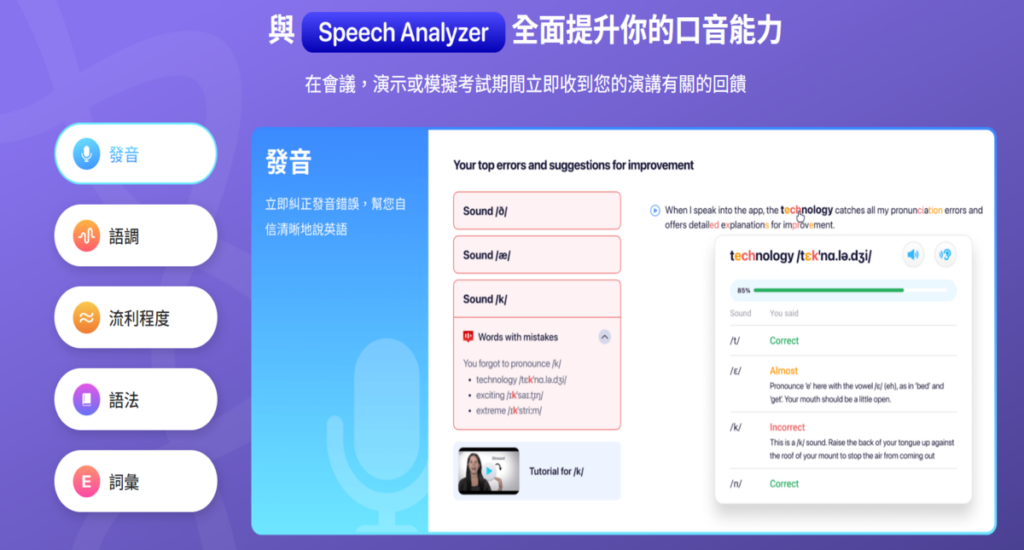
- 與 Speech Analyzer 全面提升您的口音能力:
- 收回饋:在會議,演示或模擬考試期間立即收到您的演講有關的回饋。
- 評估演示:透過 5 個因素評估您的演示:發音、語調、流利程度、語法、詞彙。
- 預測成績:預測雅思、托業、托福等國際證書的口語考試成績。
- 體驗證書課程以便充分的準備國際英語考試(雅思、托福、托業等),並掌握商務英語。
適合對象:適合所有想要提高溝通能力的人,想要提高溝通能力的人,在工作中必須接觸英語的人。
ELSA Premium 價格表
| 套餐 | 原價 (TWD) | 優惠價 (TWD) | 折扣 (%) |
|---|---|---|---|
| 終身 | 9,450 | 4,705 | 50% |
| 1 年 | 5,250 | 2,092 | 60% |
| 3 個月 | 2,100 | 1,100 | 48% |
每月限定優惠 – 錯過就沒了哦!
ELSA Speak 巨額優惠套餐:

ELSA PREMIUM 終身套餐
原價:9,450 元 ->4,705 元(折扣 50%)
輸入優惠碼:AFTEETW
ELSA PREMIUM 一年套餐
原價:5,250 元 ->2,092 元(折扣 60%)
輸入優惠碼:AFTEETW
ELSA Speak 其他優惠套餐

ELSA PRO 終身套餐
原價:6,150 元 ->6,150 元(折扣 -%)
輸入優惠碼:AFTEETW

ELSA PRO 一年套餐
原價:2,450 元 ->2,450 元(折扣 -%)
輸入優惠碼:AFTEETW

ELSA PREMIUM 三個月套餐
原價:2,100 元 -> 1,100 元(折扣 50%)

ELSA PREMIUM 一個月套餐
原價:850 元 -> 380 元(折扣 55%)
為了讓每個用戶都有機會體驗和探索該語言的全部潛力,ELSA Speak 定期推出促銷活動以最優惠的價格,為每個人使用 ELSA 並改善溝通創造條件。此外,ELSA 還準備了特別節目給名人的粉絲者,例如: Chen Lily、Howard、Benzi 等等
ELSA Speak 定期提供不同折扣的促銷活動。該應用程序還調整了從 1 個月到 1 年的多種不同時間的套餐,幫助用戶輕鬆選擇最適合其學習目標的成本。
領取優惠碼 – ELSA Speak
為了在 ELSA Speak 促銷時領取有吸引力的優惠,您應該選擇 ELSA 的可靠渠道,以避免被騙、折錢但仍未收到優惠碼或優惠碼無效。以下是領取 ELSA Speak 優惠碼的方法:
方法一:在此訪問 ELSA 主頁:https://tw.elsaspeak.com/
您可以閱讀主頁橫幅上的學習包信息,了解有關 ELSA Speak 學習包的更多信息。
方法二:您可以在此處直接註冊學習包:
ELSA Premium: 領取優惠碼的鏈接
方法三: 訪問其他 ELSA Speak 頻道:
有了 ELSA Speak,學習英語從未如此簡單。無需擔心花太多錢或考慮課程,只需在 ELSA Speak 促銷時領取優惠,全球領先的人工智能應用程序就在您手中。現在,您可以隨時隨地與 ELSA 一起學習並征服英語!
無論是日常交流、填寫國際表格,還是寄送國際郵件,正確的英文地址 格式都非常重要。透過英文地址翻譯與英文地址寫法規則,你可以更快速掌握中文地址轉換成英文地址的方法。若平常會搜尋「英文 地址」、「英文地址 翻譯」或「翻譯英文地址」,以下整理都能幫助你找到對應的寫法。一起跟 ELSA Speak 探索如何用地址翻譯英文地址吧!
台灣英文地址的順序怎麼寫?
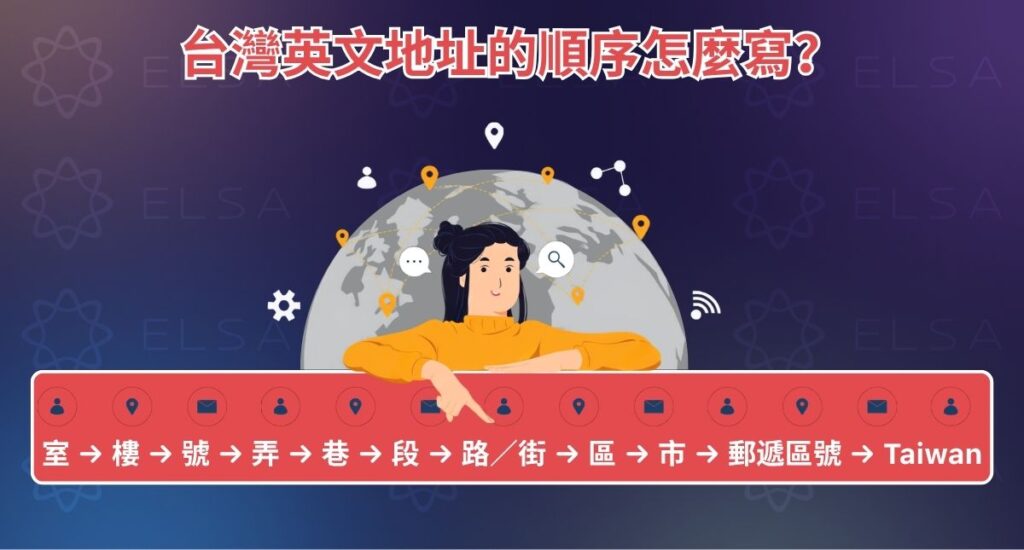
在查找台灣英文地址或「台灣 英文地址」的英文地址寫法時,你會發現它和中文地址的排列順序不同。中文地址通常由大範圍寫到小範圍,而英文地址則從最具體的資訊開始,再逐步寫到較大的行政區域。
英文地址 格式:
| 室 → 樓 → 號 → 弄 → 巷 → 段 → 路/街 → 區/鄉/鎮 → 縣/市 → 郵遞區號 → Taiwan |
例如:
- 中文地址:臺北市大安區金山南路2段55號
- 英文地址:No. 55, Sec. 2, Jinshan S. Rd., Da-an Dist., Taipei City 106409, Taiwan (R.O.C.)
如果地址沒有房號、樓層、弄、巷或段,就直接省略該項,不需要另外加入替代符號。實際填寫時,最重要的是保留足夠資訊,讓郵局、物流業者或國際系統能正確辨識收件地點。
中文地址轉英文地址的 3 個步驟
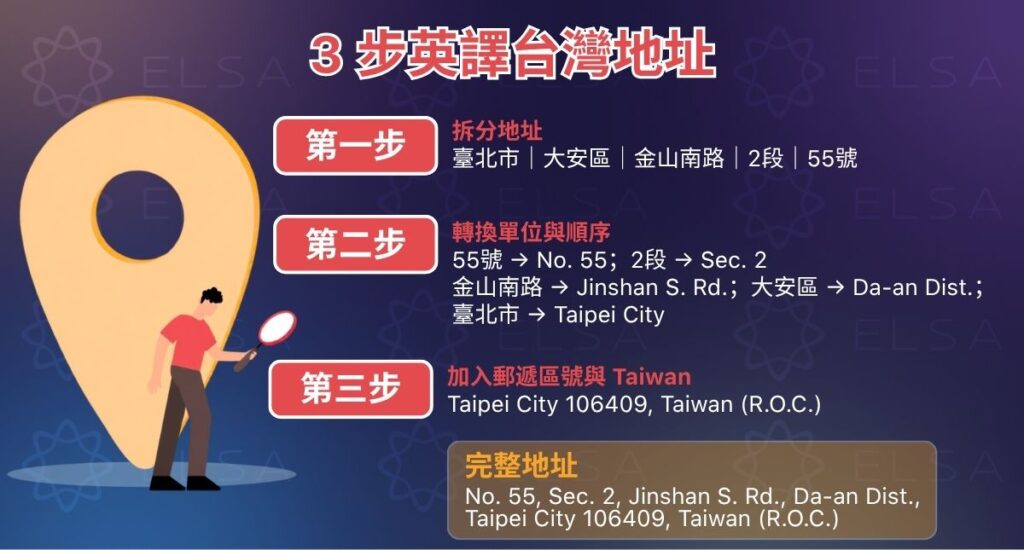
需要進行英文地址轉換時,常見搜尋方式包括英文地址翻譯、英文地址 翻譯、翻譯英文地址或地址翻譯英文地址。雖然搜尋說法不同,目的都是把中文地址轉成可用於寄信、收件或填寫國際表格的英文地址。
步驟 1:拆分地址單位
首先,把中文地址拆成不同組成部分,以確認城市、行政區、路名、段與門牌號碼。
例如:臺北市|大安區|金山南路|2段|55號
正確拆分每個單位,可以避免混淆區與縣、巷與弄,也能減少漏掉樓層、房號或其他重要資訊。這是進行英文地址翻譯或地址翻譯英文地址前的重要步驟。
步驟 2:轉換單位並調整順序
拆分完成後,專有地名應優先使用台灣官方英文譯寫方式,再把行政區與道路單位轉成英文,同時將地址改為由小到大的順序。
- 55號 → No. 55
- 2段 → Sec. 2
- 金山南路 → Jinshan S. Rd.
- 大安區 → Da-an Dist.
- 臺北市 → Taipei City
結果:No. 55, Sec. 2, Jinshan S. Rd., Da-an Dist., Taipei City
常見地址單位:
| 英文單字 | 英文寫法 | 縮寫 |
|---|---|---|
| 門牌號碼 | Number | No. |
| 樓層 | Floor | F. |
| 房間 | Room | Rm. |
| 弄 | Alley | Aly. |
| 巷 | Lane | Ln. |
| 段 | Section | Sec. |
| 路 | Road | Rd. |
| 街 | Street | St. |
| 區 | District | Dist. |
| 鄉/鎮 | Township | — |
| 市 | City | — |
| 縣 | County | — |
進行英文地址轉換時,路名、行政區或城市名稱應優先採用台灣官方譯寫,而不是自行逐字翻譯。
步驟 3:加入郵遞區號與國家
地址主要部分完成後,在縣市名稱後加入郵遞區號,並將 Taiwan 放在地址最後。
完整範例:No. 55, Sec. 2, Jinshan S. Rd., Da-an Dist., Taipei City 106409, Taiwan (R.O.C.)
如果地址要用於寄送、收件或填寫資料,送出前建議再次確認官方譯寫與郵遞區號。若不確定,可以透過英文地址查詢或英文地址生成器確認;也可以使用中華郵政英文地址相關官方工具核對資訊。
台灣英文地址怎麼填與怎麼查?
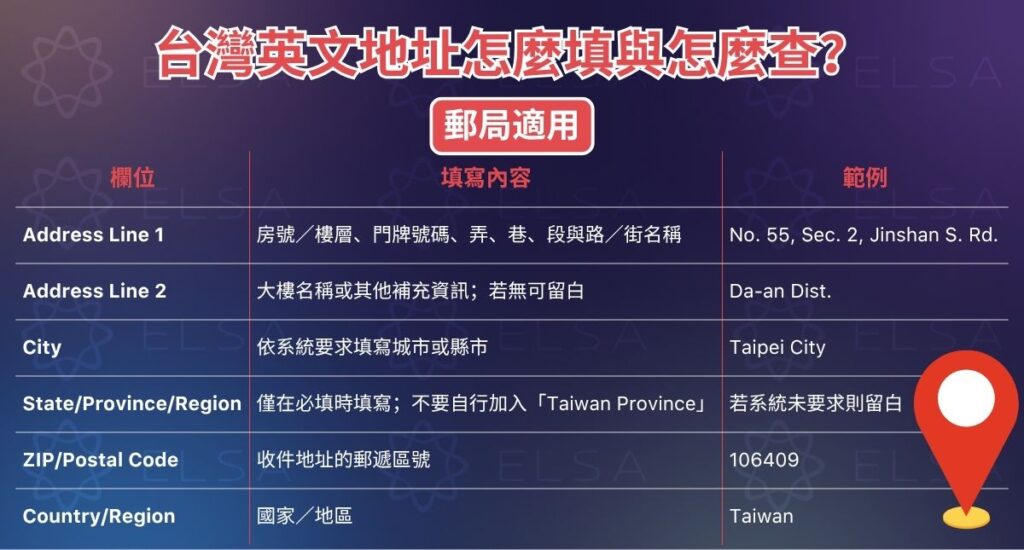
完成地址轉換後,還需要知道英文地址怎麼填、如何核對郵遞區號,以及如何使用官方工具進行英文地址查詢。這些都是填寫國際表格時很常見的需求。
Address Line 1 與 Address Line 2 怎麼填?
如果網站沒有另外說明,可以依下列方式拆分台灣英文地址:
| 欄位 | 填寫內容 | 範例 |
|---|---|---|
| Address Line 1 | 房號/樓層、門牌號碼、弄、巷、段與路/街名稱 | No. 55, Sec. 2, Jinshan S. Rd. |
| Address Line 2 | 大樓名稱或其他補充資訊;若無可留白 | Da-an Dist. |
| City | 依系統要求填寫城市或縣市 | Taipei City |
| State/Province/Region | 僅在必填時填寫;不要自行加入「Taiwan Province」 | 若系統未要求則留白 |
| ZIP/Postal Code | 收件地址的郵遞區號 | 106409 |
| Country/Region | 國家/地區 | Taiwan |
如果網站的欄位安排不同,應優先遵循網站本身的說明。不論欄位怎麼分,門牌號碼、路名、城市與郵遞區號都必須與原始地址一致。
3+3 郵遞區號怎麼填?
台灣目前使用 3+3、共 6 碼的郵遞區號。前 3 碼用來辨識區域,後 3 碼則可進一步縮小投遞範圍。
填寫郵遞區號時請注意:
- 依完整地址查詢郵遞區號
- 不要自行補 0
- 不要猜測後 3 碼
- 如果舊網站限制字數,依該網站的說明填寫
當地址用於收包裹、寄信或填寫國際文件時,正確的郵遞區號尤其重要。
國際信封上的英文地址怎麼寫?
從國外寄信到台灣時,收件人的郵政英文地址可以分成四行:
- 第 1 行:收件人姓名、部門或公司
- 第 2 行:房號/樓層、門牌號碼、弄、巷、段與路/街
- 第 3 行:區/鄉/鎮、縣/市及郵遞區號
- 第 4 行:Taiwan (R.O.C.)
例如:
| Wang Xiao-Ming No. 55, Sec. 2, Jinshan S. Rd. Da-an Dist., Taipei City 106409 Taiwan (R.O.C.) |
郵局英文地址格式與中華郵政翻譯方式
如果要寄送國際信件或包裹,可以參考郵局英文地址與郵政英文地址的格式。透過中華郵政英文地址翻譯服務,可以把中文地址轉換成適合國際郵件使用的英文格式。
進行郵局英文地址翻譯時,地址應從小單位排到大單位,例如門牌號碼、路名、行政區、城市與國家。搜尋「英文地址 郵局」、「郵局 英文地址」、「英文地址郵局」或「中華郵政英文地址」時,實際上也都是在找這類官方轉換與填寫資訊。
英文地址怎麼翻譯成中文?
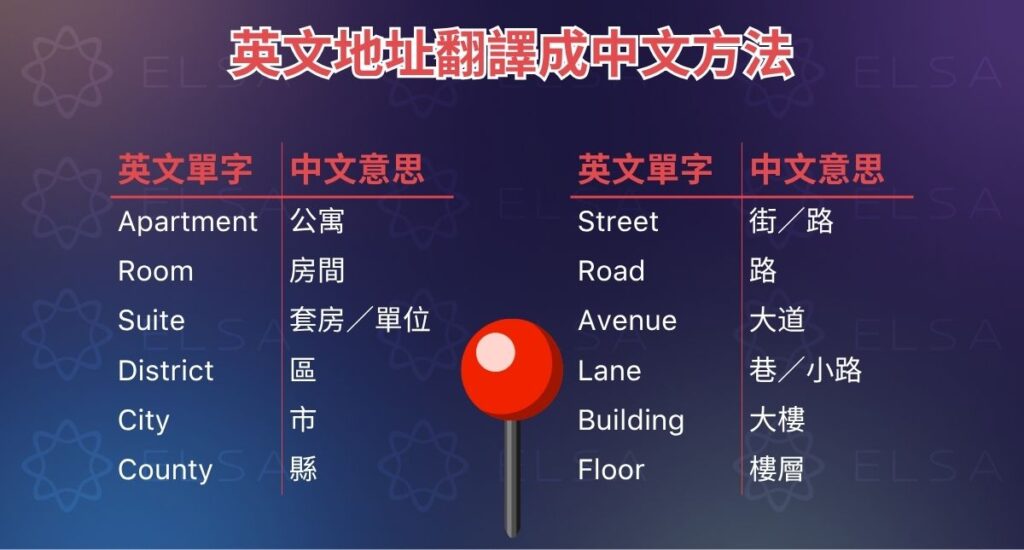
收到國外英文地址後,如果想完整理解內容,可以透過英文地址翻譯中文的方式,先辨識各個地址組成,再按照中文習慣重新排序。
英文地址通常從具體資訊寫到較大的範圍,而中文地址則多半從大範圍讀到小範圍。因此在轉換時,不建議只逐字翻譯後保留原本順序。
例如:
- 英文地址:221B Baker Street, London, NW1 6XE, United Kingdom
- 中文地址:英國倫敦 Baker Street 221B 號,郵遞區號 NW1 6XE
若依中文常見的理解順序,可整理為:英國 → London → 郵遞區號 NW1 6XE → Baker Street → 221B 號。
翻譯英文地址時,常會遇到以下單字:
| 英文單字 | 中文意思 |
|---|---|
| Street | 街/路 |
| Road | 路 |
| Avenue | 大道 |
| Lane | 巷/小路 |
| Building | 大樓 |
| Floor | 樓層 |
| Apartment | 公寓 |
| Room | 房間 |
| Suite | 套房/單位 |
| District | 區 |
| City | 市 |
| County | 縣 |
英文地址相關對話例句

在日常溝通中,註冊資料、寄送物品、訂位或確認地點時,都可能需要詢問或提供英文地址。以下整理常見又自然的說法。
英文怎麼詢問地址?
| 例句 | 中文意思 |
| What is your address? | 你的地址是什麼? |
| May I have your address? | 可以請問你的地址嗎? |
| Could you tell me your address? | 可以告訴我你的地址嗎? |
| Where do you live? | 你住在哪裡? |
| What is your home address? | 你的住家地址是什麼? |
| What address should I send it to? | 我應該寄到哪個地址? |
| Could you confirm your mailing address? | 可以請你確認一下收件地址嗎? |
9.9雙日節 —— ELSA 大促銷
ELSA PREMIUM 1 年
原價: 5,250
2,092
ELSA PREMIUM 終身
原價: 9,450
4,605
ELSA PRO 1 年
原價: 2,450
1,615
ELSA PRO 終身
原價: 6,150
2,368
英文怎麼回答地址?
回答地址時,at、on 和 in 的使用取決於地點的具體程度:at 搭配明確地址,on 搭配道路名稱,而 in 則搭配行政區、城市或國家。
| 例句 | 中文意思 |
|---|---|
| I live at 55 Jinshan South Road. | 我住在金山南路 55 號。 |
| My office is at No. 55, Sec. 2, Jinshan S. Rd. | 我的辦公室位於金山南路二段 55 號。 |
| I live on Jinshan South Road. | 我住在金山南路。 |
| My office is on Zhongxiao East Road. | 我的辦公室位於忠孝東路。 |
| I live in Da-an District. | 我住在大安區。 |
| I live in Taipei. | 我住在臺北。 |
| I live in Taiwan. | 我住在台灣。 |
更多日常主題:
以上是完整的英文地址寫法整理,包含英文地址翻譯、英文地址查詢與英文地址怎麼填等常見需求。如果你是透過郵局英文地址、中華郵政英文地址翻譯或英文地址生成器尋找工具,也可以搭配上述規則交叉確認。掌握這些方法後,無論是填寫表格、寄送郵件、跨境購物或日常溝通,都能更順利地使用英文地址。ELSA Speak 希望這些內容能幫助你在英語交流中更有自信,也更準確。
不定代名词 (Indefinite pronouns) 是英語中 7 個常見代詞之一,經常出現在考試和日常用語中。 一起跟 ELSA Speak 來了解更多關於不定代詞的知識吧!
不定代名詞是什麽?
不定代名詞 (Indefinite pronouns) 指的是不特定的人、地方或事物。在英語中,有些不定代名詞是用量詞或個別詞形成,這類不定代名詞是以 any、some、every 和 no 開頭。
一些不定代詞:all, any, another, anybody/anyone, anything, everybody/everyone, each, everything, few, nobody, many, none, several, one, some, somebody/someone.
例如:
- Someone just called you but I told you you weren’t home.
大致翻譯: 剛剛有人打電話給你,但我說你不在家。
- Tomorrow, everyone must wear uniforms to perform the opening ceremony of the new school year.
大致翻譯: 明天,大家必須穿着校服來舉行新學年的開學典禮。

不定代名詞的位置
事實上,不定代名詞在句子中有許多不同位置。 具體來說:
不定代名詞作主語
不定代名詞用作主語來描述特定的人或事物,而不指定確切的名稱或正確的數量。
例如:
- No one listens to him just because he lied to them.
大致翻譯: 沒有人會聽他只因爲他曾經對他們撒過謊。
- Someone called you, but you went out.
大致翻譯: 有人打電話給你,但你出去了。
不定代名詞作賓語
不定代名詞用作動詞的賓語來表達一般或未指定的含義。
例如:
- She didn’t invite anyone to her birthday party.
大致翻譯: 她沒有邀請任何人參加她的生日聚會。
- She looks so lonely, because there’s no one around when she’s having a bad time.
大致翻譯: 她看起來很孤獨,因為當她遇到不幸的時候,沒有人在她身邊。
不定代詞位於介詞後面
不定代詞用作介詞的賓語來表達一般或未指定的含義
例如:
- She lied to everyone at the office not to go out just because she ran out of money.
大致翻譯: 她在辦公室里跟大家撒謊說她沒錢了所以不出去。
- He was talking to someone but he seemed very serious.
大致翻譯: 他正在和某人說話,但看起來很嚴重。

常見不定代名詞
單數代名指人
| 單數代名指人 | 大致翻譯 |
| Everybody, Everyone | 大家 |
| Someone, somebody | 某人 |
| Each | 每個人 |
| Anyone, anybody | 任何人 |
| Another | 另一個人 |
| No one, Nobody | 無人 |
| The other | 其他的 |
例如:
- Anyone can make their dreams come true, as long as you really try.
大致翻譯: 任何人都可以實現自己的夢想,只需要真正去嘗試。
- Everyone has their own life. So don’t judge anyone by their appearance.
大致翻譯: 每個人都有自己的生活。 因此,不要以外表來判斷任何人。
單數代名指物
| 單數代名指物 | 大致翻譯 |
| Each | 每個 |
| Nothing | 沒有什麼 |
| Everything | 一切 |
| Something | 某事 |
| Anything | 任何事物 |
| Another | 其他 |
例如:
- Everything in this house is hand-picked and decorated by me.
大致翻譯: 這房子里的一切都是我親自挑選和裝飾的。
- Anything needs to be carefully preserved to prepare for International Women’s Day October 20.
大致翻譯: 任何東西都需要小心保存,為 10 月 20 日國際婦女節做準備。
單數代名指人和物
| 單數代名指人和物 | 大致翻譯 |
| Both | 兩者 |
| Two others | 另外兩個 |
| Neither | 無一個 |
| Either | 任意一個 |
| The other two | 另外兩個 |
例如:
- Both Lan and I have dreams of becoming a great leader. So now we are doing our best to make it happen.
大致翻譯: 我和蘭都夢想成為一名有才華的領導者。 所以現在我們正在全力落實。
- Neither the homeroom teacher nor the parents know the thoughts of their teenage children.
大致翻譯: 班主任和家長都不知道十幾歲孩子的想法。
根據情況使用單數或複數代名
一些不定代名詞可以是單數或複數,具體取決於主體想要指代的內容(說話者可能想將主語稱為可數名詞或不可數名詞)。 這些代詞包括 all, any, more, most, none, some, such.
| 根據情況使用單數或複數代名 | 大致翻譯 |
| All | 全部,所有 |
| Some | 一些 |
| Any | 任何 |
| None | 沒有人 |
| Other | 其他 |
例如:
- All that food needs to be refrigerated before it goes bad.
大致翻譯: 所有這些食物在變質之前都需要存放在冰箱中。
- None of them achieved the success they wanted.
大致翻譯: 他們都沒有人取得自己想要的成功。

區分英語中不定代名詞
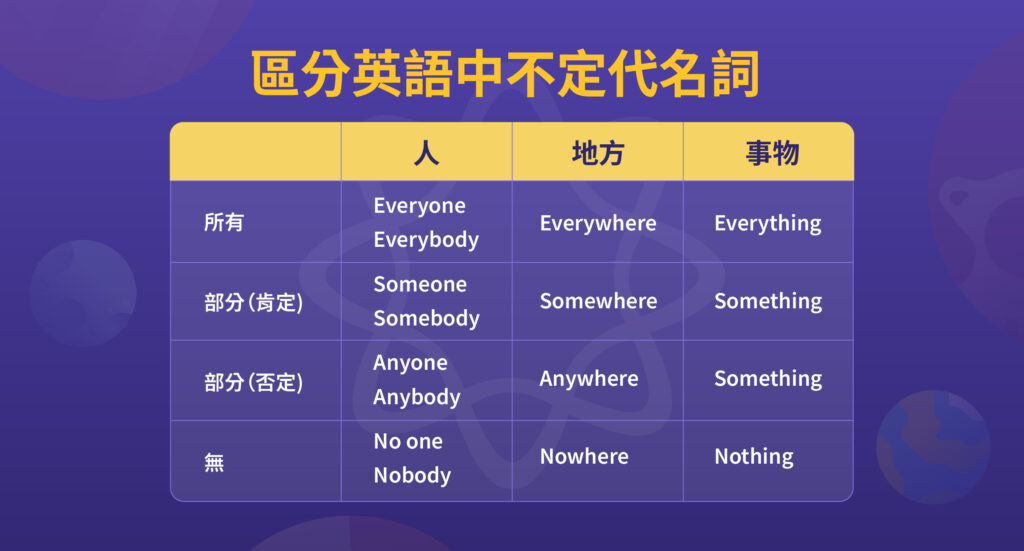
數量不定代名詞
數量不定代名詞是用來代替可數名詞,表達不定數量的詞語。
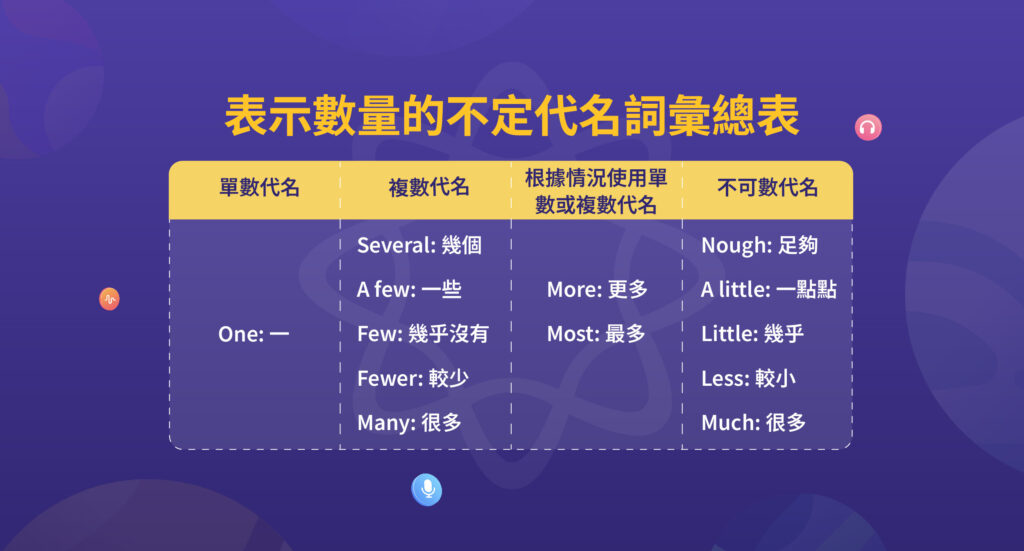
數量不定代名詞總表
| 單數代名 | 複數代名 | 根據情況使用單數或複數代名 | 不可數代名 | |
| One: 一 | Several: 幾個 A few: 一些 Few: 幾乎沒有Fewer: 較少 Many: 很多 | More: 更多 Most: 最多 | Enough: 足夠 A little: 一點點 Little: 幾乎 Less: 較小 Much: 很多 | |
| 例如 | Out of all my classmates, there is only one I don’t want to be friends with. 大致翻譯:在我所有的同學中,只有一個人是我不想成為朋友的。 | Many are called, but few are chosen. 大致翻譯:被叫來的人很多,但被選中的人卻很少。 | 不可數名詞 There’s no salt left in the pot. More is added later. 大致翻譯:罐子里沒有鹽了。 它們將在稍後添加。 复数名词 This paragraph lacks words. More are added later. 大致翻譯:這一段漏字了。 它們將在稍後添加。 | Although this book is very famous, little is known about the author of it. 大致翻譯:雖然這本書非常有名,但是幾乎沒有關於作者的信息。 |
>>閲讀更多:although 用法:詳細解釋、例句與應用練習
不定代名詞的用法
英語中的不定代名詞常常讓很多人在使用時需要注意句子中的動詞而造成“困惑”。 以下是各個不定代名詞的詳細用法說明供您參考。
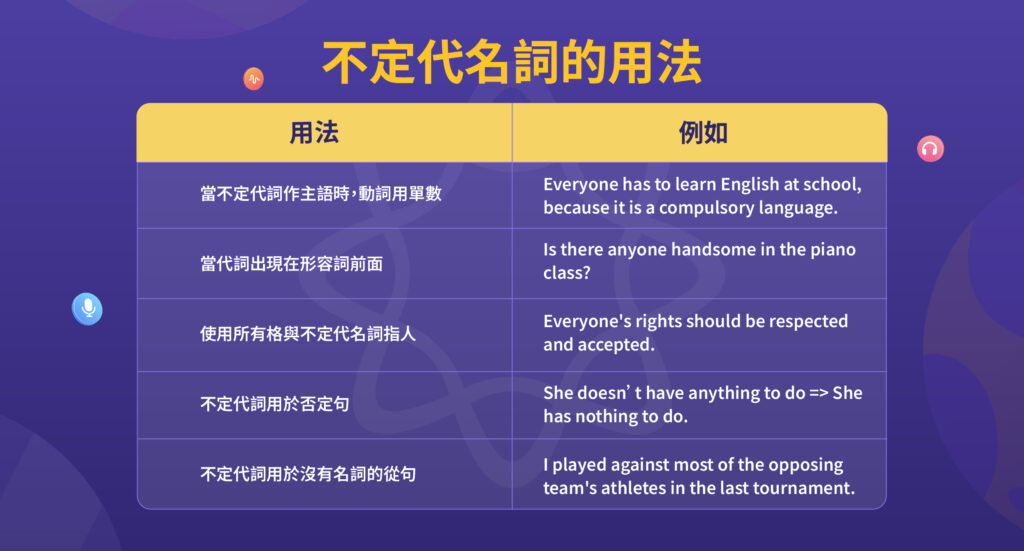
當不定代詞作主語時,動詞用單數
最常見的不定代名詞,例如: someone, something, anybody, anything, nobody, nothing, each, every, either, neither, another, one 都有一個單數的含義。 因此,在使用這些代名詞作為主語時,我們也會使用單數動詞來表示主語和動詞數量上的一致。
例如:
- Everyone has to learn English at school, because it is a compulsory language.
大致翻譯:每個人都必須在學校學習英語,因為這是一門必修語言。
- Someone spilled this pot, causing the soil to fall all over the floor.
大致翻譯:有人打翻了種這種植物的花盆,土掉一地上。
- Looks like someone is here. I have heard someone calling for help many times.
大致翻譯:看起來有人在這裡。 我多次聽到有人呼救。
當代詞出現在形容詞前面
不定代名詞可以放在形容詞前面,具有表達某事或某人的狀態或品質的含義。
例如:
- Is there anyone handsome in the piano class?
大致翻譯:鋼琴班有帥哥嗎?
- Anyone want to go out and enjoy the breeze with me?
大致翻譯:有人想和我一起出去透氣嗎?
使用所有格與不定代名詞指人
不定代名詞指人在所有格中使用,以表達對某個群體的總體所有權。 要將所有格與不定代名詞一起使用,請在不定代名詞後面添加 s。
例如:
- Everyone’s rights should be respected and accepted.
大致翻譯:每個人的權利都應該得到尊重和接受。
- It’s nobody’s business. It’s a common job for everyone to do.
大致翻譯:這不關任何人的事。 這是大家一起做的公幹。
不定代詞用於否定句
否定句中(含 not)、使用不定代詞組 any- (anything, anywhere, anyone).
在具有否定含義(不包含 not)的句子中,使用前綴為 no- (nobody, no one, nowhere) 的不定代名詞,而不使用前綴為 any-的代名詞。
例如:
- She doesn’t have anything to do => She has nothing to do.
大致翻譯:她沒什麼事可做。
- He doesn’t have anything to give you => He has nothing to give you.
大致翻譯:他沒有什麼可以給你的。
不定代詞用於沒有名詞的從句
不定代名詞用來代替可數或不可數名詞,表達不定的數量。 當用於沒有名詞的從句時,不定代名詞通常充當句子的主語或賓語。
例如:
- I played against most of the opposing team’s athletes in the last tournament.
大致翻譯:在上屆比賽中我幾乎與方球隊的大多數運動員比過賽。
- Out of all the teachers at my school, there’s only one I don’t like.
大致翻譯:在我學校的所有老師中,只有一位我不喜歡。
注意:為了更清楚地表達句子的意思,可以使用這樣的結構:不定代詞 + of + 名詞短語。 “of” 後面的名詞短語必須附有限定詞 “the” 或所有格形容詞,例如:your、my、their、…
使用不定代詞時的注意
英語中不定代名詞的使用方法除了上述之外,還需要注意以下幾點:
如果在句子中使用了帶有否定含義的不定代名詞,那就不會使用“not”。
例如:
- No one can answer that question = Everyone cannot answer that question.
大致翻譯:沒有人能回答那個問題。
在否定從句中,我們使用帶有前綴 no- 而不是 any- 的不定代名詞。
例如:
- Nobody knows who he is – 沒有人知道他是誰,而不是 Anybody knows who he is – 誰都知道他是誰.
當動詞與不定代名詞變位時,要注意動詞的單數和複數。
不定代名詞練習及答案
練習 1: 選擇正確的答案
1. She went shopping yesterday but she couldn’t find ………. that I liked.
A. nothing B. anything C. everywhere
2. ate ………. in her lunch bag except for the carrot.
A. everything B. anything C. somebody
3. Excuse me, waiter. There’s ………. in my soup. I think it’s a fly.
A. something B. anywhere C. everywhere
4. She didn’t go ………. on his holiday. She was so bored!
A. nowhere B. somewhere C. anywhere
5. My brother thinks intelligent aliens may exist ………. in the universe.
A. anyone B. something Cnowhere
6. ………. answered her phone when she called an hour ago.
A. No one B. Anyone C. Nowhere
7. My brother puts my glasses ………. in his office but he can’t remember exactly where.
A. somewhere B. everywhere C. anywhere
8. ………. ate my candy! Who? Who ate my candy?
A. Anything B. Somebody C. Anybody
9. My parents can’t meet me tomorrow because I have ………. important to do.
A. somewhere B. something C. nothing
10. ………. is more important than having friends and family who love you.
A. Everyone B. Somewhere C. Nothing
11. ………. in my class passed the grammar test!
A. Everything B. Everyone C. Something
12. Did you guys do ………. interesting on the weekend?
A. anything B. anywhere C. somewhere
13. ………. can lift this box! It’s too heavy to lift.
A. No one B. Something C. Anybody
14. Almost ………. in the world knows about the Olympic games.
A. somewhere B. everywhere C. everyone
15. Some scientists believe there is alien life ………. in our solar system.
A. something B. somewhere C. anything
16. There are still plenty of empty seats. We can sit ………. we like.
A. anything B. anyone C. anywhere
17. There’s ……………… in the room. I can hear some noise.
A. anyone B. someone C. no one
18. ……………. believed in what he said. He lied to them so many times.
A. Anyone B. No one C. Everyone
19. She put ……………… in the carton, all the things she had.
A. everything B. nothing C. anything
20. I went ……………….. last week. I stayed at home.
A. everywhere B. nowhere C. anywhere
21. “What’s wrong with you?” – “………………., I’m okay.”
A. None B. Nothing C. No one
22. In conclusion, the importance of luck in determining goal achievement is overstated, while there are much more significant factors to consider, namely hard work and determination. It is recommended that ______ who wants to pursue their dream should develop a strong will and perseverance.
A. Anyone B. Someone C. Somebody D. Everybody
23. There are severe consequences when copyrighted contents are distributed freely for______. This trend may well put the career of many authors, artists, and creative workers in danger, as they receive a significantly lower income from selling their books and songs. Yet this is not only a problem of finance but also an issue of morality. The proclivity of taking others’ work without permission is a form of disregarding their rights and stealing their work. From a broader perspective, when authors’ intellectual property is not respected, they may be less likely to positively contribute to society.
A. Everything B. No one C. Anything D. Everyone
24. Local news is significant to an average person because of a few reasons. The first is that it is immediately relevant to them. This high level of relevancy means that they are more likely to read the news and learn _______ new and interesting in their local area. That can be the opening of a new theme park, the premiere of a new film shown in the cinema, or a special lunch buffet that one may enjoy at the weekend. Local news, furthermore, gets people to know the issues that may have a direct impact on them. News on a recent road blockage near one’s neighborhood, for instance, may help them to choose a better route to their workplace every day.
A. Nothing B. Something C. Anything D. Nobody
答案
| 1 | B |
| 2 | A |
| 3 | A |
| 4 | C |
| 5 | C |
| 6 | A |
| 7 | A |
| 8 | B |
| 9 | B |
| 10 | C |
| 11 | B |
| 12 | A |
| 13 | A |
| 14 | C |
| 15 | B |
| 16 | C |
| 17 | B |
| 18 | C |
| 19 | A |
| 20 | B |
| 21 | B |
| 22 | A |
| 23 | D |
| 24 | B |
練習 2: 選擇合適的不定代名詞
1. She would like (anything/ something) to eat.
2. My father knows (something/ nothing) about it.
3. He hasn’t got (something/ anything) to do.
4. We sold (everything/ anything) in the sales.
5. The girl didn’t say (nothing/ anything).
6. Is there (something/ anything) amusing on Iphone?
7. Our dog must be (somewhere/ anywhere).
8. There was a flood (anywhere/ somewhere) in Taipei
9. My mother would like to buy (anything/ something) for my dad.
10. My doctor did (everything/ somebody) to save me.
11. Has (anybody / nobody / somebody) seen my passport?
12. I was hungry because there was (anything / something / nothing) to eat.
13. There wasn’t (anybody / somebody / nobody) at the check-in desk.
14. We didn’t have (somewhere / nowhere / anywhere) to sleep.
15. Can I have (something / anything / nothing) to drink?
16. (Anybody / Everybody / Somebody) says that Paris is amazing in the spring.
答案:
| 1 | Something |
| 2 | Nothing |
| 3 | Anything |
| 4 | Everything |
| 5 | Anything |
| 6 | Anything |
| 7 | Somewhere |
| 8 | Somewhere |
| 9 | Something |
| 10 | Everything |
| 11 | Anybody |
| 12 | Nothing |
| 13 | Anybody |
| 14 | Anywhere |
| 15 | Something |
| 16 | Anybody |
>>瞭解更多:名詞子句是什麼?結構、用法、例子及附答案的練習題
以上是 ELSA Speak 分享的不定代名詞相關語法知識。 希望看完帖子后您能獲得更多有用的知識來幫助您學習英語的過程。點進英語文法專欄閲讀更多有趣内容!
過去完成式(Past Perfect Tense)在英語中起着重要作用,協助您要表達的是某動作在過去某個時間點之前已經完成。 在下面的文章中。 ELSA Speak 將為您提供如何使用和區分過去完成式的知識。
Past Perfect Tense – 過去完成式的概念
過去完成式(Past Perfect Tense)是12 種英文時態之一,通常用於描述「過去發生的兩個事件」,先發生的事件用過去完成式,後發生的事件用過去簡單式來表達。
例如:
- She had done her housework before her father came back
大致翻譯:她在父親回來之前打掃完了房子。
- My friend had finished his project right before the deadline last week.
大致翻譯:我的朋友上周在截止日期前完成了他的項目。
>>閲讀更多:過去進行式(Past Continuous Tense): 用法、結構、對比與例子
過去完成式(Past Perfect Tense)- 公式
過去完成式的公式是什麼?立即跟 ELSA Speak 一起探索吧!
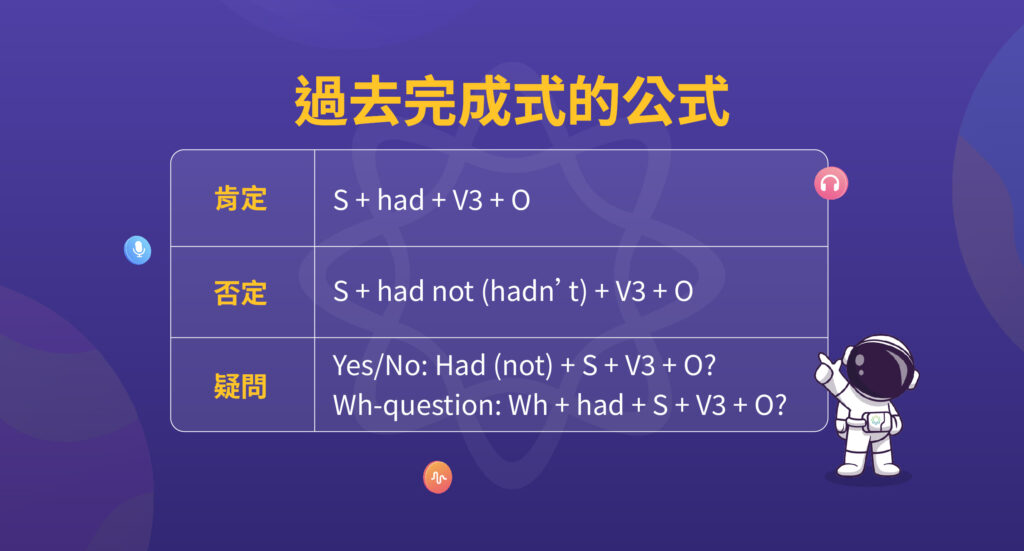
肯定結構
結構: S + had + V3 + O
| 結構: S + had + V3 + O |
例如:
- My mother had gone out when shipper delivered to.
大致翻譯:當送貨員到達時,我媽媽出去了。
- I had finished my homework just before the deadline last Thursday.
大致翻譯:上周四我在截止日期前完成了作業。
否定結構
| 結構: S + had not (hadn’t) + V3 + O |
例如:
- My mother hadn’t come home when shipper delivered to.
大致翻譯:當送貨員到達時,我媽媽還沒有回家。
- I hadn’t finished my homework just before the deadline last Thursday.
大致翻譯:上周四我沒有在截止日期前完成作業。
疑問結構
| 結構 Yes/No: Had (not) + S + V3 + O? 結構 Wh-question: Wh + had + S + V3 + O? |
例如:
- Had the film ended when you arrived at the cinema?
大致翻譯:當你到達電影院時電影已經結束了,對吧?
>>掌握動詞三態:動詞三態是什麽? 動詞三態的區別和最準確的用法。
過去完成式(Past Perfect Tense)- 用法
什麼時候用過去完成式(Past Perfect Tense)? 過去完成式常用於以下情況:
1. 當兩個動作發生在過去時,先發生的動作用過去完成式,后發生的動作用過去簡單式。
例如:
- I went to the movies with my friends after my mother had came back.
大致翻譯:我媽媽回家后我和我的朋友去看電影。
- I met him after he had graduated from college.
大致翻譯:我是在他大學畢業后遇見他的。
2. 用於描述過去某一時間或過去某一時間之前發生並持續的動作。
例如:
- By the time we arrived, Lan had gone out.
大致翻譯:當我們到達時,蘭已經出去了。
- I had never played soccer until last week.
大致翻譯:直到上周末我才踢足球。
3. 描述作為另一個動作的首要條件而發生的動作。
例如:
- I had prepared for the exams and was ready to do well.
大致翻譯:我已經為考試做好了準備,並準備取得好成績。
- I went to Paris last summer and had gone to the Eiffel Tower.
大致翻譯:去年夏天我去了巴黎,去了埃菲爾鐵塔。
4.用在第三類條件句中,表示過去不真實的情況。
例如:
- If I had enough money, I could have bought a new iphone.
大致翻譯:如果我有足夠的錢,我就可以買一部新 iPhone了。
- If she had followed my advice, she wouldn’t have had to sell her favorite car.
大致翻譯:如果她聽從了我的建議,她就不必賣掉她最喜歡的汽車。
>>if條件句練習:If 用法,概念,結構與練習: 一、二、三,混合
5. 過去完成時也用於描述過去一段時間內或另一段時間之前發生的動作。
例如:
- Mary had worked at this company for five years before she went to her hometown last year.
大致翻譯:瑪麗在這家公司工作了5年,去年才回國。
6.用於表達對過去某事的失望。
例如:
- We wished we had purchased the ticket.
大致翻譯:我們希望我們已經買了票。
>>閲讀更多:Have been 用法:完整公式、例句與用法區別
過去完成式(Past Perfect Tense)- 識別標志
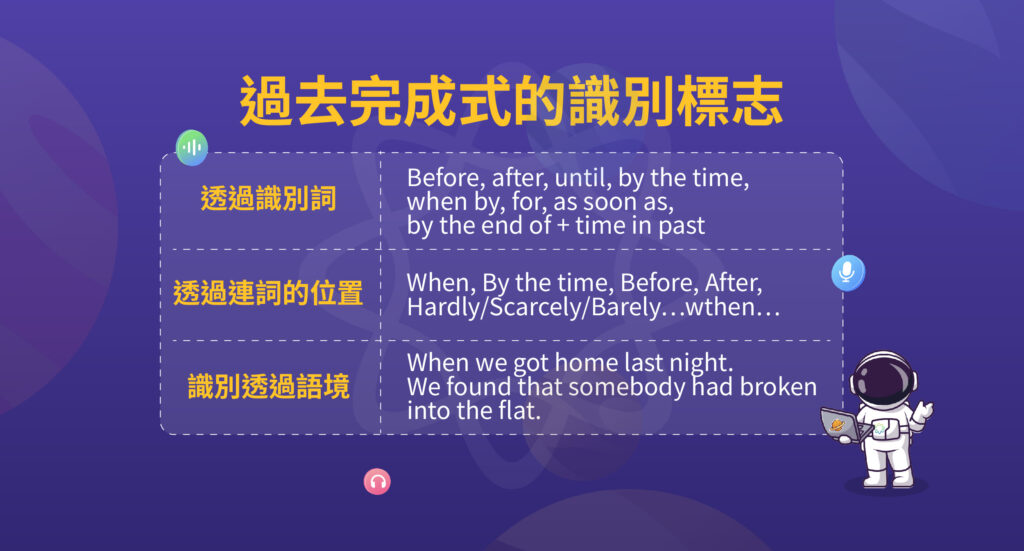
透過識別詞
過去完成式的識別標志透過這些詞: before, after, until, by the time, when by, for, as soon as, by the end of + time in past,…
例如:
- Before I went to work, my mother packed lunch for me.
大致翻譯:在我去上班之前,媽媽給我準備了午餐。
- My boyfriend hadn’t recognized me until I took off my mask.
大致翻譯:直到我摘下口罩,我男朋友才認出我。
透過連詞的位置
除了識別透過識別詞外,過去完成式還可以透過句子中連詞的位置來識別。 具體:
| 連詞 | 例如 | 解釋 |
|---|---|---|
| When (當) | When I arrived at the airport, my flight had taken off before 2 hours. 大致翻譯:當我到達機場時,我的航班提前 2 小時出航。 | 用於描述同時發生的兩個事件或一個事件相繼發生。 |
| Before (之前) | Before I had parted with him, we went around the world together. 大致翻譯:在我和他分手之前,我們曾經一起環遊世界。 | 用於描述在另一事件之前發生的事件。 “before” 前面的句子用過去完成式,“before” 後面的句子用過去簡單式。 |
| After (后) | We went home after we had arrived in Sapa 2 days 1 night. 大致翻譯:我們去了沙巴2天1夜后就回家了。 | 用於描述在另一個事件之後發生的事件。 “after” 後面的句子用過去簡單式。 |
| By the time (到…的時候) | I had finished my homework by the time the teacher checked it. 大致翻譯:老師檢查的時候我已經完成作業了。 | 用於強調一個事件在另一事件發生時已經完成。 |
| Hardly/Scarcely/Barely …. when ….. (一…就) | Hardly had I gone out when it rained. 大致翻譯:我一出去,就下雨了。 | 是一種僅使用過去完成式的倒裝結構。 用於表達對一件事情接連發生另一件事情感到愕然或意外。 |
>>相關内容:While 是什麼意思?結構、含義、用法及附答案練習
識別透過語境
您可以識別過去完成式透過語境,例如:
- When we got home last night. We found that somebody had broken into the flat.
大致翻譯:昨晚,當我們回到家時,我們發現有人闖入了房子。
- Karen didn’t want to come to the cinema with us because she had already seen the film.
大致翻譯:凱倫不想和我們一起去看電影,因為她(之前)已經看過這部電影了。
- At first I thought I’d done the right, but soon I realized that I’d made a serious mistake.
大致翻譯:起初我以為我做了正確的事,但很快我意識到我犯了一個嚴重的錯誤。
- The man sitting next to me on the plane was very nervous. He hadn’t flown before./ He had never flown before.
大致翻譯:飛機上坐在我旁邊的那個人非常緊張。 他以前從未坐過飛機。/他以前從未飛過。
區分過去完成式(Past Perfect Tense)
過去完成式和過去完成進行式的區分
一樣:
- 兩個都表達了在過去的參考點之前發生並完成的動作。
- 兩個都使用助動詞“had”和主要動詞的過去分詞。
不一樣:
| 過去完成式 (Past Perfect Tense) | 過去完成進行式 (Past Perfect Continuous Tense) | |
|---|---|---|
| 結構 | (+) S + had + V3/-ed (-) S + had not + V3/-ed (?) Had + S + V3/-ed | (+) S + had been + Ving (-) S + hadn’t been + Ving (?) Had + S + been + Ving |
| 用法 | – 表示過去發生並在另一個動作之前結束的動作。 – 表達過去確定時間之前的動作。 – 用於不真實的條件句(類型 3 條件句)。 | – 描述過去發生的、持續並持續到過去確定時間的動作。 – 表示一個動作已經結束但仍然對過去的另一個動作有影響。 |
| 識別標志 | 常與 before、after、by the time、when、until、as long as、… 連用。 | 常與 since, how long, for, … 連用。 |
| 例如 | I met them after they had divorced. 大致翻譯:他們離婚後我遇見了他們。 I had been to Danang twice by the time I reached 25. 大致翻譯:25歲之前我去過峴港兩次。 | I had been working here for two weeks when he got promoted. 大致翻譯:他升職之前我在這裡工作了兩周。 May really needed a holiday since she had been working hard for 6 months. 大致翻譯:May 確實需要休假,因為她已經辛苦工作了 6 個月。 |
>>閲讀更多:since 用法:意義、規範用法、區分方法及記憶技巧
過去完成式和過去簡單式的區分
一樣:
- 表達過去的行為:兩個都講述以前發生的事件。
- 使用代詞和連詞:與指示過去時間的代詞和連詞結合使用。
不一樣:
| 過去完成式 (Past Perfect Tense) | 過去簡單式 (Past Simple Tense) | |
|---|---|---|
| 結構 | (+) S + had + V3/-ed (-) S + had not + V3/-ed (?) Had + S + V3/-ed | (+) S + V2/ed (-) S + did not + V0 (?) Did + S + V0 |
| 用法 | – 表示過去發生並在另一個動作之前結束的動作。 – 表達過去確定時間之前的動作。 – 用於不真實的條件句(類型 3 條件句)。 | – 表達過去發生並完全結束的動作。 – 表示過去重複的動作。 – 表示插入過去發生的動作的。 – 表示過去連續發生的一系列動作。 – 用於不真實的願望。 – 用於條件句類型 II(現在時的非真實條件句)。 |
| 識別標志 | 常與 before, after, by the time, when, until, as soon as, … 連用 | 常與 yesterday, in the past, the day before, ago, last (week, year, month) 連用或一天中已經過去的一段時間 (today, this morning, this afternoon). |
| 例如 | I went to the movies with my friends after my mother had come back. 大致翻譯:我媽媽回家后我和我的朋友去看電影。 When I went to England, I had studied English for over 2 years. 大致翻譯:當我來到英國時,我曾經學習英語兩年多了。 | Lulu wasn’t at home when I knocked on her door. She was out at school. 大致翻譯:當我敲露露的門時,她不在家。她在學校。 I studied English for 5 years. 大致翻譯:我已經學習英語五年了。 |
過去完成式和現在完成式的區分
一樣:
- 描述行動:從過去開始,持續到現在或產生影響現在的結果。
- 使用代詞和連詞:與指示過去時間的代詞和連詞結合使用。
不一樣:
| 過去完成式 (Past Perfect Tense) | 現在完成式 (Present Perfect Tense) | |
|---|---|---|
| 結構 | (+) S + had + V3/-ed (-) S + had not + V3/-ed (?) Had + S + V3/-ed | (+) S + have (’ve)/has (’s) + VPII (-) S + have not (haven’t)/has not (hasn’t) + VPII (?) Have/Has + S + VPII |
| 用法 | – 表示過去發生並在另一個動作之前結束的動作。– 表達過去確定時間之前的動作。– 用於不真實的條件句(類型 3 條件句)。 | – 表示過去發生的動作,該動作現在繼續發生,並且可能在將來繼續發生。– 指過去重複發生的動作。– 描述過去某個時間發生但時間不清楚的動作。– 談論某人的經歷(比較句和The first/ last/ second…)– 描述過去某個時間發生但留下了現在可以清楚看到的跡象或後果。 |
| 識別標志 | 常與 before, after, by the time, when, until, as soon as, … 連用。 | 當句子中出現的單詞,例如:– For + 至今的一段時間 (for a long time, for 2 years).– Since + 至今的一段時間 (since 2000, since 1975).– Just, Already, Before, Yet, Ever, Never, Recently, So far. |
| 例如 | My mom had gone out for a walk when I came home. 大致翻譯:當我回到家時,我媽媽出去散步了。 I had had a family dinner before I went out last night. 大致翻譯:昨晚出去之前我吃了一頓家庭晚餐。 | Jane has stayed with her parents since she graduated. 大致翻譯:Jane 自從畢業之後就一直和父母住在一起 David has written five books and is working on another one. 大致翻譯:David 已經寫了五本書,並且正在寫另一本書。 |
過去完成式的應用練習
练习1:選擇括号中动词的正确形式。
1. I (come) ……….. back home after I (finish) ……………… my work.
2. My mother said that she (meet) ……………. my teacher before.
3. Before my father (go) ………….. to bed, he (read) ………… a novel.
4. She told me she (not/wear) ……………… such kind of clothes before.
5. When my family came to the stadium, the match (start)
6. She said that she ( meet) ……………………. Mr. Bean before.
7. Before she (listen) ………………….. to music, she (do)……………………. homework.
8. Last night, Peter (go) ………………….. to the supermarket before he (go) ………………… home.
9. When David came, everybody ________ (leave).
10. He ________ (already/watch) the movie, so he wouldn’t want to see it atop gain.
11. My kids didn’t eat anything at the party because they _________ (eat) dinner at home.
12. The motorbike burned just after it ______ (crash) into the tree.
13. John _______ (not/complete) his homework by the deadline, so he called his teacher to tell that he would submit it late.
14. She didn’t cry because she _______ (know) the truth.
15. The tornado destroyed the tent that we (build) ____________.
16. She (not / be) ____________ to Hanoi before 2018.
17. When he went out to play, he (do / already) ____________ his homework.
18. My sister ate all of the cake that our mum (make) ____________ .
19. The nurse took off the plaster that she (put on) ____________ six weeks before.
20. The waitress brought a drink that I (not / order) ____________ .
21. I could not remember the song we (learn) ____________ three week before.
22. The children collected mangos that (fall) ____________ from the tree.
23. (she / phone) ____________ Nam before she went to see him in Laos?
24. He (not / ride) ____________ elephants before that day.
答案:
| 1 | Came – had finished |
| 2 | Had met |
| 3 | Went – had read |
| 4 | Hadn’t worn |
| 5 | Had started |
| 6 | Had met |
| 7 | Listened – had done |
| 8 | Had gone – went |
| 9 | Had left |
| 10 | Had already watched |
| 11 | Had eaten |
| 12 | Had crashed |
| 13 | Hadn’t completed |
| 14 | Had known |
| 15 | Had built |
| 16 | Had not been |
| 17 | Had already done |
| 18 | Had made |
| 19 | Had put on |
| 20 | Had not ordered |
| 21 | Had learned |
| 22 | Had fallen |
| 23 | Had she phoned |
| 24 | Had not ridden |
練習2:用正確的公式改寫下面的句子
1. He went home after that Ling arrived at the party.
After he ___________________________________________
2. She had lunch and then she came to her house.
After she_____________________________________________
3. He went to the airport but the plane had already departed.
After the plane ________________________________________
4. My sister had gone home before my father arrived.
After_____________________________________________
5. I had lunch then I took a look around the shops.
Before_____________________________________________
6. The light had gone out before I got out of the office.
When _____________________________________________
7. After he had explained everything clearly, we started our work.
By the time _____________________________________________
8. David had gone home before we arrived. After_____________________________________________
9. We had lunch then we took a look around the shops. Before_____________________________________________
10. The light had gone out before we got out of the office.
When_____________________________________________
11. After she had explained everything clearly, we started our work.
By the time_____________________________________________
12. My father had watered all the plants in the garden by the time my mother came home.
Before_____________________________________________
答案:
1. After he had gone home, Ling arrived at the party.
2. After she had lunch, she came to her house.
3. After the plane had departed, he went to the airport.
4. After I had gone home, my father arrived.
5. Before I took a look around the shops, I had had lunch.
6. When I got out of the office, the light had gone out.
7. By the time we started our work, he had explained everything clearly
8. After David had gone home, we arrived.
9. Before we took a look around the shops, we had had lunch.
10. When we got out of the office, the light had gone out.
11. By the time we started our work, she had explained everything clearly.
12. Before my mother came home, my father had watered all the plants in the garden.
可以看出,過去完成式(Past Perfect Tense)用於許多不同的情況,包括日常英語交流和寫作中。 ELSA Speak 希望看完帖子后您能獲得更多有用的知識來幫助您學習英語的過程。相關英語文法主題可以點進來觀看更多,學習更多有利於英文語法交流的知識!
5月20日快到了,台灣人經常按月讀日——520,“520”讀音為“Wǔ’èr líng”,這個發音與“Wǒ ài nǐ”相似,意思是“我愛你”。 這是情侶們享受愛情時刻、發送真心話的理想時機。 為了能夠以浪漫而精緻的方式表達您的感受,一起跟ELSA Speak 探索關於愛情的浪漫英文短句吧!
浪漫英文短句
ELSA Speak 集合了一些英文句子 唯美且浪漫,來參考吧!
| 浪漫英文短句 | 大致翻譯 |
|---|---|
| They say as long as at least one person cares for you, life isn’t a waste. So when things go terribly wrong, and you feel like giving up, please remember you still got me. | 有人說,如果至少有一個人在乎你,生命就不算浪費。即使當你遇到困難或者當你想放棄的時候,請記住你永遠有我。 |
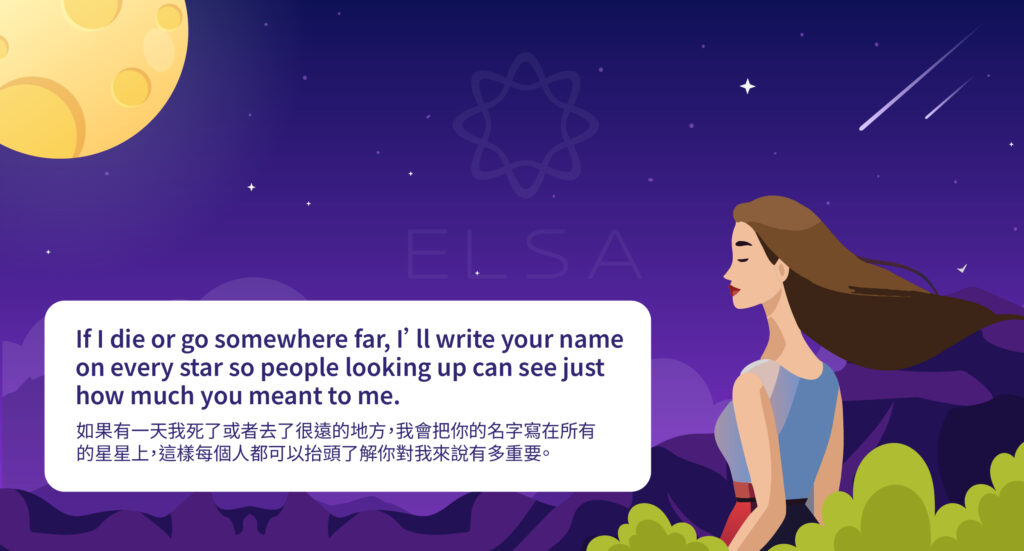
| If I die or go somewhere far, I’ll write your name on every star so people looking up can see just how much you meant to me. | 如果有一天我死了或者去了很遠的地方,我會把你的名字寫在所有的星星上,這樣每個人都可以抬頭了解你對我來說有多重要。 |
| Hate has a reason for everything but love is unreasonable. | 你恨一個人可以有理由,但你愛一個人是毫無理由的。 |
| A great love is not one who loves many, but one who loves one woman for life. | 偉大的愛情不是愛很多人,而是一生只愛一人。 |
| Can I say I love you today? If not, can I ask you again tomorrow? And the day after tomorrow? And the day after that? Coz I’ll be loving you every single day of my life. | 今天我可以說愛你嗎?要不,我可以明天再問你嗎?後天?大後天?因為我生命中的每一天都愛你。 |
| It only takes a second to say I love you, but it will take a lifetime to show you how much. | 只需要幾秒鐘來說我愛你,但需要一生來證明它。 |
| I would rather be poor and in love with you, than being rich and not having anyone. | 與其富有而孤獨,寧願貧穷而有愛。 |
| I’d give up my life if I could command one smile of your eyes, one touch of your hand. | 我願意用我的一生來看到你的微笑,握住你的手。 |
| I don’t even want to think about what life would be like without you. | 我不想想象沒有你的生活會是什麼樣子。 |
| Everything you do in my life adds to my happiness, subtracts from my sadness, and multiplies my joy! | 你所做的一切都為我的生活增添了快樂,減少了悲傷,倍增了快樂! |
| You are the sunshine in my day and the moonlight of my nights. | 你是我的陽光也是我的月光。 |
| I just wouldn’t feel complete without you. | 我不會感到完滿如果沒有你。 |
| You are my treasure – the most precious thing in my life. | 你是寶藏,是我生命中最有價值的東西。 |
| I love you more and more every day. | 我每天都愛你多一點。 |
| How can you love another if you don’t love yourself? | 如果不愛自己,那你怎麼能去愛別人呢? |
>>閲讀更多:英文座右銘精選:200+ 勵志、短句與名人 motto
>>更多唯美短句:總結 100+ 最經典、最有意義的英文短句唯美關於生活、愛情
名人關於愛情的美麗短句
對於男人的浪漫英文短句
| 浪漫英文短句 | 大致翻譯 |
|---|---|
| As he read, I fell in love the way you fall asleep: slowly, and then all at once. (John Green) | 當他開始讀這本書時,我就像入睡一樣愛上了他:慢慢地、出乎意料地。 |
| I saw that you were perfect, and so I loved you. Then I saw that you were not perfect and I loved you even more. (Angelita Lim) | 我看到你是多麼完美,因此,我愛你。但當我看到你不再完美時,我對你的愛又多了一千倍。 |
| I love you not only for what you are but for what I am when I am with you. I love you not only for what you have made of yourself but for what you are making of me. I love you for the part of me that you bring out. (Elizabeth Barrett Browning) | 我愛你不僅因為你是誰,還因為和你在一起時我是誰。我愛你,不僅因為你為自己所做的一切,還因為你為我所做的一切。我愛你,因為你創造了我的一部分。 |
| In all the world, there is no heart for me like yours. In all the world, there is no love for you like mine. (Maya Angelou) | 這個世界上,再也沒有一顆心像你一樣向著我。這個世界上,沒有人對你的愛能像我對你的愛一樣。 |
| I need you like a heart needs a beat. (One Republic) | 我需要你,就像心臟需要跳動一樣。 |
對於女人的浪漫英文短句
| 浪漫英文短句 | 大致翻譯 |
|---|---|
| If I know what love is, it is because of you. (Hermann Hesse) | 如果我知道什麼是愛,那是因為你。 |
| If you live to be a hundred, I want to live to be a hundred minus one day so I never have to live without you. (A. A. Milne) | 如果你活到100歲,我想活到100歲減去一天,因為我永遠不想活如果沒有你。 |
| Take my hand, take my whole life too. For I can’t help falling in love with you. (Oscar Wilde) | 握住我的手,也帶走我的生命。因為我不能不愛你。 |
| You make me want to be a better man. (Melvin Udall) | 你讓我想成為一個更好的男人。 |
| Grow old along with me, the best is yet to be. (Robert Browning) | 和我一起變老,未來一定會更好。 |

歐美電影中關於愛情的好台詞
| 浪漫英文短句 | 大致翻譯 |
|---|---|
| Some people are worth melting for. (Frozen) | 有的人值得我為她融化。(冰雪奇緣) |
| You will never age for me, nor fade, nor die. (Shakespeare in Love) | 在我眼裡你不會變老,不會褪色,不會死去。(莎翁情史) |
| I love you every universe. (Doctor Strange) | 我在每一個宇宙都愛著你。(奇異博士2:失控多元宇宙) |
| Love means never having to say you’re sorry. (Love Story) | 愛意味着你永遠不必說道歉。 |
| I love you 3000. (Iron Man) | 我愛你三千遍。(鋼鐵俠) |
>>更多有趣短句:150+ 唯美且有意義的英文勵志短句和名言精選合集!

超級浪漫撩人的短句
| 浪漫英文短句 | 大致翻譯 |
|---|---|
| Are you tired of running through my mind all day? | 你整天在我腦子裡跑來跑去,不累嗎? |
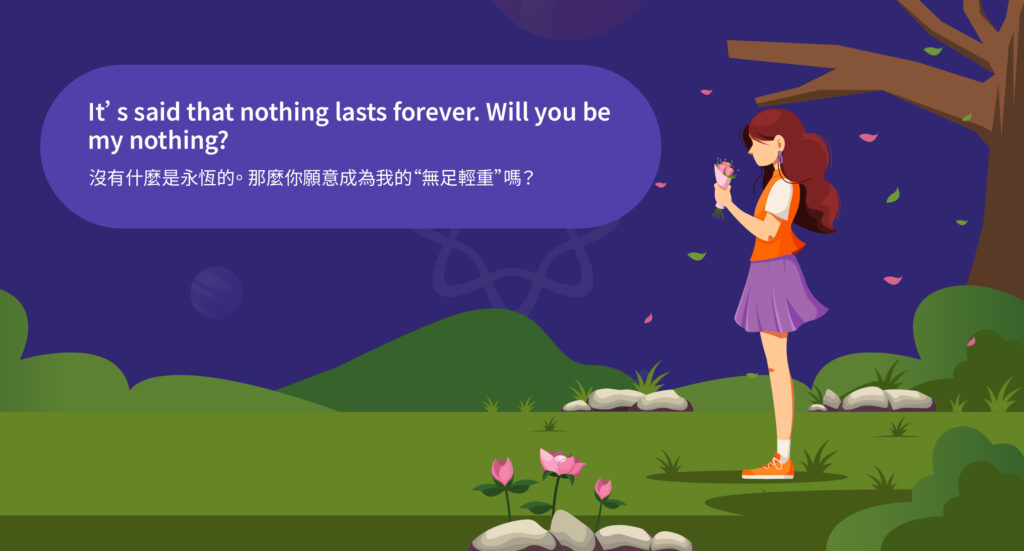
| It’s said that nothing lasts forever. Will you be my nothing? | 沒有什麼是永恆的。那麼你願意成為我的“無足輕重”嗎? |
| I’m not good at anything… except loving you. | 我什麼都不擅長,我只擅長愛你。 |
| I’m 4, you’re 2. I’m minus you is still equal to you. | 你4,我2。除了你,還是你。 |
| Meeting you is the best thing that ever happened to me. | 遇見你是我遇到過最好的事情。 |
| Ask me why I’m so happy and I’ll give you a mirror. | 如果你問我為什麼幸福,我會給你一個鏡子。 |
| Good boyfriends are hard to find. I must be the world’s greatest detective! | 好的男朋友很難找。我一定是最有才華的偵探! |
| I wanna be the one holding your heart. | 我想成為唯一一個抓住你的心的人。 |
| My eyes need a check-up, I just can’t take them off of you. | 我的眼睛需要檢查,我無法將目光從你身上移開。 |
| You’re the reason behind my smile. | 你是我每一個微笑背後的原因。 |
>>精彩語錄:勵志語錄:100+ 段語錄含各種英文主題合集以幫助鼓舞每天的精神
浪漫的英文表白短句
表白的短句對於男人
| 浪漫英文短句 | 大致翻譯 |
|---|---|
| You are like an angel that saved my soul! | 你就像天使拯救了我的靈魂! |
| I love you with all I have! | 我用我所擁有的一切來愛你! |
| My love for you is growing day by day. I couldn’t stop it, so I decided to tell you. I love you! | 我對你的感情與日俱增。我無法阻止,所以我決定告訴你。我愛你! |
| Maybe you are not the special girl in the crowd. But you are the special girl in my heart! | 也許你在人群中並不是一個特別的女孩。但你在我心中卻是一個特別的女孩! |
| You don’t know how much I love you until you touch my heart and feel its beat! | 除非你觸摸我的心並感受它的跳動,否則你不會知道我有多愛你! |
| Take my hand and let me take care of you in the next days of this life. I love you! | 牽着我的手,讓我在以後的日子裡照顧你。我愛你! |
| My world was light up when you appeared. Will you be my girlfriend? | 當你出現時,我的世界變得明亮。你能做我女朋友嗎? |
| When it hurts to look back and you are scared to look ahead, look beside. I’ll always be there for you. | 如果你回首時感到痛苦,害怕展望未來……看看你旁邊,我一直在你身邊。 |
| I love you like my life, do you know why? Cause you are my life… | 我愛你就像愛自己的生活一樣,你知道為什麼嗎?因為你就是我生命的全部…… |
| I dropped a tear in the ocean. When someone finds it, I’ll stop loving you. | 我把一滴淚滴入大海,當有人發現它時,我就不再愛你了。 |
>>閲讀更多:100+英文諺語大全 (Proverb):最經典的生活、愛情與勵志英語箴言
表白的短句對於女人
| 浪漫英文短句 | 大致翻譯 |
|---|---|
| I love you for no reason, because you are yourself! | 我愛你沒有任何理由,只是因為你是你! |
| If anyone asks me what I like, I will answer out loud that I like you! | 如果有人問我喜歡什麼,我會坦白說我喜歡你! |
| Give me a password to log into your heart! | 請給我登錄你心的密碼! |
| Oxygen is the origin of life for humanity, just like you are. Without you I can hardly respire. | 氧氣是生命之源,就像你一樣。沒有你我很難維持呼吸。 |
| When you are fond of a person, you know that person is your heaven. As for you, you are the world! | 當喜歡一個人的時候,那個人就是天堂。對於我來說,你就是整個世界! |
| The tree grows on nutrients from the soil, and I live gladly thanks to your advention. | 樹木因土壤的養分而生長,我因你的存在而幸福。 |
| When you love, people are usually very thick-witted. And I’m just a stupid girl standing in front of you. | 人在愛的時候,往往會變得更加愚蠢。而我,只是一個站在你面前的傻姑娘。 |
| People say they hate each other from the sky. So now I will hate you so much so that you can be given to me sooner. | 人們常說怕什麼來什麼。所以現在我會非常恨你以便早點擁有你。 |
>>閲讀相關:七夕情人節快樂英文怎麽説? 精選 100+ 給七夕節日的浪漫短句

愛情短句中的詞
剛認識時的詞彙
| 詞彙 | 發音 | 意思 |
|---|---|---|
| A blind date | /ˌblaɪnd ˈdeɪt/ | 相親 |
| Flirtatious (形容詞) | /flɜːˈteɪ.ʃəs/ | 打情罵俏,輕佻 |
| To flirt (with someone) (動詞) | /flɜːt/ | 調情,打情罵俏 |
| To chat (someone) up | /tʃæt.ʌp/ | 與…搭訕;與…調情 |
| Pick-up line | /ˈpɪk.ʌp ˌlaɪn/ | 對異性搭訕時說的話 |
談戀愛時的詞彙
| 詞彙 | 意思 |
|---|---|
| Make a commitment | 承諾 |
| To be smitten with somebody | 被迷住的; 着了迷的; 神魂顛倒的 |
| Live together | 住在一起 |
| To adore | 愛慕,熱愛;非常喜歡 |
| To tie the knot | 結婚 |
| Hold hands | 握手 |
| Love is returned | 愛情得到回應 |
| Can’t live without you | 沒有你我活不下去 |
| (to) fall for somebody | 真心愛一個人 |
| (to) love each other unconditionally | 無條件地彼此相愛 |
| (to) accept one’s proposal | 接受某人的求婚 |
| (to) be/go on honeymoon (with sb) | 和某人去度蜜月 |
| (to) be/get engaged/married | 訂婚、結婚 |
| (to) love you with all my heart | 全心全意地愛你 |
| (to) take the plunge | 舉行訂婚/婚禮 |
| (to) fall in love at first sight | 一見鍾情 |
感情遇到挫折的詞彙
| 詞彙 | 意思 |
|---|---|
| Cheat on someone | 欺騙某人 |
| Have a domestic | 吵架 |
| Lovesick | 相思,為了愛情而生病或憂愁的 |
| To dump somebody | 甩掉,拋棄 |
| To split up | 分手 |
| Get back together | 破鏡重圓 |
>>閲讀更多:總結 100+ 英語中最常見的 idiom(成語)

浪漫短句對於家庭
| 浪漫英文短句 | 大致翻譯 |
|---|---|
| Family is not an important thing. It’s everything. (Michael J. Fox) | 家庭根本不是什麼重要的東西。它就是一切。 |
| Family is not just skin and flesh; it’s all heart and feeling. (Unknown) | 家庭不僅僅是骨肉;這一切都與心靈和情感有關。 |
| A house can be built by brick, but a home must be built by heart. (Unknown) | 房子可以用磚砌成,但家必須用心建造。 |
| The most important thing in the world is family and love. (John Wooden) | 這個世界上最重要的事情就是家庭和愛情。 |
| Home is a place where you are loved unconditionally. (Unknown) | 家是你被無條件愛的地方。 |
| Family means no one gets left behind or forgotten. | 家庭意味着沒有人被拋棄或遺忘。 |
| Families are like music, some high notes, some low notes, but always a beautiful song. | 家庭就像一首歌,有跌宕起伏,但始終是一首優美的歌。 |
| If you have a place to go, it is a home. If you have someone to love, it is a family. If you have both, it is a blessing. | 如果你有一個可以回去的地方,那就叫家。如果你有一個值得愛的人,那就叫家人。如果你兩者都擁有,那就是一種佑護。 |
| Without a family, man, alone in the world, trembles with the cold. | 沒有了家人,人們孤身一人在世上,在寒冷中瑟瑟發抖。 |
| You are born into your family and your family is born into you. No returns. No exchanges. | 你出生於你的家庭,你的家庭也會因你而出生,這是一個不可逆轉的循環。 |
| Family is where the life begins and the love never ends. | 家庭是生命的開始,充滿無盡的愛。 |
| Family is the most important thing in the world. | 家庭是世界上最重要的東西。 |
| The family is one of nature’s masterpieces. | 家庭是造化的傑作。 |
| Family members are like branches on a tree, we all grow in different directions, yet our roots remain as one. | 家庭成員就像一棵樹的樹枝,向不同的方向生長,但始終來自同一根原。 |

以上是一些精選的、簡短的、有意義的、精緻的浪漫英文短句。ELSA Speak 希望這篇文章能幫助您在一個非常有意義的日子裡,以最浪漫的方式向您所愛的女朋友/男朋友表達您的感情。更多精彩内容在溝通交流英語專欄等你哦!