Author: 魚丸
趁著十月,ELSA Speak 推出限時超值優惠,為你提供更多開始或持續提升英文能力的動力。所有學習方案皆享優惠價格,其中 ELSA Premium 終身方案更推出前所未有的超值價格,創下歷史最低優惠價。立即探索完整優惠內容!
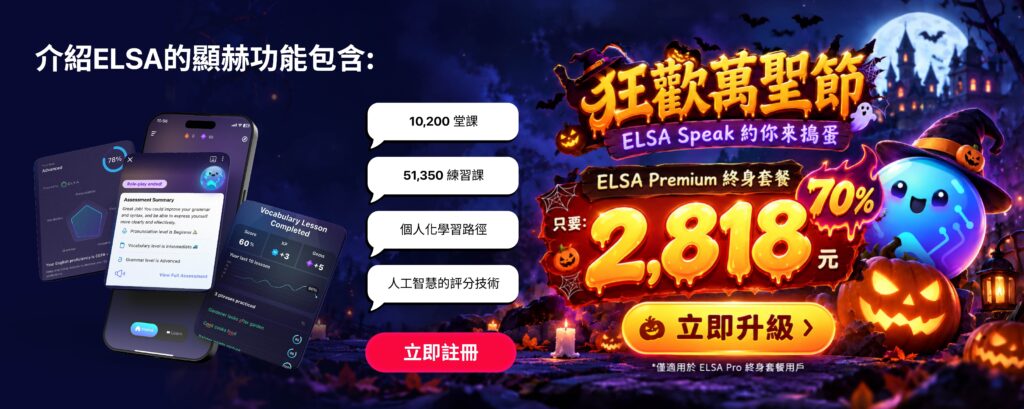
ELSA Premium 終身方案|新用戶與升級用戶皆享專屬優惠
無論你是首次使用 ELSA Speak 的新用戶,或是現有 ELSA Pro 終身方案學員,都能在本次活動中以優惠價格升級至 ELSA Premium 終身方案。
ELSA Professional 首發優惠登場
適逢 ELSA Professional 推出,現在以超值首發價格 3,355 元 即可體驗專為職場英文需求打造的學習內容與功能,幫助學習者更輕鬆提升職場溝通能力。
ELSA PROFESSIONAL
專為職場人士打造的職場英文學習方案
原價:5,890 元
優惠價:3,355 元
限時省 49%
更多 ELSA 學習方案優惠同步開放
除了 ELSA Premium 終身方案與 ELSA Professional 外,你也可以依照自身需求選擇 ELSA Pro ,多種期限與優惠價格自由選擇:
ELSA Pro 價格表
| 套餐 | 原價 (TWD) | 優惠價 (TWD) | 折扣 (%) |
|---|---|---|---|
| 終身 | 6,150 | 2,568 | 58% |
| 1 年 | 2,450 | 1,715 | 30% |
| 3 個月 | 850 | 495 | 41% |
活動時間
優惠活動截至十月。活動結束後,各學習方案將恢復原定價格。
ELSA Speak 巨額優惠套餐:
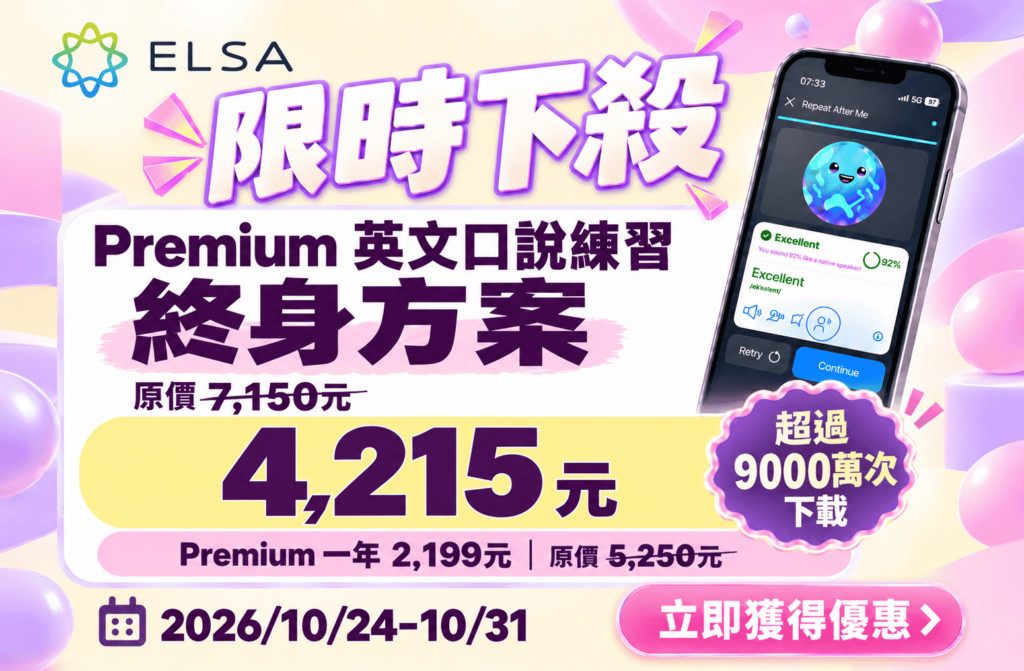
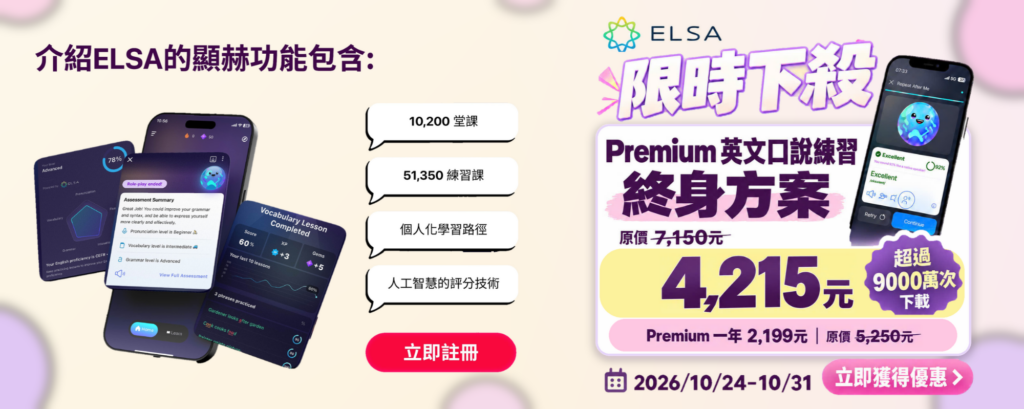
ELSA PREMIUM 終身套餐
原價:7,150 元 ->4,215 元(折扣 41%)

ELSA PREMIUM 一年套餐
原價:5,250 元 ->2,199 元(折扣 58%)
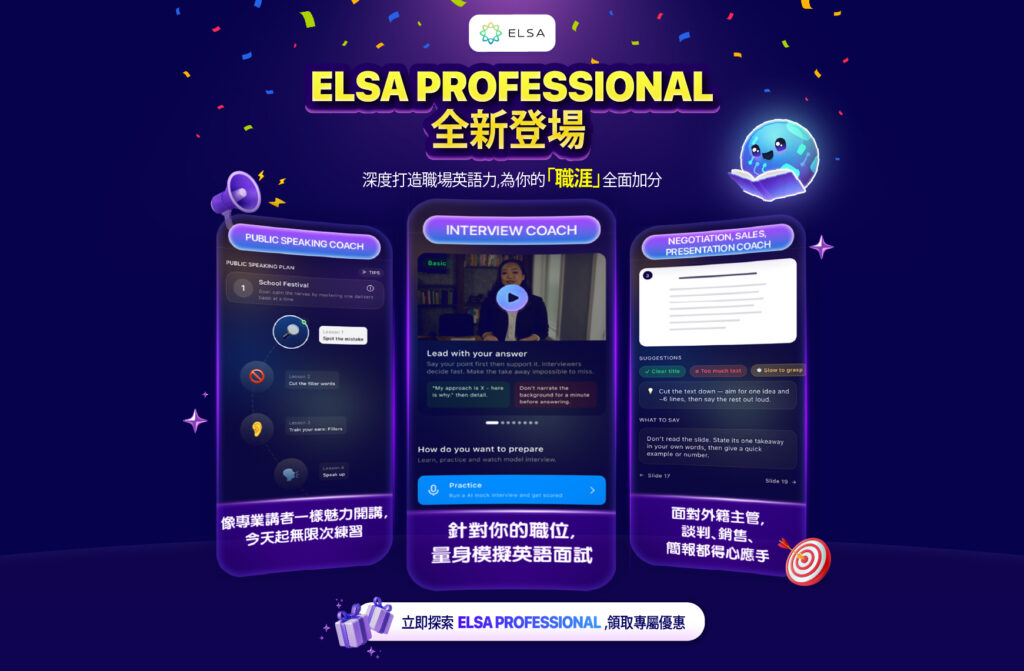
ELSA PROFESSIONAL
原價:5,890 元 ->3,335 元(折扣 49%)
ELSA Speak 其他優惠套餐
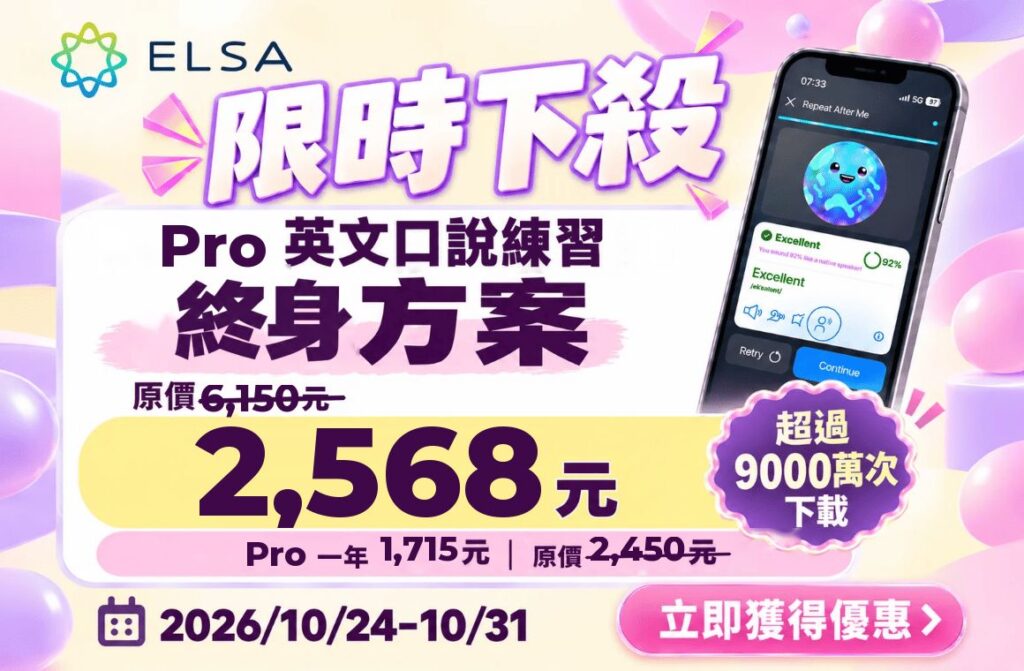
ELSA PRO 終身套餐
原價:6,150 元 ->2,568 元(折扣 58%)
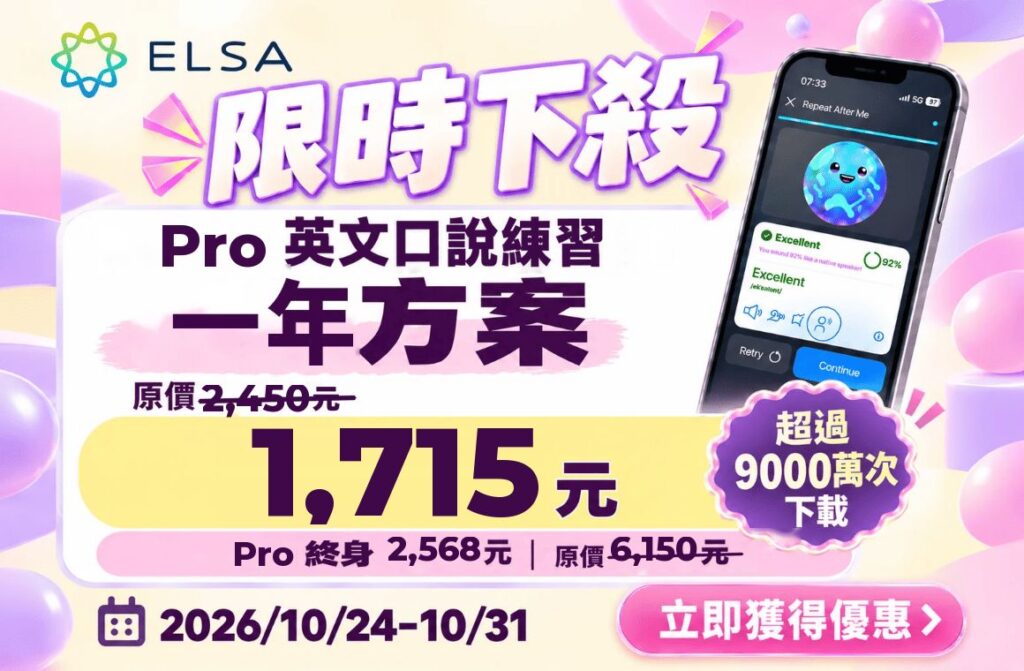
ELSA PRO 一年套餐
原價:2,450 元 ->1,715 元(折扣 30%)

ELSA PREMIUM 三個月套餐
原價:2,100 元 -> 1,140 元(折扣 46%)
適用對象
本活動適用於所有 ELSA Speak 使用者,包括:
- 從未購買 ELSA Speak 學習方案的新用戶
- 曾購買學習方案但目前已到期的學員
- 現有 ELSA Pro 或 ELSA Premium 用戶,需要續訂或升級方案
注意:學習方案使用期限將從輸入啟用碼後開始計算,讓你能更彈性安排學習計畫。
十月開啟新旅程的好時機。不論你想升級目前的學習方案、尋找長期學習選擇,或是剛開始體驗 ELSA Speak,本次活動都提供多元方案,幫助你輕鬆找到最適合自己的英文學習方式。
立即關注 ELSA Speak,第一時間掌握最新超值優惠!
Halloween 英文怎麼說?萬聖節快樂英文有哪些常見表達?Trick or Treat 和不給糖就搗蛋英文又是什麼意思?ELSA Speak 整理萬聖節英文單字、萬聖節英文口號、萬聖節英文語錄、萬聖節英文歌及萬聖節英文介紹範文,帶你一次掌握實用單字、祝福語與節慶表達!
萬聖節英文是什麼?萬聖節的意義與由來
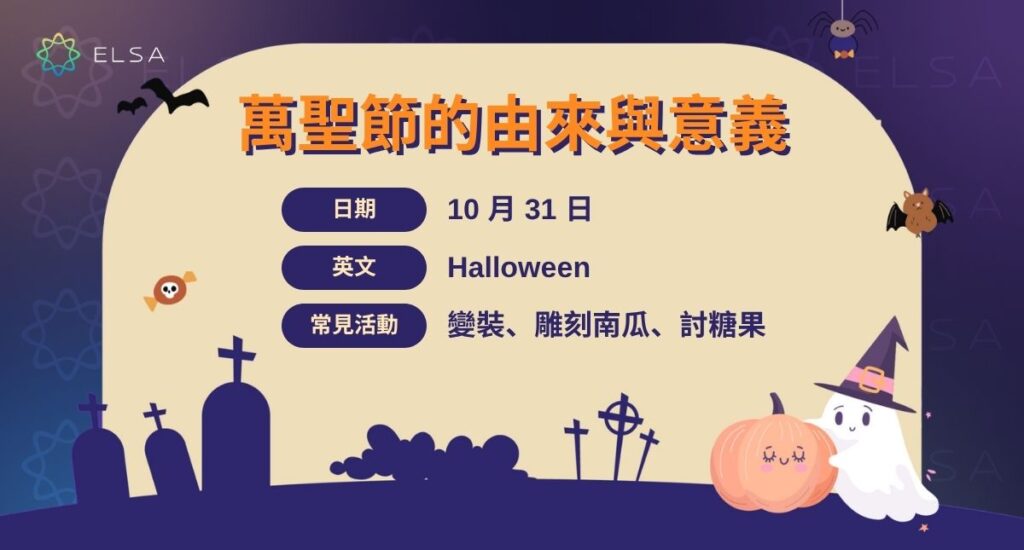
Halloween 是什麼意思?
萬聖節 英文為 Halloween,也常被稱為萬聖夜,指的是每年 10 月 31 日的節日(依照英文日期寫法可寫成 October 31st)。常見的慶祝活動包括穿上變裝服飾、裝飾南瓜、參加萬聖節派對,以及小朋友挨家挨戶玩 Trick or Treat(不給糖就搗蛋),向鄰居索取糖果。在台灣,萬聖節常被拿來和同樣與鬼魂有關的中元節相比;如果想向外國朋友介紹這兩個節日,也可以一起學會中元節 英文的說法。
萬聖節是哪一天?10 月 31 日和 11 月 1 日有什麼不同?
| Halloween(萬聖節) | All Saints’ Day(諸聖節) | |
|---|---|---|
| 日期 | 10 月 31 日 | 11 月 1 日 |
| 意義 | 以變裝、派對及討糖活動為主的節日 | 基督宗教紀念眾聖徒的節日 |
| 由來 | 部分傳統源自古代凱爾特人的薩溫節(Samhain) | 源自基督宗教傳統 |
| 常見活動 | 變裝、裝飾南瓜、舉辦派對及討糖果 | 參與宗教活動,紀念眾聖徒 |
10月特別優惠 —— ELSA 大促銷
ELSA PREMIUM 1 年
原價: 5,250
2,199
ELSA PREMIUM 終身
原價: 7,150
4,215
ELSA PRO 1 年
原價: 2,450
1,715
ELSA PRO 終身
原價: 6,150
2,568
萬聖節英文單字總整理
想用英文聊萬聖節,可以先從常見的裝飾物、經典角色、節慶活動及形容氣氛的單字開始學起。
萬聖節裝飾與用品英文單字
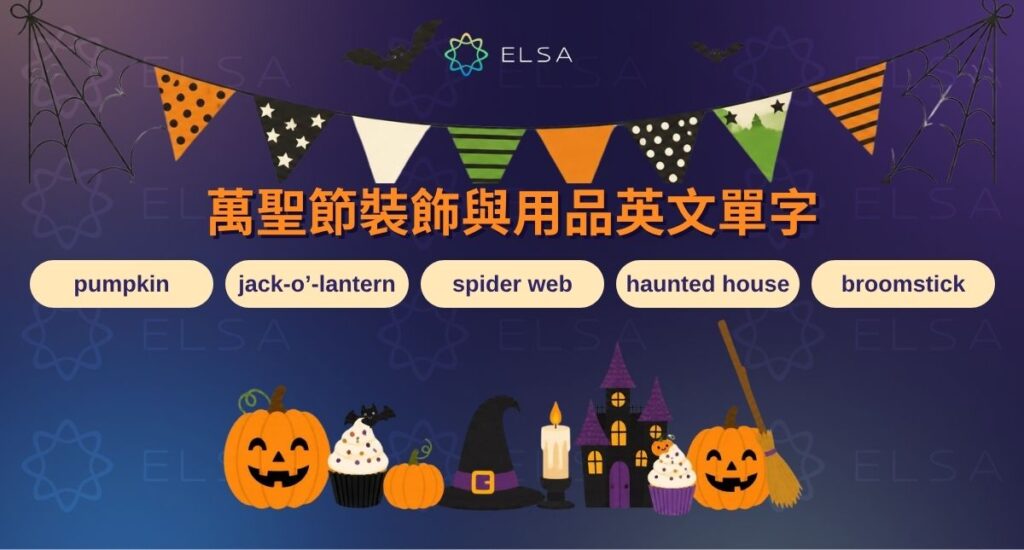
| 英文單字 | 中文意思 |
|---|---|
| pumpkin | 南瓜 |
| jack-o’-lantern | 南瓜燈 |
| candy | 糖果 |
| spider web | 蜘蛛網 |
| bat | 蝙蝠 |
| skeleton | 骷髏 |
| haunted house | 鬼屋 |
| broomstick | 掃帚 |
萬聖節角色與服裝英文單字
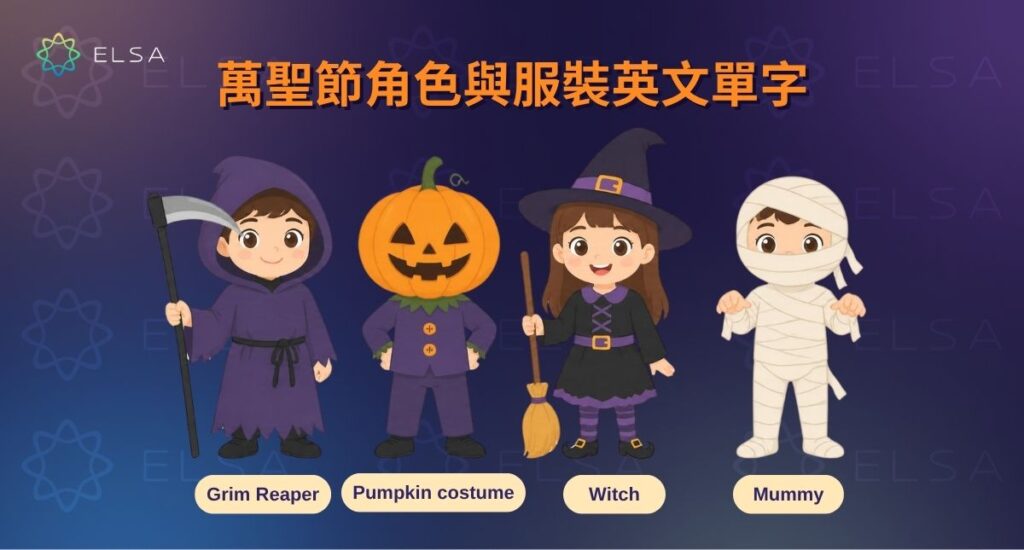
| 英文單字 | 中文意思 |
|---|---|
| witch | 女巫 |
| vampire | 吸血鬼 |
| ghost | 鬼魂 |
| zombie | 殭屍 |
| mummy | 木乃伊 |
| werewolf | 狼人 |
| monster | 怪物 |
| costume | 化裝服、變裝服飾 |
補充用法: dress up as + 角色,表示「打扮成……」或「變裝成……」,是聊萬聖節時很實用的英文片語。
萬聖節活動與食物英文單字
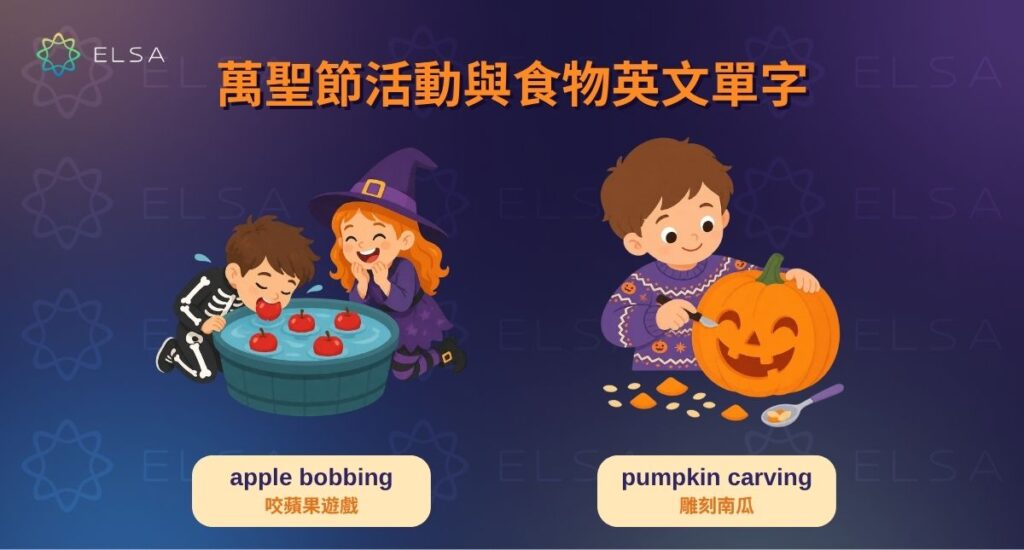
| 英文單字 | 中文意思 |
|---|---|
| trick-or-treating | 挨家挨戶討糖果 |
| costume party | 變裝派對 |
| pumpkin carving | 雕刻南瓜 |
| apple bobbing | 咬蘋果遊戲 |
| candy | 糖果 |
| candy apple | 糖衣蘋果 |
| treat bag | 糖果袋 |
| dress up as | 變裝成…… |
| decorate the house | 裝飾房子 |
| watch a horror movie | 看恐怖片 |
形容萬聖節氣氛的英文形容詞
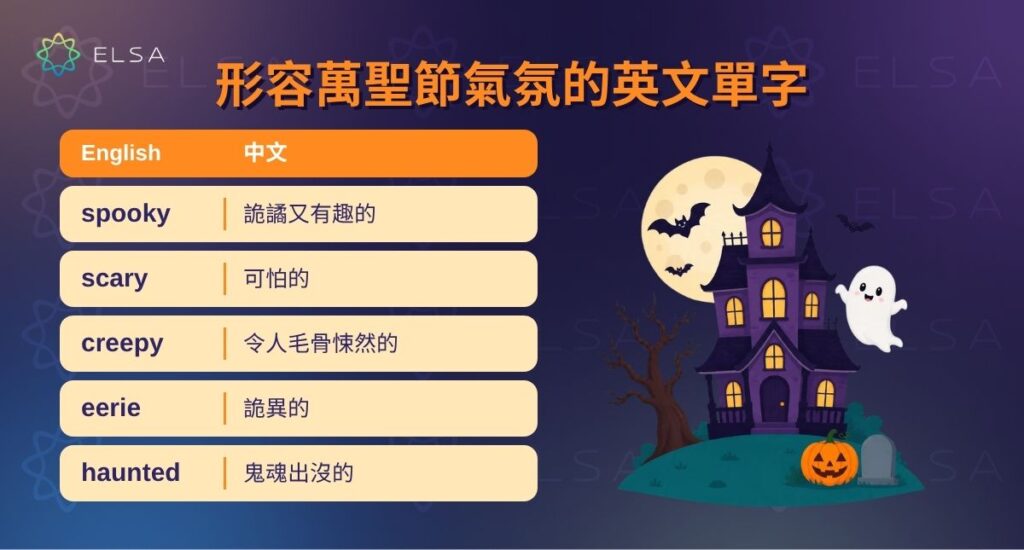
| 英文單字 | 中文意思 |
|---|---|
| spooky | 詭譎又有趣的、帶點陰森感的 |
| scary | 可怕的、嚇人的 |
| creepy | 令人毛骨悚然的 |
| eerie | 詭異的、陰森的 |
| haunted | 鬼魂出沒的、鬧鬼的 |
Spooky 和 scary 都能形容令人害怕的事物,但語氣有所不同。Spooky 通常帶有神祕、陰森又有趣的氣氛,例如 a spooky party(氣氛詭譎的派對);scary 則更強調讓人感到害怕,例如 a scary movie(恐怖片)。因此,在撰寫萬聖節卡片或社群貼文時,spooky 很適合用來營造應景又有趣的節日氣氛。
10 句簡短又有趣的萬聖節英文口號
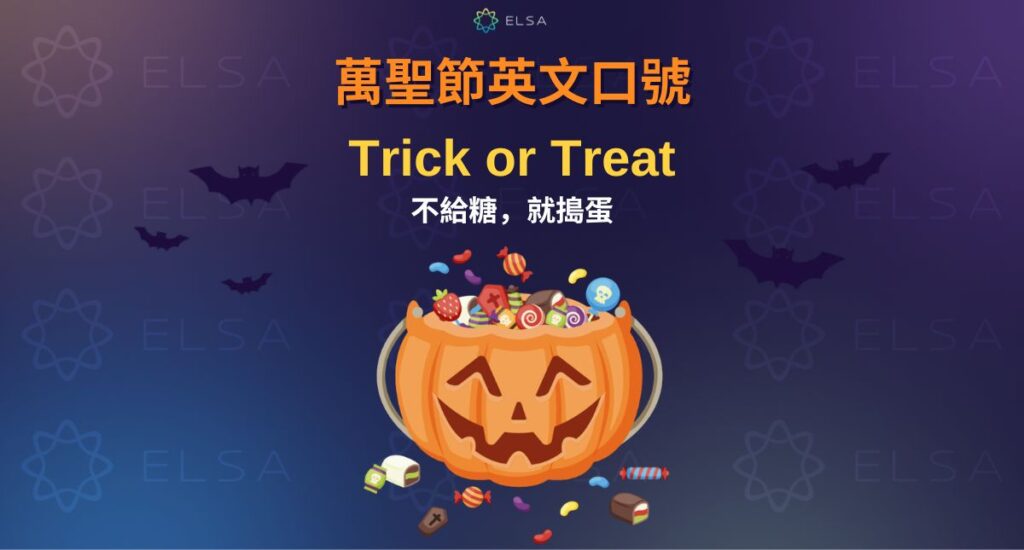
想為萬聖節活動、變裝派對海報或社群貼文增添節日氣氛嗎?以下整理了 10 句簡短又好記的萬聖節英文標語,讓你的文案更有趣、更應景!
| 萬聖節英文標語 | 中文意思 |
|---|---|
| Trick or Treat! | 不給糖就搗蛋! |
| Eat, drink, and be scary! | 吃喝盡興,盡情搞怪! |
| Boo! Did I scare you? | 嗚!有沒有嚇到你? |
| Keep calm and scare on! | 保持冷靜,繼續嚇人! |
| Too cute to spook! | 可愛到讓人捨不得嚇! |
| Witch way to the party? | 女巫派對要往哪裡走? |
| Have a fang-tastic night! | 祝你度過超棒的萬聖夜! |
| Get your spooky on! | 一起進入萬聖節的搞怪模式! |
| No tricks, just treats! | 不搞惡作劇,只給甜蜜驚喜! |
| Let’s get spooky! | 一起來點詭譎氣氛吧! |
你可以依照活動風格挑選適合的標語。如果是親子活動或可愛風格的派對,Too cute to spook! 會是很棒的選擇;如果是變裝派對或萬聖節主題活動,則可以使用 Let’s get spooky!,輕鬆營造應景氣氛。
萬聖節快樂英文怎麼說?精選 80 句祝福語
英文中最常見的「萬聖節快樂」說法是 “Happy Halloween!“。除此之外,你也可以依照祝福對象和使用情境,選擇簡短、活潑或充滿創意的英文祝福語,讓萬聖節問候更有趣!
常見的萬聖節英文祝福語
| 英文祝福語 | 中文意思 |
|---|---|
| Happy Halloween! | 萬聖節快樂! |
| Happy Halloween, everyone! | 祝大家萬聖節快樂! |
| Have a spooky Halloween! | 祝你度過一個充滿神祕氣氛的萬聖節! |
| Have a fun and safe Halloween! | 祝你度過一個快樂又平安的萬聖節! |
| Hope you get lots of candy tonight! | 希望你今晚收到滿滿的糖果! |
| Have a fang-tastic Halloween! | 祝你度過一個超棒的萬聖節! |
| Have a spooktacular night! | 祝你度過一個精彩又有趣的萬聖夜! |
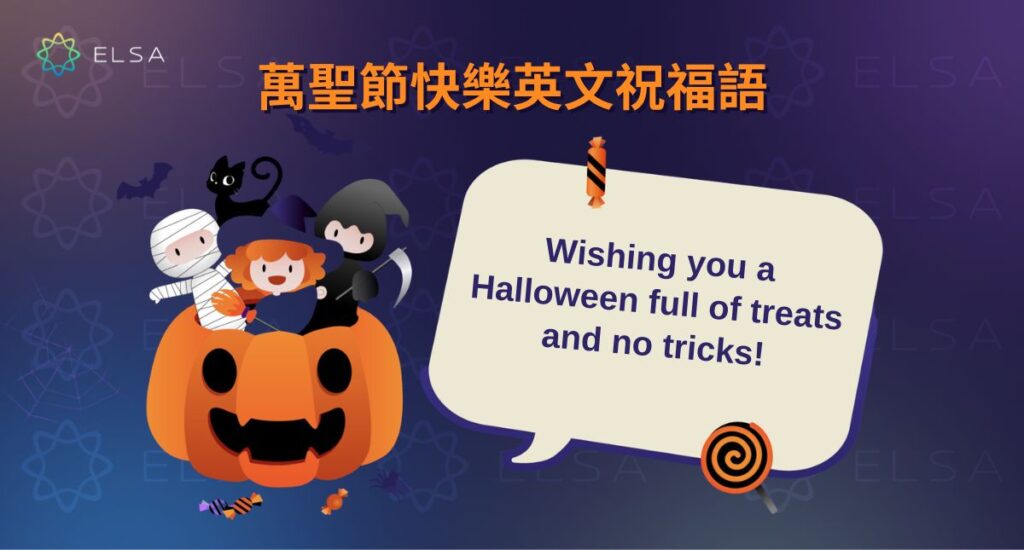
| Wishing you a Halloween full of treats and no tricks! | 祝你萬聖節糖果滿滿,沒有惡作劇! |
| Have a boo-tiful Halloween! | 祝你度過一個美好的萬聖節! |
| Happy Halloween! Don’t let the ghosts get you! | 萬聖節快樂!小心別被鬼抓走囉! |
其中,fang-tastic 是由 fang(尖牙、獠牙)和 fantastic(極好的)組合而成的諧音雙關語;boo-tiful 則結合了 beautiful(美麗的)和 boo(用來嚇人的「嗚!」聲),讓祝福語更有萬聖節的趣味。
閲讀更多:100+ 生日快樂英文大全:除了 Happy Birthday 生日祝福語金句
適合朋友與社群貼文的簡短萬聖節祝福語
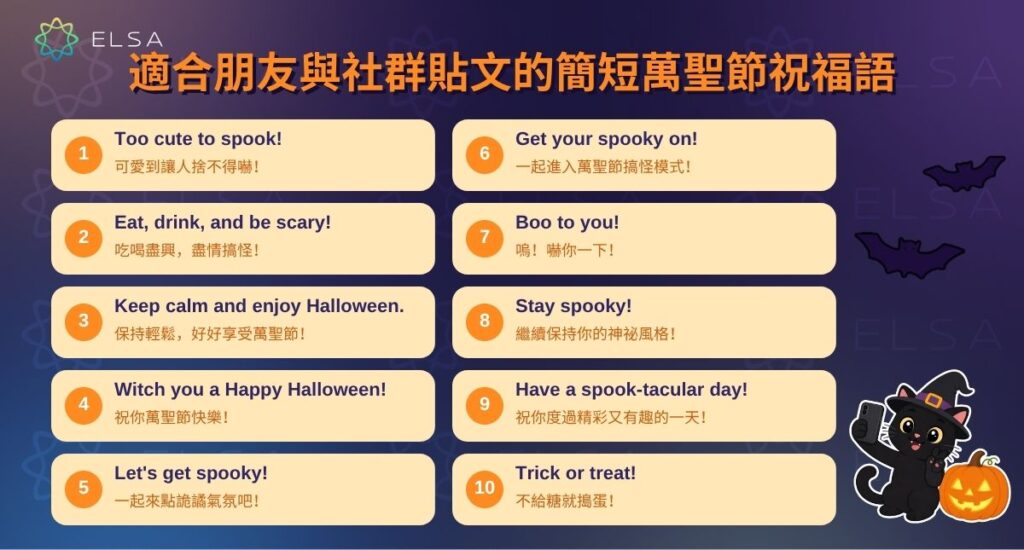
想在 Instagram、Facebook 發文,或傳訊息給朋友嗎?以下這些簡短又有創意的英文句子,很適合搭配變裝照、南瓜燈、黑貓或萬聖節裝飾一起使用。
| 英文文案 | 中文意思 |
|---|---|
| Too cute to spook! | 可愛到讓人捨不得嚇! |
| Eat, drink, and be scary! | 吃喝盡興,盡情搞怪! |
| Keep calm and enjoy Halloween. | 保持輕鬆,好好享受萬聖節! |
| Witch you a Happy Halloween! | 祝你萬聖節快樂! |
| Let’s get spooky! | 一起來點詭譎氣氛吧! |
| Get your spooky on! | 一起進入萬聖節搞怪模式! |
| Boo to you! | 嗚!嚇你一下! |
| Stay spooky! | 繼續保持你的神祕風格! |
| Have a spook-tacular day! | 祝你度過精彩又有趣的一天! |
| Trick or treat! | 不給糖就搗蛋! |
這些句子運用了押韻、諧音或雙關語,簡短又容易記憶,很適合搭配萬聖節變裝照、南瓜燈、黑貓或節慶裝飾,讓社群貼文更有節日氣氛。
閲讀更多:浪漫英文短句 50 句:告白、英文情話、IG 文案與電影台詞,附中文翻譯
萬聖節英文語錄:經典名句與電影台詞
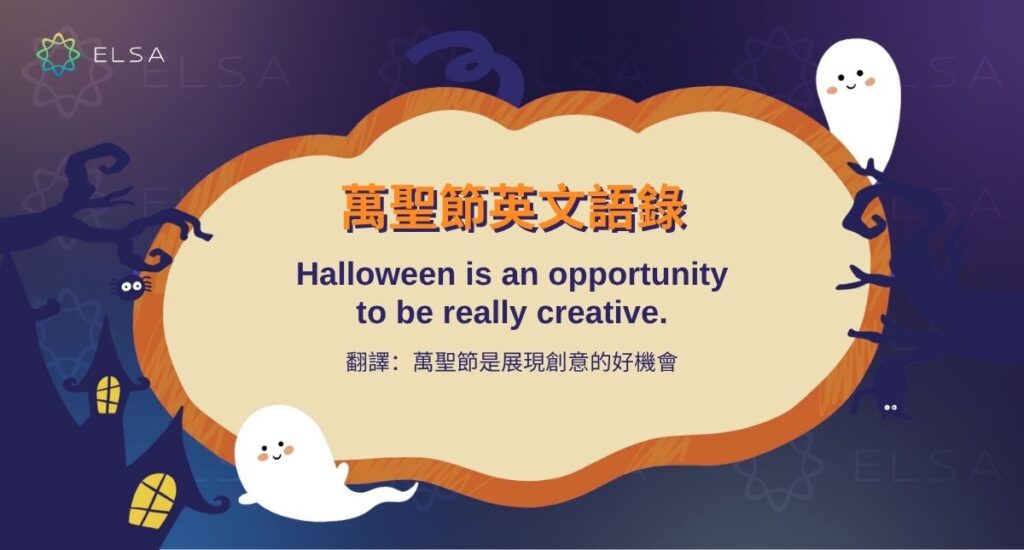
除了萬聖節祝福語,你也可以認識一些與萬聖節相關的英文名句和經典電影台詞,更深入感受這個節日神祕又刺激的氛圍。
| 英文語錄 | 中文翻譯 |
|---|---|
| “Something wicked this way comes.” — Macbeth, William Shakespeare | 有邪惡的東西正朝這裡而來。 |
| “Double, double toil and trouble; Fire burn, and cauldron bubble.” — Macbeth, William Shakespeare | 麻煩重重,災禍不斷;烈火熊熊,坩堝沸騰。 |
| “You know, it’s Halloween. I guess everyone’s entitled to one good scare, huh?” — Halloween (1978) | 你知道,今天是萬聖節。我想每個人都該有一次被嚇得魂飛魄散的機會,對吧? |
| “Be afraid. Be very afraid.” — The Fly (1986) 電影標語 | 害怕吧,而且要非常害怕。 |
萬聖節英文歌曲推薦
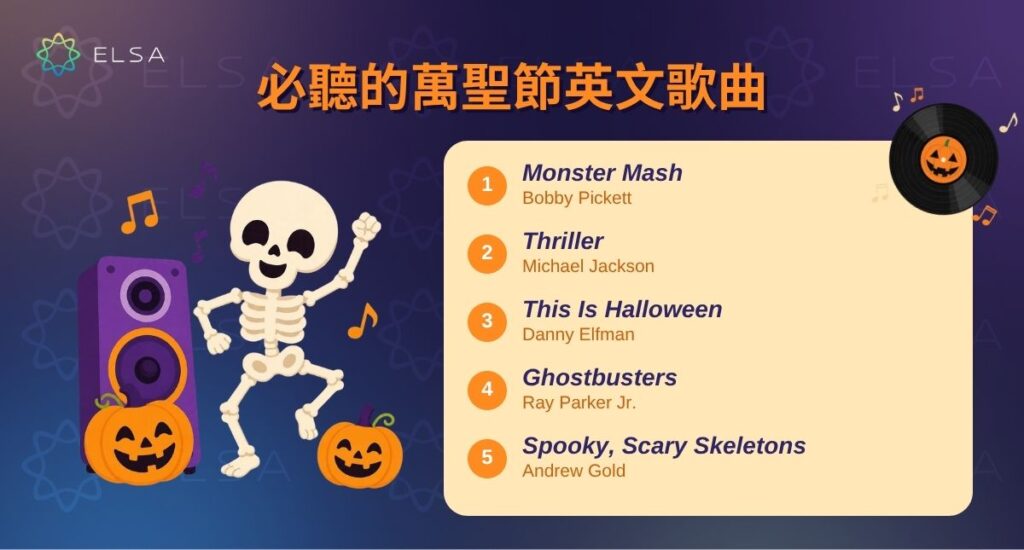
音樂是認識萬聖節文化、練習英文的有趣方式。你可以依照不同的場合,挑選以下幾首經典的萬聖節歌曲,為派對增添氣氛,也能在聽歌的過程中學英文。
| 歌曲名稱 | 適合場合 |
|---|---|
| Monster Mash — Bobby Pickett | 萬聖節派對、復古歡樂風格的活動 |
| Thriller — Michael Jackson | 舞蹈表演、恐怖主題派對 |
| This Is Halloween — Danny Elfman | 萬聖節主題活動 |
| Ghostbusters — Ray Parker Jr. | 輕鬆歡樂的節慶聚會 |
| Spooky, Scary Skeletons — Andrew Gold | 兒童活動、萬聖節歌單 |
練習英文聽力時,可以先試著辨認歌曲中的關鍵單字,再跟著旋律一起唱,練習英文發音、語調和重音。如果想在網站上刊登完整歌詞,記得先確認著作權規範,並在必要時取得使用授權。
萬聖節討糖英文對話
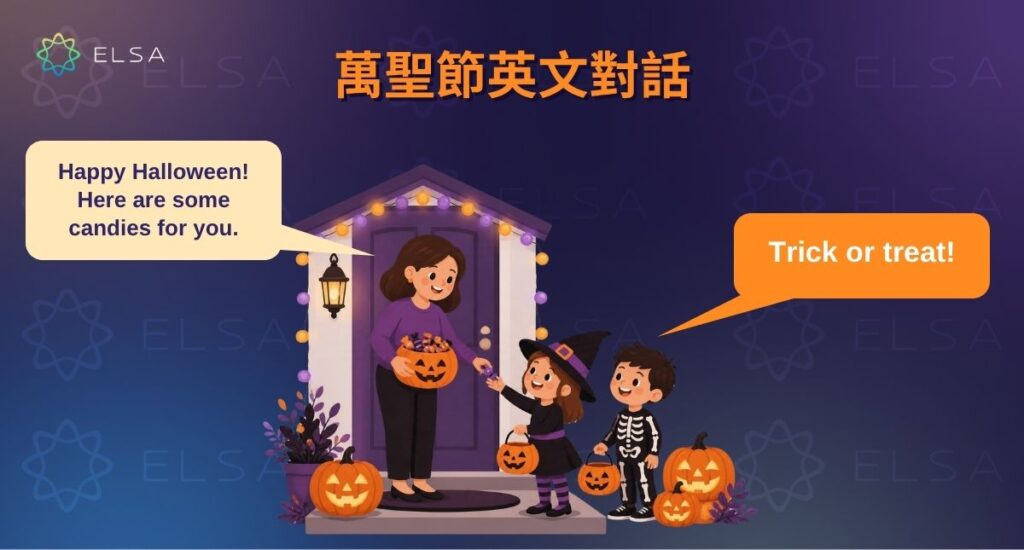
除了說 Trick or Treat!(不給糖就搗蛋!),還可以學會以下實用的英文句子,讓你更自然地參與萬聖節活動。
萬聖節實用英文句型
| 英文句型 | 中文意思 |
|---|---|
| Can I have some candy, please? | 可以給我一些糖果嗎? |
| I love your Halloween costume! | 我好喜歡你的萬聖節變裝! |
| What are you dressed up as? | 你今天變裝成什麼角色? |
| Let’s go to the Halloween party! | 我們一起去參加萬聖節派對吧! |
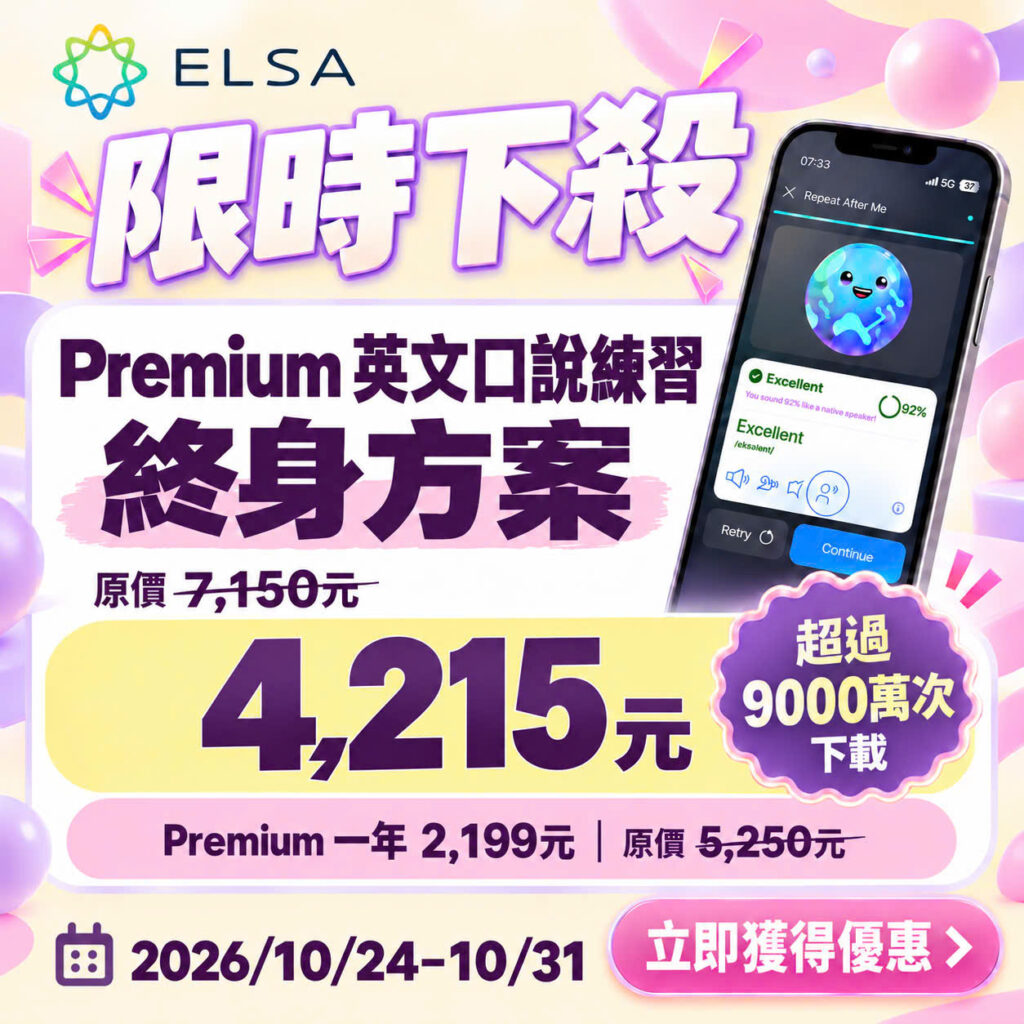
不要錯過具有大量功能的英語學習包
ELSA Premium 終身 – 十月優惠
原價:7,150元 現在 4,215 元
ELSA Premium 還有另外以下的學習包:
ELSA Premium 一年:原價:5,250元 現在 2,199 元
ELSA Premium 三個月:原價:2,100元 現在 1,140 元
萬聖節討糖英文對話範例
| 英文對話 | 中文翻譯 |
|---|---|
| Child: Trick or treat! | 小朋友: 不給糖就搗蛋! |
| Adult: Happy Halloween! Here are some candies for you. | 大人: 萬聖節快樂!這些糖果送給你們。 |
| Child: Thank you! I love your decorations! | 小朋友: 謝謝!我好喜歡你們家的裝飾! |
萬聖節英文介紹範文
如果你需要在課堂報告、英文作業或日常對話中介紹萬聖節,可以參考以下英文範文,學習如何用英文介紹萬聖節的日期、活動與節慶特色。
簡短的萬聖節英文介紹
| Halloween is celebrated on October 31 every year. People often wear costumes, decorate their homes, and enjoy fun activities with friends and family. One of the most popular traditions is trick-or-treating, when children go from house to house asking for candy. Halloween is a fun time to be creative and enjoy the spooky atmosphere. |
中文翻譯:
萬聖節每年都在 10 月 31 日舉行。人們通常會穿上變裝服飾、裝飾家裡,並和親朋好友一起參加有趣的活動。最受歡迎的傳統之一就是挨家挨戶討糖果,小朋友會到不同人家索取糖果。萬聖節也是發揮創意、感受神祕又有趣的節日氣氛的好時機。
完整的萬聖節英文介紹
| Halloween is a popular celebration observed on October 31 in many countries. People often dress up as witches, vampires, ghosts, or their favorite characters. They decorate their homes with pumpkins and spooky ornaments, and some families enjoy carving jack-o’-lanterns together. Children may go trick-or-treating to collect candy, while adults attend costume parties or watch horror movies. Today, Halloween is also an opportunity for people to spend time with friends and family and enjoy creative activities. |
中文翻譯:
萬聖節是許多國家在 10 月 31 日慶祝的節日。人們經常打扮成女巫、吸血鬼、鬼魂或自己喜歡的角色。他們會用南瓜和各種充滿神祕氣氛的裝飾品布置家裡,有些家庭也喜歡一起雕刻南瓜燈。小朋友會挨家挨戶討糖果,而大人則可能參加變裝派對或看恐怖片。如今,萬聖節也是人們與親朋好友相聚、一起參與創意活動的好機會。
常見問題
Halloween 和 All Saints’ Day 有什麼不同?
→ Halloween 通常指 10 月 31 日的萬聖夜;All Saints’ Day 則是 11 月 1 日的諸聖節,屬於基督宗教的節日。在日常英文對話中,Halloween 是最常用來指稱萬聖節的說法。
Happy Halloween 和 Trick or Treat 有什麼不同?
→ Happy Halloween 的意思是「萬聖節快樂」,用來向別人送上節日祝福;Trick or Treat 則是小朋友在萬聖節挨家挨戶討糖果時常說的話,通常翻譯為「不給糖就搗蛋」。
萬聖節的英文是什麼?萬聖節 英文怎麼拼?
→ 萬聖節的英文是 Halloween,也有較少見的拼法 Hallowe’en。
Trick or Treat 是什麼意思?不給糖就搗蛋英文怎麼說?
→ Trick or Treat! 是萬聖節最具代表性的英文說法之一,通常翻譯為「不給糖就搗蛋」。Trick 有「惡作劇」或「捉弄」的意思,treat 則可以表示「款待」或「請客」。萬聖節期間,小朋友會穿上變裝服飾,挨家挨戶索取糖果,並大聲說出 Trick or Treat!
從 Halloween、Happy Halloween 到 Trick or Treat,這些實用的英文表達不僅能幫助你認識西方節慶文化,也能讓你在萬聖節派對、課堂報告或日常對話中更自然地使用英文。想學習更多實用的英文會話技巧嗎?快來探索 ELSA Speak 的更多溝通交流英語專欄中的文章吧!
ELSA Speak 專為台灣學員推出 ELSA Professional 升級優惠活動,升級價格只要 890 元起,讓你以更超值的價格體驗 ELSA 更高級的學習方案!本次優惠名額有限,僅限前 100 名學員,千萬別錯過!
把握優惠機會,以超值價格升級 ELSA Professional
為了讓更多學員以更實惠的價格提升英語能力,ELSA Speak 特別推出 ELSA Professional 升級優惠,無論是新學員或現有學員,都有機會享有專屬優惠。
特別是已擁有 ELSA Pro 或 ELSA Premium 終身方案的學員,可依照目前持有的方案,以專屬優惠價升級至 ELSA Professional 終身方案。
本次優惠亮點:
- ELSA Professional 升級價格 890 元起
- 多種學員身分皆可享有專屬優惠
- 提供升級至 ELSA Professional 終身方案的選擇
- 限量 100 個優惠名額,額滿即止
ELSA Pro、Premium 與 Professional 方案比較
ELSA Speak 提供多種學習方案,滿足不同學員的英語學習需求與目標。
其中,ELSA Professional 是專為希望提升學習體驗、進一步精進英語能力的學員所設計的進階學習方案。
如果你目前正在使用 ELSA Pro 或 ELSA Premium,現在正是以專屬優惠價升級至 ELSA Professional 的好機會!
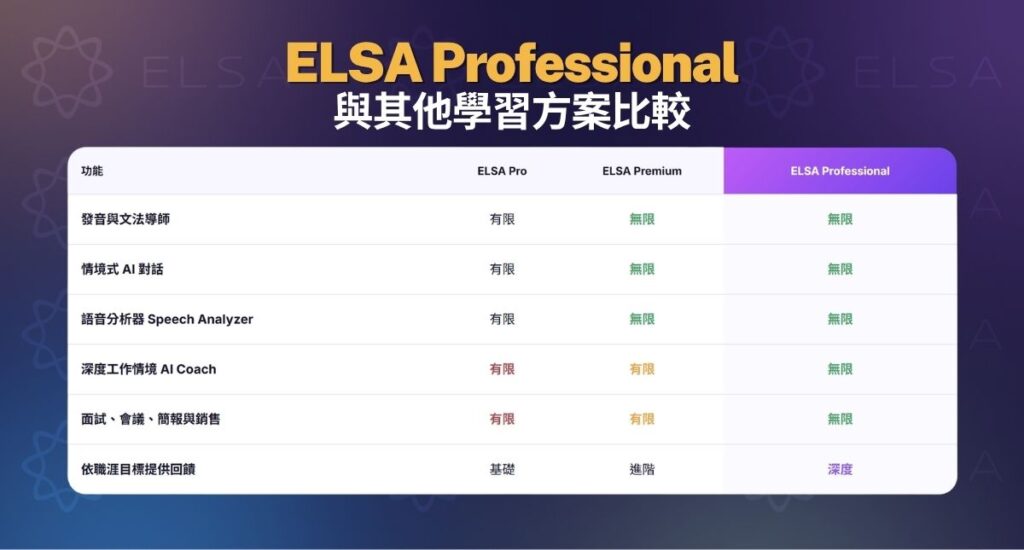
台灣 ELSA Professional 升級優惠價格一覽
ELSA Professional 的升級價格會依據學員目前持有的方案而有所不同,讓你能選擇最適合自己的升級優惠。
| 適用對象 | 專屬優惠 |
|---|---|
| 新學員 | ELSA Professional 一年方案優惠價 3,019 元 |
| 擁有 ELSA Pro 終身方案學員 | 以 3,482 元升級至 ELSA Professional 終身方案 |
| 擁有 ELSA Premium 終身方案學員 | 以 890 元升級至 ELSA Professional 終身方案 |
| 擁有 ELSA Pro 或 Premium 一年方案學員 | 享有更優惠的升級價格,【點此了解】 |
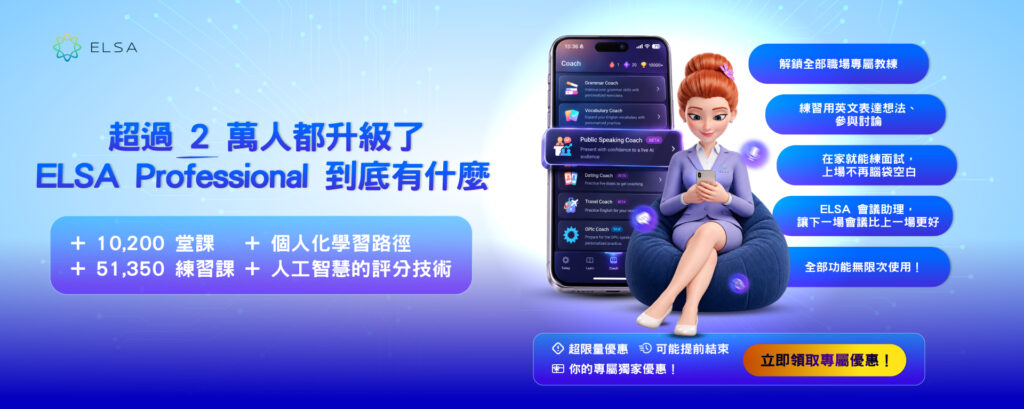
優惠期間:限定前 100 名學員
本次 ELSA Professional 升級優惠僅提供給前 100 名完成報名的學員。
優惠名額額滿即提前結束。如果你正考慮升級 ELSA 學習方案,千萬別錯過這次以超值價格升級 ELSA Professional 的機會!
立即升級 ELSA Professional!
投資英語學習,是提升自我能力與職涯發展的重要一步。透過本次 ELSA Professional 升級優惠,你將有機會以更實惠的價格,享有 ELSA 更高級學習體驗。
想提升英文口說能力,打造流利道地的英語發音嗎?全球超過 9,000 萬人下載的 AI 英文學習 App ELSA Speak 與 街口支付 強強聯手,為你帶來限時超值折扣!即日起至 10 月 31 日,只要使用街口支付購買 ELSA Speak 指定訂閱方案,除了享受標準優惠價外,輸入獨家優惠碼還能再折 5%,搭配街口支付結帳最高再享 8.5% 街口幣回饋!
ELSA Speak × 街口支付限時優惠,雙重好康一次拿
雙重優惠大公開
- 第一重|獨家折扣: 結帳輸入優惠碼 JKOELSA26,立即享 95 折 專屬優惠!
- 第二重|街口加碼: 使用街口支付付款,享最高 5% 街口幣回饋(單筆最高 100 幣)+ 指定付款方式最高 3.5% 回饋!

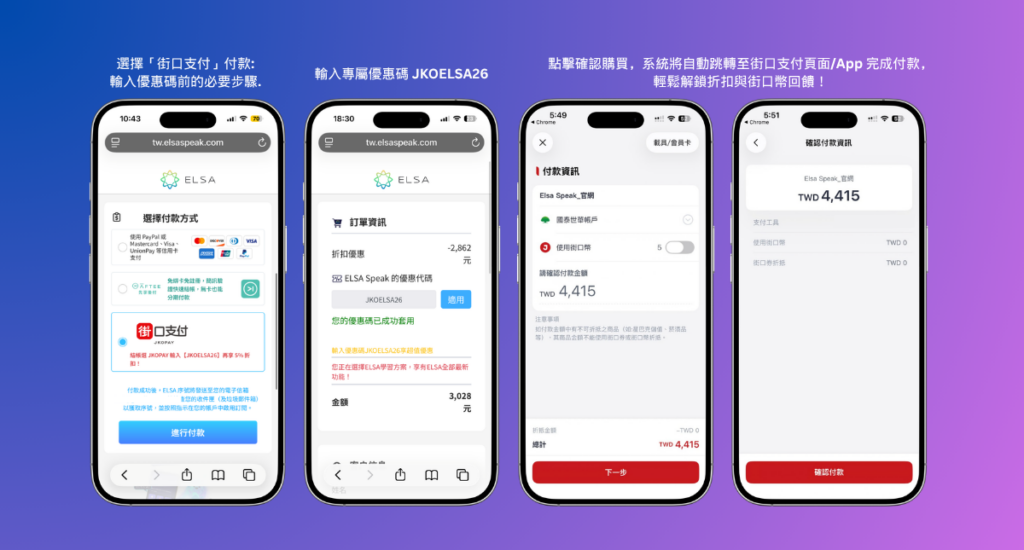
4 步驟輕鬆領取街口支付優惠
1. 選擇適合您的方案:進入 https://tw.elsaspeak.com/inf-jkopay/ 選擇最符合您需求的學習方案。
2. 選擇「街口支付」付款:輸入優惠碼前的必要步驟
於結帳頁面中,付款方式請先勾選 街口支付(JKOPay)。
3. 輸入優惠碼 JKOELSA26:套用專屬折扣
輸入專屬優惠碼 JKOELSA26。
重要提醒: 請務必「先選擇街口支付」再「輸入優惠碼」,系統才能成功折抵專屬優惠!
4.確認購買並進行結帳:前往街口 App 完成付款.
點擊確認購買,系統將自動跳轉至街口支付頁面/App 完成付款,輕鬆解鎖折扣與街口幣回饋!
注意事項:街口幣回饋數量有限,發完為止,詳細回饋規則請以街口支付 App 活動公告為準。
無論你是想提升職場英文競爭力、準備各類英語檢定,還是單純希望口說更流利道地,ELSA Speak 的 AI 個人化專屬教練都能協助你輕鬆達成目標。把握這次與街口支付合作的獨家限時優惠,現在就是投資自己英語能力的最佳時機!
馬上點擊專屬連結進入 ELSA Speak x 街口支付活動頁面 選擇適合你的方案,結帳選用街口支付並輸入優惠碼 JKOELSA26,一起省荷包、輕鬆解鎖道地英語口說!
拒絕英文有多種表達方式,依據直接程度與溝通情境而有所不同。一起了解禮貌拒絕英文、委婉拒絕英文與直接拒絕英文,以及常用的英文例句。跟著 ELSA Speak 透過本文一起探索!
拒絕英文是什麼?清楚區分refuse、reject、decline的差異
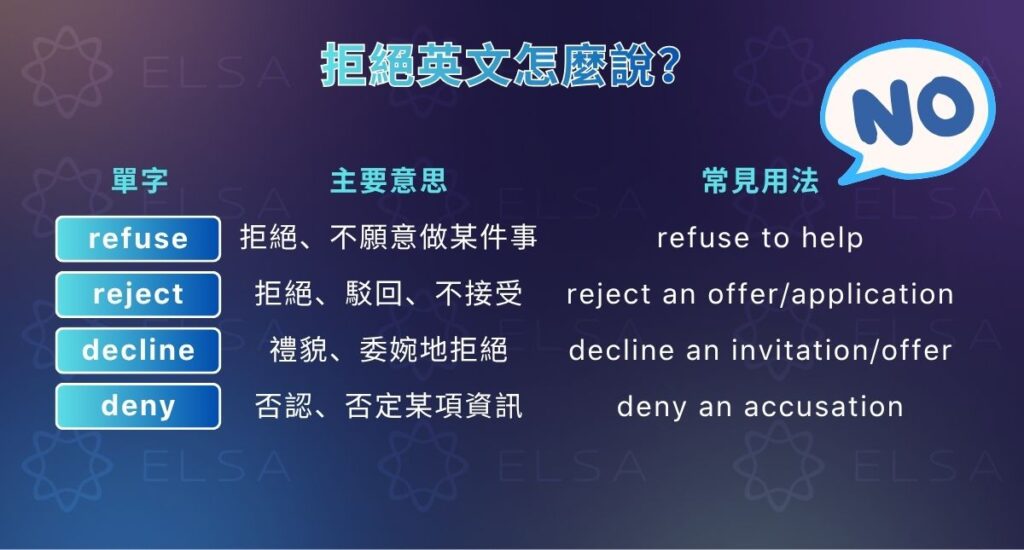
Refuse – 拒絕、不同意做某事
Refuse (v.) 用於某人不同意或不願意執行某項行為,強調拒絕者的決定。
句型結構:
| refuse + to V |
例句:
- He refused to help me. (他拒絕幫我。)
- She refused to answer my question. (她拒絕回答我的問題。)
Reject – 拒絕、駁回、不接受
Reject (v.) 通常用於某項提議、想法、申請、產品等未被接受,通常基於特定標準或條件。
- The manager rejected our new project. (主管駁回了我們的新專案。)
- The bank rejected my loan application. (銀行拒絕了我的貸款申請。)
Reject (n.) 可指被淘汰的產品或被棄置的物品。
Decline – 以禮貌、委婉的方式拒絕
Decline (v.) 同樣意為“拒絕”,但通常帶有更禮貌、溫和且正式的語氣,尤其適用於拒絕邀請、提議或機會。
- I decided to decline the invitation. (我決定婉拒邀請。)
- She politely declined the job offer. (她禮貌地拒絕了工作邀請。)
除了“拒絕”之外,decline 還有衰退、下降的含義。
Deny – 否認、駁斥某項資訊
Deny (v.) 與 refuse 和 reject 不同。此字主要用於某人否認某事為真,例如否認某項指控、資訊或事件。
- He denied the accusation. (他否認了指控。)
- She denied stealing the money. (她否認曾拿走那筆錢。)
區分 refuse, reject, decline, deny
| 英文單字 | 主要意思 | 常見用法 |
|---|---|---|
| refuse | 拒絕做某事 | refuse to help |
| reject | 拒絕接受、駁回 | reject an offer/application |
| decline | 禮貌性拒絕 | decline an invitation/offer |
| deny | 否認、駁斥事實 | deny an accusation |
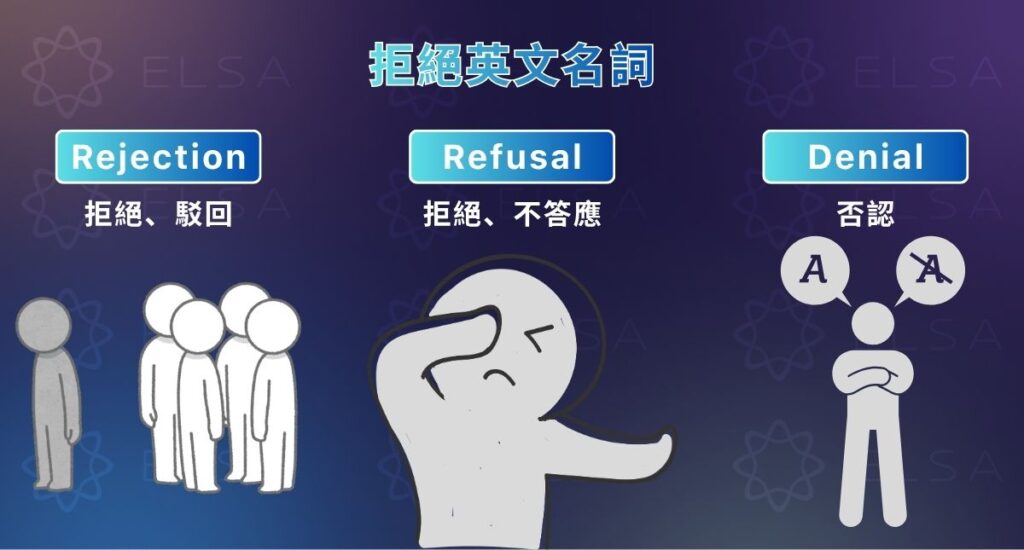
拒絕英文名詞
| 拒絕英文名詞 | 中文釋義 | 例句 |
|---|---|---|
| rejection | 拒絕、駁回 | Her rejection of the offer surprised everyone. (她拒絕提議這件事讓大家感到意外。) |
| refusal | 拒絕、不同意 | The manager’s refusal to approve the budget caused delays. (主管拒絕批准預算一事造成延誤。) |
| denial | 否認 | His denial of the accusation surprised everyone. (他否認指控這件事讓大家感到意外。) |
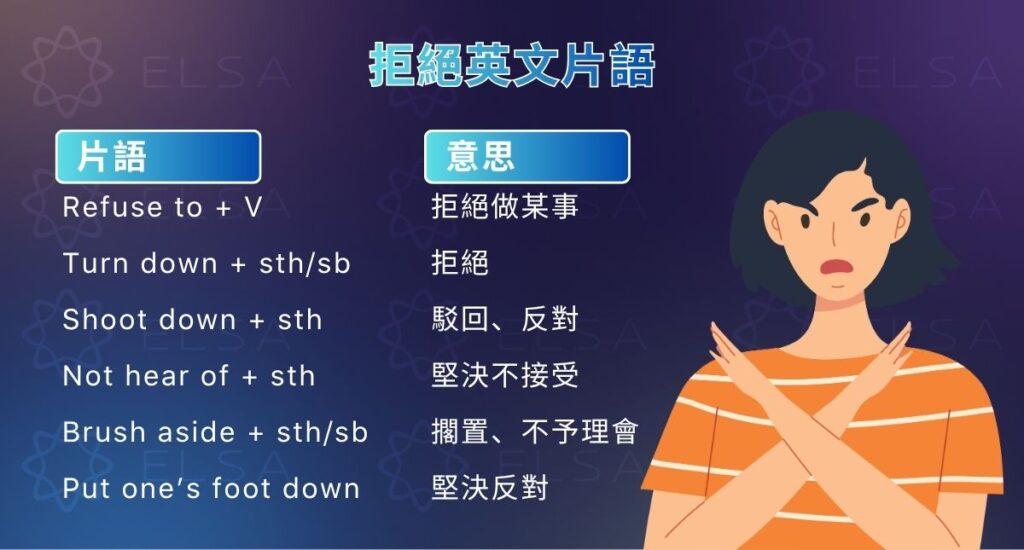
拒絕英文片語
| 片語 | 中文釋義 | 例句 |
|---|---|---|
| refuse to + V | 拒絕、不肯做某事 | Jenny refused to sign the contract. (Jenny 拒絕簽訂合約。) |
| turn down + sth/sb | 拒絕 | She turned down the job offer. (她拒絕了工作機會。) |
| push aside + sth/sb | 擱置、不在意 | I cannot push aside what happened to me. (我無法拋開發生在自己身上的事。) |
| shoot down + sth | 駁回、反對 | The manager shot down my proposal. (主管駁回了我的提案。) |
| not hear of + sth | 堅決不接受 | My mother wouldn’t hear of me paying for dinner. (我媽媽堅持不讓我付晚餐費。) |
| clean your mind of + sth | 拋開、從腦中移除 | Time can help you clean your mind of worries. (時間可以幫助你拋開那些煩惱。) |
| brush aside + sth/sb | 擱置、忽視 | She brushed my suggestion aside. (她將我的提議置之不理。) |
| put one’s foot down | 堅決反對、阻止 | The teacher put her foot down and refused to change the rules. (老師堅決反對並拒絕更改規定。) |
相關内容:【搭配 英文】搭配詞(Collocation):含義、常見類型與練習
各種情境下的拒絕英文例句
學習拒絕英文時,不應只會說 “No”。根據不同情境,你可以選擇禮貌拒絕英文、委婉拒絕英文或直接拒絕英文。
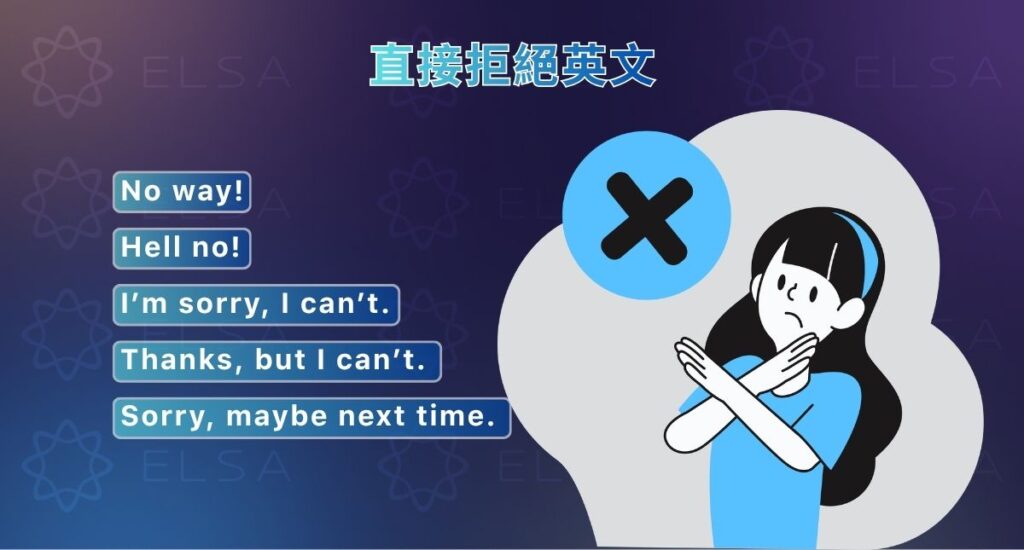
直接拒絕英文
| 拒絕英文例句 | 中文釋義 |
|---|---|
| No way! | 想都別想! |
| Hell no! | 不,絕對不行! |
| A karaoke party? During a pandemic? Are you kidding? | 卡拉 OK 派對?疫情期間?你在開玩笑嗎? |
| I’m sorry, I can’t. | 抱歉,我沒辦法。 |
| Thanks, but I can’t. | 謝謝,但我沒辦法。 |
| Sorry, maybe next time. | 抱歉,或許下次吧。 |
委婉、禮貌拒絕英文
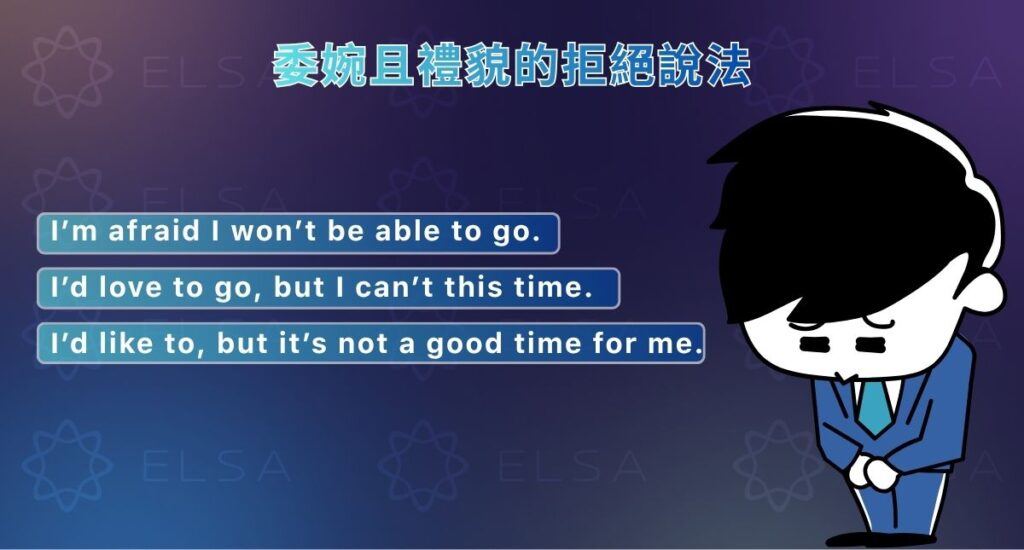
以下為禮貌拒絕英文和婉轉拒絕英文,適用於較為正式的場合。
| 英文例句 | 中文釋義 |
|---|---|
| It sounds like fun, but I don’t think I can make it. | 聽起來很有趣,但我想我沒辦法參加。 |
| I’d like to, but it’s not a good time for me. | 我很想去,但這個時間對我不太方便。 |
| I’m afraid I won’t be able to go. | 恐怕我沒辦法去。 |
| I’d love to go, but I can’t this time. | 我很想去,但這次不行。 |
| I really wish I could be there, but I have other plans. | 我真的很希望能參加,但我已經有其他計劃了。 |
職場情境拒絕英文
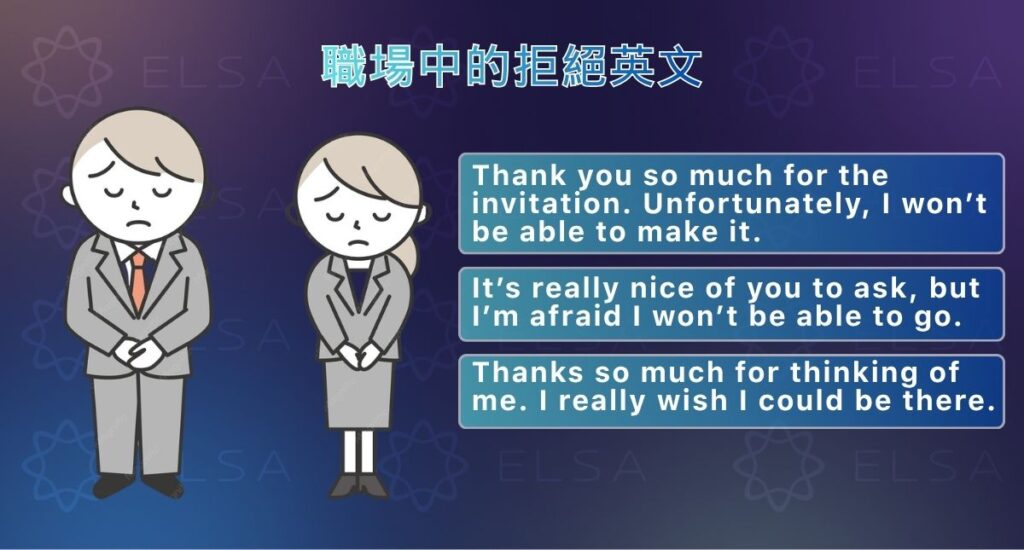
| 英文例句 | 中文釋義 |
|---|---|
| Thank you so much for the invitation. Unfortunately, I won’t be able to make it. | 非常感謝您的邀請。很遺憾,我將無法出席。 |
| It’s really nice of you to ask, but I’m afraid I won’t be able to go. | 非常感謝您的邀請,但恐怕我無法出席。 |
| I’m so sorry I won’t be able to attend. It sounds like it’s going to be fun. | 很遺憾無法出席,聽起來會是個很棒的活動。 |
| Thanks so much for thinking of me. I really wish I could be there. | 非常感謝您想到我。我真的很希望能參加。 |
offer 拒絕 英文
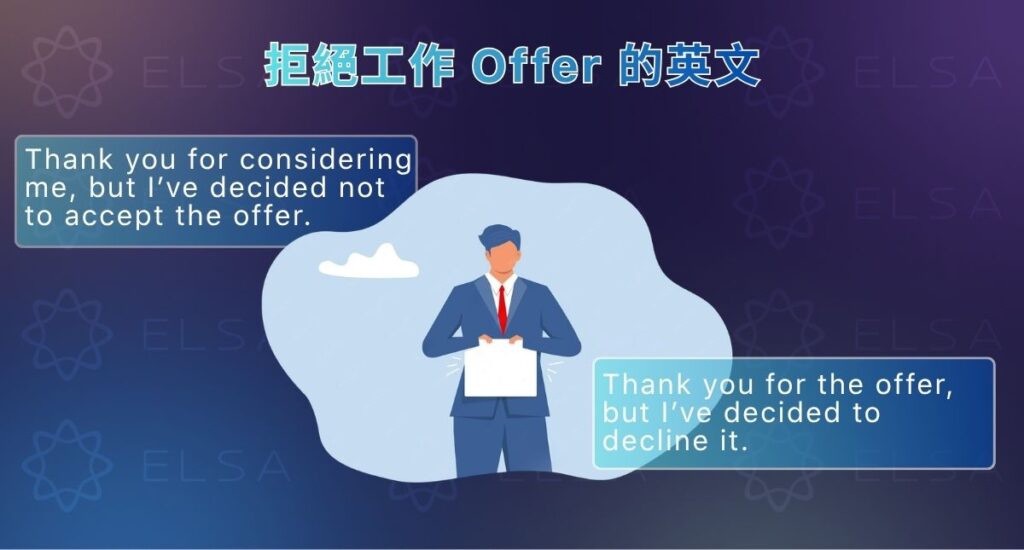
| 英文例句 | 中文釋義 |
|---|---|
| Thank you for the offer, but I’ve decided to decline it. | 感謝您的 offer,但我已決定婉拒這份邀請。 |
| I really appreciate the offer, but I’m afraid I’ll have to decline. | 我非常感謝這份 offer,但恐怕我必須婉拒。 |
| Thank you for considering me, but I’ve decided not to accept the offer. | 感謝您的考慮,但我決定不接受這份 offer。 |
閲讀更多職場知識:精選 100+ 個商用英文詞彙及最常用的商務溝通句型
被拒絕 英文
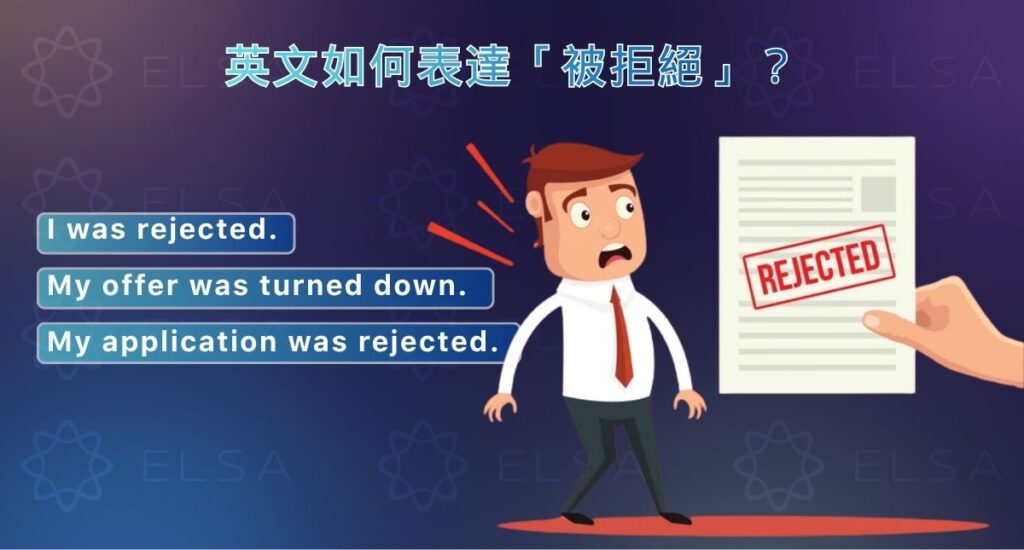
| 英文例句 | 中文釋義 |
|---|---|
| I was rejected. | 我被拒絕了。 |
| My application was rejected. | 我的申請被拒絕了。 |
| My offer was turned down. | 我的提議被拒絕了。 |
| I was turned down for the job. | 我應徵那份工作被拒絕了。 |
專業拒絕英文信範本
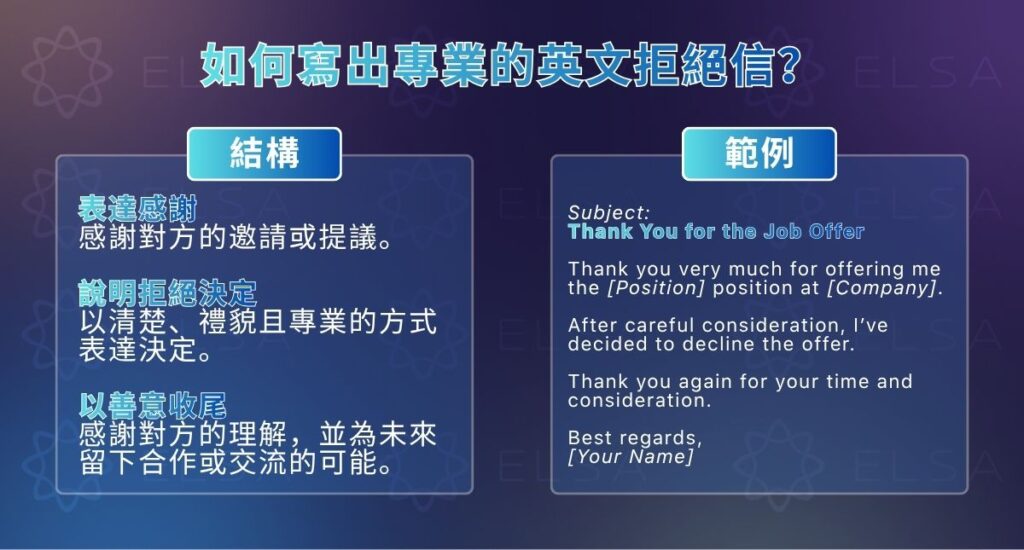
撰寫拒絕英文信時,尤其在職場環境中,應使用禮貌、清晰且專業的表達方式。有別於直接拒絕英文中過於簡短的說法,如 No 或 I refuse,建議先以感謝開場,再表達拒絕決定,最後以展現善意的句子作結。 來看看常見的拒絕英文信件範例吧!
拒絕英文信範本
| Subject: Thank You for Your Invitation Dear [Name], Thank you very much for your invitation. I truly appreciate you thinking of me and giving me the opportunity to attend. Unfortunately, I won’t be able to attend due to a prior commitment. I’m sorry that I won’t be able to join you this time, and I hope we can have another opportunity to meet in the future. Thank you again for your understanding. I hope you have a wonderful event. Best regards, [Your Name] |
釋義:
主旨:感謝您的邀請
親愛的〔姓名〕:
非常感謝您的邀請。我真的非常感激您想到我,並給予我這個參與的機會。
很遺憾,由於事先已有其他行程安排,我將無法出席。對於這次無法一同參與,我深感抱歉,希望日後有機會能夠再相聚。
再次感謝您的體諒,祝活動圓滿成功。
敬上
〔您的姓名〕
10月特別優惠 —— ELSA 大促銷
ELSA PREMIUM 1 年
原價: 5,250
2,199
ELSA PREMIUM 終身
原價: 7,150
4,215
ELSA PRO 1 年
原價: 2,450
1,715
ELSA PRO 終身
原價: 6,150
2,568
拒絕請求英文信範本
| Subject: Regarding Your Request Dear [Name], Thank you for reaching out and for your request. I appreciate your understanding and consideration. Unfortunately, I’m unable to accommodate this request at the moment due to my current schedule. I apologize for any inconvenience this may cause. Thank you for your understanding. I hope we can find another opportunity to work together in the future. Best regards, [Your Name] |
釋義:
主旨:關於您的請求
親愛的〔姓名〕:
感謝您的聯繫與來信。我非常感謝您的理解與體諒。
很遺憾,由於目前的行程安排,我現在無法回應此項請求。對於可能造成的任何不便,我深感抱歉。
感謝您的體諒,希望日後有機會能夠合作。
敬上
〔您的姓名〕
拒絕offer信範本
| Subject: Thank You for the Job Offer Dear [Name], Thank you very much for offering me the [Position] position at [Company]. I truly appreciate the time you and your team spent speaking with me and sharing more about the role. After careful consideration, I’ve decided to decline the offer. This was not an easy decision, and I’m very grateful for the opportunity to be considered for the position. Thank you again for your time and consideration. I wish you and the team continued success. Best regards, [Your Name] |
釋義:
主旨:感謝您的工作邀請
親愛的〔姓名〕:
非常感謝您提供我〔公司〕〔職位〕的機會。我真的非常感激您和團隊花時間與我溝通,並進一步介紹這個職位。
經過審慎考量後,我決定婉拒這份 offer。這並不是一個容易的決定,我非常感謝有機會被考慮擔任此職位。
再次感謝您的時間與考量,祝您和團隊持續成功。
敬上
〔您的姓名〕
拒絕合作邀請信範本
| Subject: Regarding the Collaboration Opportunity Dear [Name], Thank you for reaching out and for sharing this collaboration opportunity with me. I truly appreciate your interest and the time you took to discuss the proposal. After careful consideration, I’ve decided not to move forward with the collaboration at this time. I sincerely appreciate the opportunity and hope we can explore potential opportunities to work together in the future. Thank you again for your understanding. Best regards, [Your Name] |
釋義:
主旨:關於合作機會
親愛的〔姓名〕:
感謝您的聯繫,並與我分享這次合作機會。我非常感謝您的關注,以及您為討論這項提案所付出的時間。
經過審慎考量後,我決定目前暫不推進此次合作。我誠摯感謝您所帶來的機會,並希望未來有機會探索其他合作可能。
再次感謝您的體諒。
敬上
〔您的姓名〕
清楚理解拒絕英文的用法,有助於你掌握更委婉拒絕 英文表達,同時維持禮貌得體的溝通方式。請依據不同情境選擇合適的表達方式,讓你在英文溝通上更加自信。歡迎在 ELSA Speak 英文溝通專區探索更多精彩文章!
在國外遊樂園購票時,你可能需要用英文詢問票價、開放時間或如何購買快速通關票。那麼遊樂園英文怎麼說?跟著 ELSA Speak 學習遊樂園英文單字、遊樂設施名稱,以及常用遊樂園英文對話,讓你在實際情境中自信開口。
遊樂園英文是什麼?
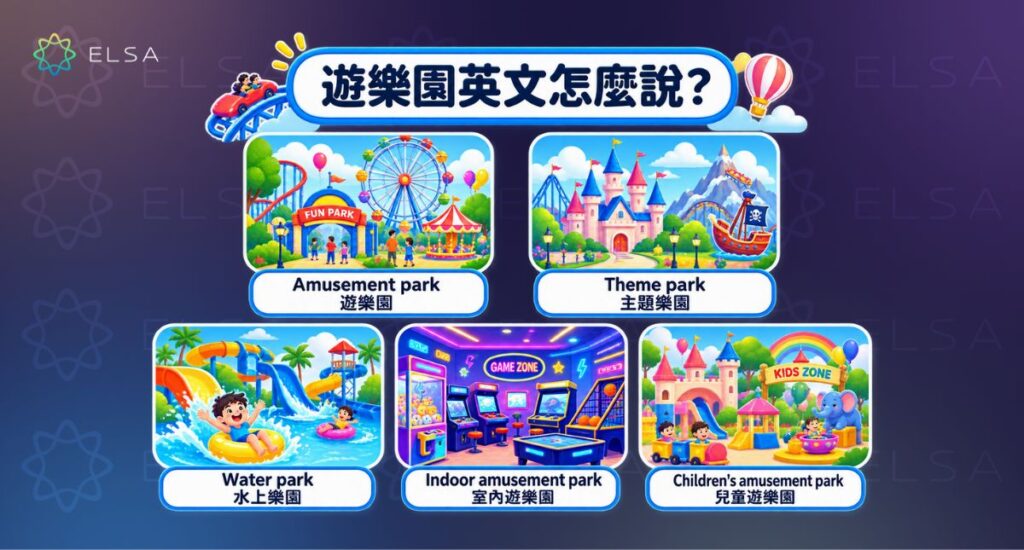
遊樂園 英文通常稱為 amusement park 或 theme park。雖然兩者都指遊樂場所,但使用範疇有所不同。此外,你也會看到水上遊樂園、室內遊樂園或兒童遊樂園等不同說法。
各類遊樂園英文
| 英文單字 | 翻譯 |
|---|---|
| Amusement park | 遊樂園 |
| Theme park | 主題樂園英文 |
| Water park | 水上遊樂園 英文 |
| Indoor amusement park | 室內遊樂園英文 |
| Children’s amusement park | 兒童遊樂園英文 |
| Large amusement park | 大型遊樂園 英文 |
Amusement park 與 theme park 有何不同?
| Amusement park | Theme park | |
|---|---|---|
| 釋義 | 遊樂園 | 主題樂園 |
| 特色 | 以遊樂設施為主 | 貫穿主題,各區域依主題設計 |
| 遊樂設施 | 多種刺激與家庭向設施 | 結合角色、電影或故事的遊樂設施 |
| 例子 | Local Amusement Park | Disneyland, Universal Studios |
遊樂園遊樂設施英文單字
以下為常見遊樂設施英文單字。若你前往迪士尼樂園或其他主題樂園,這些單字將幫助你輕鬆看懂指示牌、地圖,並用英文說出你喜愛的迪士尼遊樂設施英文名稱。
刺激型設施(Thrill Rides)
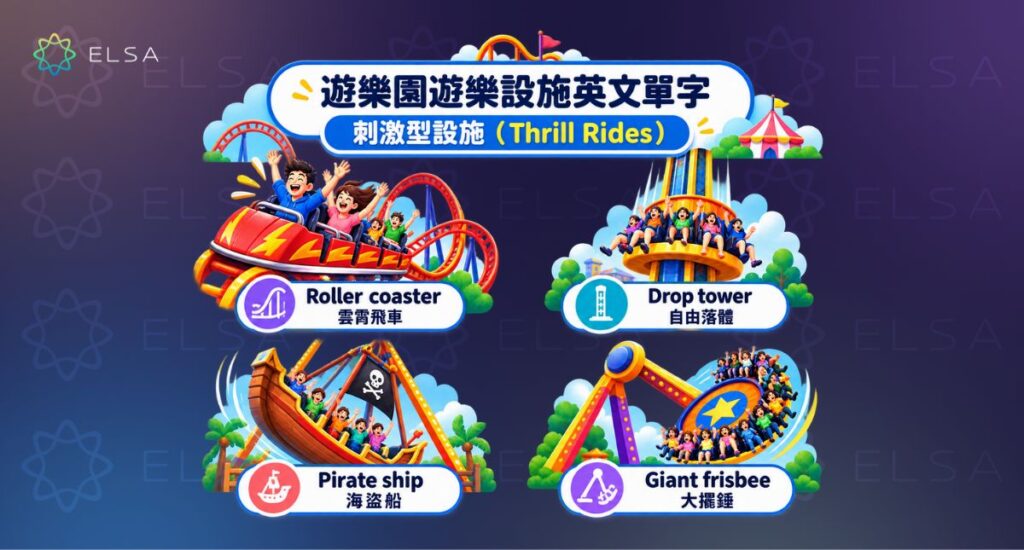
| 英文單字 | 翻譯 |
|---|---|
| Roller coaster | 雲霄飛車 |
| Inverted coaster | 懸掛式雲霄飛車 |
| Launch coaster | 彈射型雲霄飛車 |
| Drop tower | 自由落體塔 |
| Free-fall ride | 自由落體設施 |
| Pirate ship | 海盜船 |
| Swing ride | 飛天鞦韆/旋轉飛椅 |
| Spinning ride | 旋轉設施 |
| Giant frisbee | 巨型旋轉圓盤 |
| Sky coaster | 高空擺盪設施 |
| Slingshot | 彈射升空設施 |
| Motion simulator | 動感模擬設施 |
| Pendulum ride | 鐘擺設施 |
| Top spin | 翻滾旋轉設施 |
| Bungee ride | 高空彈跳設施 |
| Zip line | 高空滑索設施 |
家庭向設施(Family Rides)
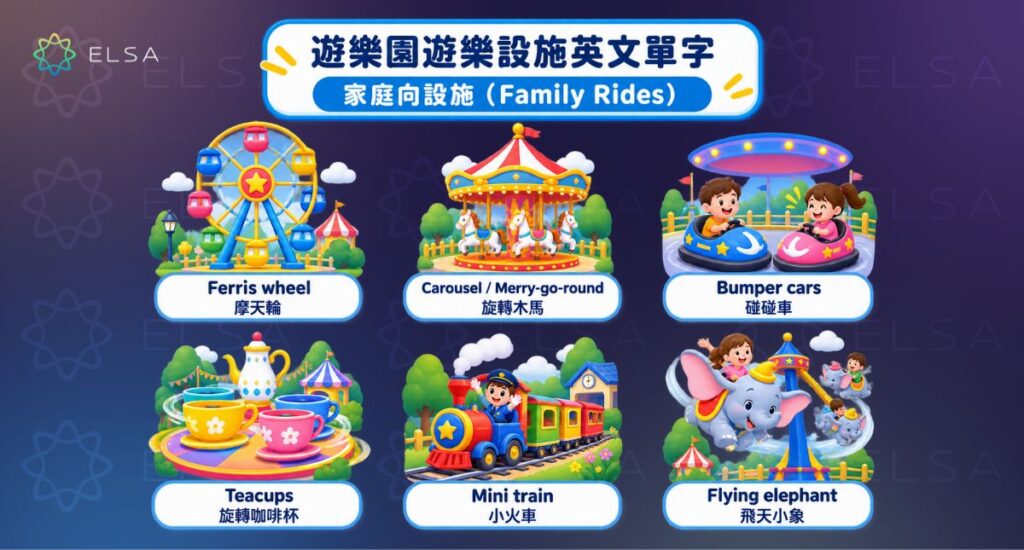
| 英文單字 | 翻譯 |
|---|---|
| Ferris wheel | 摩天輪 |
| Carousel / Merry-go-round | 旋轉木馬 |
| Bumper cars | 碰碰車 |
| Teacups | 茶杯旋轉設施 |
| Mini train | 迷你火車 |
| Flying elephant | 飛天小飛象設施 |
| Cable car | 纜車 |
| Monorail | 單軌列車 |
| Boat ride | 遊船設施 |
| Track ride | 軌道車設施 |
| Kiddie ride | 幼兒遊樂設施 |
| Observation tower | 觀景塔 |
| Chair swing | 飛椅 |
| Maze | 迷宮 |
| Playground | 兒童遊樂區 |
水上設施(Water Rides)
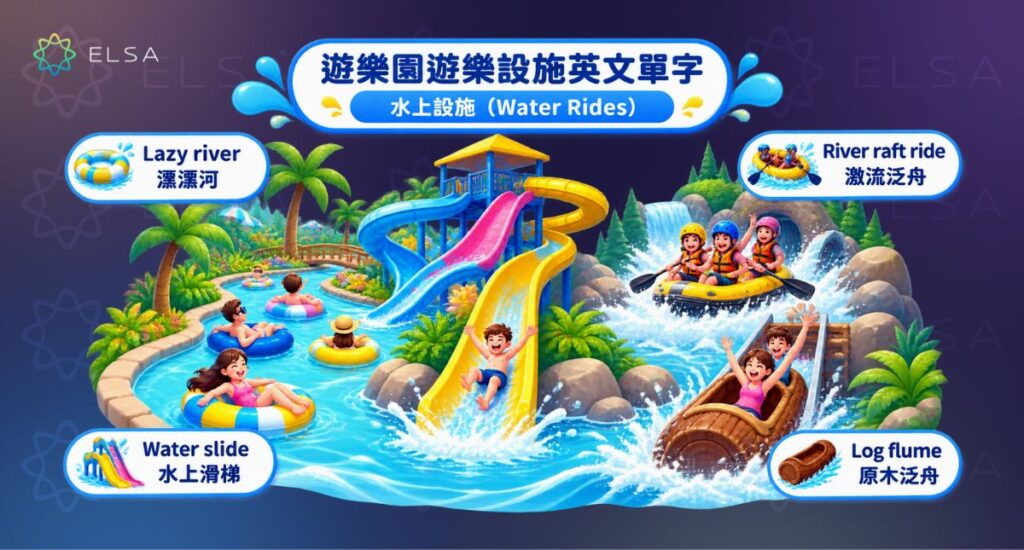
| 英文單字 | 翻譯 |
|---|---|
| Water slide | 水上滑梯 |
| Lazy river | 懶人河 |
| Wave pool | 造浪池 |
| Splash pad | 噴水遊樂區 |
| River raft ride | 泛舟設施/急流泛舟 |
| Log flume | 原木滑水道設施 |
| Water coaster | 水上雲霄飛車 |
| Tube slide | 浮圈滑水道 |
| Body slide | 人體滑水道/無浮圈滑水道 |
| Speed slide | 高速水上滑梯 |
| Water playground | 水上遊樂區 |
| Splash ride | 水上濺水設施 |
其他遊樂區域
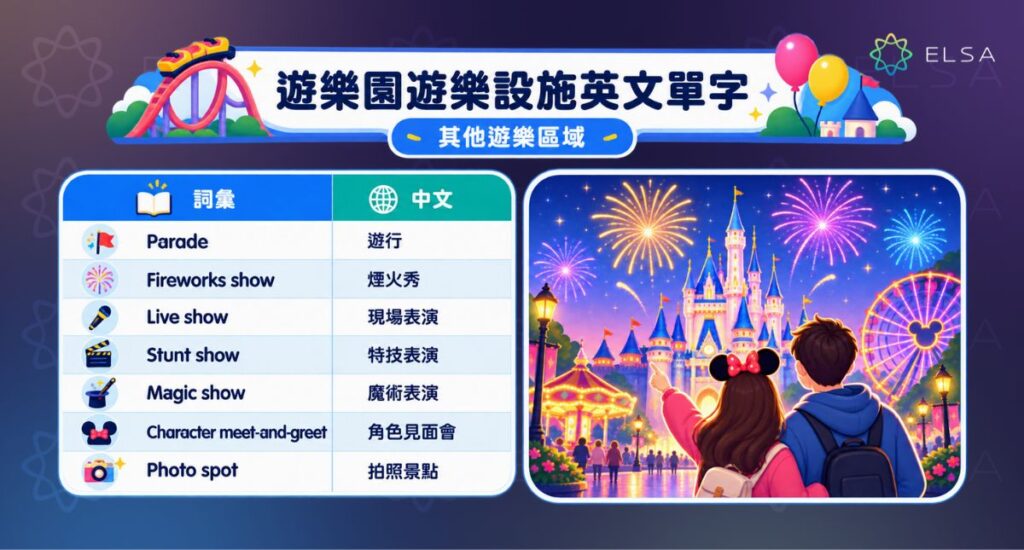
| 英文單字 | 翻譯 |
|---|---|
| Haunted house | 鬼屋 |
| Fun house | 趣味屋/遊樂屋 |
| Dark ride | 室內暗乘設施/黑暗騎乘設施 |
| Mirror maze | 鏡子迷宮 |
| Motion simulator | 動感模擬設施 |
| Indoor playground | 室內遊樂區 |
| Arcade | 電玩遊戲區 |
| 4D theater | 4D電影院 |
| VR experience | 虛擬實境體驗 |
| Game booth | 遊戲攤位 |
| Shooting gallery | 射擊遊戲區 |
| Parade | 遊行 |
| Fireworks show | 煙火表演 |
| Live show | 現場演出 |
| Stunt show | 特技表演 |
| Magic show | 魔術表演 |
| Character meet-and-greet | 角色見面活動 |
| Photo spot | 拍照打卡點 |
| Observation deck | 觀景台 |
10月特別優惠 —— ELSA 大促銷
ELSA PREMIUM 1 年
原價: 5,250
2,199
ELSA PREMIUM 終身
原價: 7,150
4,215
ELSA PRO 1 年
原價: 2,450
1,715
ELSA PRO 終身
原價: 6,150
2,568
常見遊樂園英文單字
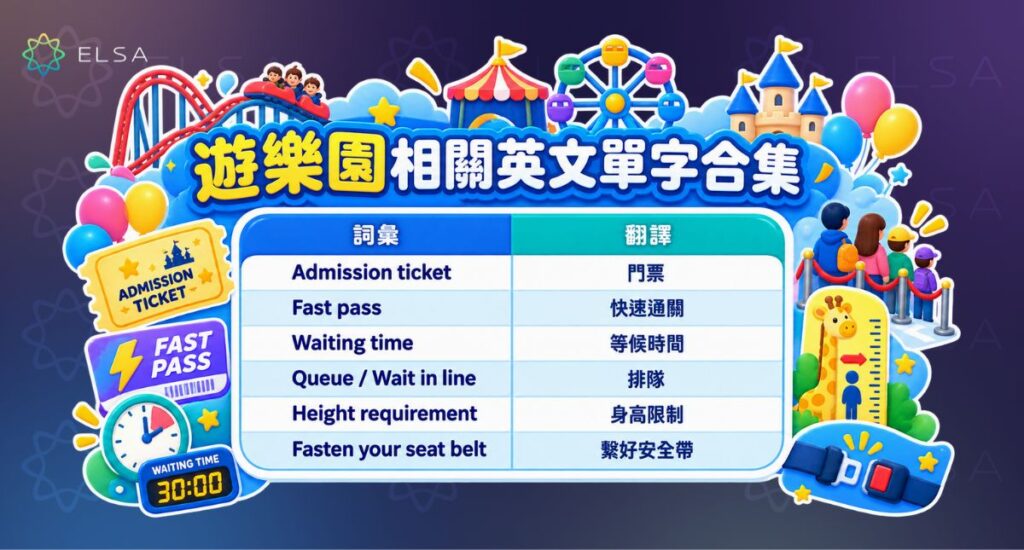
除了遊樂設施名稱外,你也需要了解遊樂園常見單字,以便購票、看懂指示牌並與工作人員溝通。
票券與服務
| 英文單字 | 翻譯 |
|---|---|
| Ticket | 票券 |
| Admission ticket | 入場券 |
| Annual pass | 年票 |
| Fast pass | 快速通關票 |
| Entrance | 入口 |
| Exit | 出口 |
| Queue | 排隊人龍 |
| Waiting time | 等候時間 |
| Map | 地圖 |
| Locker | 置物櫃 |
| Lost and found | 失物招領處 |
| Souvenir shop | 紀念品商店 |
| Food court | 美食區 |
常用動詞
| 英文單字 | 翻譯 |
|---|---|
| Ride | 玩(某項設施) |
| Queue | 排隊 |
| Wait in line | 排隊等候 |
| Buy tickets | 購票 |
| Take photos | 拍照 |
| Wear a seat belt | 繫上安全帶 |
| Fasten your seat belt | 繫緊安全帶 |
| Get on | 上(車廂、設施) |
| Get off | 下(車廂、設施) |
常見告示牌
| 英文單字 | 翻譯 |
|---|---|
| Height requirement | 身高限制 |
| Minimum height: 120 cm | 最低身高:120公分 |
| Safety rules | 安全規定 |
| Please remain seated | 請保持坐姿 |
| Fasten your seat belt | 請繫好安全帶 |
| Keep your hands inside | 請將手放在車廂內 |
| Keep your hands and feet inside the vehicle | 請將手腳保持在車廂內 |
| Secure all loose items | 請妥善保管易掉落物品 |
| No food or drinks | 禁止攜帶食物或飲料 |
| No food or drinks allowed | 不得攜帶食物或飲料入場 |
| Not recommended for pregnant guests | 不建議孕婦乘坐 |
| Emergency exit | 緊急出口 |
| Ride temporarily closed | 設施暫停營運/暫停開放 |
| Do not enter | 禁止進入 |
| No smoking | 禁止吸菸 |
| Staff only | 僅限工作人員 |
| Please wait here | 請在此等候 |
| Exit only | 僅供出口使用 |
知名遊樂園英文名稱
若有機會出國旅遊或在台灣遊玩,你會在地圖、票券或官方網站上常看到遊樂園的英文名稱。以下為幾個知名遊樂園的英文說法。
| 中文名稱 | 英文名稱 |
|---|---|
| 義大遊樂世界 | E-DA Theme Park |
| 六福村主題遊樂園 | Leofoo Village Theme Park |
| 臺北市立兒童新樂園 | Taipei Children’s Amusement Park |
| 劍湖山世界 | Janfusun Fancy World |
| 九族文化村 | Formosan Aboriginal Culture Village |
| 小人國主題樂園 | Window on World Theme Park |
| 迪士尼樂園 | Disneyland |
| 環球影城 | Universal Studios |
遊樂園英文作文
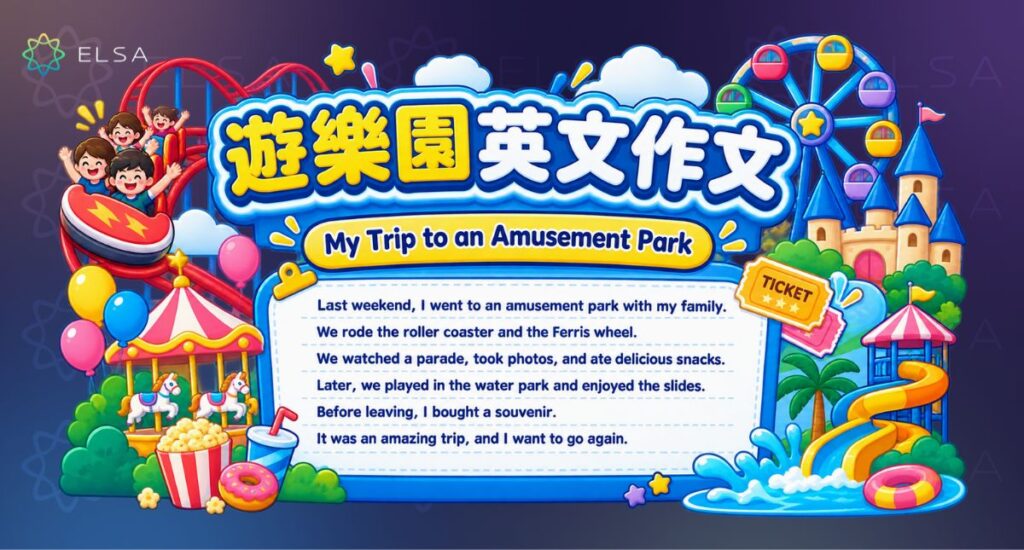
若你正在尋找遊樂園 英文作文,以下為一篇約130字的範文,詞彙簡單,適合學生與英文初學者參考。
範文:
| Last weekend, I went to an amusement park with my family. It was one of the most exciting days of my vacation. We bought admission tickets and started with the roller coaster. Although it was a little scary, it was also a lot of fun. Then we rode the Ferris wheel and enjoyed the beautiful view from the top. We also watched a parade, took many photos, and tried some delicious snacks. After lunch, we visited the water park and spent hours playing in the wave pool and on the water slides. Before leaving, I bought a souvenir to remember the trip. I had an amazing time with my family, and I can’t wait to visit the amusement park again. |
中文翻譯:
上個週末,我和家人一起去了遊樂園。那是假期中最有趣的一天之一。我們購買了入場票,先從雲霄飛車開始玩起。雖然有點嚇人,但非常好玩。之後,我們搭了摩天輪,從高處俯瞰整個園區。我們也觀看了遊行、拍了很多照片,並享用了美味的點心。午餐後,我們前往水上遊樂園,在造浪池和各種水上滑梯玩了好幾個小時。離開前,我買了一個紀念品留作此行的回憶。我和家人度過了非常美好的時光,期待下次能再回來。
遊樂園英文對話
若你準備前往遊樂園或出國旅遊,請參考以下遊樂園英文對話,讓你在常見情境中自信開口溝通。
購票
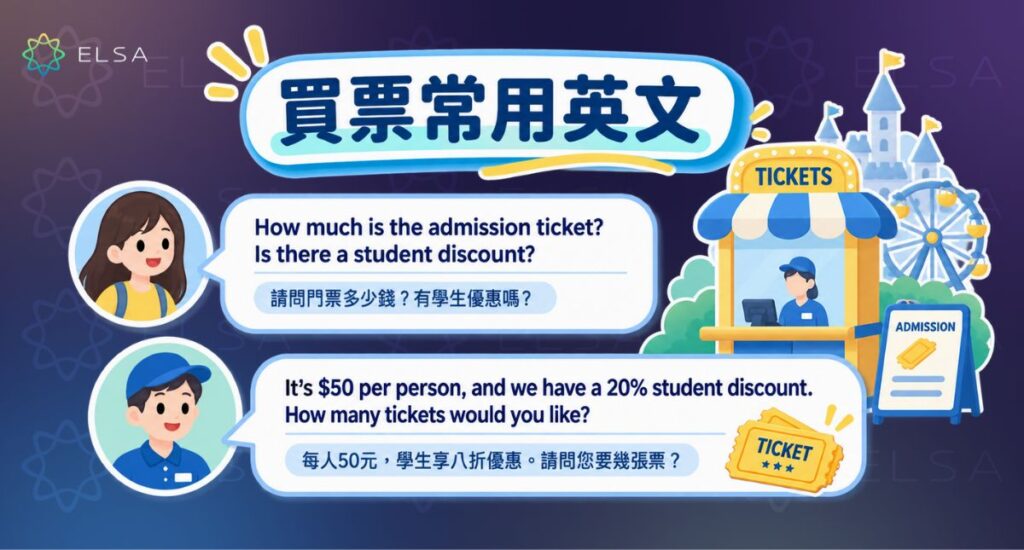
| 英文對話 | 翻譯 |
|---|---|
| A: Hello. I’d like two admission tickets, please. | A: 你好,請給我兩張入場票。 |
| B: Certainly. Are they for adults or children? | B: 好的,請問是成人票還是兒童票? |
| A: Two adult tickets, please. | A: 兩張成人票。 |
| B: Would you like to add a fast pass? | B: 您是否需要加購快速通關票? |
| A: Yes. How much is it per person? | A: 好的,每人多少錢? |
| B: It’s $20 per person. | B: 每人20美元。 |
| A: Okay, I’ll take two fast passes as well. | A: 好,我再加兩張快速通關票。 |
| B: Great. The total is $120. | B: 總計120美元。 |
| A: Can I pay by credit card? | A: 我可以用信用卡付款嗎? |
| B: Of course. Here are your tickets and park map. | B: 當然可以,這是您的票券和園區地圖。 |
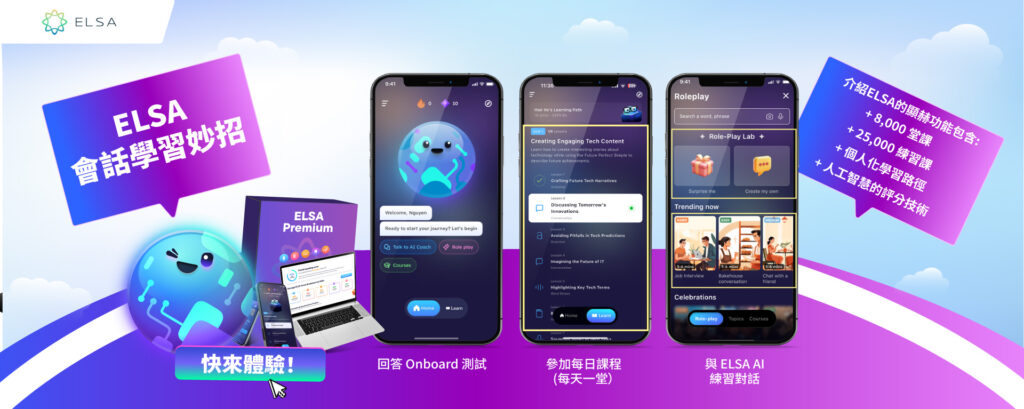
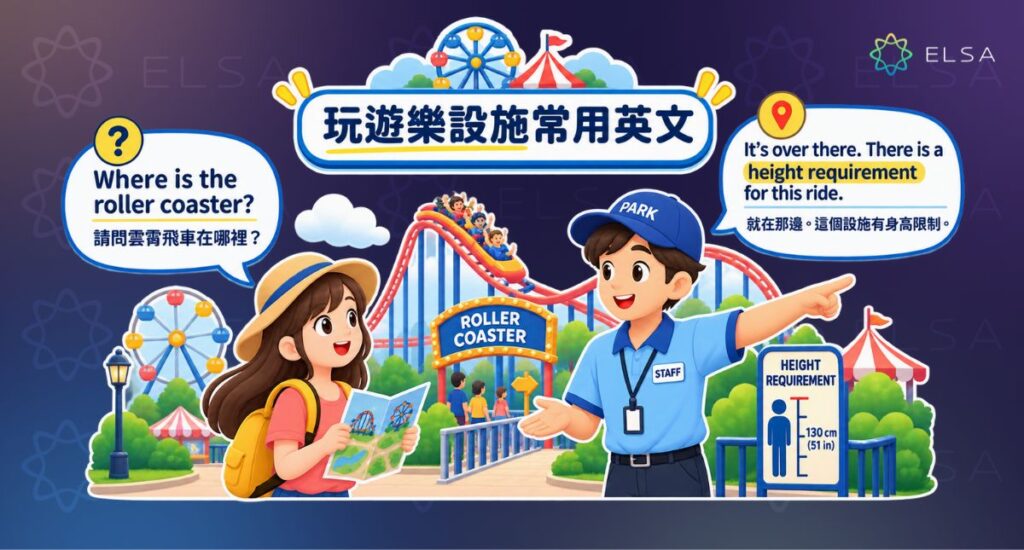
詢問設施
| 英文對話 | 翻譯 |
|---|---|
| A: Excuse me. Where is the roller coaster? | A: 不好意思,雲霄飛車在哪裡? |
| B: Go straight and turn left at the souvenir shop. | B: 直走後在紀念品商店左轉。 |
| A: Is it far from here? | A: 離這裡遠嗎? |
| B: No. It’s about a five-minute walk. | B: 不遠,走路大約五分鐘。 |
| A: How long is the waiting time? | A: 目前等候時間是多久? |
| B: Around forty minutes at the moment. | B: 目前大約40分鐘。 |
| A: Is there a height requirement? | A: 有身高限制嗎? |
| B: Yes. Riders must be at least 120 centimeters tall. | B: 有,乘客身高至少需達120公分。 |
| A: Can I take my bag with me? | A: 我可以帶包包嗎? |
| B: No. Please leave it in the locker beside the entrance. | B: 不行,請將包包存放在入口旁的置物櫃中。 |
與朋友同遊
| 英文對話 | 翻譯 |
|---|---|
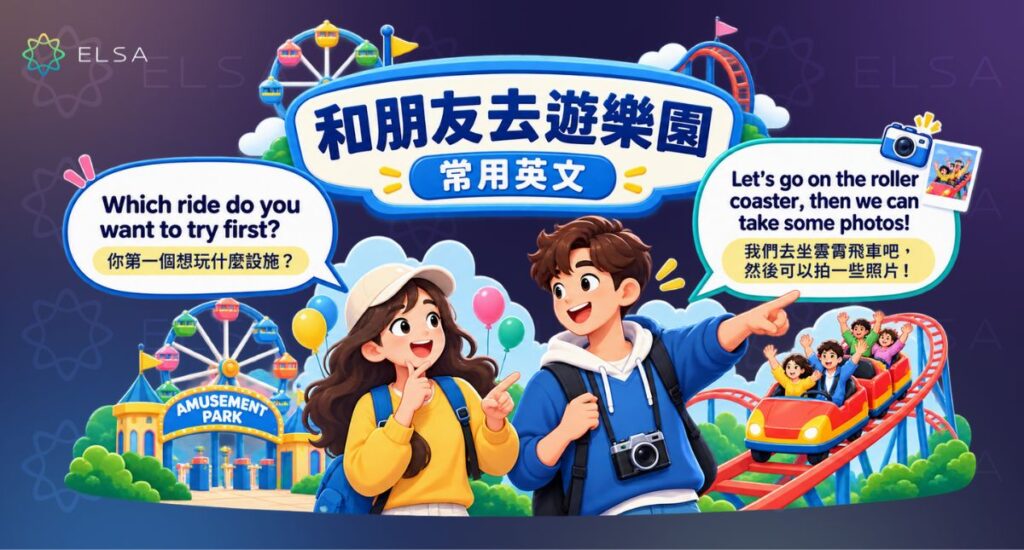
| A: Which ride do you want to try first? | A: 你想先玩哪個設施? |
| B: Let’s go on the roller coaster. | B: 去坐雲霄飛車吧。 |
| A: Are you sure? It looks really scary. | A: 你確定嗎?看起來很嚇人耶。 |
| B: Don’t worry. It’ll be fun! | B: 別擔心,會很好玩的! |
| A: How about the Ferris wheel first? | A: 要不要先搭摩天輪? |
| B: Okay. We can enjoy the view and take some photos. | B: 好啊,我們可以欣賞景色和拍照。 |
| A: Then we can try the pirate ship. | A: 之後再去玩海盜船。 |
| B: Good idea. After that, let’s watch the parade. | B: 好主意,然後一起去看遊行。 |
| A: Sounds perfect. Where should we meet if we get separated? | A: 聽起來很棒。如果走散了要在哪裡碰面? |
| B: Let’s meet in front of the park entrance. | B: 就在遊樂園入口碰面吧。 |
點餐
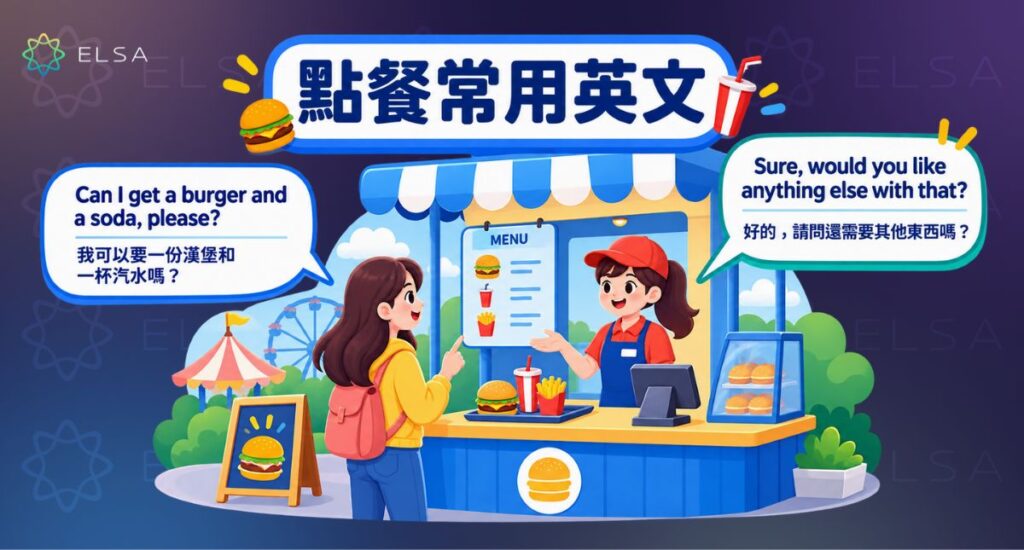
| 英文對話 | 翻譯 |
|---|---|
| A: Hi. Can I see the menu, please? | A: 你好,可以給我看菜單嗎? |
| B: Of course. Our most popular items are burgers, hot dogs, and fried chicken. | B: 當然可以,我們最受歡迎的是漢堡、熱狗和炸雞。 |
| A: I’d like a cheeseburger and a medium fries. | A: 我要一個起司漢堡和一份中薯。 |
| B: What would you like to drink? | B: 請問您想喝什麼? |
| A: A cola, please. | A: 一杯可樂。 |
| B: Would you like to make it a combo? | B: 您要不要改成套餐? |
| A: Yes, please. And can I also have one hot dog? | A: 好的,再加一個熱狗。 |
| B: Certainly. Is that for here or to go? | B: 好的,請問內用還是外帶? |
| A: For here, please. | A: 內用。 |
| B: Your total is $18. Please pick up your order at counter number five. | B: 總計18美元,請至5號櫃台取餐。 |
常見問題(FAQ)
水上遊樂園英文是什麼?
→ Water park.
去遊樂園 英文 怎麼說?
→ Go to an amusement park 或 go to a theme park.
熟練掌握遊樂園英文單字,將有助於你在旅遊或談論休閒活動時更自然地溝通。請多加練習遊樂園英文單字、遊樂設施英文名稱,以及各種實際情境的英文對話。歡迎前往 ELSA Speak 溝通交流英語專區,探索更多多元主題的詞彙內容。
你是否正在尋找各國國家英文以及在日常交流中的使用方式?ELSA Speak 整理國家英文、國家英文縮寫、英文全名與對照表,幫助你快速查找。一起探索這篇實用文章吧!
國家英文怎麼說?
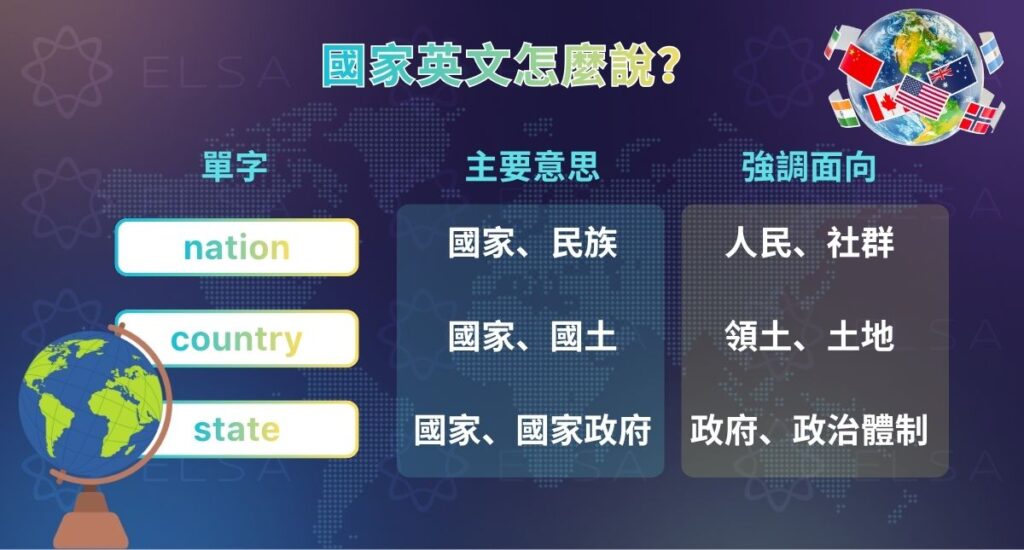
在談論國家英文時,你經常會遇到三個術語:nation, country 和 state。儘管這三個詞都可以指“國家”,但它們各自側重的方面有所不同:
| 英文單字 | 主要意義 | 強調 |
|---|---|---|
| nation | 國家、民族 | 人民、群體 |
| country | 國家、國土 | 領土、土地 |
| state | 國家、州 | 政府與政治制度 |
例子:
- Taiwan is a beautiful country with a rich culture. (台灣是一個擁有豐富文化的美麗國家。)
- The nation celebrated the success of its athletes. (全國人民慶祝了運動員們的成功。)
- The state provides free education for children. (國家為兒童提供免費教育。)
英語中關於國家的常用短語
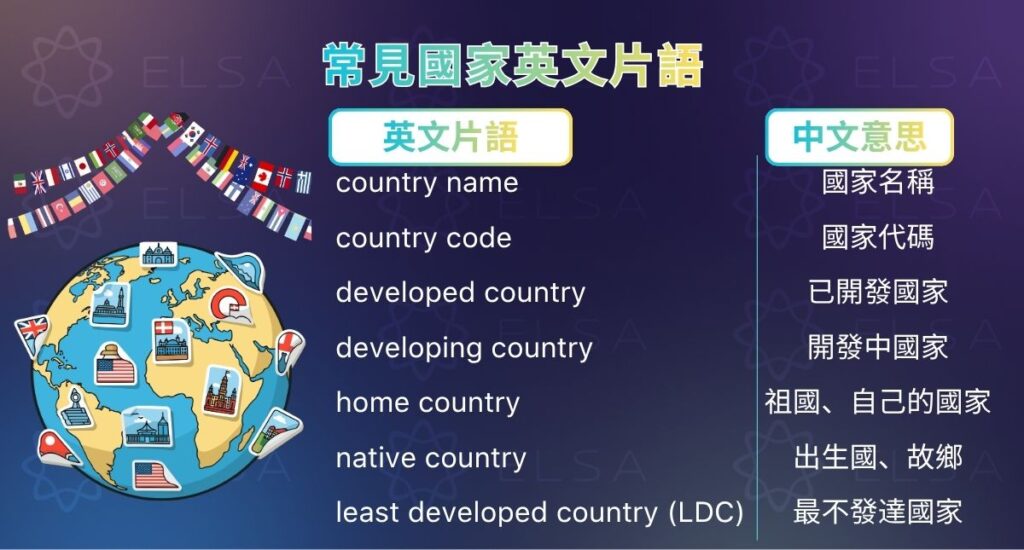
解答開發中國家英文這個問題。這些是國家英文單字,以及在溝通、學習和工作中常用的表達方式。
| 英語短語 | 意義 |
|---|---|
| country name | 國家名稱 |
| country code | 國家代碼 |
| developed country | 已開發國家 英文 |
| developing country | 發展中國家 英文/開發中國家 英文 |
| least developed country (LDC) | 低度開發國家 (LDC)/未開發國家英文 |
| home country | 自己的國家、祖國 |
| native country | 祖國;本國 |
| flee the country | 逃離國家/逃離該國 |
| European country | 歐洲國家 |
| Middle Eastern country | 中東國家 |
| nation building | 國家建設 |
| creditor nation | 債權國 |
| most-favored nation | 最惠國 |
| sovereign state | 主權國家 |
| state-owned enterprise | 國有企業 |
| head of state | 國家元首 |
按大洲和地區分類整理各國家英文名稱
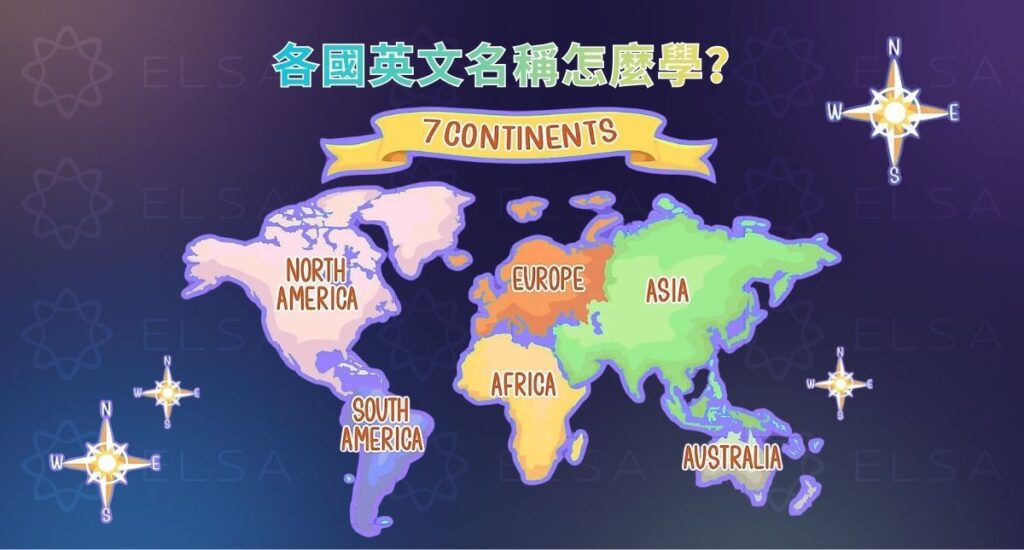
如果你想查找國家英文全名及國家英文對照,最簡單的學習方法是按大洲和地區對國家進行分類。下表根據聯合國的標準地理分類,匯總了各國的英文名稱。
亞洲 – Asia
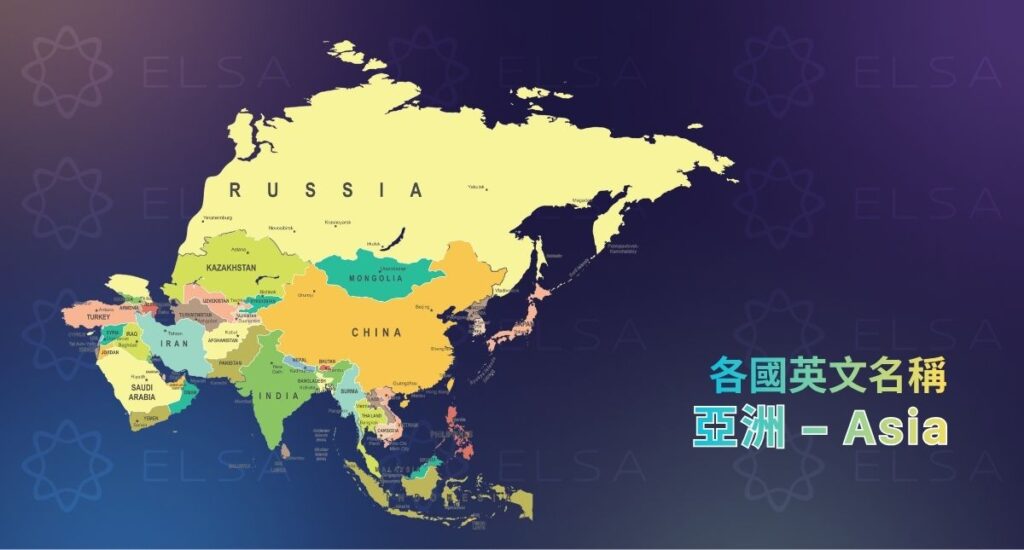
亞洲可劃分為若干主要區域:東亞、東南亞、南亞、中亞和西亞。在尋找國家英文或按主題學習與國家英文單字時,也常常會見到這些分類。
東亞 – East Asia
首先來了解中東國家 英文名稱:
| 中文名稱 | English | ISO 3166-1 |
|---|---|---|
| 中國 | China | CN / CHN |
| 日本 | Japan | JP / JPN |
| 韓國 | Republic of Korea (South Korea) | KR / KOR |
| 北韓 | Democratic People’s Republic of Korea (North Korea) | KP / PRK |
| 蒙古 | Mongolia | MN / MNG |
東南亞 – Southeast Asia
這些國家的英文名稱對台灣的英語學習者來說相當常見,因為它們經常出現在與旅遊、就業、留學及貿易相關的議題中。
| 中文名稱 | English | ISO 3166-1 |
|---|---|---|
| 汶萊 | Brunei Darussalam | BN / BRN |
| 柬埔寨 | Cambodia | KH / KHM |
| 印尼 | Indonesia | ID / IDN |
| 寮國 | Lao People’s Democratic Republic | LA / LAO |
| 馬來西亞 | Malaysia | MY / MYS |
| 緬甸 | Myanmar | MM / MMR |
| 菲律賓(菲律賓國家英文) | Philippines | PH / PHL |
| 新加坡 | Singapore | SG / SGP |
| 泰國 | Thailand | TH / THA |
| 東帝汶 | Timor-Leste | TL / TLS |
| 台灣 | Taiwan | TW / TWN |
| 越南 | Viet Nam | VN / VNM |
注意: 在標準英語文本中,你經常會看到Vietnam這個拼法;但在聯合國的國家名稱體系中,其標準英語名稱為Viet Nam
南亞 – South Asia
| 中文名稱 | English | ISO 3166-1 |
|---|---|---|
| 阿富汗 | Afghanistan | AF / AFG |
| 孟加拉 | Bangladesh | BD / BGD |
| 不丹 | Bhutan | BT / BTN |
| 印度 | India | IN / IND |
| 馬爾地夫 | Maldives | MV / MDV |
| 尼泊爾 | Nepal | NP / NPL |
| 巴基斯坦 | Pakistan | PK / PAK |
| 斯里蘭卡 | Sri Lanka | LK / LKA |
中亞 – Central Asia
| 中文名稱 | English | ISO 3166-1 |
|---|---|---|
| 哈薩克 | Kazakhstan | KZ / KAZ |
| 吉爾吉斯 | Kyrgyzstan | KG / KGZ |
| 塔吉克 | Tajikistan | TJ / TJK |
| 土庫曼 | Turkmenistan | TM / TKM |
| 烏茲別克 | Uzbekistan | UZ / UZB |
10月特別優惠 —— ELSA 大促銷
ELSA PREMIUM 1 年
原價: 5,250
2,199
ELSA PREMIUM 終身
原價: 7,150
4,215
ELSA PRO 1 年
原價: 2,450
1,715
ELSA PRO 終身
原價: 6,150
2,568
西亞 – Western Asia
西亞通常涵蓋中東地區的許多國家,因此在搜尋「中東國家英文」時,你會發現其中許多國家都包含在這份清單中。
| 中文名稱 | English | ISO 3166-1 |
|---|---|---|
| 亞美尼亞 | Armenia | AM / ARM |
| 亞塞拜然 | Azerbaijan | AZ / AZE |
| 巴林 | Bahrain | BH / BHR |
| 賽普勒斯 | Cyprus | CY / CYP |
| 喬治亞 | Georgia | GE / GEO |
| 伊拉克 | Iraq | IQ / IRQ |
| 以色列 | Israel | IL / ISR |
| 約旦 | Jordan | JO / JOR |
| 科威特 | Kuwait | KW / KWT |
| 黎巴嫩 | Lebanon | LB / LBN |
| 阿曼 | Oman | OM / OMN |
| 卡達 | Qatar | QA / QAT |
| 沙烏地阿拉伯 | Saudi Arabia | SA / SAU |
| 巴勒斯坦 | State of Palestine | PS / PSE |
| 敘利亞 | Syrian Arab Republic | SY / SYR |
| 土耳其 | Türkiye | TR / TUR |
| 阿拉伯聯合大公國 | United Arab Emirates | AE / ARE |
| 葉門 | Yemen | YE / YEM |
歐洲 – Europe
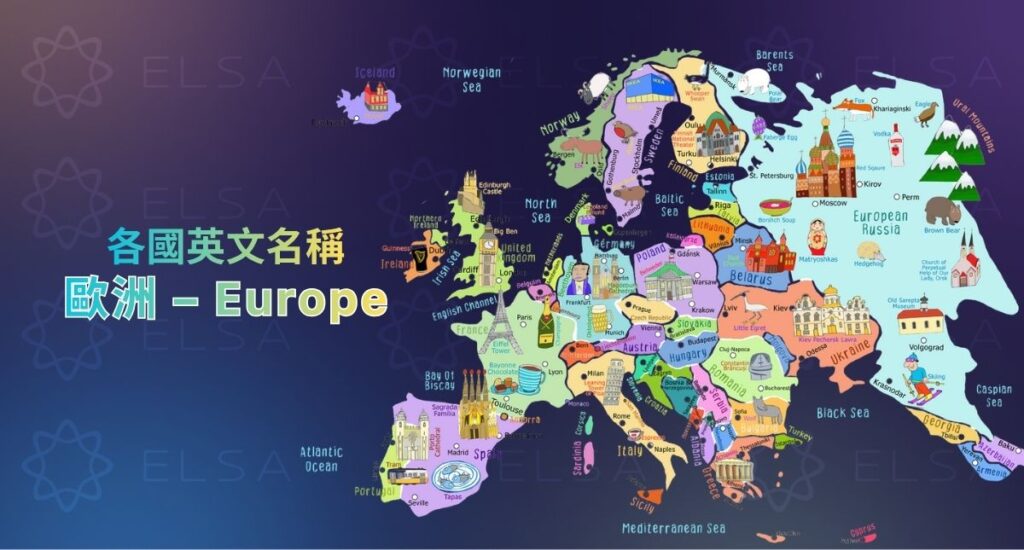
歐洲國家英文可以歸類為北歐、西歐、東歐和南歐,以便於學習和查閱。
北歐 – Northern Europe
| 中文名稱 | English | ISO 3166-1 |
|---|---|---|
| 丹麥 | Denmark | DK / DNK |
| 愛沙尼亞 | Estonia | EE / EST |
| 芬蘭 | Finland | FI / FIN |
| 冰島 | Iceland | IS / ISL |
| 愛爾蘭 | Ireland | IE / IRL |
| 拉脫維亞 | Latvia | LV / LVA |
| 立陶宛 | Lithuania | LT / LTU |
| 挪威 | Norway | NO / NOR |
| 瑞典 | Sweden | SE / SWE |
| 英國 | United Kingdom | GB / GBR |
西歐 – Western Europe
| 中文名稱 | English | ISO 3166-1 |
|---|---|---|
| 奧地利 | Austria | AT / AUT |
| 比利時 | Belgium | BE / BEL |
| 法國 | France | FR / FRA |
| 德國 | Germany | DE / DEU |
| 列支敦斯登 | Liechtenstein | LI / LIE |
| 盧森堡 | Luxembourg | LU / LUX |
| 摩納哥 | Monaco | MC / MCO |
| 荷蘭 | Netherlands | NL / NLD |
| 瑞士 | Switzerland | CH / CHE |
東歐 – Eastern Europe
| 中文名稱 | English | ISO 3166-1 |
|---|---|---|
| 白俄羅斯 | Belarus | BY / BLR |
| 保加利亞 | Bulgaria | BG / BGR |
| 捷克 | Czechia | CZ / CZE |
| 匈牙利 | Hungary | HU / HUN |
| 摩爾多瓦 | Republic of Moldova | MD / MDA |
| 波蘭 | Poland | PL / POL |
| 羅馬尼亞 | Romania | RO / ROU |
| 俄羅斯 | Russian Federation | RU / RUS |
| 斯洛伐克 | Slovakia | SK / SVK |
| 烏克蘭 | Ukraine | UA / UKR |
南歐 – Southern Europe
| 中文名稱 | English | ISO 3166-1 |
|---|---|---|
| 阿爾巴尼亞 | Albania | AL / ALB |
| 安道爾 | Andorra | AD / AND |
| 波士尼亞與赫塞哥維納 | Bosnia and Herzegovina | BA / BIH |
| 克羅埃西亞 | Croatia | HR / HRV |
| 希臘 | Greece | GR / GRC |
| 義大利 | Italy | IT / ITA |
| 馬爾他 | Malta | MT / MLT |
| 蒙特內哥羅 | Montenegro | ME / MNE |
| 北馬其頓 | North Macedonia | MK / MKD |
| 葡萄牙 | Portugal | PT / PRT |
| 聖馬利諾 | San Marino | SM / SMR |
| 塞爾維亞 | Serbia | RS / SRB |
| 斯洛維尼亞 | Slovenia | SI / SVN |
| 西班牙 | Spain | ES / ESP |
| 梵蒂岡 | Holy See (Vatican City) | VA / VAT |
非洲 – Africa
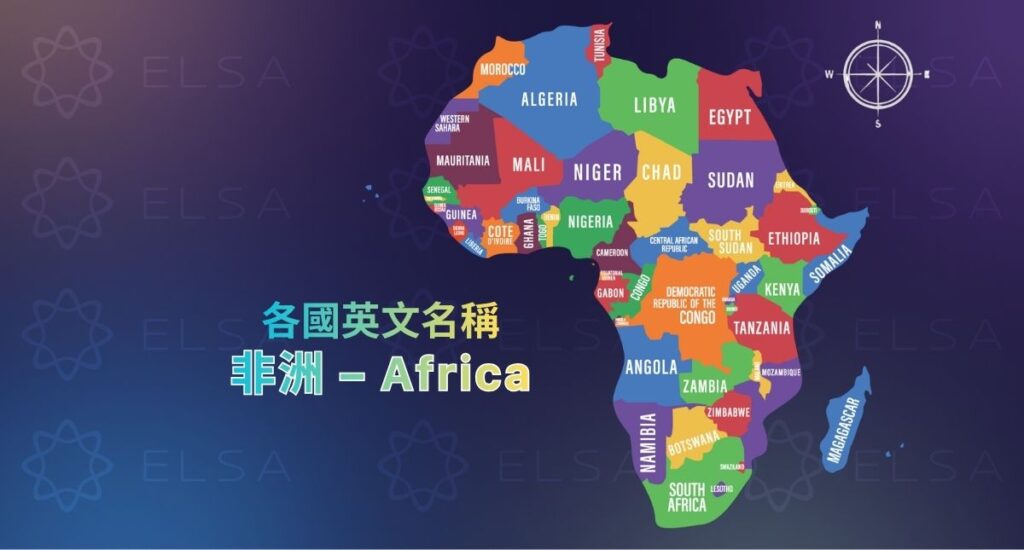
非洲通常被劃分為北非、西非、中非、東非和南非。
北非 – Northern Africa
| 中文名稱 | English | ISO 3166-1 |
|---|---|---|
| 阿爾及利亞 | Algeria | DZ / DZA |
| 埃及 | Egypt | EG / EGY |
| 利比亞 | Libya | LY / LBY |
| 摩洛哥 | Morocco | MA / MAR |
| 蘇丹 | Sudan | SD / SDN |
| 突尼西亞 | Tunisia | TN / TUN |
西非 – Western Africa
| 中文名稱 | English | ISO 3166-1 |
|---|---|---|
| 貝南 | Benin | BJ / BEN |
| 布吉納法索 | Burkina Faso | BF / BFA |
| 維德角 | Cabo Verde | CV / CPV |
| 象牙海岸 | Côte d’Ivoire | CI / CIV |
| 甘比亞 | Gambia | GM / GMB |
| 迦納 | Ghana | GH / GHA |
| 幾內亞 | Guinea | GN / GIN |
| 幾內亞比索 | Guinea-Bissau | GW / GNB |
| 賴比瑞亞 | Liberia | LR / LBR |
| 馬利 | Mali | ML / MLI |
| 茅利塔尼亞 | Mauritania | MR / MRT |
| 尼日 | Niger | NE / NER |
| 奈及利亞 | Nigeria | NG / NGA |
| 塞內加爾 | Senegal | SN / SEN |
| 獅子山 | Sierra Leone | SL / SLE |
| 多哥 | Togo | TG / TGO |
中非 – Middle Africa
| 中文名稱 | English | ISO 3166-1 |
|---|---|---|
| 安哥拉 | Angola | AO / AGO |
| 喀麥隆 | Cameroon | CM / CMR |
| 中非共和國 | Central African Republic | CF / CAF |
| 查德 | Chad | TD / TCD |
| 剛果共和國 | Republic of the Congo | CG / COG |
| 剛果民主共和國 | Democratic Republic of the Congo | CD / COD |
| 赤道幾內亞 | Equatorial Guinea | GQ / GNQ |
| 加彭 | Gabon | GA / GAB |
| 聖多美普林西比 | Sao Tome and Principe | ST / STP |
東非 – Eastern Africa
| 中文名稱 | English | ISO 3166-1 |
|---|---|---|
| 蒲隆地 | Burundi | BI / BDI |
| 葛摩 | Comoros | KM / COM |
| 吉布地 | Djibouti | DJ / DJI |
| 厄利垂亞 | Eritrea | ER / ERI |
| 衣索比亞 | Ethiopia | ET / ETH |
| 肯亞 | Kenya | KE / KEN |
| 馬達加斯加 | Madagascar | MG / MDG |
| 馬拉威 | Malawi | MW / MWI |
| 模里西斯 | Mauritius | MU / MUS |
| 莫三比克 | Mozambique | MZ / MOZ |
| 盧安達 | Rwanda | RW / RWA |
| 塞席爾 | Seychelles | SC / SYC |
| 索馬利亞 | Somalia | SO / SOM |
| 南蘇丹 | South Sudan | SS / SSD |
| 坦尚尼亞 | United Republic of Tanzania | TZ / TZA |
| 烏干達 | Uganda | UG / UGA |
| 尚比亞 | Zambia | ZM / ZMB |
| 辛巴威 | Zimbabwe | ZW / ZWE |
南非 – Southern Africa
| 中文名稱 | English | ISO 3166-1 |
|---|---|---|
| 波札那 | Botswana | BW / BWA |
| 史瓦帝尼 | Eswatini | SZ / SWZ |
| 賴索托 | Lesotho | LS / LSO |
| 納米比亞 | Namibia | NA / NAM |
| 南非 | South Africa | ZA / ZAF |
美洲 – Americas
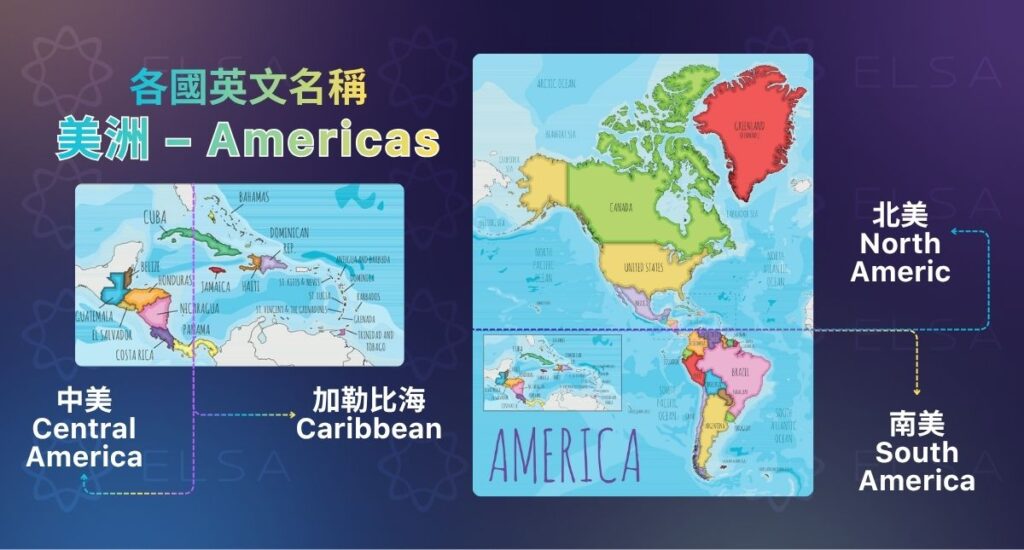
美洲可分為北美洲、中美洲、加勒比海地區和南美洲。
北美洲 – North America
| 中文名稱 | English | ISO 3166-1 |
|---|---|---|
| 加拿大 | Canada | CA / CAN |
| 美國 | United States of America | US / USA |
| 墨西哥 | Mexico | MX / MEX |
中美洲 – Central America
| 中文名稱 | English | ISO 3166-1 |
|---|---|---|
| 貝里斯 | Belize | BZ / BLZ |
| 哥斯大黎加 | Costa Rica | CR / CRI |
| 薩爾瓦多 | El Salvador | SV / SLV |
| 瓜地馬拉 | Guatemala | GT / GTM |
| 宏都拉斯 | Honduras | HN / HND |
| 尼加拉瓜 | Nicaragua | NI / NIC |
| 巴拿馬 | Panama | PA / PAN |
加勒比海地區 – Caribbean
| 中文名稱 | English | ISO 3166-1 |
|---|---|---|
| 安地卡及巴布達 | Antigua and Barbuda | AG / ATG |
| 巴哈馬 | Bahamas | BS / BHS |
| 巴貝多 | Barbados | BB / BRB |
| 古巴 | Cuba | CU / CUB |
| 多米尼克 | Dominica | DM / DMA |
| 多明尼加共和國 | Dominican Republic | DO / DOM |
| 格瑞那達 | Grenada | GD / GRD |
| 海地 | Haiti | HT / HTI |
| 牙買加 | Jamaica | JM / JAM |
| 聖克里斯多福及尼維斯 | Saint Kitts and Nevis | KN / KNA |
| 聖露西亞 | Saint Lucia | LC / LCA |
| 聖文森及格瑞那丁 | Saint Vincent and the Grenadines | VC / VCT |
| 千里達及托巴哥 | Trinidad and Tobago | TT / TTO |
南美洲 – South America
| 中文名稱 | English | ISO 3166-1 |
|---|---|---|
| 阿根廷 | Argentina | AR / ARG |
| 玻利維亞 | Plurinational State of Bolivia | BO / BOL |
| 巴西 | Brazil | BR / BRA |
| 智利 | Chile | CL / CHL |
| 哥倫比亞 | Colombia | CO / COL |
| 厄瓜多 | Ecuador | EC / ECU |
| 蓋亞那 | Guyana | GY / GUY |
| 巴拉圭 | Paraguay | PY / PRY |
| 秘魯 | Peru | PE / PER |
| 蘇利南 | Suriname | SR / SUR |
| 烏拉圭 | Uruguay | UY / URY |
| 委內瑞拉 | Bolivarian Republic of Venezuela | VE / VEN |
大洋洲 – Oceania
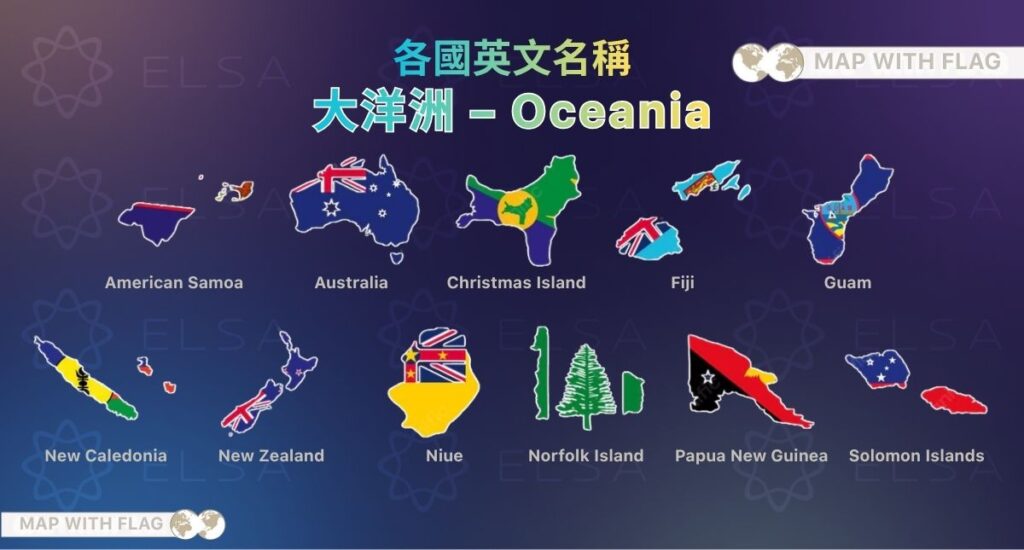
在學習國家英文時,不要忽視大洋洲的國家,尤其是 Australia 和 New Zealand。
澳洲與紐西蘭 – Australia and New Zealand
| 中文名稱 | English | ISO 3166-1 |
|---|---|---|
| 澳洲 | Australia | AU / AUS |
| 紐西蘭 | New Zealand | NZ / NZL |
美拉尼西亞 – Melanesia
| 中文名稱 | English | ISO 3166-1 |
|---|---|---|
| 斐濟 | Fiji | FJ / FJI |
| 巴布亞紐幾內亞 | Papua New Guinea | PG / PNG |
| 索羅門群島 | Solomon Islands | SB / SLB |
| 萬那杜 | Vanuatu | VU / VUT |
密克羅尼西亞 – Micronesia
| 中文名稱 | English | ISO 3166-1 |
|---|---|---|
| 吉里巴斯 | Kiribati | KI / KIR |
| 馬紹爾群島 | Marshall Islands | MH / MHL |
| 密克羅尼西亞聯邦 | Federated States of Micronesia | FM / FSM |
| 諾魯 | Nauru | NR / NRU |
| 帛琉 | Palau | PW / PLW |
玻里尼西亞 – Polynesia
關於國家名稱及縮寫的說明
一個國家的名稱與國家英文縮寫是兩回事。例如:
| 國家名稱 (English) | ISO 英文縮寫 |
|---|---|
| United States | US / USA |
| United Kingdom | GB / GBR |
| Japan | JP / JPN |
| South Korea | KR / KOR |
| Vietnam | VN / VNM |
| Taiwan | TW / TWN |
縮寫形式可能因係統而異,例如 ISO 雙字元或 ISO 三字元代碼、網際網路代碼或通用慣例。因此,在表格或正式文件中使用時,建議核實具體要求的程式碼類型。
關於國家英語會話短語
詢問有關該國的情況
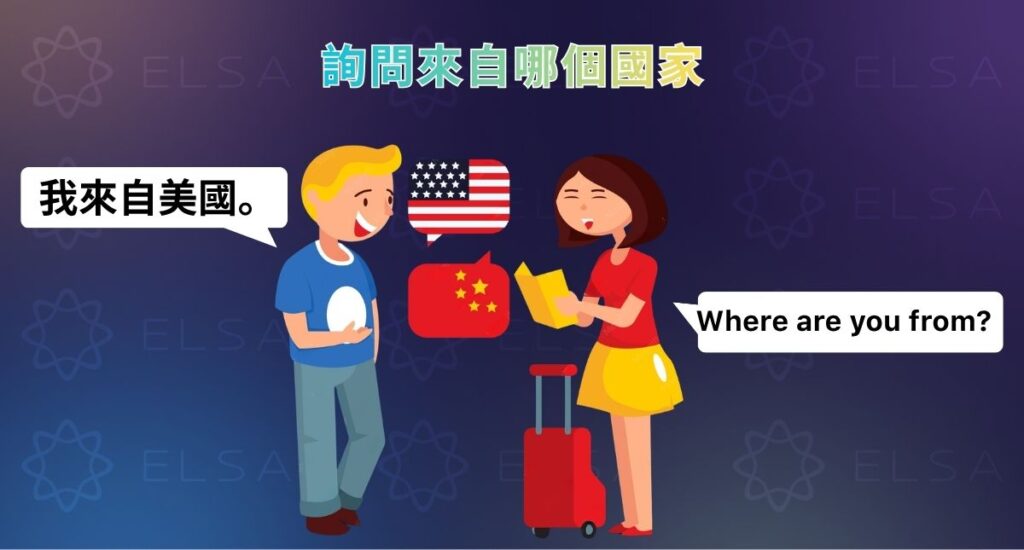
當你想問某人來自哪個國家時,可以使用以下英語句型:
| 英語句型 | 翻譯 |
|---|---|
| Where are you from? | 你來自哪裡? |
| What country are you from? | 你來自哪個國家? |
| Which country are you from? | 你來自哪個國家? |
| Where do you come from? | 你來自哪裡? |
| What is your nationality? | 你的國籍是什麽? |
| Which country do you live in? | 你住在哪個國家? |
其中,“Where are you from?”是日常對話中最常見、最自然的問法。如果想用英語直接詢問對方來自哪個國家,可以使用 “What country are you from?” 或者 “Which country are you from?”。
不要錯過具有大量功能的英語學習包
ELSA Premium 終身 – 十月優惠
原價:7,150元 現在 4,215 元
ELSA Premium 還有另外以下的學習包:
ELSA Premium 一年:原價:5,250元 現在 2,199 元
ELSA Premium 三個月:原價:2,100元 現在 1,140 元
關於該國的回應
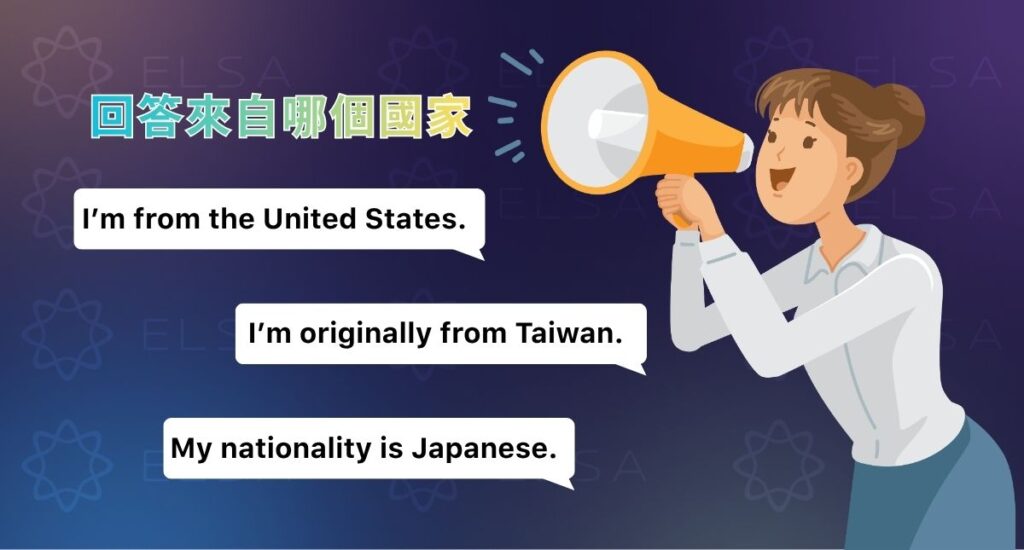
回答時,你可以直接說出國家的英文名稱,或是搭配介詞from來說明你來自哪裡。
| 英語句型 | 翻譯 |
|---|---|
| I’m from Vietnam. | 我來自越南。 |
| I come from Japan. | 我來自日本。 |
| I’m from the United States. | 我來自美國。 |
| I’m originally from Taiwan. | 我來自台灣。 |
| I live in South Korea. | 我住在韓國。 |
| I’m Taiwanese. | 我是台灣人。 |
| My nationality is Japanese. | 我的國籍是日本。 |
在學習常用國家英文時,應同時記住國名及其對應的國籍稱呼,以便在對話中靈活運用。例如:Vietnam – Vietnamese, Japan – Japanese, Korea – Korean, Taiwan – Taiwanese, Thailand – Thai 與 China – Chinese.
掌握國家 英文,不僅有助於記憶國家英文,還能促進溝通、學習及英語的實際運用。歡迎前往 ELSA Speak 的溝通交流英語專區,探索更多實用文章!
在國際會議上突然被點名發言,腦中明明有想法,卻一時不知道怎麼用英文說出口?或是遇到英文簡報、面試、談判時,總擔心自己的表達不夠專業?全新 ELSA Professional,就是為真實職場情境打造的進階英文學習方案。從練習到實戰,幫助你把「會英文」真正變成「敢用英文工作」。
ELSA Professional 是什麼?
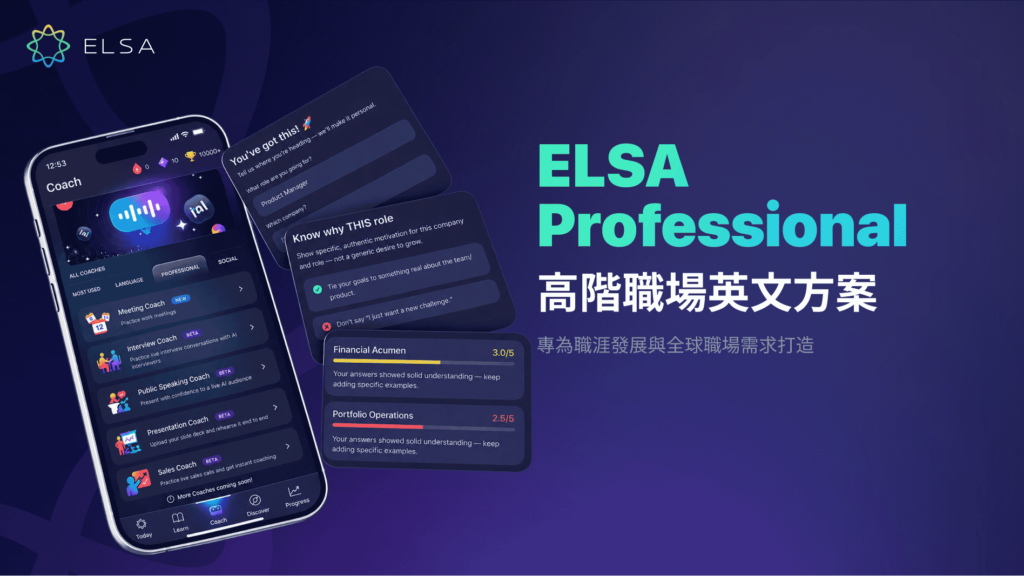
ELSA Professional 是一款高級英語溝通學習方案,專為職涯發展,以及在全球化職場環境中工作的需求而設計。它遠不止是一款常規的發音糾正應用,更是一個由新一代人工智慧(AI)驅動的學習生態系統,能夠精準模擬真實的職場溝通場景。
若 ELSA Premium 是建立英語溝通全面基礎的關鍵,那麼 ELSA Professional 則是將這些語言技能轉化為實際職場應用的助推器,幫助你將語言能力真正運用在工作中,拓展職涯發展空間。
選擇此版本,使用者不僅能享受 ELSA Premium 方案的所有權益,還能無限使用兩款突破性工具:由 6 位智慧教練組成的 Professional Coach,以及虛擬助理 Meeting Companion。這個組合建構了一個全面的練習環境,讓學習者不僅能精進發音,還能在與國際同事或合作夥伴溝通時,掌握用字技巧、建構論點,並做到反應迅速、自信從容。
探索 ELSA Professional 的卓越功能
這個學習方案的優點在於其智慧回饋系統,該系統依托深度學習技術與專有的語音辨識技術建構而成。學習者無需局限於基礎的日常對話,而是可以透過針對職場場景優化的三大核心功能模組,直接磨練更為複雜的技能。
應對各種職場情境的 Professional Coach 工具組
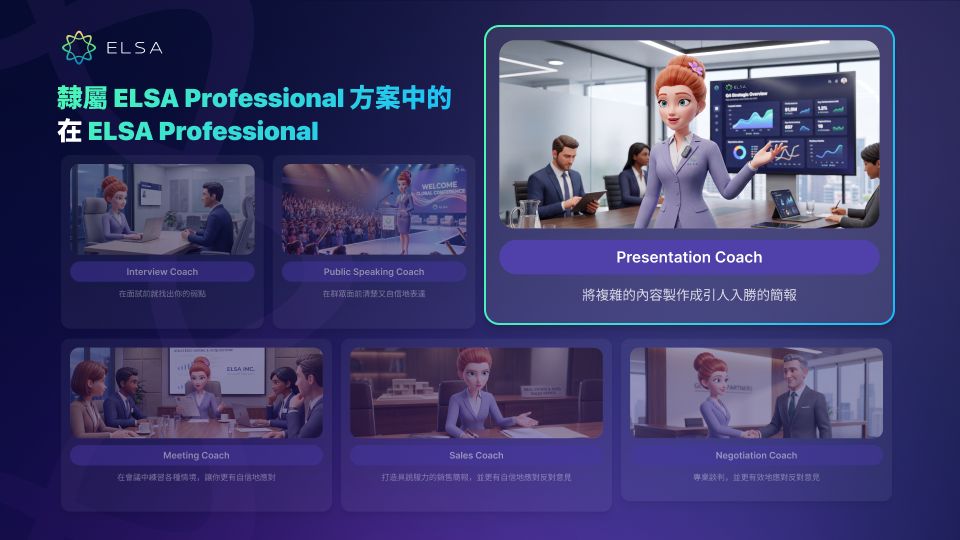
Professional Coach 是該課程方案的一大獨家亮點,它圍繞著真實且具有互動性的角色扮演場景而設計,旨在磨練你的語言思維與職業溝通風格。此模組內建的六位專業 AI 助理將化身為你的私人教練,引導你應對職場日常溝通中的各種挑戰:
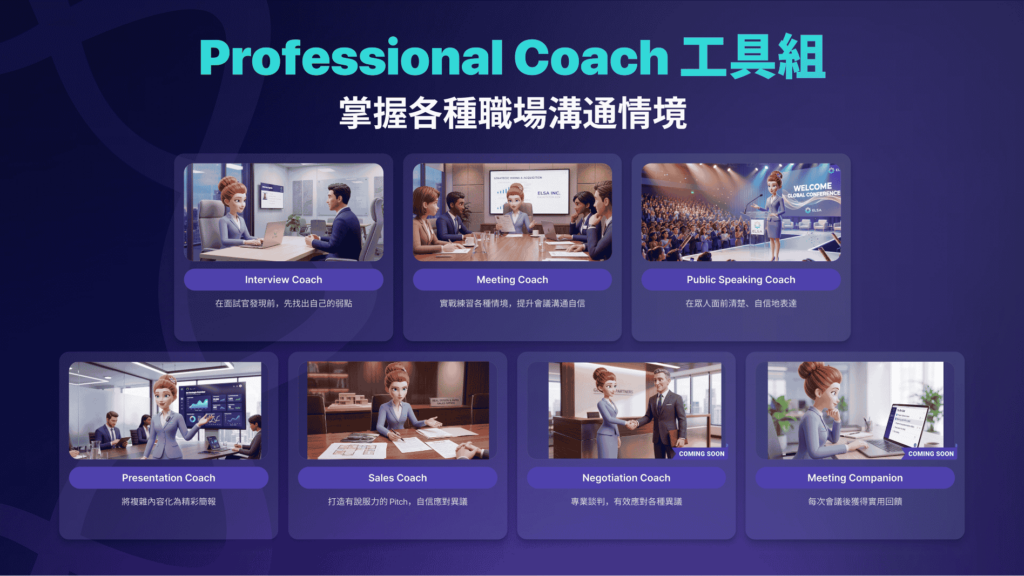
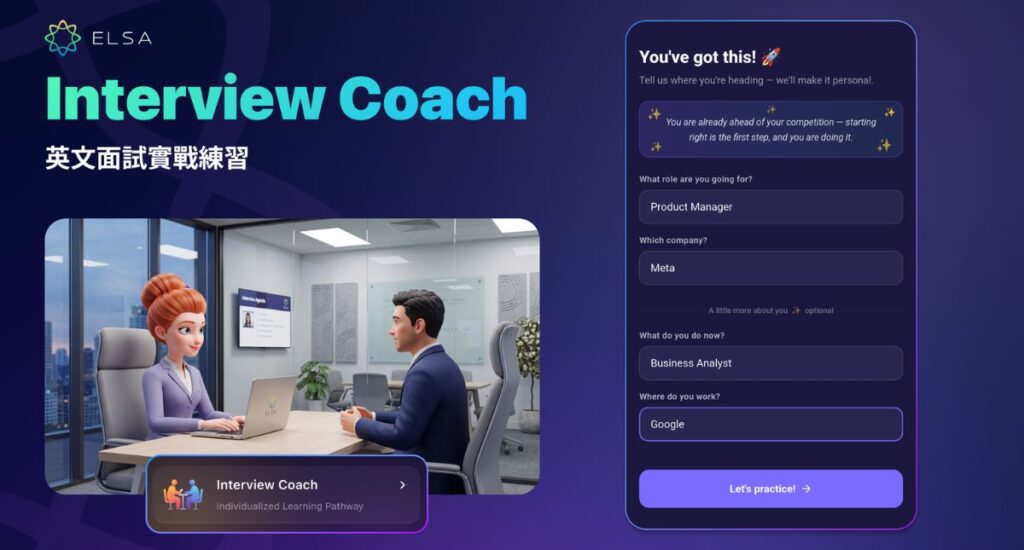
Interview Coach:協助學習者練習英文面試,透過練習回答常見問題,並準備以能給雇主留下良好印象的方式展示自身的經驗、技能與成就。
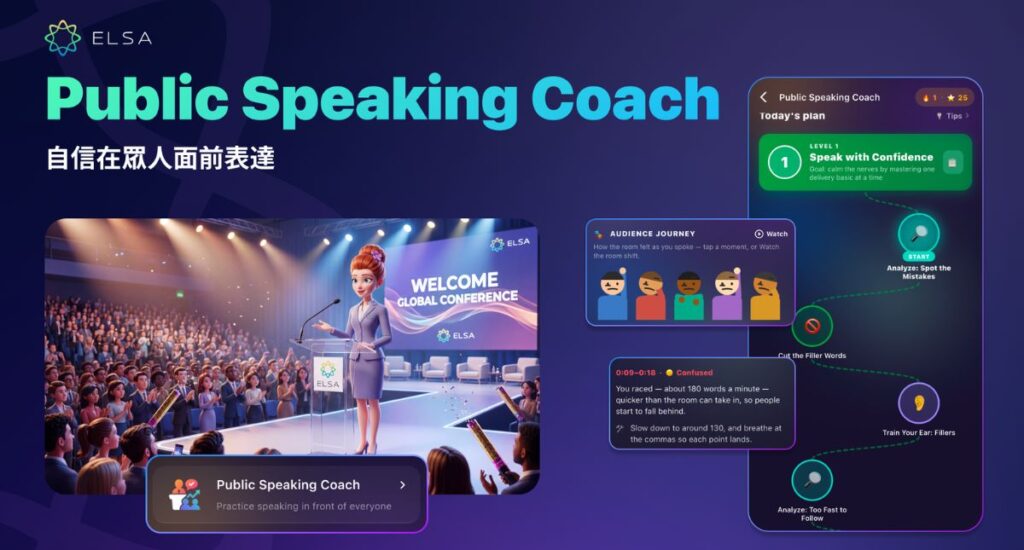
Public Speaking Coach:透過就語音語調、語速節奏以及如何在聽眾面前增強自信提供指導,幫助提升公眾演講與簡報技巧。
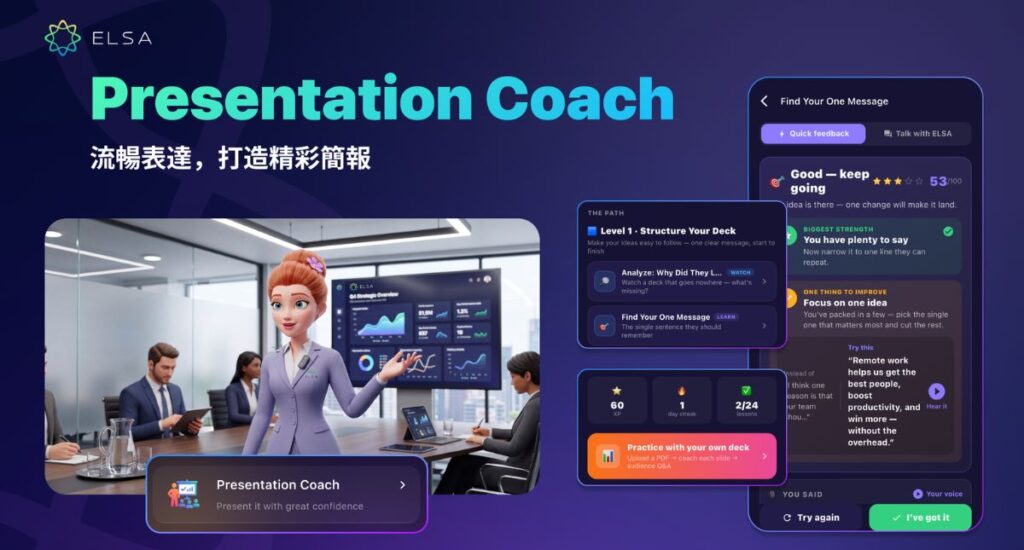
Presentation Coach:專注於簡報架構技巧——從構思令人印象深刻的開場、構建邏輯連貫的論點,到發表極具說服力的結語——有助於確保專案報告和提案想法更加順暢。
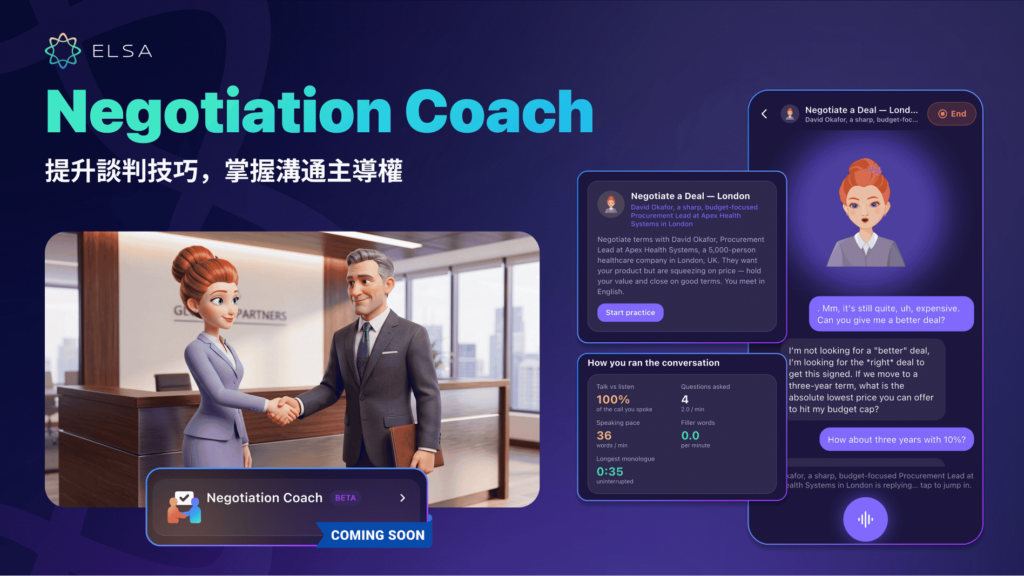
即將推出 – Negotiation Coach: ELSA Speak 正在開發的新功能,旨在幫助學習者熟悉常見的談判情境,例如合約協商、薪資談判或工作條件協商。透過這項功能,你可以練習如何進行反駁、表達自己的觀點,並根據不同情境提出合適的方案。
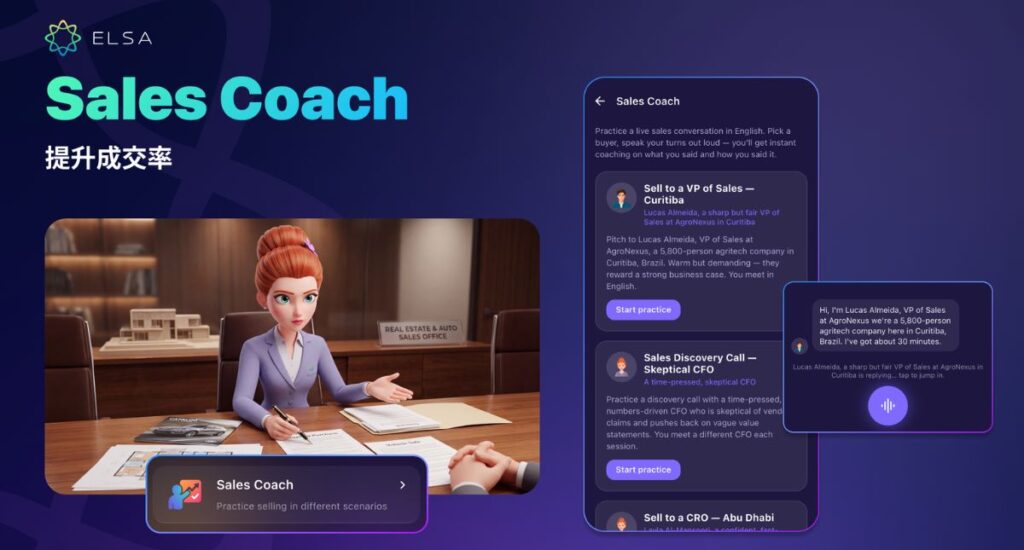
Sales Coach:練習介紹產品與服務,並熟練地應對客戶的異議或拒絕,從而提高銷售成交率。
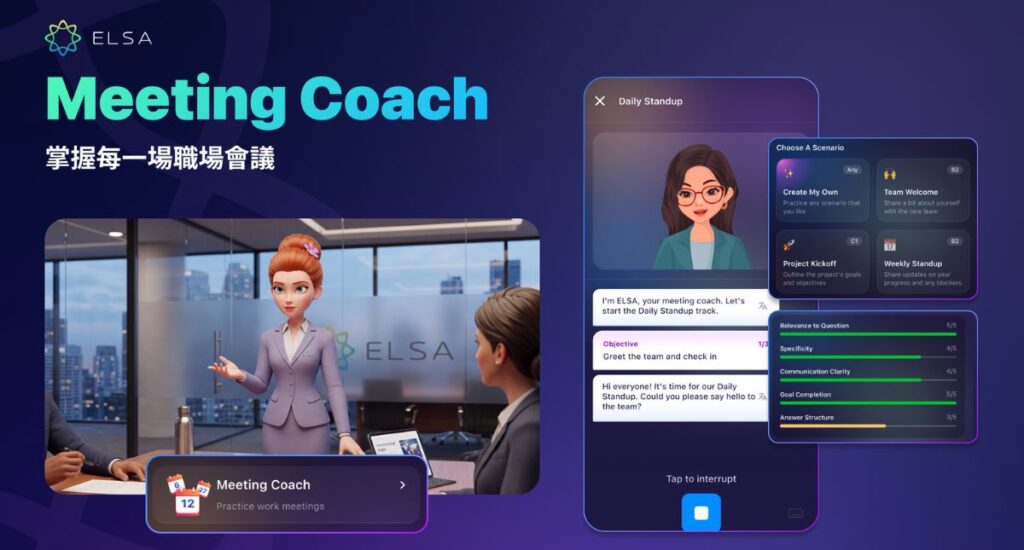
Meeting Coach:針對內部會議或與外國合作夥伴的會議做好充分準備,能讓上班族有效地通報工作進展、提出切中要點的疑問,並自信地分享自己的見解。
使用者需注意,Professional Coach 組內的各項功能不單獨出售。學員必須购买完整方案,方可無限使用所有這些智慧 AI 教練。
即將推出:Meeting Companion-全新突破性功能
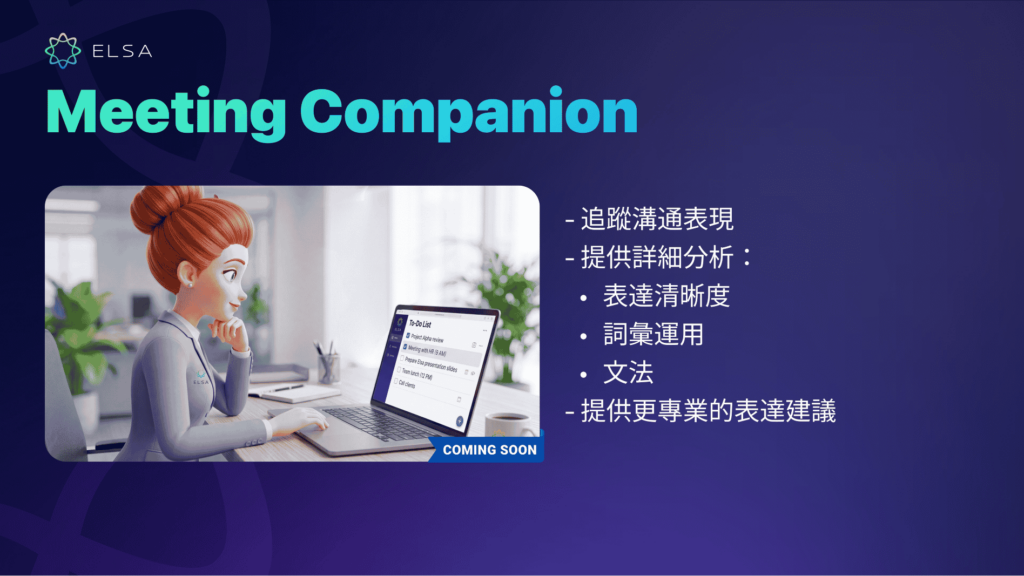
Meeting Companion 是 ELSA Speak 即將推出的新功能,旨在幫助學習者在會議以及跨國企業的實際英語溝通情境中更加自信。
透過科技助理在實際會議中的即時支援,幫助你徹底消除與國際同事直接互動時的緊張與不安。
完整享有 ELSA Premium 的無限使用權益
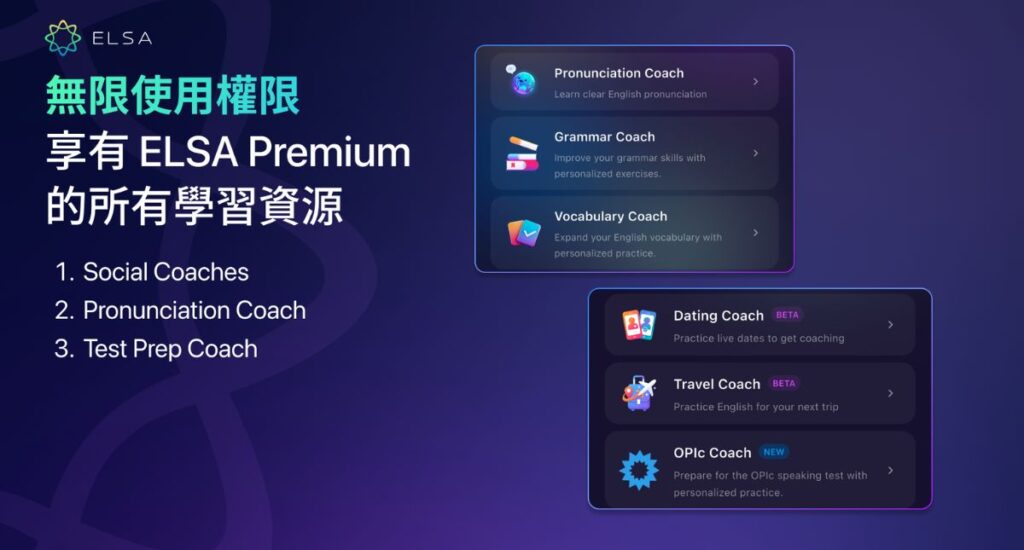
除了針對職場場景的專業功能外,學習者仍可存取上一版本中涵蓋廣泛基礎知識的學習資源庫。購買此高級方案,你將能夠無限享受 ELSA Premium 包含的所有學習資源。
這種完美的結合確保學習者既能紮實鞏固語言基本功,又能持續磨練商務英語能力,從而為實現長期的職業目標提供有力支持。
ELSA Professional 和 ELSA Premium 有什麽區別?
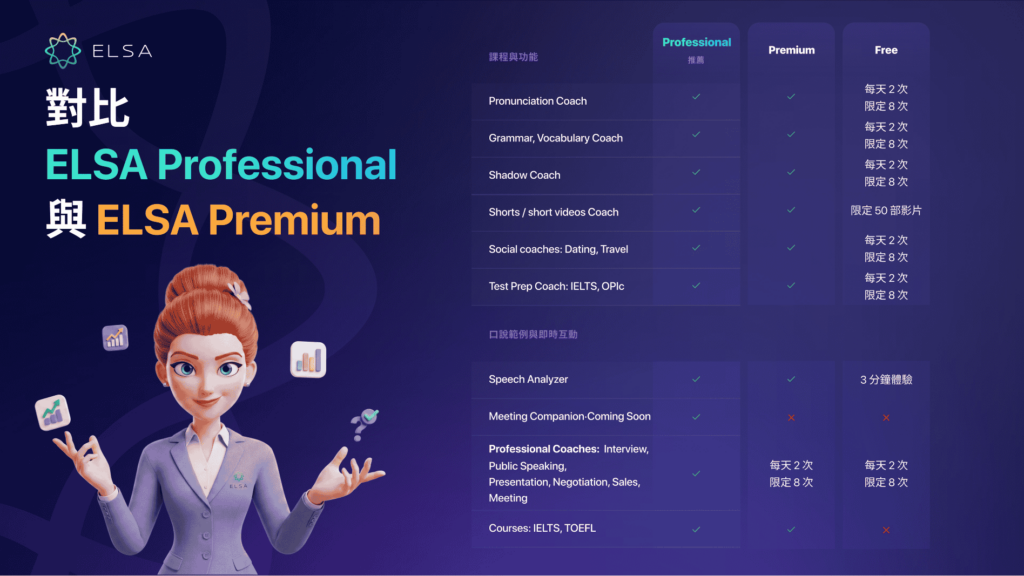
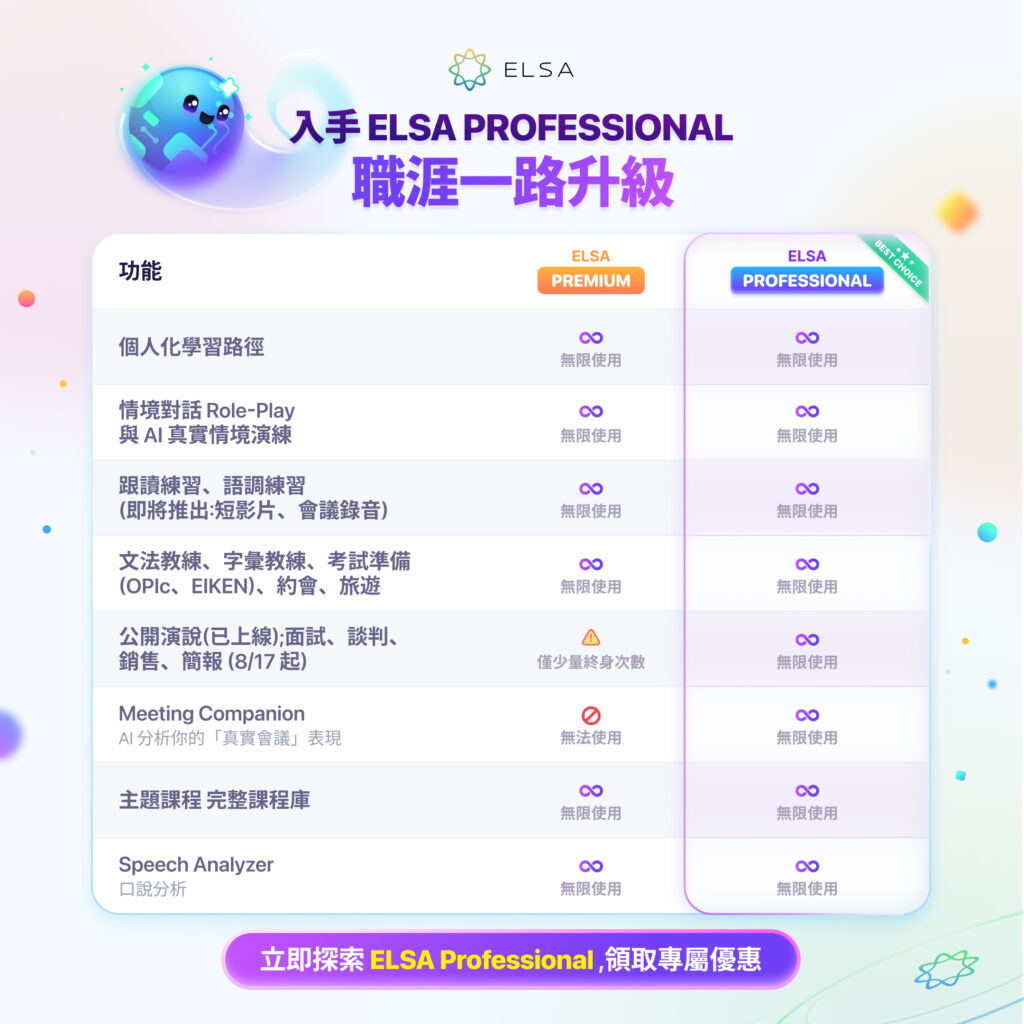
ELSA Premium 適合希望在練習日常英語溝通的同時,全面提升發音、詞彙與文法能力的使用者。除了涵蓋 Premium 版本的完整學習權益外,ELSA Professional 更進一步結合專為職場情境設計的高階模擬功能,幫助使用者為面試、簡報等重要職場溝通做好準備。
ELSA Premium 與 ELSA Professional 比較表
| 功能 | ELSA Premium | ELSA Professional |
|---|---|---|
| 個人化學習路徑 | ♾️ 無限使用 | ♾️ 無限使用 |
| AI 情境角色扮演對話 | ♾️ 無限使用 | ♾️ 無限使用 |
| Shadowing、Short Videos | ♾️ 無限使用 | ♾️ 無限使用 |
| Grammar Coach、Vocabulary Coach、考試練習(OPIc、EIKEN)、Dating、Travel | ♾️ 無限使用 | ♾️ 無限使用 |
| Public Speaking、Interview、Negotiation、Sales、Presentation | ⚠️ 使用受限 | ♾️ 無限使用 |
| Meeting Companion AI 分析您的真實會議 | 🚫 無法使用 | ♾️ 無限使用 |
| 完整課程內容 | ♾️ 無限使用 | ♾️ 無限使用 |
| Speech Analyzer 語音分析 | ♾️ 無限使用 | ♾️ 無限使用 |
如果你的主要目標只是提升日常英語溝通能力或備考各類英語檢定,那麼 ELSA Premium 是一個合適的選擇;反之,如果你的工作需要你具備面試、商務談判、演講或主持專業國際會議等方面的高階技能,則應選擇 ELSA Professional 方案。
適合 ELSA Professional 的目標學員
無論你的身分、工作領域或具體職業目標為何,都能從這項高級學習方案中獲得實際的價值。此學習方案經過專門優化,旨在滿足以下方面的實際溝通需求:
- 正在準備求職面試的人
- 在國際環境中工作的人員
- 經常參加會議並演講的人
- 銷售與諮詢人員
- 負責商務談判的人員
- 即將畢業、準備進入職場的大學生
在職涯發展方面,你應該選擇 ELSA Premium 還是 ELSA Professional?
仔細權衡當前需求與未來的職涯發展目標,將有助於你做出更適合自己的選擇,既符合預算又契合個人技能發展計畫的方案。你可以參考下方的建議標準表:
請選擇 ELSA Premium 方案若你:
請選擇 ELSA Professional 方案若你:
- 為一場重要的英語求職面試做準備。
- 參加國際線上會議時,經常感到有壓力。
- 在多人面前發言或進行專案簡報時,培養自信的舉止是必要的。
- 直接從事銷售、合約談判或與外國合作夥伴的關係維護工作。
- 全面、無限制地使用 Professional Coach 系統和智慧助理 Meeting Companion。
ELSA PROFESSIONAL
專為職場人士打造的職場英文學習方案
原價:5,890 元
優惠價:3,355 元
限時省 49%
常見問題
這個學習方案包含Premium 版本的學習權益嗎?
→ 有。訂閱 Professional 方案後,學員不僅能取得 Premium 版本所提供的全套無限學習資源,還能使用職場場景的進階模擬工具。
Coach 可以單獨購買嗎?
→ 不可以。面試教練屬於獨家 Professional Coach 解決方案套件的一部分,不單獨出售。學員必須擁有 Professional 方案,方可充分使用此工具。
這個新學習方案適合那些尚未開始工作的學生嗎?
→ 非常適合。尤其是對於那些正準備實習或求職面試的大四學生,或是需要在大學期間磨練在多人面前用英語演講與展示技巧的學生。
參加國際認證考試的學生應該選擇這個方案嗎?
→ 可以。Professional 版的使用者可以完全存取系統內針對雅思(IELTS)和托福(TOEFL)等知名國際認證考試的練習資料庫。
對於任何渴望自信展現實力並拓展全球職涯發展的人士而言,ELSA Professional 確實是一項真正值得的長期投資。ELSA Speak 陪你升級英語,立即註冊或升級至 ELSA Professional 學習方案,為未來的晉升機會做好準備,拓展未來的職涯發展機會!
Meeting Coach 是一套運用人工智慧打造的 AI 英文會議訓練工具,專為職場人士設計,協助練習即時溝通與應對能力、表達意見,以及在職場情境中有效參與討論。系統能真實模擬多種會議情境,提供即時錯誤修正,並深入評估會議溝通技巧與英語能力。跟著 ELSA Speak 一起認識 Meeting Coach,為每一場國際會議做好準備。
📌 Key Takeaways
- 3 種練習模式包括 Guided Practice、Semi-Guided 和 Freeform Meeting,依照不同程度提供適合的練習方式。
- 雙重評分系統在同一場練習中同時評估 Meeting Skill 與 Language Skill。
- Tap to Interrupt 可主動中斷 AI,模擬會議中的自然互動情境。
- 即時文法錯誤修正幫助學習者在溝通過程中即時發現並修正錯誤。
- Power Phrase 提供實用表達方式,幫助學習者更專業、自信地表達意見。
Meeting Coach 是什麼?
Meeting Coach 是 ELSA Professional 方案中的 AI 職場會議模擬功能。學習者可以透過雙向語音,直接與虛擬同事對話、更新工作進度,並練習回應或反駁不同意見。
使用者可從有句型提示的基礎模式一路練習到進階的自由對話模式。系統會同步評估會議參與與主持能力,以及英文發音與語言表達表現,幫助職場人士將所學實際應用在職場溝通中。
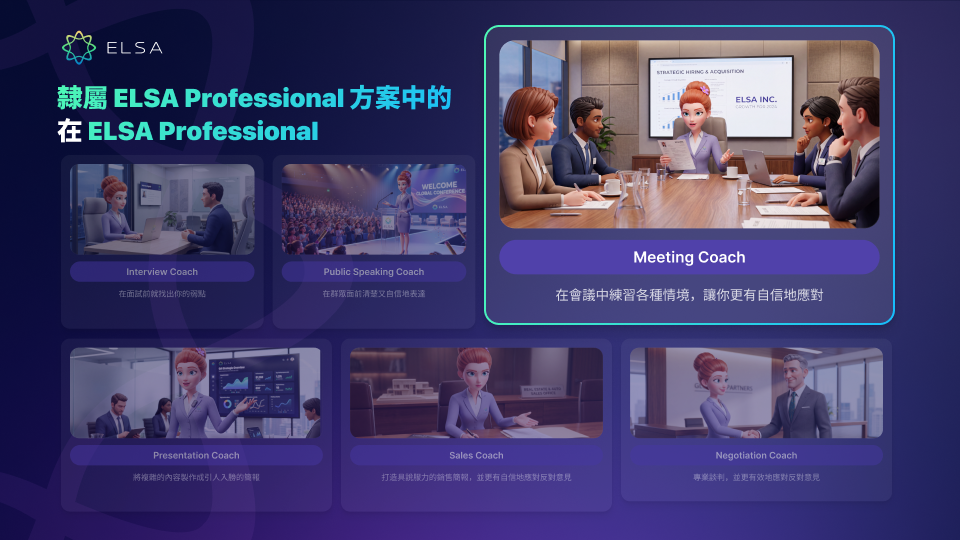
使用 AI 練習會議的好處
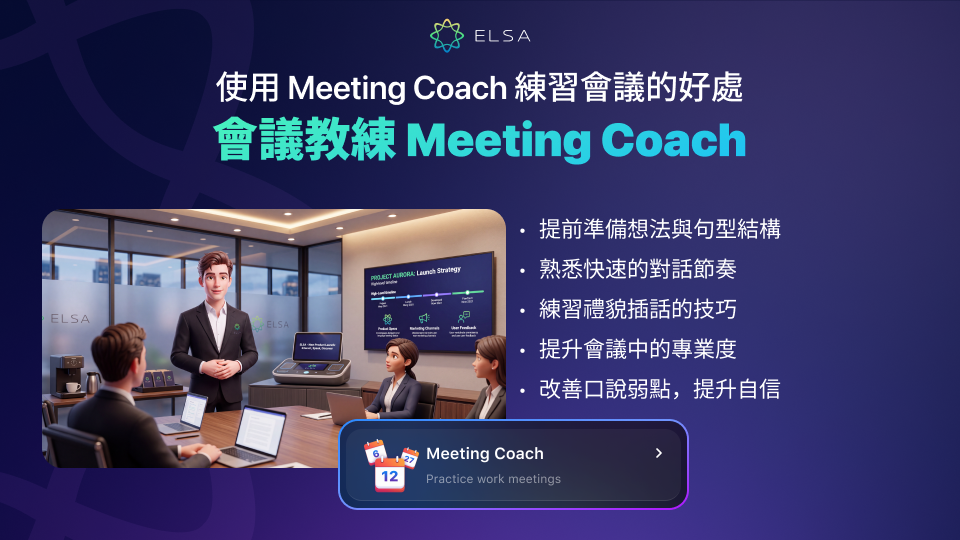
透過 AI 練習,能快速提升語言反應速度與職場溝通表現,對職場人士帶來多項實際效益:
- 事先準備想法與句型架構:幫助整理內容架構與實用句型,進入真實會議時更有把握。
- 熟悉快速的對話節奏:提升聽力反應,並練習面對同事突如其來的問題時靈活應對。
- 練習禮貌插話技巧:熟悉如何在適當時機自然地加入對話、掌握發言時機,同時維持專業態度。
- 提升會議中的專業感:透過正式職場用語與實用句型,讓表達更符合商務情境。
- 找出溝通弱點、建立自信:在低壓力的練習環境中,辨識並改善發音或文法問題。
Meeting Coach 如何運作?
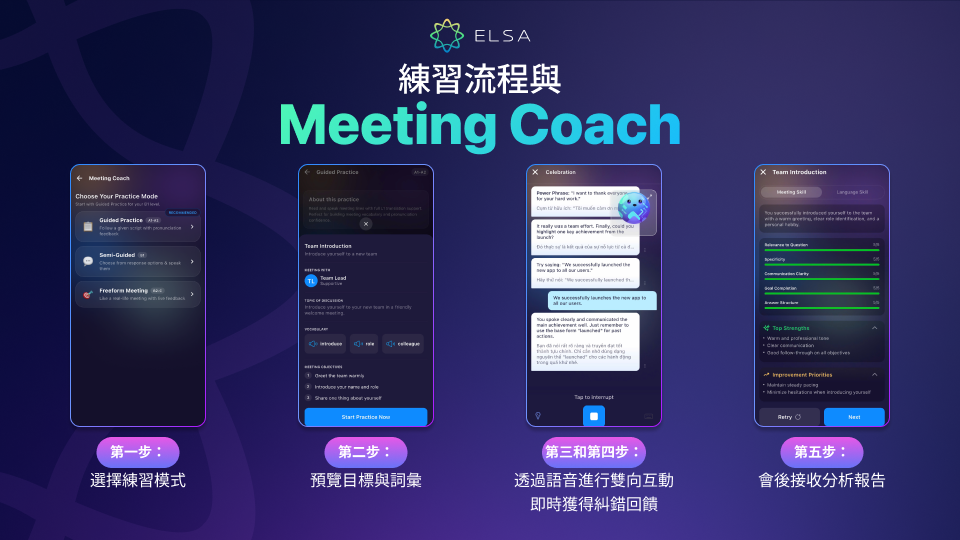
訓練流程設計簡潔,盡可能還原全球企業的真實會議情境。每個練習回合依序進行以下步驟:
- 選擇練習模式:從三種難度中選擇最符合目前能力的模式,讓你以自然、無壓力地開始練習。
- 預覽目標與單字:系統會顯示 AI 同事的角色與背景資訊、重點單字,以及本次會議的 3 個目標,方便在開啟麥克風前先整理想法。
- 進行雙向語音互動:直接透過麥克風發言,完成畫面上的討論目標;AI 會即時聆聽並依你的內容持續回應。
- 即時接收錯誤修正:AI 會分析文法錯誤或不夠正式的用語,讓你立即看出問題並調整說法。
- 取得會後分析報告:結果頁會整合 Meeting Skill 與 Language Skill 兩大類指標,清楚呈現優勢與優先改善項目。
Meeting Coach 適合哪些人?
這項進階會議訓練技術適合多種國際職場角色,尤其能為以下族群帶來明顯價值:
- 跨國企業員工
- 主管與團隊領導者
- 技術專業人員
- 不敢主動發言,或不熟悉如何自然插話的人
- 希望提升會議反應速度與溝通能力的人
Meeting Coach 的功能
整套功能涵蓋會議前準備、即時互動到會後分析,核心目標是提升實戰反應與英文溝通能力。
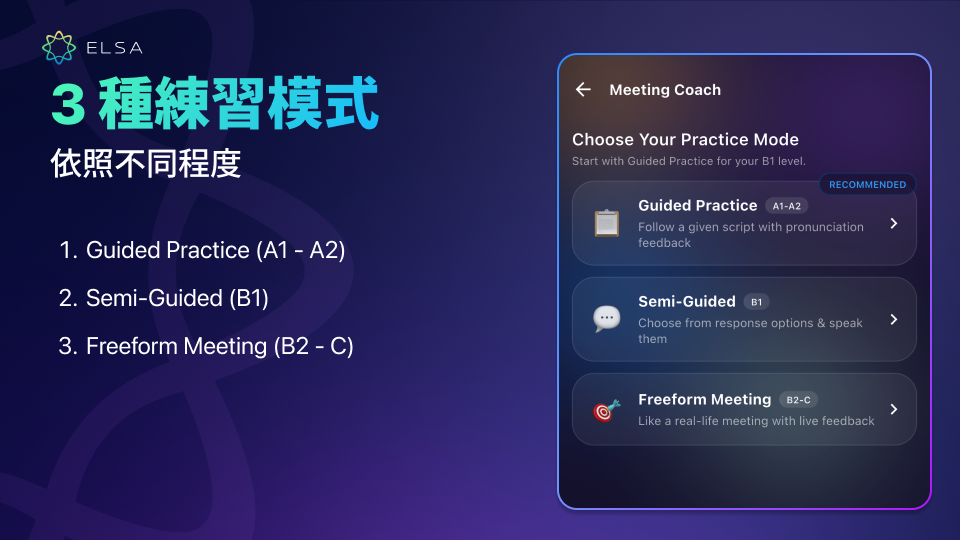
依程度設計的 3 種練習模式
三個訓練等級依學習者能力分層設計,並可隨著進步彈性切換:
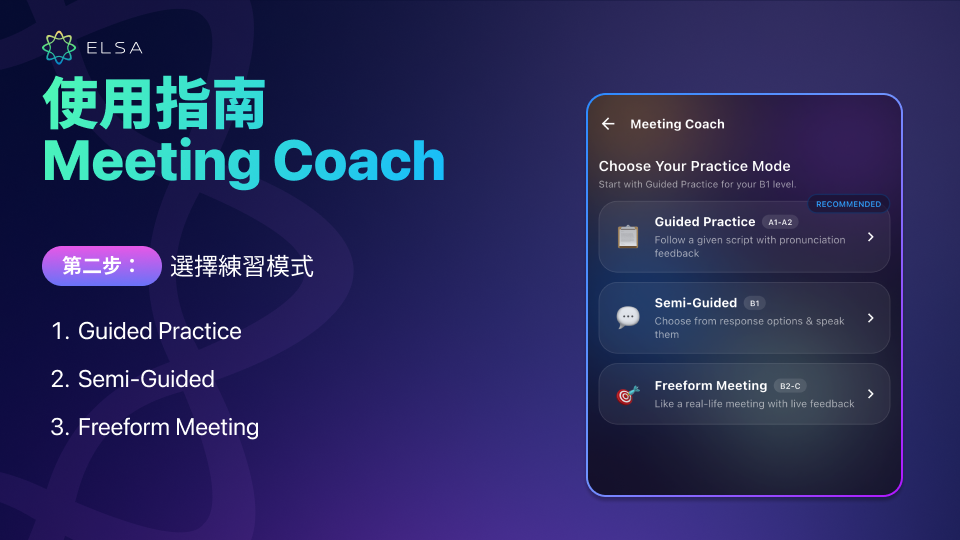
- Guided Practice(A1 – A2):依照現成範例腳本練習口說,並提供中文文翻譯輔助。適合初學者累積單字並建立發音信心。
- Semi-Guided(B1):從系統提供的選項中挑選適合的回答,再大聲說出來。能同時熟悉自然表達方式與練習判斷合適的回答方式。
- Freeform Meeting(B2 – C):完全開放式的真實會議模擬,沒有腳本也沒有標準答案。AI 會依照實際回答即時回應,提供更高強度的臨場反應挑戰。
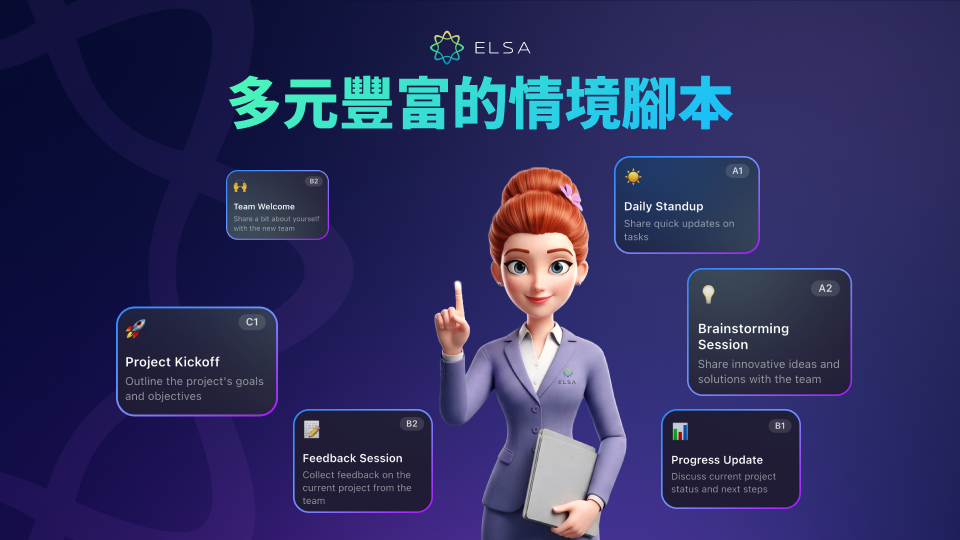
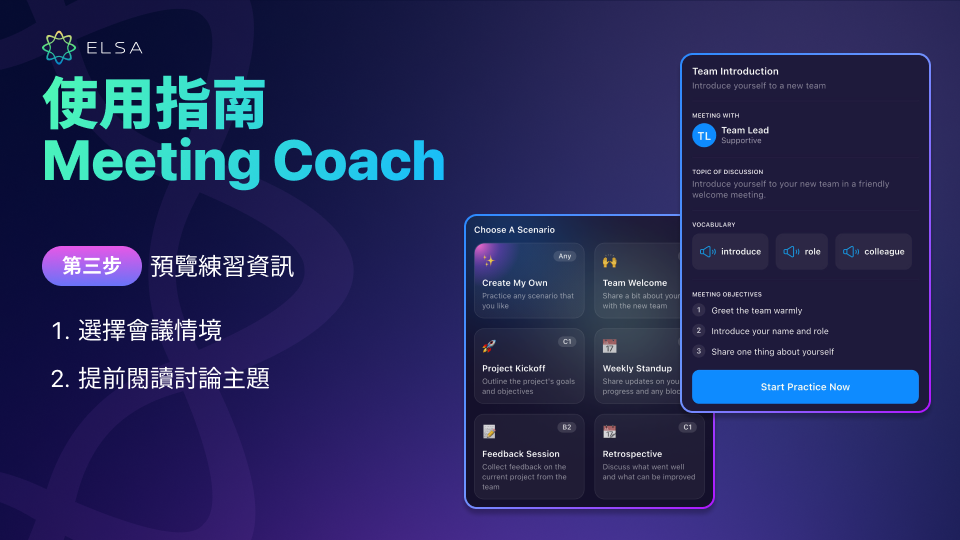
多元職場會議情境資料庫
練習庫涵蓋現代職場所常見的大多數溝通情境,讓你能為不同類型的會議做好準備:
- Team Introduction / Team Welcome:加入新團隊時介紹自己、職稱與個人興趣,練習建立良好第一印象並快速融入團隊。
- Daily Standup / Weekly Standup:快速更新已完成的工作、接下來的任務與遇到的障礙,非常適合採用敏捷工作方式的團隊。
- Project Kickoff:向團隊說明新專案的目標、期待與重要里程碑,從一開始就建立清楚一致的行動方向。
- Brainstorming Session:提出新想法並與團隊討論解決方案,強化論述能力與批判性思考。
- Progress Update / Weekly Sync:向主管完整回報工作進度並討論下一步,練習清楚呈現資訊與專業判斷。
- Feedback Session:以建設性的方式蒐集並交換專案回饋,學習正向聆聽與有技巧地提供意見。
- Retrospective:專案完成後回顧做得好的地方與可優化之處,練習整理經驗並整理可應用於未來工作的經驗。
- Celebration:主持慶祝成果、肯定團隊貢獻的會議,練習傳遞正向能量與鼓舞團隊士氣。
- Create My Own:依個人實際需求自行設定會議主題與情境,特別適合為即將到來的重要會議做準備。
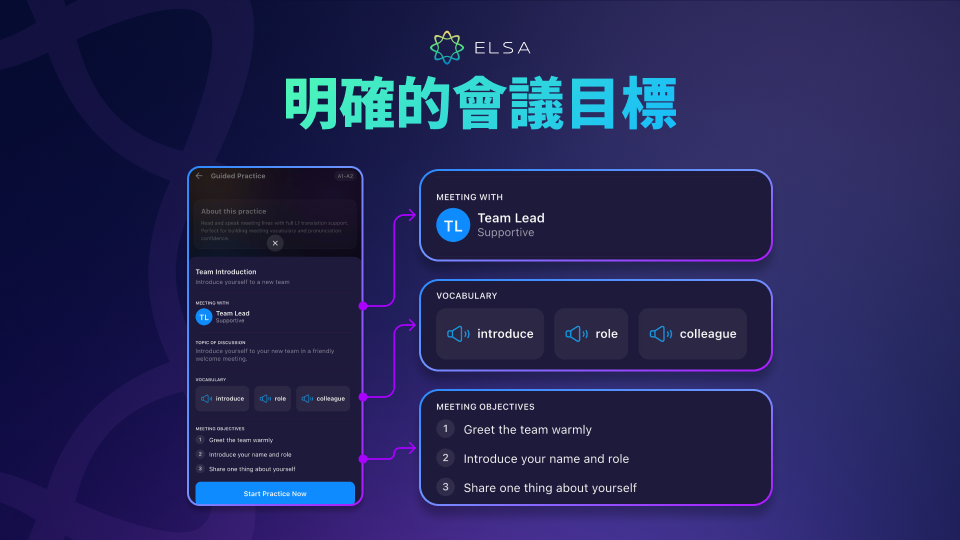
設定會議目標與智慧句型提示
準備階段會先協助學習者掌握溝通方向,再開啟麥克風,因此與 AI 對話時不容易陷入被動。
| 項目 | 簡短說明 | 範例 |
|---|---|---|
| Meeting With | 設定 AI 對話角色與個性,方便依對象調整溝通方式。 | 具有 Supportive 個性的 Team Lead |
| Vocabulary | 進入會議前提供關鍵單字清單與標準發音示範。 | Milestone, bottleneck, action item, deadline |
| Meeting Objectives | 設定必須完成的具體討論目標,並即時追蹤進度。 | 1/3 – Greet the team warmly 2/3 – Introduce your name and role 3/3 – Share one thing about yourself |
| Power Phrase & Try Saying | 當你一時想不到怎麼說時,在畫面上提供實用句型與更自然的表達方式。 | I would like to quickly update on… Could I jump in with a quick question? |
| 英文 – 中文雙語支援 | 翻譯 AI 的完整對話與回饋,協助學習者順暢理解內容。 | 在 AI 回覆下方開啟中文翻譯 |
互動式對話與即時錯誤修正
即時互動技術打造更有臨場感的溝通環境,並在每一輪對話中快速提供精準協助:
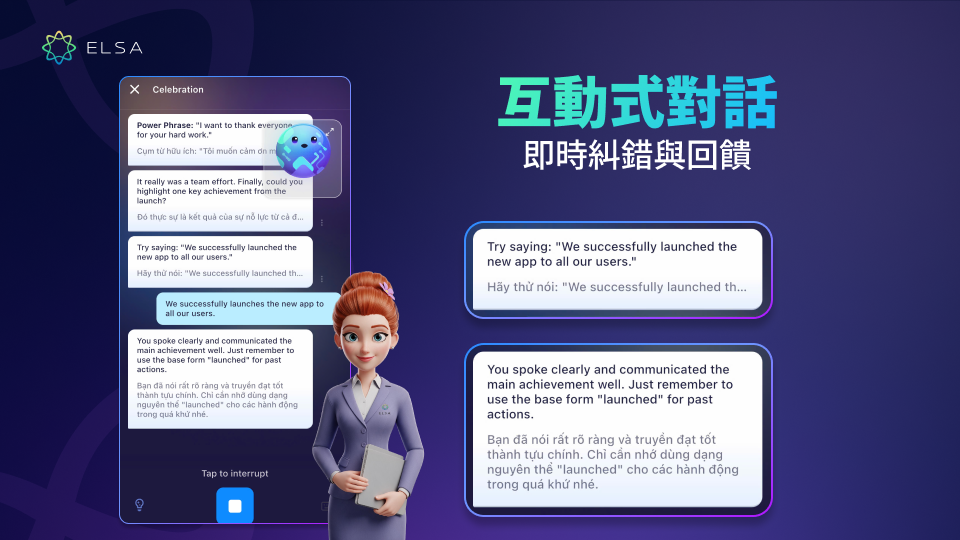
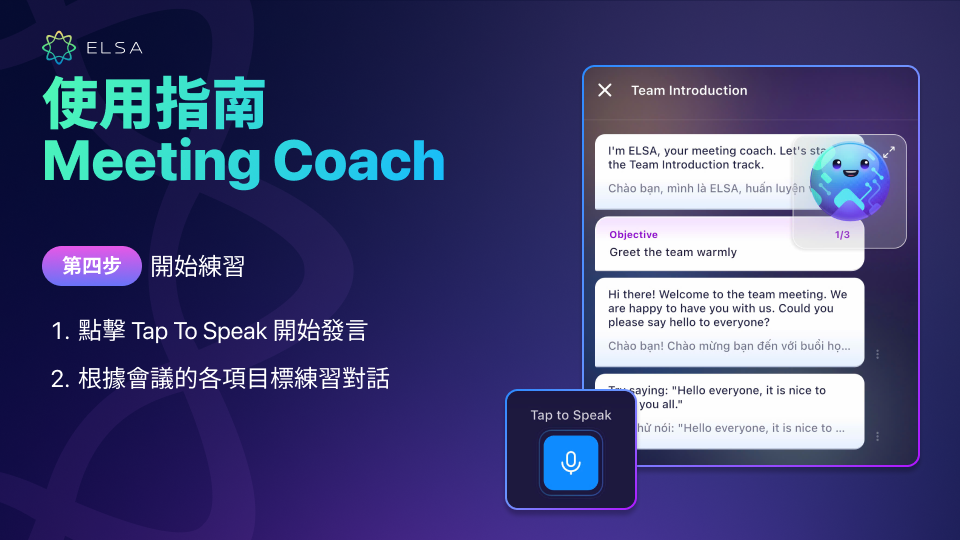
- Tap to Speak:直接透過麥克風回答,也可以隨時切換為鍵盤輸入。語音辨識會立即把你的發音轉成文字。
- Tap to Interrupt:AI 說話時可主動按下中斷,爭取發言或禮貌插話,練習掌握對話節奏。
- 即時錯誤回饋:AI 會立刻分析不夠正式的用語或文法錯誤,幫助你理解錯在哪裡,並在後續對話中立即修正。
深入評估會議技巧(Meeting Skill)
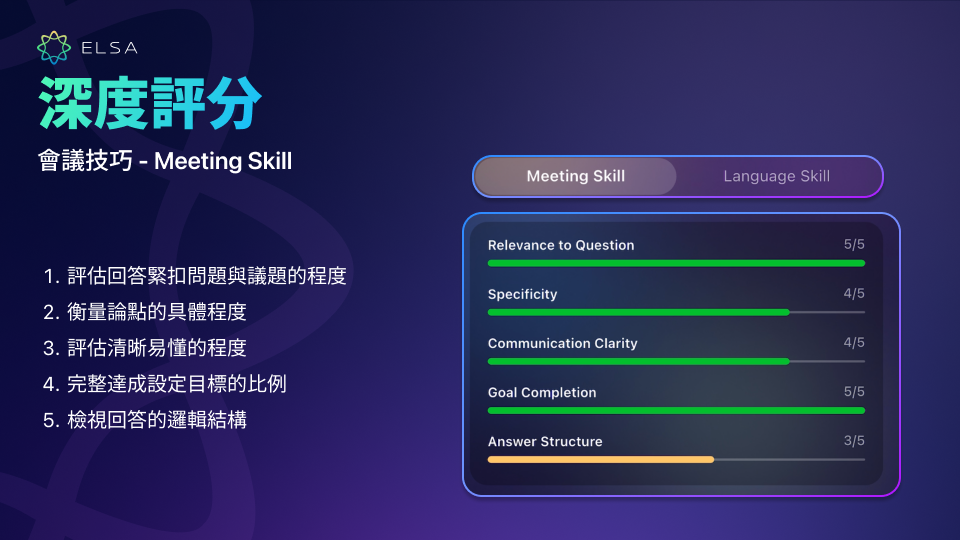
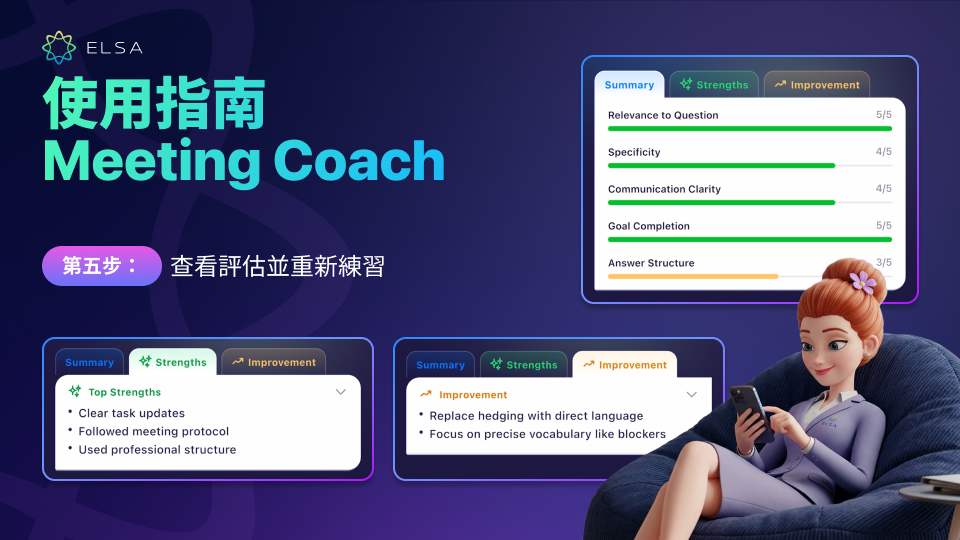
會議互動與溝通能力會透過 5 項專業指標,以最高 5/5 分進行評估,完整反映發言效果:
- Relevance to Question:評估回答是否貼近問題與當前討論主題,反映聆聽理解與回答切中重點的能力。
- Specificity:衡量觀點、例證與數據是否具體。內容越具體、有依據,越能提高說服力。
- Communication Clarity:評估訊息是否清楚、容易理解。條理分明的表達能讓聽眾更快掌握重點。
- Goal Completion:衡量原先設定的會議目標完成比例,反映掌握內容方向與溝通紀律的能力。
- Answer Structure:評估回答是否具有清楚、合乎邏輯的架構。組織完整的發言更能展現專業感。
全面分析英語能力(Language Skill)
每次會議結束後,Radar Chart 會分析 5 項核心語言能力,協助學習者看清楚自己的發音與表達表現:
- Pronunciation:顯示各音節的發音準確度,清楚指出已掌握與仍需加強的部分。
- Vocabulary:評估專業單字的多樣性與使用是否符合情境。使用合適的職場語彙可提升此項表現。
- Fluency:衡量流暢度、說話節奏與停頓或猶豫的頻率。以適中速度連貫表達能讓表達更自然、更有說服力。
- Grammar:評估句型結構與時態使用是否正確,協助明確找出仍需修正的文法問題。
- Intonation:評估語調是否自然,包括高低起伏與句子重音。自然的語調能提升表達力與可信度。
Lesson Score & Level:顯示總分與對應程度,例如 Intermediate 或 Upper Intermediate,方便持續追蹤進步。
優勢與優先改善項目報告
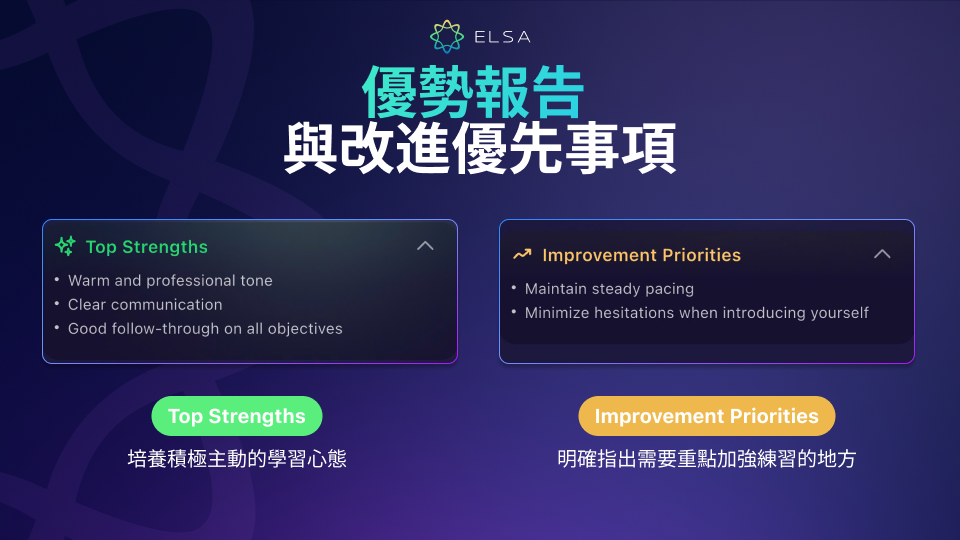
回合結束後的摘要提供客觀觀察與可執行的改善方向,讓你清楚知道該保留哪些優勢,以及下一步要修正什麼:
- Top Strengths:找出具備優勢的溝通風格、具邏輯的發言架構,以及掌握會議目標的能力,強化正向學習動機。
- Improvement Priorities:提供具體建議,例如穩定語速或減少「嗯、呃」等填充語,讓表達更精準俐落、更有影響力。
Meeting Coach 包含在哪個學習方案?
Meeting Coach 是 6 位 AI Coach 之一,不單獨販售,而是完整包含於 ELSA Professional 方案中。此方案協助專業人士與管理者提升溝通能力,在國際職場中拓展更多職涯機會。
ELSA PROFESSIONAL
專為職場人士打造的職場英文學習方案
原價:5,890 元
優惠價:3,355 元
限時省 49%
Meeting Coach 使用方式
只要使用行動裝置,就能快速開始一場 AI 會議練習。你可以隨時隨時隨地進行模擬會議練習,依自己的時間安排練習。
快速操作:
- 開啟 ELSA Speak App > 切換至 Coach 分頁 > 選擇 Professional > 選擇 Meeting Coach
- 選擇練習模式與會議情境 > 點選 Start Practice Now,透過麥克風開始對話
- 在 Meeting Skill 與 Language Skill 分頁查看詳細分析
- 可點選 Retry 立即重練,針對剛發現的問題加強改善
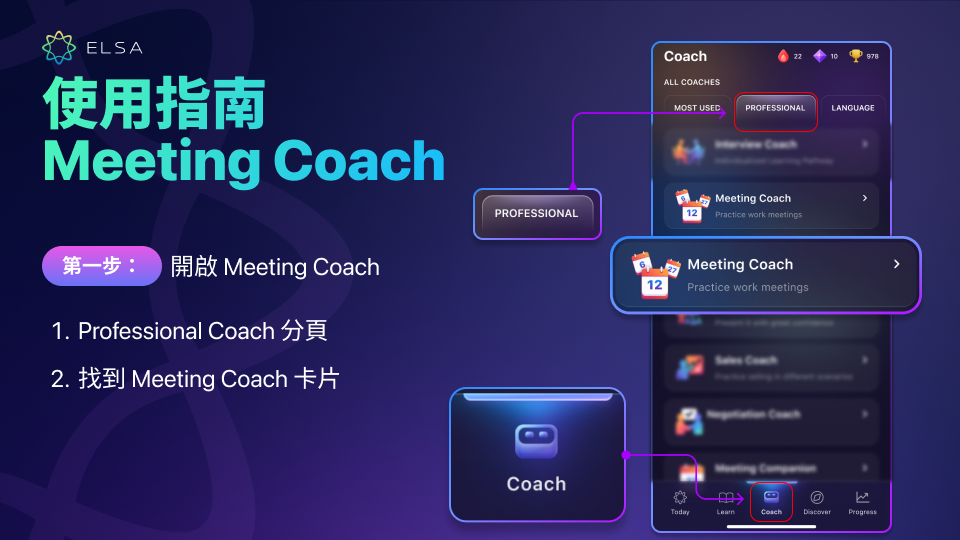
步驟 1:開啟 Meeting Coach
打開 ELSA Speak App,從底部導覽列切換至 Coach 分頁。接著選擇 Professional 類別,再點選 Meeting Coach 卡片即可開始。
步驟 2:選擇練習模式
從以下三種模式中選擇:
- Guided Practice:適合基礎程度(A1 – A2)
- Semi-Guided:適合中級程度(B1)
- Freeform Meeting:適合反應能力較佳的學習者(B2 – C)
如果還不確定自己的程度,可以先從有引導的模式開始,熟悉後再逐步提升難度。
步驟 3:選擇情境並預覽資訊
從現有清單中選擇想練習的情境,例如 Team Introduction、Daily Standup 或 Project Kickoff。接著花幾分鐘閱讀討論主題、聆聽單字發音示範,並記住本次會議的 3 個核心目標。
步驟 4:開始與 AI 對話
點選 Start Practice Now,正式進入與 AI 助理的模擬會議。先聆聽 AI 開場,再按下麥克風圖示,依照提示發言或自由作答。想補充資訊或爭取發言時,可善用 Tap to Interrupt 練習禮貌插話。
步驟 5:查看評估並再次練習
仔細查看分析結果,找出每天可以持續改善的項目。你可以在兩個進階評估分頁之間切換:
- Meeting Skill 分頁:查看 5 項會議能力指標,以及優勢與需要改善的項目。
- Language Skill 分頁:透過 Radar Chart 查看 5 項語言能力分析。
接著可點選 Retry 重新練習同一個情境,針對剛才發現的問題加強練習;或點選 Next 繼續探索新的職場會議情境。
能夠自信掌握英文會議,是建立職場影響力的重要一步。Meeting Coach 提供智慧且無壓力的練習環境,讓你每天都能強化會議溝通能力。立即在 ELSA Speak App 訂閱 ELSA Professional,解鎖完整的進階會議訓練工具。今天準備得越充分,就越能為未來的國際職涯開啟更多可能。
每次英文簡報前,你是否都得熬夜反覆背稿?要怎麼讓內容有條理、抓住重點,還能自信回應現場提問?透過 Presentation Coach,你可以和 AI 一起練習真正能應用於職場的簡報技巧。
📌 Key Takeaways
- 3 個階段的學習路徑,依序訓練講稿架構、投影片設計與現場表達。
- Practice with your own deck 可上傳 PDF,讓 AI 逐頁提供建議,並模擬 Audience Q&A。
- 滿分 100 分的評分系統,從 4 個面向進行評估:Strong Hook、One Clear Message、Clear Arc、Strong Close。
- AI 回饋可協助找出內容、簡報架構與臨場反應上需要改善的地方。
- 真實投影片練習可直接將所學應用於工作中的英文簡報與報告。
Presentation Coach 是什麼?
Presentation Coach 是 ELSA Professional 中的進階 AI 簡報教練。它以國際簡報原則設計一系列短篇課程,從訊息架構、投影片精簡,到實際上台表達,循序帶領學習者建立完整能力。
你也可以直接上傳自己的 PDF 簡報,讓 AI 逐頁提供建議,同時練習簡報與 Audience Q&A。系統會細分評估關鍵簡報能力,幫助職場人士快速優化簡報內容,在面對同事、客戶或合作夥伴時更有自信。
使用 Presentation Coach 練習專案簡報的好處
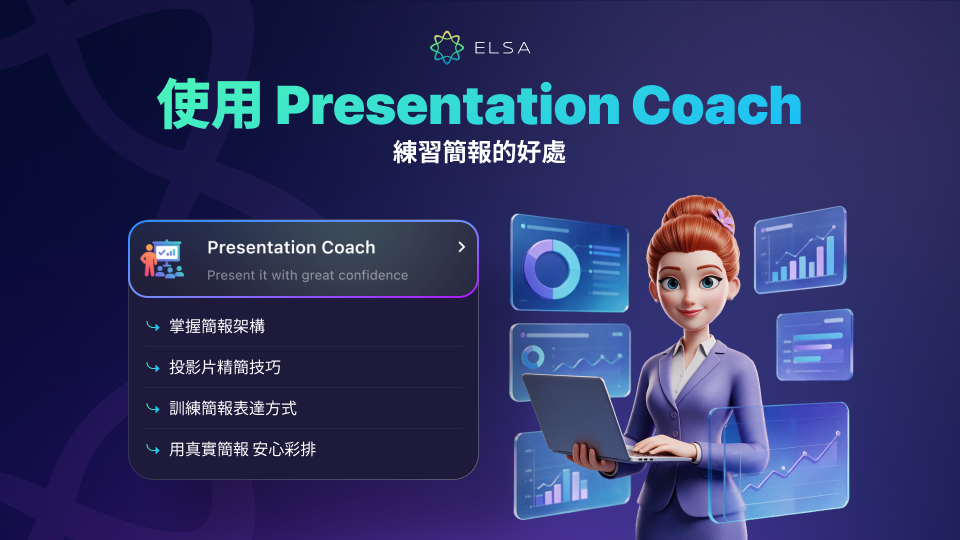
透過 Presentation Coach 練習,能同時改善簡報思維與上台表達的穩定度。主要好處包括:
- 掌握具說服力的簡報架構:運用 Problem → Solution → Ask 邏輯,讓想法更清楚、更有吸引力。
- 學會精簡投影片:把文字過多的投影片轉化成視覺化重點,聚焦真正重要的數據與訊息。
- 培養穩定自然的表達方式:練習投影片之間的銜接、控制語速,並維持自然的表達節奏。
- 用真實簡報安心彩排:可反覆練習實際工作報告,不必承受正式場合的心理壓力。
Presentation Coach 適合誰?
這套進階簡報訓練工具適合需要以英文工作或學習的人、並希望提升表達能力的人,特別適合:
- 經常需要報告、提出想法、計畫或專案的職場人士
- 不容易將內容濃縮成清楚核心訊息的人
- 習慣看著投影片逐字念的人
- 需要準備英文簡報作業的學生
Presentation Coach 功能介紹
Presentation Coach 從內容準備、投影片設計、實際演練到問答,全程支援簡報能力養成,每項功能都著重於培養能實際應用的簡報自信。
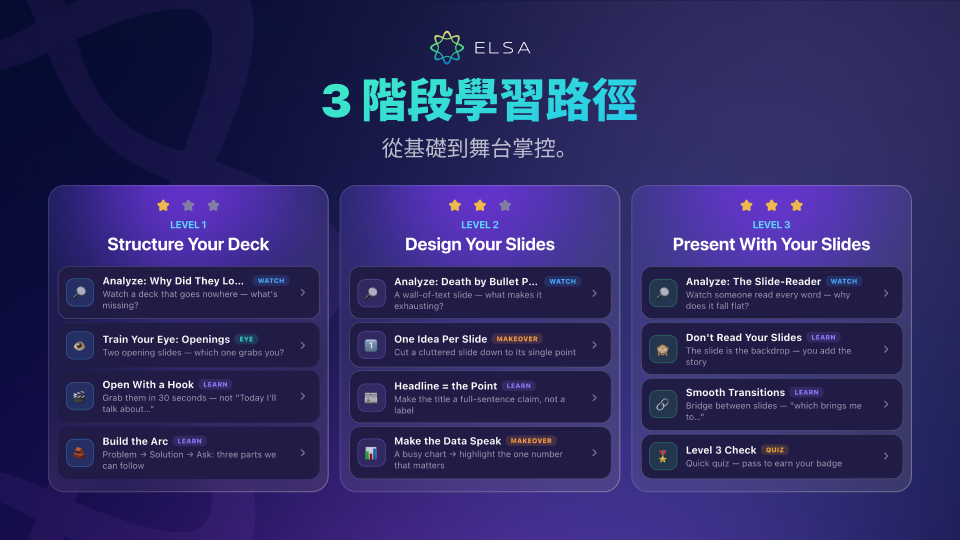
3 個階段的學習路徑:從基礎架構到自信上台
課程分為三個清楚的階段,對應專業簡報者的核心能力,帶領學習者循序建立從簡報架構到語音表達的完整技巧。
| 階段 | 核心目標 | 詳細內容 |
|---|---|---|
| Level 1 – Structure Your Deck | 建立清楚的簡報架構 | 找出 One Message,在 30 秒內用 Hook 抓住觀眾注意力,建立 Problem – Solution – Ask 邏輯,並設計有力的結尾。 |
| Level 2 – Design Your Slides | 建立現代化投影片設計思維 | Kill the Bullets,將標題改成有結論的主張句,並將圖表與數據視覺化。 |
| Level 3 – Present With Your Slides | 培養專業表達技巧 | 練習不照著投影片念,使用 Smooth Transitions,自然控制語速,並維持眼神交流。 |
多元互動式學習方式
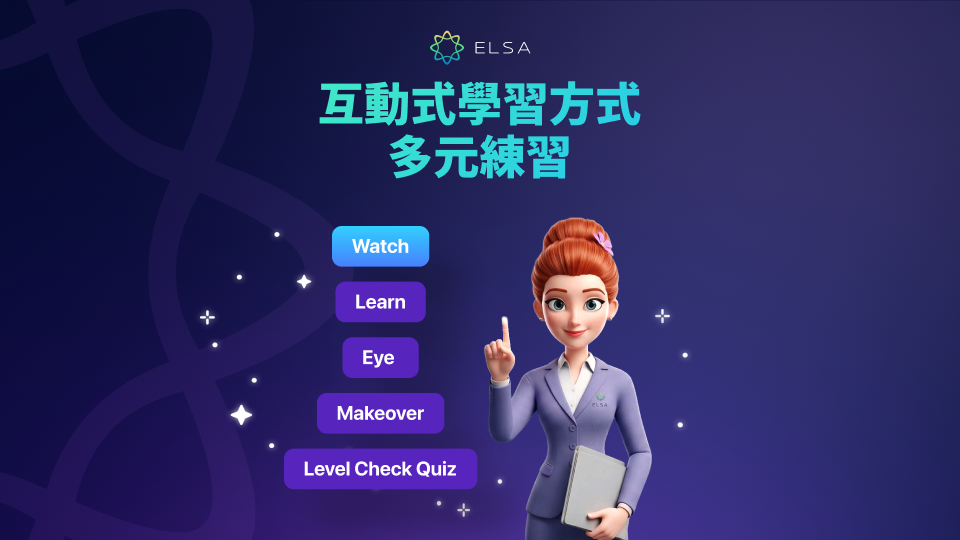
課程不只提供單向理論,而是透過多種互動練習,讓簡報技巧更容易理解並實際應用:
- Watch / Analyze:分析較弱的開場範例,找出觀眾失去注意力的原因。
- Learn:透過 AI 教練學習如何把整場簡報濃縮成一個清楚的核心訊息。
- Eye / Ear Training:比較兩種開場或轉場說法,選出更有效的表達方式。
- Makeover:把凌亂、文字過多的投影片,改成更視覺化、聚焦的版本。
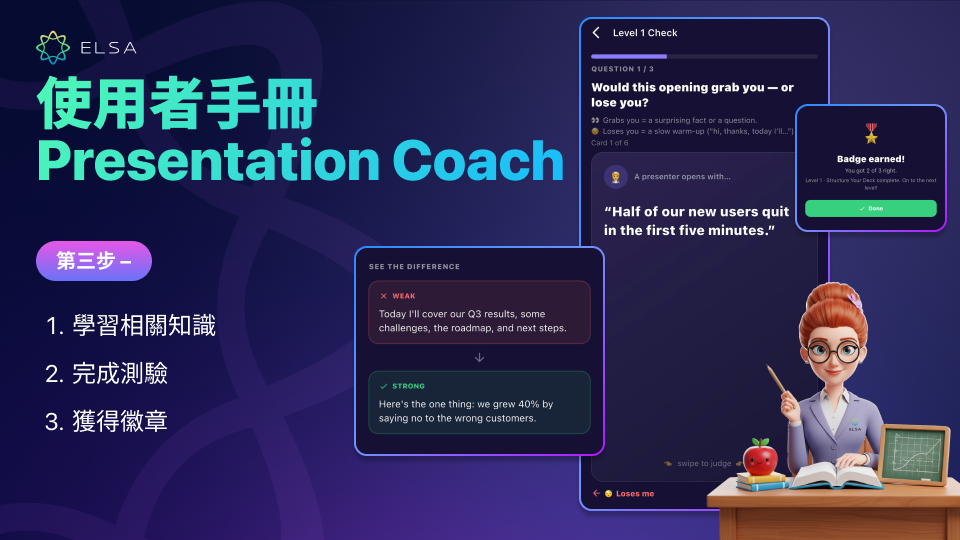
- Level Check Quiz:完成滑卡式測驗與簡報流程排序,取得對應等級徽章。
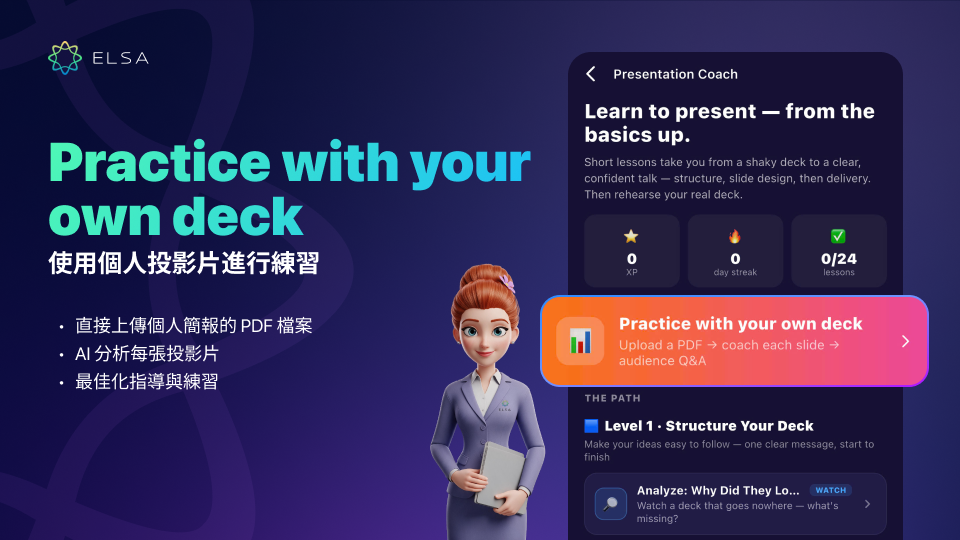
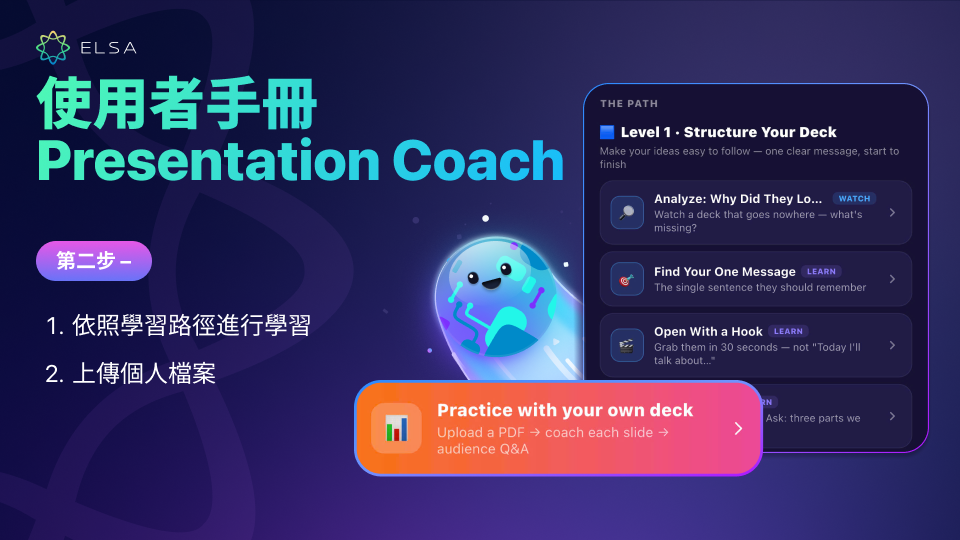
使用自己的投影片練習(Practice with your own deck)
這項功能可以把實際工作資料直接帶進 AI 練習環境,非常適合重要簡報前的準備:
- 可直接在 App 上傳個人簡報 PDF,系統讀取後會逐頁陪你進行練習。
- AI 會分析每一頁投影片,指出做得好的地方、可刪減的內容,並提供建議的說法。完成逐頁演練後,還可以進入 Audience Q&A,回答 AI 模擬的現場提問。
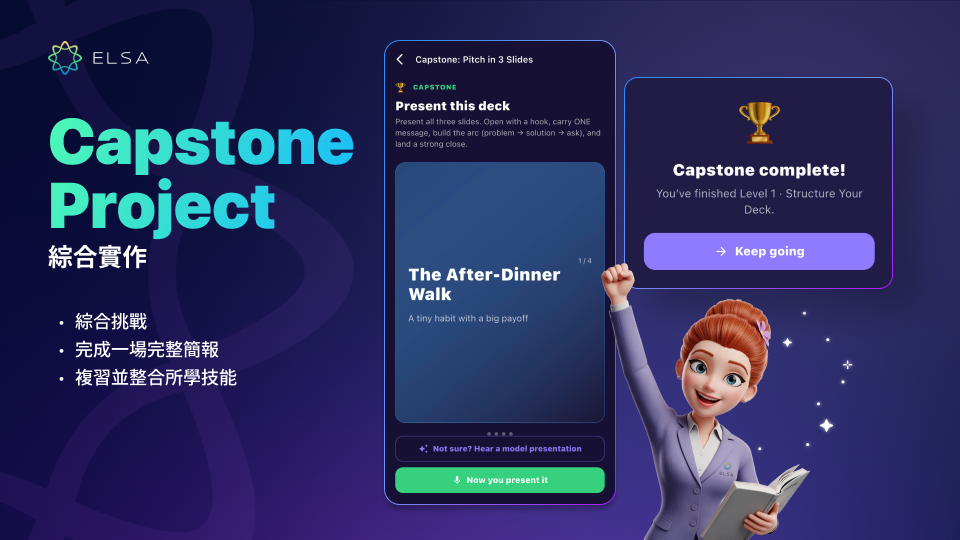
Capstone Project 綜合實作
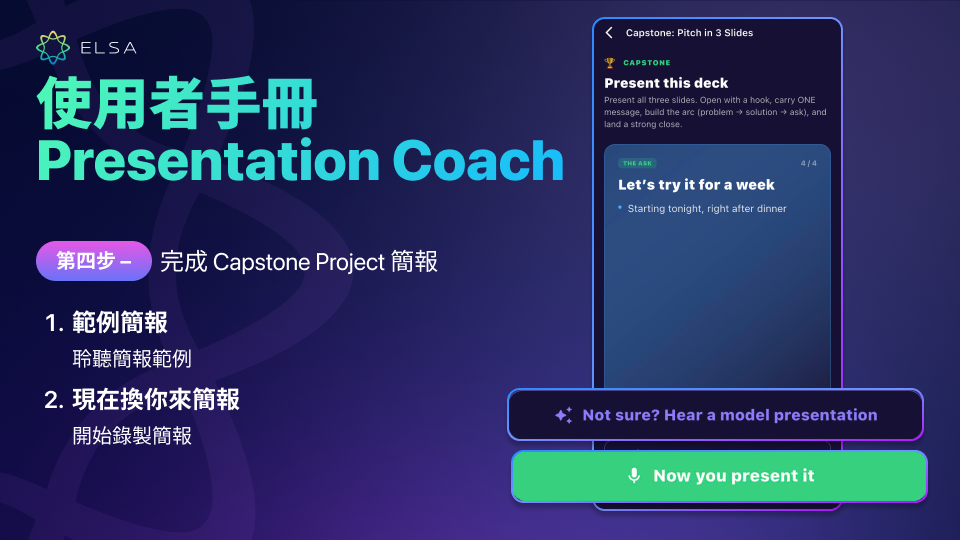
Capstone Project 是整合性練習,用來檢驗一路累積的簡報能力,讓學習者在完成課程前練習一次完整簡報:
- 使用 3 至 4 頁的範例投影片進行完整簡報。正式開口前,可先播放 A model presentation,觀察語音與投影片切換如何配合。
- 準備好後,點擊麥克風即可即時錄製整場簡報。系統會完整記錄說話內容與表達方式,供下一步評分。
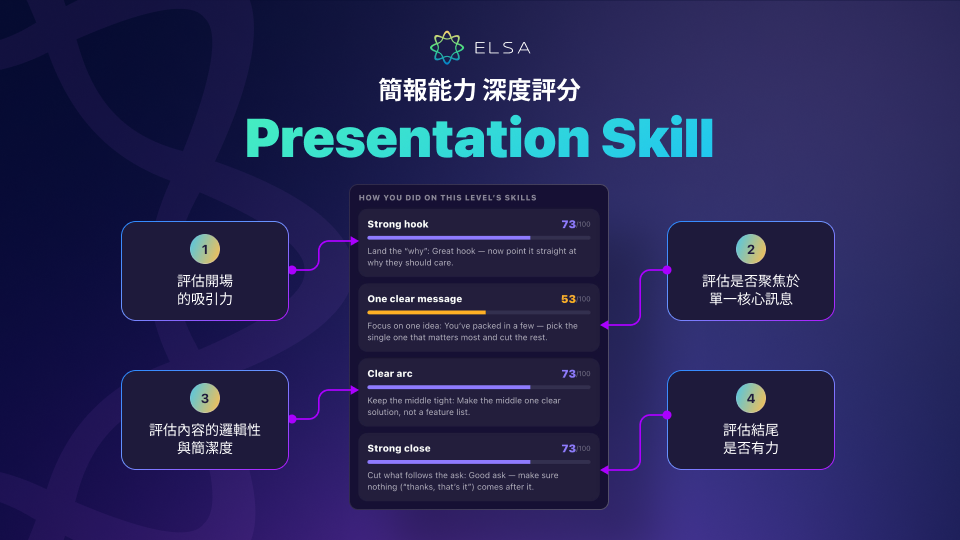
簡報能力深度評分
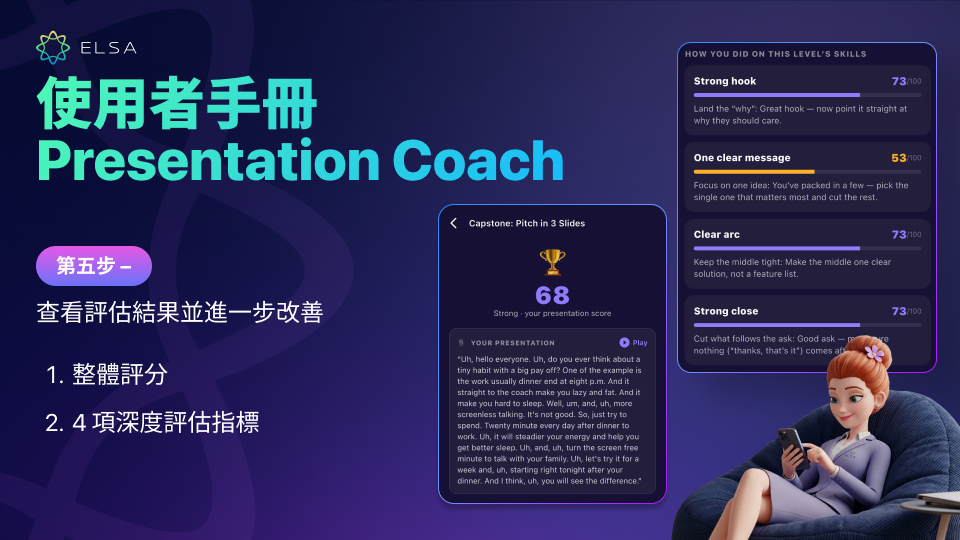
練習完成後的報告會以量化方式呈現表達成果。整體 Presentation Score 搭配 Strong 等能力評級,幫助你了解目前的簡報能力:
| 評分項目 | 最高分 | 評估重點 |
|---|---|---|
| Strong Hook | 100 分 | 評估開場是否足夠吸引人,以及是否讓觀眾知道為什麼值得關注這個主題。 |
| One Clear Message | 100 分 | 是否能聚焦於一個核心訊息,並刪除多餘論點。 |
| Clear Arc | 100 分 | 內容是否依照 Problem – Solution – Ask 呈現清楚、精簡且合理的脈絡。 |
| Strong Close | 100 分 | 結尾是否明確且有力,並提出清楚的 Call to Action。 |
系統同時提供完整 Transcript 與音訊回放功能。你可以一邊重聽自己的表達,一邊對照 AI 回饋,更精準地找出需要調整的地方。
Presentation Coach 包含在哪個方案?
Presentation Coach 完整包含在 ELSA Professional 的 Professional Coach 進階工具中,目前不單獨販售。若要使用完整功能,需要升級至 ELSA Professional。
ELSA PROFESSIONAL
專為職場人士打造的職場英文學習方案
原價:5,890 元
優惠價:3,355 元
限時省 49%
Presentation Coach 使用方式
在手機 App 上即可快速開始 AI 簡報訓練。你可以依照規劃好的課程路徑學習,也可以直接用自己的投影片進行彩排。
快速操作開啟:
- 開啟 ELSA Speak > Coach > Professional > Presentation Coach
- 選擇 The Path,或點選 Practice with your own deck 上傳 PDF
- 點選 Now you present it,使用麥克風錄製簡報
- 查看 4 項評分結果,再點選 Present again 繼續練習
步驟 1:開啟 Presentation Coach
打開 ELSA Speak,在底部導覽列選擇 Coach,接著進入 Professional 並點選 Presentation Coach。
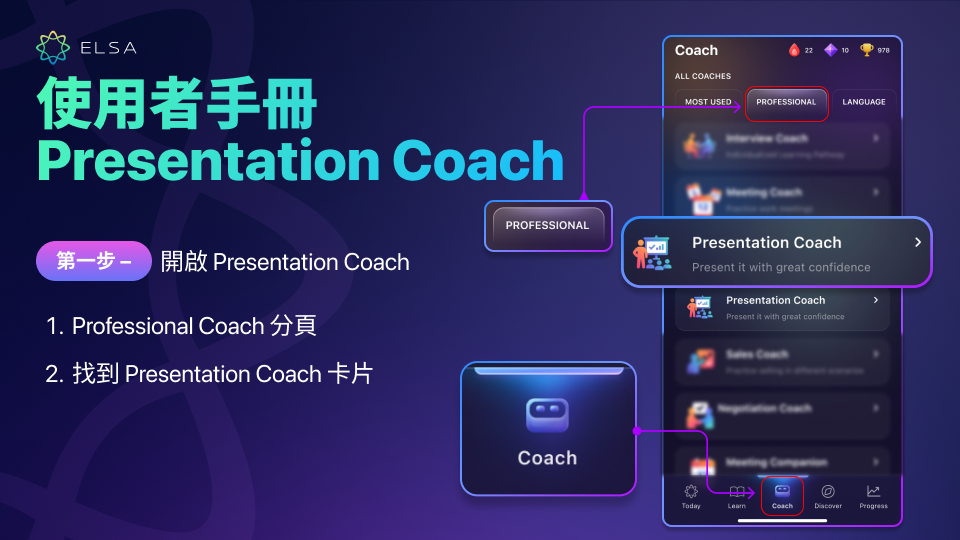
步驟 2:選擇學習路徑或上傳自己的投影片
若要從基礎完整建立能力,可選擇 The Path,依序完成 Level 1 到 Level 3。
若即將進行真實簡報,可直接點選 Practice with your own deck,上傳 PDF 簡報。
步驟 3:完成課程與 Level Check
依序進行影片分析、聆聽練習、轉場句選擇與 Makeover 等活動,學習如何改善文字過多的投影片。完成課程後,通過 Level Check Quiz 即可獲得對應的等級徽章。
步驟 4:進行 Capstone 或投影片彩排
可先播放 A model presentation,參考停頓、節奏與語調。接著點選 Now you present it 開始錄音,並接著進入 Audience Q&A,回答 AI 模擬的提問。
步驟 5:查看回饋並持續優化
查看總分與 4 個評分面向的詳細建議,之後點選 Present again 重新練習,直到內容與表達達到理想狀態。
你不必再靠逐字背稿,也不必在主管、客戶或合作夥伴面前因緊張而反覆停頓。Presentation Coach 不只是讓你少看投影片,更能幫助你建立清楚的邏輯,並用更有自信地表達。
把每一次簡報或專案報告,都變成展現專業價值與推進職涯的機會。立即在 ELSA Speak App 訂閱 ELSA Professional,解鎖完整的 AI 簡報教練工具。