 2025年/12月/02日 | 魚丸


英文文法是幫助你正確溝通和寫作的重要基礎。但是,由於文法涉及眾多主題,學習起來可能會讓人感到困惑。 ELSA Speak 將幫助你從基礎到高級掌握英文文法,易於理解,易於應用。
基礎英文文法的重要性

你通常會通過聽、說、讀、寫這四項基本技能接觸英語。英文文法可以被視為你運用這四項技能的基礎。
英文文法是指將句子依照正確的順序排列,使詞語和成分之間具有正確的關係和和諧性的方法。。文法規則幫助你建立完整、正確的句子,從而準確、適當地傳達訊息。
英文文法是一套與語言要素相關的規則,例如詞彙、片語、子句、句子和段落。隨著時間的推移和實際應用,英語語法或多或少地進行了調整,以便更好地服務生活。
把這 50 個項目唸出來,看看你的發音拿幾分。

英文文法總整理:十二種基本英文時態
一共有12種英文時態,這些時態表示動作發生在過去、現在或未來。每種時態都有其獨特的識別標識和對應的句子結構。快來學習英文文法 時態吧!
英文時態:現在式

表示現在時間的時態有四種:一般現在式、現在完成式、現在進行式、現在完成進行式。
| 現在簡單式 (Simple Present Tense) | 現在進行式 (Present Continuous Tense) | 現在完成式 (Present Perfect Tense) | 現在完成進行式 (Present Perfect Continuous Tense) |
|---|---|---|---|
| 表達顯而易見的事實、習慣、重複的行為和即時的決定。 | 描述說話時正在發生或即將發生的動作。 | 描述一項始於過去並延續到現在的行為,或結果對現在產生影響的行為。 | 描述一項始於過去、延續到現在、並可能在未來發生的行為。 |
| (+) S + V(s/es) + O | (+) S + am/is/are + Ving + O | (+) S + have/has + P2 + O | (+) S + have/has + been + Ving + O |
| (-) S + don’t/doesn’t + V + O | (-) S + am/is/are + not + Ving + O | (-) S + have/has + not + P2 + O | (-) S + have/has + not + been + Ving + O |
| (?) Do/Does + V + O? | (?) Am/is/are + S + Ving + O? | (?) Have/has + S + P2 + O? | (?) Have/has + S + been + Ving + O? |
| always, often, usually, sometimes, never | now, at the moment, today | already, yet, just, ever, never | since, for |
>>有趣内容:Have been 用法:完整公式、例句與用法區別
英文時態:過去式

表示過去時間的時態有四種:一般過去式、過去完成式、過去進行式、過去完成進行式。
| 過去簡單式 (Past Simple Tense) | 過去進行式 (Past Continuous Tense) | 過去完成式 (Past Perfect Tense) | 過去完成進行式 (Past Perfect Continuous Tense) |
|---|---|---|---|
| 描述過去某個時間發生並結束的動作。 | 描述過去某個特定時間正在發生的動作,或描述中斷的動作。 | 描述過去發生並結束於另一個動作之前的動作。 | 描述過去某個動作發生之前的一個動作。 |
| (+) S + V2/Ved + O | (+) S + was/were + Ving + O | (+) S + had + P2 + O | (+) S + had + been + Ving + O |
| (-) S + didn’t + V + O | (-) S + was/were + not + Ving + O | (-) S + had + not + P2 + O | (-) S + had + not + been + Ving + O |
| (?) Did + S + V + O? | (?) Was/were + S + Ving + O? | (?) Had + S + P2 + O? | (?) Had + S + been + Ving + O? |
| ago, yesterday, last week, last night, in (2000) | while, when, at that time, at 8 pm yesterday | since, for, before | since, for |
英文時態:未來式

英語共有5種時態,分別對應5種表達未來時間點的方式,包括:一般將來式、將來完成式、將來進行式和將來完成進行式。
| 時態 | 用途 | 句型 | 常見時間副詞 |
|---|---|---|---|
| 未來簡單式 (Future Simple Tense) | 用來表達說話當下臨時決定的計畫、承諾、意圖、建議。 | (+) S + will/shall + V + O (-) S + will/shall not + V + O (?) Will/Shall + S + V + O? | tomorrow, next week, in a year, soon |
| 近未來式 (Near Future Tense) | 描述事先已制定好的計畫或決定;也可用於根據現有證據做出的預測。 | (+) S + be going to + V + O (-) S + be not going to + V + O (?) Be + S + going to + V + O? | in + 時間段(in 30 minutes), tomorrow |
| 未來進行式 (Future Continuous Tense) | 描述預期在未來某一特定時間點正在進行的動作。 | (+) S + will be V-ing + O (-) S + will not be V-ing + O (?) Will + S + be V-ing + O? | this time tomorrow, at 7 PM next week |
| 未來完成式 (Future Perfect Tense) | 表示在未來某個特定時間點之前就會完成的動作。 | (+) S + will have + P.P. + O (-) S + will not have + P.P. + O (?) Will + S + have + P.P. + O? | by the end of + month/week/year |
| 未來完成進行式 (Future Perfect Continuous Tense) | 描述從過去開始並持續到未來某一時間點的動作,強調「持續的時間長度」。 | (+) S + will have been V-ing + O (-) S + will not have been V-ing + O (?) Will + S + have been V-ing + O? | by the end of + day/week/month |
英文文法總整理:詞類概述
句子中的詞類顯示了英語中具體詞組的語法功能。每個詞類在句子中都有其對應的功能和位置,而且通常並不相同。你需要掌握的8個基本英文詞性是:名詞、動詞、形容詞、代名詞、副詞…
為了讓學習過程更加順暢,建議您配合詳細的說明 英文來掌握每個詞性的核心用法。
>>你應該在找:冠詞 a、an、the 是什麼?初學者如何輕鬆地掌握冠詞用法?
英文詞性:代名詞

英語中的代名詞 (Pronoun)是可以在句子中代替名詞的詞,避免使用代詞。你需要了解的最基本的英語代詞類型包括:人稱代名詞 (Personal pronouns)、所有格代名詞 (Possessive pronoun)、關係代名詞 (relative pronouns)和疑問代名詞 (interrogative pronouns)。
| 類別 | 定義 | 代詞清單 |
|---|---|---|
| 人稱代名詞 | 代替名詞,可作為主詞或受詞使用。 | 主格:I, you, we, they, he, she, it 受格:me, you, us, them, him, her, it |
| 所有格代名詞 | 取代「所有格形容詞 + 名詞」的完整片語。 | mine, hers, his, theirs, ours, its |
| 關係代名詞 | 用來連接關係子句與主要子句。 | who, whose, whom, which, that |
| 疑問代名詞 | 用於提出問題,代表問題所指向的對象。 | what, whom, whose, which, who |
>>關於不定代名詞 英文用法:不定代名詞 (Indefinite pronouns): 用法和題庫
英文詞性:名詞

名詞 – Noun 用於指事物、事件和人物。名詞在句子中可以作主詞、受詞等不同位置。英文中有很多種名詞,例如:普通名詞、專有名詞、複合名詞、集合名詞、抽象名詞等等。
| 名詞類型 | 意思 | 例子 |
|---|---|---|
| 普通名詞和專有名詞 | – 普通名詞泛指事物、人物和地點。 – 專有名詞泛指特定名稱,且首字母必須大寫。 | – 普通名詞: tree, shirt, road, chicken – 專有名詞: Lisa, John, Eiffel Tower, London, Paris |
| 具體名詞和抽象名詞 | – 具體名詞 是通過感官可以感知的物體。 – 抽象名詞指的是無法直接感受到的概念和情感。 | – 具體名詞: sugar, pen, book, TV – 抽象名詞: happiness, sorrow, pain |
| 可數名詞和不可數名詞 | – 可數名詞是具有單數和複數形式的可數名詞。– 不可數名詞沒有複數形式。 | – 可數名詞: apples, pens, books – 不可數名詞: feeling, tear, hope |
| 複合名詞 | 是由兩個或多個名詞組合而成的新名詞。 | toothpaste (牙膏), classroom (教師) |
英文詞性:形容詞

形容詞是用來描述其所指涉的事物或現象名詞屬性的詞。形容詞通常位於句子中名詞之前,修飾該名詞。
例子: Katty is a beautiful girl. (凱蒂是個漂亮的女孩。)
→ “beautiful – 漂亮” 用來描述人類名詞 “Katty”.
→ beautiful 位於名詞 girl 之前, 修飾 girl
| 形容詞類型 | 意思 | 例子 |
|---|---|---|
| 以 -ing / -ed 結尾的形容詞 | – -ed: 描述受影響的人/物的情緒。- -ing: 描述其情感影響。 | – I am bored. (感覺)- The film is boring. (令人沮喪的影響) |
| 描述性形容詞 | 描述事物的性質、特點和外觀。 | tall, blue, expensive, soft, wooden,… 排序: Opinion → Size → Age → Color → Origin → Material → Purpose (O-P-S-A-C-O-M-P) 例子: a beautiful (opinion) small (size) old (age) French (origin) wooden (material) dining (purpose) table |
| 所有格形容詞 | 表示某人/某物對後面名詞的擁有權。 | I → my; You → your; We → our; They → their; He → his; She → her; It → its |
在上述例句中,分號不僅能幫助區隔不同的對應關係,也能讓句子結構更加清楚;想進一步了解分號用法及其他常見情境,可以繼續閱讀相關說明。
英文詞性:動詞

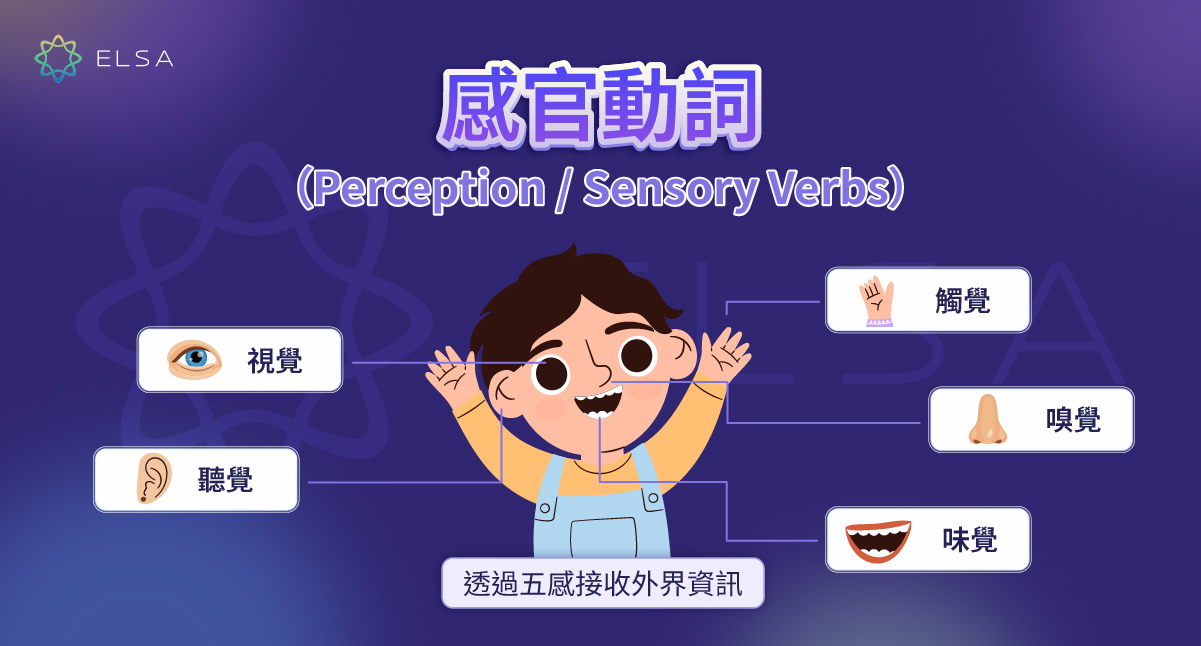
動詞是句子中表示主語動作、狀態或情況的詞或詞組。動詞可以說是句子中最基本的組成。動詞位於主詞之後、頻率副詞之後、受詞之前。
例子: My brother often eats apples for breakfast.
→ 這句話中的動詞“eat”位於主詞“my brother”和頻率副詞“often”之後,位於賓語“apples”之前。
| 動詞類型 | 主要意義 | 例子 |
|---|---|---|
| 規則動詞 | 這是一個常用動詞,遵循時態規則。 | play, love, cook… |
| 不規則動詞 | 不遵循時態規則,需要把每種形式都牢記在心。 | go → went → gone have → had → had |
| 情態動詞 | 與動詞不定式 V 結合使用,可以表示能力、許可、建議… | can, could, must, should, may,… |
| To be & 助動詞 | 利用時態來構成否定句、疑問句或強調句。 | be (am/is/are/was/were)do/does/did, have/has/had |
| 片語動詞(Phrasal verbs) | 作為動詞,當與介詞或副詞連用時,它往往會獲得新的意義。 | look after, give up, turn on… |
| 不及物動詞和及物動詞 | – 不及物動詞:不需要受詞 – 及物動詞:需要受詞跟在後面 | – He arrived early. – She buys books. |
英文詞性:副詞

英語中的副詞 (Adverb) 是用來補充說明其他詞語的性質、特點和語境的詞語。副詞描述動作發生的方式、地點、時間、方法和程度。
| 副詞類型 | 主要意義 | 例子 |
|---|---|---|
| 地點副詞 | 描述動作發生的地點或描述位置、距離。 | here, there, inside, outside, anywhere…→ He lives there. |
| 程度副詞 | 從低到高描述行動/情緒的程度。 | very, quite, fully, little, hardly…→ She fully understands the lesson. |
| 時間副詞 | 決定動作何時發生。 | now, yesterday, already, lately, soon…→ I met her yesterday. |
| 方式副詞 | 描述動作是如何發生的(通常以 -ly 結尾)。 | quickly, slowly, happily…→ He runs quickly. |
| 頻率副詞 | 描述動作發生的頻率。 | always, often, rarely, never…→ She always gets up early. |
英文詞性:量詞

量詞是表示數量的詞,放在名詞前面修飾名詞。英語中的量詞可以與可數名詞或不可數名詞搭配使用。有些量詞既可以與可數名詞搭配使用,也可以與不可數名詞搭配使用。
| 量詞 | 配用于 | 主要意思 | 例子 |
|---|---|---|---|
| Few | 可數名詞複數 | 很少,幾乎沒有(負面意思) | Few people came to the party. |
| A few | 可數名詞複數 | 幾個,足夠了(略帶肯定) | A few apples are on the table. |
| Little | 不可數名詞 | 很少,幾乎沒有(否定) | There’s little water left. |
| A little | 不可數名詞 | 一點點,夠用 | I have a little money with me. |
| Some | 可數名詞(複數)或不可數名詞 | 一些/一點(用於肯定句) | I have some books. Some water is left. |
| Any | 可數名詞(複數)或不可數名詞 | 任何/一些(否定式,疑問式) | Do you have any sugar? I don’t know any. |
| Many | 可數名詞複數 | 很多(否定句和疑問句) | How many books do you have? |
| Much | 不可數名詞 | 很多(否定句和疑問句) | I don’t have much time. |
英文詞性:介詞

介詞是構成句子的重要組成部分之一。介詞表示句子中提及的人和事物之間的關係。介詞可以連接動詞和名詞、主語和受詞或其他成分。
介詞可以完全決定整個句子的意思。根據意義的不同,介詞可以分為以下幾種類型:表示位置的介詞、表示時間的介詞和表示方向的介詞。
| 位置介詞 | 時間介詞 | 表示方向的介詞 | |
|---|---|---|---|
| 常用介詞 | in, on, at, under, above, next to, behind, between, inside, outside | in, on, at, before, after, during, since, until | to, from, into, out of, up, down, across, along, toward(s), through |
| 功能 | 描述空間中的位置/地點 | 確定該行為發生的時間或時間段。 | 描述移動方向或目的地 |
| 例子 | – The book is on the table. – The cat is under the chair. | – I was born in 2000. – We’ll meet at 5 p.m. | – He walked to the park. – They ran across the road. |
英文詞性:連接詞

英語中的連接詞用於連接短語、句子或段落。連詞在日常溝通和書面表達中都非常常用。連接詞的主要類型包括:從屬連接詞、並列連接詞和相關連接詞。
| 從屬連接詞 | 並列連接詞 | 相關連接詞 | |
|---|---|---|---|
| 功能 | 將從句與主句連結起來 | 連接等效單位(單字、片語、子句) | 將兩個等效組件配對。 |
| 常用連接詞範例 | because, since, although, if, before, after, as long as,… | for, and, nor, but, or, yet, so (FANBOYS) | either – or, neither – nor, both – and, not only – but also |
| 例句 | – I went home because it was late. – If it rains, we’ll stay in. | – She is smart and kind. – You can stay or go. | – Either you study, or you fail. – Both Tom and Jerry are here. |
>>閲讀更多:因為 英文:如何使用 Because of、Due to、Owing to 以及其同義詞
英文文法總整理:常見句子結構
學完英語中所有的詞類之後,我們繼續學習句子結構以及如何構成完整的句子。這些是學習英語時必須掌握的最基本的句子結構!
比較句 – Comparison Sentences

比較句 – Comparison Sentences 是一種用於根據某種特定標準或面向比較兩個或多個事物、事件或人物的句式結構。英語中有三種比較形式:平等比較、優劣比較和最高級比較。
| 平等比較 | 優劣比較 | 最高級比較 |
|---|---|---|
| 兩個物體在某一方面是相等的 | 一個物體在某一方面優於另一個物體。 | 組內有一位傑出受試者(≥ 3 位受試者) |
| S + V + as + Adj/Adv + as + O | 簡短形容詞/副詞:S + V + Adj/Adv + -er + than + O | 簡短形容詞/副詞:S + V + the + Adj/Adv + -est |
| 長形容詞/副詞:S + V + more + Adj/Adv + than + O | 長形容詞/副詞:S + V + the most + Adj/Adv | |
| She is as tall as her brother. | – They run faster than us. – This book is more interesting than that one. | – He is the fastest runner in the team. – She is the most beautiful girl here. |
條件句 – Conditional Sentences

英語中的條件句表達的是,如果某個提出的條件成立,則某個事件也可能發生。以“if”開頭的條件句最為常用。一個條件句包含兩個子句:包含 IF的條件子句和結果子句。
| 條件句類型 | 公式 | 功能 |
|---|---|---|
| 第零類條件句 | If + S + V, S + V | 表達生活中顯而易見的事實或永遠正確額真理。 |
| 第一類條件句 | If + S + V, S + will + V | 表達當前可能發生的事件及其未來結果。 |
| 第二類條件句 | If + S + V-ed, S + would + V | 表達當前不真實的事件和假設的結果。 |
| 第三類條件句 | If + S + had + P2, S + would + have + P2 | 表達過去不真實的事件和假設的結果。 |
| 混合條件句 | If + S + had + P2, S + would + V (或第二類和第三類的組合) | 表達過去不真實的事件和現在不真實的結果。 |
例子:
| 條件句類型 | 例子 |
|---|---|
| 第零類條件句 | If you heat water to 100°C, it boils. |
| 第一類條件句 | If it rains, I will stay at home. |
| 第二類條件句 | If I were a bird, I would fly. |
| 第三類條件句 | If I had studied, I would have passed the exam. |
| 混合條件句 | If I had gone to bed earlier, I would not be so tired now. |
>>閲讀相關:If 用法,概念,結構與練習: 一、二、三,混合
wish願望句

wish願望句表達說話者對某件事的渴望或夢想。這件事可能發生在過去、現在或將來,也可能尚未發生。根據時間的不同,句式結構也會有所不同。
| 願望類型 | 現在願望句 | 未來願望句 | 過去願望句 |
|---|---|---|---|
| 公式 | S1 + wish(es) + S2 + V_ed | S1 + wish(es) + S2 + would/could + V | S1 + wish(es) + S2 + had + P2 |
| 功能 | 表達對目前並不存在的事物的願望。 | 表達對未來不可能發生的事情的願望。 | 表示對過去未發生的事表示遺憾。 |
| 例子 | I wish I knew the answer. | She wishes he would call her. | They wish they had studied harder. |
主動/被動句

被動句是指句子的主詞是受詞,而受詞是另一個人或物動作的承受者。被動句根據時態有其自身的結構,並遵循對應的動詞變化規則。
將主動句轉換為被動句的 4 個具體步驟:
步驟 1: 找出句子中的受詞(O),並將其移到句子的開頭作為主詞(S)。
步驟 2: 觀察主要動詞(V),確定句子的時態。
步驟 3: 根據原句的時態,將動詞轉換為被動語態“tobe + p.p”。
步驟 4: 將主動句中的主詞 (S) 改為受詞 (O),將其移到句末,並在前面加上 “by” 。
| 句子類型 | 公式 | 功能 |
|---|---|---|
| 主動句 | S + V + O | 描述主語對受詞執行的動作。 |
| 被動句 | S + be + V-ed/P2 + by O | 描述對主語執行的動作,強調動作的接受者。 |
| 主動疑問句 | Be + S + V-ed/P2 + O? | 詢問主語對受詞所執行的動作。 |
| 被動疑問句 | Be + S + V-ed/P2 + by O? | 對主語所採取的行動提出問題,强調行動的接受者。 |
例子:
| 句子類型 | 例子 |
|---|---|
| 主动句 | I gave her a book. |
| 被动句 | A book was given to her (by me). |
| 主动疑問句 | Has she repaired his bike for hours? |
| 被动疑問句 | Has the bike been repaired for hours by her? |
假設句

假設句用於說話者希望某人做某事,或用於表示該行為不確定發生的情況,通常用於請求、許可、幫助或建議的句子。
大概結構:
| S + V (請求,願望) + that + S + (should) + V (不定式) |
例子:
- I suggest that he go to the doctor. (我建議他去看醫生。)
- She asked that I be on time. (她要求我準時到達。)
- It is important that you finish the project by tomorrow. (重要的是你務必在明天之前完成這個專案。)
- I wish that she were here. (我希望她在這裡。)
注意事項: 在假設的句子中,S + (should) + V (不定式) 部分的動詞不會根據時態進行變位,通常以不定式形式出現。
祈使句

祈使句用來要求某人做某事,它可以是命令、請求、建議或意見。祈使句通常沒有主語,通常以句號或感嘆號(!)結尾。
例子:
- Close the door! (把門關上!)
- Please be quiet. (請安靜。)
- Don’t forget to call me. (別忘了打電話給我。)
- Take out the trash. (把垃圾倒掉。)
- Sit down, please. (請坐下。)
注意事項:
- 祈使句不使用直接主語,而是使用動詞原形(V不定詞)
- 在祈使句中可以加入”please” 以使語氣更柔和、更有禮貌。
直接引語,間接引語

間接引語是對他人所說的話的轉述。間接引語通常放在“that”之後,而不是用引號括起來。
將直接引語句子轉換為間接引語句子的主要步驟如下:
- 時態必須顛倒(如果陳述動詞是過去式)。
- 改變人稱代名詞、時間和地點。
- 改變地點和時間副詞。(today → that day; tomorrow → the next day; here → there)
| 直接引語 (Direct Speech) | 間接引語(Reported/Indirect Speech) | |
|---|---|---|
| 用法 | 用於逐字引用某人的原話。包含引號。 “…”. | 用於複述他人所說的主要觀點。通常情況下,在”that”之後不使用引號。 |
| 結構 | S + say/tell + “…” | S + said/told + (that) + 子句 |
| 例子 | He said: “I will go tomorrow.” | He said (that) he would go the next day. |
| 記憶點 | x | – 時態必須顛倒(如果陳述動詞是過去式)。 – 改變人稱代名詞、時間和地點。 |
| 顛倒 | 無需顛倒 | 例子: 一般現在式 → 一般過去式 “I eat” → He said he ate. |
| 改變人稱代名詞 | 保留原代名詞。 | “I” → “he/she”, “you” → “I/he/she” 根據語境而定 |
| 改變副詞 | today → that day tomorrow → the next day here → there | 根據時態和語境而變化。 |
英語中的關係子句

關係子句用於更清楚地解釋其前面的名詞。這個名詞在前面的另一個子句中被提及。關係子句由關係代名詞和關係副詞構成: whom, who, whose, which, where, when, that, why.
| 用法 | 結構 | 例子 | |
|---|---|---|---|
| 限定性關係子句 | 用於指明所談論的人/物。不加逗號。 | Noun + who/which/that/where/whose + 子句 | The book that is on the table is mine. |
| 非限定性關係子句 | 與定名詞(通常是專有名詞)連用。在添加補充資訊時,請用逗號隔開。 | Noun, who/which/where/…, 子句 | My father, who is 60 years old, still plays tennis. |
| 簡化關係子句 | 減少限定性或非限定性關係子句。根據不同語境,用 V-ing 或者 V3/P2。 | – Noun + V-ing (主動) – Noun + V3/P2 (被動) | – The man standing at the door is my uncle. – The book written by her is famous. |
| 名詞子句 | 用作句子中的主語、受詞或補語。以that, if, whether, what, why, how, who,…開頭 | S + V + that/if/what/… + mệnh đề | I don’t know what she wants. What he said is true. |
關於問題類型的基礎英文文法

英文中的疑問句- Interrogative Sentences 是用來詢問有關人、物或事件資訊的句子。疑問句以問號“?”結尾,說話時語調通常在句末上揚。
英語中的疑問詞用於提問。根據問題的具體內容或所提到的人/物/事,我們會使用不同的疑問詞,例如:who, what, why, when, where, how,…
| 問題類型 | 用法 | 結構 | 例子 |
|---|---|---|---|
| 使用疑問詞的提問 | 用於詢問人、事、原因、時間、地點和方法,。。。 | Wh-word + 助動詞 + S + V + …? | – What do you like? (你喜歡什麼?) – Where does she live? (她住在哪裡?) |
| Yes/No question 的提問 | 詢問以得到 “Yes” 或者 “No”的答案 | 助動詞 + S + V + …? | – Do you play football? (你踢足球嗎?) – Has he arrived? (他到了嗎?) |
| 多項選擇題 | 請從兩個或多個選項中選擇的提問 | Wh-word (若有) + 助動詞 + S + V + A or B? | – Do you want tea or coffee? (你想喝茶還是咖啡?) – Who is taller, Anna or Lisa? (安娜和麗莎誰更高?) |
| 附加問句 | 確認訊息,並期望聽者同意。 | 主句,助動詞 (+ not) + S? | – You are a student, aren’t you? (你是學生,對吧?) – She didn’t go, did she? (她沒去,對吧?) |

基礎英文文法結構
enough 用法

| 形容詞 + enough | enough +名詞 | |
|---|---|---|
| 結構 | S + V + adj + enough + (for sb) + to V | S + to be + enough + N + (for sb) + to V |
| 意思 | 描述夠。。。以便做某事,強調品質/形容詞。 | 表示足夠什麽做某件事,強調數量。 |
| 例子 | She is strong enough to lift the box. (她力氣夠大以把箱子搬起來。) | There is enough time for us to finish the task. (我們有足夠的時間完成這項任務。) |
suggest 用法

| Suggest + V-ing / Noun | Suggest that + 子句 | |
|---|---|---|
| 結構 | S + suggest + V-ing / N | S + suggest + that + S + V (不定式或根據語境變位形式) |
| 意思 | 建議一個具體的動作或名詞 | 建議某人該做什麼 |
| 例子 | I suggest going to the park. (我建議去公園。) | She suggested that he take a break. (她建議他休息一下。) |
hope 用法

| Hope + to V | Hope + 子句 | |
|---|---|---|
| 結構 | S + hope + to V | S + hope + (that) + S + V (根據語境變位形式) |
| 意思 | 未來想做某件事 | 希望現在或將來會發生的某件事。 |
| 例子 | I hope to travel to Japan next year. (我希望明年能去日本旅行。) | I hope (that) he will arrive soon. (我希望他能盡快到達。) |
used to 用法

| Used to + V | Be/get + used to + V-ing/N | |
|---|---|---|
| 結構 | S + used to + V | S + be/get + used to + V-ing/N |
| 意思 | 表達過去已不存在的習慣與狀態 | 描述說話者習慣於(現在)的某種習慣或狀態 |
| 例子 | I used to play football when I was young. (我小時候曾經踢足球。) | She is used to waking up early. (她習慣了早起。) |
| 注意事項 | 這種時態不用於描述現在仍在進行的動作。 | 用於表示對當前行為的熟悉程度。 |
>>used to 用法詳細内容:used to 用法:區別 used to, be used to 與 get used to 和練習示例
mind 用法

| S + mind + V-ing/N | Would you mind/Do you mind + V-ing/N | |
|---|---|---|
| 意思 | 用來表示某人做某事時感到不快或惱火。 | 用於請求意見或請某人做某事,比較有禮貌。 |
| 例子 | I mind waiting for too long. (我介意等待太久。) | Do you mind opening the window? (你介意打開窗戶嗎?) |
| 注意事項 | 常用於否定句或肯定句中,表示不喜歡。 | 用於請求或詢問他人幫助的疑問句。 |
would you like 用法

| Would you like + to V | Would you like + N | |
|---|---|---|
| 意思 | 用來詢問某人是否想做某件事。 | 用來詢問某人的選擇或提出建議。 |
| 例子 | Would you like to go out for dinner?(你想出去吃晚餐嗎?) | Would you like some coffee?(你想喝點咖啡嗎?) |
| 注意事項 | 常用於邀請、建議或詢問某人想要採取的行動。 | 用來向某人索取或提供特定物品。 |
>>相關内容:For example 用法: 通過易於理解的例子和替代詞進行詳細說明
As if 和 As though 用法

| S + V + As if/As though + S + V | S + V + As if/As though + S + V-ed | |
|---|---|---|
| 意思 | 描述一種被描繪成真實的行為或情況,但可能並非事實。 | 描述現在或過去發生的假設的或不真實的行為或事件。 |
| 例子 | She talks as if she knows everything. (她說話好像她什麼都知道似的。) | He acted as though he had won the prize. (他表現得好像自己贏得了獎項一樣。) |
| 注意事項 | 用來描述一種並非真實存在但卻存在於當下的行為或狀態。 | 用於談論過去不真實的行為或狀態。 |
Although 用法

| Although + S + V, S + V… | S + V although S + V | |
|---|---|---|
| 意思 | 連接詞“Although”用於連接兩個意思相反或對比鮮明的從句。 | “Although” 用來表達句子中兩個分句之間的對比。 |
| 例子 | Although it was raining, we went to the beach. (雖然下著雨,我們還是去了海灘。) | I went to the beach although it was raining. (雖然下著雨,但我還是去了海灘。) |
| 注意事項 | “Although” 位於句首,後面用逗號分隔各個子句。 | “Although” 位於句中,不需要逗號。 |
注意事項: 在口語中,Although 也可以用“though”代替。
In spite of 用法

| In spite of + N/V-ing, S + V + … | S + V + … in spite of N/V-ing | In spite of the fact that + S + V | |
|---|---|---|---|
| 意思 | 這種結構表示“雖然”,表達了兩個分句之間的對比或讓步。 | “In spite of” 表達了主句中的動作/事實與從句中的動作/事實之間的矛盾。 | 允許後跟完整子句。 |
| 例子 | In spite of the rain, they went out. (儘管下著雨,他們還是出門了。) | They went out in spite of the rain. (儘管下著雨,他們還是出門了。 | In spite of the fact that he was ill, he went to school. (儘管他生病了,他還是去上學了。) |
| 注意事項 | “In spite of” 可以放在句首,但必須用逗號分隔子句。 | “In spite of” 位於句末,不需要逗號。 | 雖然有人使用,但它通常比較冗長,在簡單的口語中應該避免使用。 |
despite 用法

| Despite + N/V-ing, S + V + … | S + V + … despite + N/V-ing | |
|---|---|---|
| 意思 | 雖然(表示對比,相反) | |
| 例子 | Despite being tired, she still went to work.(儘管很累,她還是去上班了。) | She still went to work despite being tired.(儘管很累,她還是去上班了。) |
>>更多結構:除了 英文(In addition to):定義、用法、結構與同義詞
because/because of 用法

| Because | Because of | |
|---|---|---|
| 詞類 | 連接詞 (conjunction) | 介詞(preposition) |
| 結構 | Because + S + V | Because of + N / V-ing / 名詞片語 |
| 意思 | 因為(解釋原因) | 因為,由於(原因,理由) |
| 在句子中的位置 | 在句首或句中 | 在句首或句中 |
| 例子 | – Because it was raining, we stayed inside. (因為下雨,我們待在室內。) – She passed the test because she studied. (她通過了考試,因為她認真學習了。) | – Because of the rain, we stayed inside. (因為下雨,我們待在室內。) – She passed the test because of her hard work. (她通過考試是因為她很努力。) |
| 注意事項 | 不要在名詞前使用“because” | 不要在子句前使用 “because of” |
>>相關内容:因此 英文: So, thus, therefore, hence 的用法
so, such, too 用法

| So … that | Such … that | Too … to | |
|---|---|---|---|
| 公式 | so + adj/adv + that + 子句 | such + (a/an) + adj + noun + that + 子句 | – To be + too + adj + (for sb) + to V – S + V + too + adv + (for sb) + to V |
| 意思 | 太。。。了(負面意義) | 什麽東西太。。。了 | 太……了以至於某人無法做某事(無法執行該動作) |
| 例子 | – The coffee was so hot that I couldn’t drink it. (咖啡太燙了,我根本喝不了。) – He ran so quickly that no one could catch him. (他跑得太快了,根本沒有人能追上他。) | – It was such a beautiful day that we went to the beach. (那天天氣太好了,所以我們去了海邊。) – She is such an intelligent girl that everyone admires her. (她是個非常聰明的女孩,大家都很羡慕她。) | – This box is too heavy for me to carry. (這個箱子太重了,我搬不動。) – He spoke too fast for us to understand. (他說話太快了,我們聽不懂。) |
as well as 用法

as well as 這個結構有兩個主要意義:既。。。又。。。或不但…而且…。基本上,as well as 用來連接句子中兩個詞類相似的詞。
結構:
| N/Adj/子句 + as well as + N/Adj/子句 |
例子:
- He as well as his friends were invited to the party.
(他和他的朋友們都被邀請參加了派對。)
- She is talented as well as hardworking.
(她既有才華又勤奮。)
>>更多内容:As soon as 是什麼? 正確的 as soon as 用法與實際例句
as much as 用法

| S + V + as much as + S + … | S + V + as much + N (不可數) + as + S + … | |
|---|---|---|
| 意思 | 跟誰/什麽一樣做的多 | 擁有不可數的數量,等於某人/某物 |
| 詞型/結構 | 與動詞的比較 | 與不可數名詞的比較 |
| 例子 | She studies as much as her brother. (她和哥哥學習得一樣多。) | He doesn’t have as much money as I do. (他沒有我那麼多錢。) |
not only… but also 用法

Not only … but also 這種結構強調人、事物或事件的性質,特點。 Not only … but also的意思就是“不僅/不但…而且…“。這種結構可以將兩個詞性相似的子句連接起來。
結構:
| S + V + not only + N/V/Adj/Adv + but also + N/V/Adj/Adv |
例子:
- She not only sings well but also dances beautifully.
(她不僅唱的好聼,而且跳得也很好。)
- He is not only smart but also kind.
(他不但聰明,而且心地善良。)
would rather 用法

| S + would rather + V | S1 + would rather (that) + S2 + V-ed | |
|---|---|---|
| 意思 | 在或將來想要做某事的願望 | 希望過去已發生的事情發生(或希望沒有發生的事情發生)。 |
| 例子 | – I would rather stay at home tonight. (我今晚寧願待在家裡。) – She would rather eat pizza than pasta. (她寧願吃披薩也不願吃義大利麵。) | – I would rather (that) you studied harder. (我更希望你更努力學習。) – They would rather (that) we did it now. (他們希望我們現在就做。) |
Prefer 用法

| 結構形式 | 意思 | 例子 |
|---|---|---|
| Prefer / Would prefer + to + V | 表達對某事物的偏好。 | I prefer to study at night. (我更喜歡晚上學習。) |
| Prefer + N / V-ing + to + N / V-ing | 表達對某事物的偏好。 | I prefer reading books to watching TV. (比起看電視,我更喜歡讀書。) |
| Would prefer + to V + rather than + V | 表達更傾向於做某事而不是做另一事。 | I would prefer to go for a walk rather than stay inside. (我寧願出去散步,也不願待在室內。) |
想更完整掌握 prefer 用法 以及 prefer 後接不同結構時的句型變化,可以參考相關內容,幫助你更準確地運用這個常見動詞。
refuse 用法

| Refuse + Noun | Refuse to do sth | |
|---|---|---|
| 結構 | Refuse + Noun | Refuse + to do sth |
| 意思 | 拒絕某人/某事 | 拒絕做某事 |
| 例子 | She refused the invitation. (她拒絕了邀請。) | He refused to help me with the project.(他拒絕幫助我完成這個專案。) |
let 用法

let結構表示允許,用於表達對某人的許可,允許某人做某事。 let結構通常與受詞和不定詞連用。
例子:
| Let + someone + V (不定式) |
例子:
- Let me help you. (讓我來幫你。)
- She let me go early. (她允許我早點去)
let’s 用法

Let’s 是 let us 的縮寫。當你想邀請某人一起做某事時,可以使用 let’s。 Let’s 可以理解為祈使句,因此通常後接不定式。
結構:
| Let’s + V (不定式) |
例子:
- Let’s go to the park! (我們一起去公園吧!)
- Let’s study English together. (我們一起學習英語吧。)
difficult 用法

Difficult 是英語中最常用的形容詞之一。與 difficult 連用的結構可以是單一形容詞置於名詞前,也可以是與動詞連用。
結構:
| S + to be + difficult (for sb) + to do sth |
例子:
- Math is difficult for me to understand. (數學對我來說很難理解。)
- It’s difficult to find a solution. (要找到解決方案很困難。)
promise 用法

| Promise + (not) + to V | Promise + something | Promise + (sb) + (that) + S + V | |
|---|---|---|---|
| 意思 | 保證/承諾(不)做什麽 | 承諾某事 | 向某人承諾/答應誰會做某事 |
| 詞類/位置 | 動詞 + 不定式動詞(to V) | 動詞 + 名詞 | 動詞 + 受詞 + 子句(that) |
| 例子 | – I promise to help you. (我保證會幫助你。) – She promised not to tell anyone. (她保證不會告訴任何人。) | He made a promise of support. (他提出了一個支持的承諾) | They promised me that they would come. (他們答應過我他們會來的。) |
avoid 用法

Avoid 表示避免某事或避免要做某事。此結構可與動詞或名詞的V-ing形式連用。
結構:
| Avoid + Noun/V-ing |
例子:
- I left home early to avoid the rush hour. (我早早出門,避免遇到了高峰期。)
- Andy has been avoiding me for 3 days. (安迪已經躲我三天了。)
advise 用法

| advise + sb + to V | advise + that + S + should + V | |
|---|---|---|
| 意思 | 勸某人做某事 | 勸誰該做什麽 |
| 例子 | The doctor advised me to rest.(醫生勸我休息。) | She advised that he should see a dentist.(她勸他去看牙醫。) |
after 用法

| After + V-ing / 短語 | After +子句 | |
|---|---|---|
| 意思 | 做完什麽後 | 完成某事後 |
| 詞型/結構 | 介詞 + V-ing | 連接詞 + 過去完成式子句 |
| 例子 | After taking a hot bath, I go to bed. (洗完熱水澡後,我就上床睡覺了。) | After they had finished the exam, they went on a vacation. (考試結束後,他們就去度假了。) |
asked 用法

| S + asked + if/whether + S + V | S + asked + sb + to V | |
|---|---|---|
| 意思 | 問(間接問題) | 要求/命令某人做某事 |
| 詞型/結構 | 間接陳述句 | 動詞 + 受詞 + 不定式動詞 |
| 例子 | She asked if he was home. (她問他是否在家。) | He asked me to open the window. (他讓我打開窗戶。) |
enjoy 用法

enjoy 表示喜歡、享受。在英語中,enjoy 這個結構可以與動詞、名詞連用,也可以單獨使用。在需要表達具體信息的情況下,enjoy 可以取代 like 或 love。
結構:
| Enjoy + N/Ving |
例子:
- I enjoy listening to classical music. (我喜歡聽古典音樂。)
- They enjoy the party a lot. (他們非常喜歡這個聚會。)
must 用法

是 have to、should 和 ought to 這組情態動詞中具有最強烈的強制性意義。 must 的用法非常簡單,與其他modal verb類似。
結構:
| S + must + V – 某人被迫做了某件事 |
例子:
- You must finish your homework before dinner. (你必須在晚餐前完成作業。)
- Students must bring their ID cards to the exam. (學生參加考試時必須攜帶身分證。)
when, while 用法

| 第一個子句 | 第二個子句 | 意思 | |
|---|---|---|---|
| when + 一般過去式,過去完成式 | S + V (一般過去式) | S + had + P2 (過去完成式) | 描述過去發生的、發生在另一個事件之前的動作。 |
| when + 過去進行式,一般過去式 | S + was/were + V-ing (過去進行式) | S + V (一般過去式) | 描述正在進行的動作被另一個動作打斷的過程 |
| when + 一般過去式 | S + V (一般過去式) | S + V (一般過去式) | 描述過去先後發生的兩個事件。 |
| while + 過去(現在)進行式 | S + was/were + V-ing (過去進行式) | S + was/were + V-ing (過去進行式) | 描述過去同時發生的兩個事件。 |
例子:
- when + 一般過去式,過去完成式
When I arrived, they had finished the meeting. (我到的時候,他們已經結束會議了。)
- when + 過去進行式,一般過去式
I was watching TV when she called me. (我正在看電視的時候,她打了電話給我。)
- when + 一般過去式
I met her when I was at the park. (我在公園的時候,遇到了她。)
- while + 過去進行式
While I was cooking, my brother was cleaning the house. (我做飯的時候,我哥哥在打掃房子。)
find 用法

| find + sth/sb + adj + to V | find + it + adj + to V | |
|---|---|---|
| 意思 | 看看某人/某事如何做某事 | 感覺/發現某事怎麽樣? |
| 例子 | She found the movie interesting. (她覺得這部電影很有意思。) | I find it easy to learn English by myself. (我發現很容易自學英文。) |
句中的 myself 是用來強調「自己」完成動作的代名詞,想進一步了解這類 反身代名詞 (reflexive pronoun) 的用法,可以參考相關內容。
remember 用法

| remember to V | remember V-ing | |
|---|---|---|
| 意思 | 記住要做什麽 | 記住你做過的事 |
| 例子 | Remember to lock the door. (記得鎖門。) | I remember locking the door. (我記得已鎖了門。) |

不要錯過具有大量功能的英語學習包
ELSA Premium 終身 – 十月優惠
原價:7,150元 現在 4,215 元
ELSA Premium 還有另外以下的學習包:
ELSA Premium 一年:原價:5,250元 現在 2,199 元
ELSA Premium 三個月:原價:2,100元 現在 1,140 元
unless 用法

在條件句中,unless 結構等同於 “If not”。你可以用 unless 代替 if 來造句,並調整後面子句的意思(肯定句-否定句),使句子意思不變。
結構:
| S + V (肯定) unless + S + V (否定) |
例子:
- Unless you study hard, you will not pass the exam. (除非你努力學習,否則你不會通過考試。)
- I will go to the party unless something urgent comes up. (除非有緊急狀況,否則我會去參加派對。)
had better 用法
| S + had better + V | S + had better not + V | |
|---|---|---|
| 意思 | 應該(威懾,警告) = Should | 不應該= Shouldn’t |
| 例子 | You had better study harder. (你應該更努力學習。) | You had better not be late again. (你不應該再遲到了。) |
It was not until 用法

| It was not until + 時間 + that + S + V | It was not until + S + V + that + S + V | |
|---|---|---|
| 意思 | 直到… 才… | 直到… 才… |
| 例子 | It was not until 10 PM that I finished my homework. (直到晚上十點我才做完作業。) | It was not until he called that I understood. (直到他打電話來,我才明白。) |
need 用法

| S + need (not) + V | S + need + to V/N | S + need + V-ing | |
|---|---|---|---|
| 意思 | 應該怎麼做(肯定/否定) | 需要做什麼(動詞或名詞) | 需要採取什麼措施? |
| 例子 | You need not worry. (您不必擔心。) | – I need to finish my report. (我需要完成我的報告。) – She needs help. (她需要幫助。) | The car needs repairing. (這輛車需要修理。) |
regret 用法

| Regret + to Verb | Regret + V-ing | |
|---|---|---|
| 意思 | 很遺憾地做什麽 | 很遺憾什麽 |
| 例子 | I regret to inform you that the event is canceled. (很遺憾地通知您,本次活動已取消。) | I regret missing the party. (我很遺憾錯過了這次聚會。) |
stop 用法

| Stop + to Verb | Stop + V-ing | |
|---|---|---|
| 意思 | 停下来 | 停做什么 |
| 例子 | I stopped to check my phone. (我停下來查看手機。) | I stopped running to catch my breath. (我停跑以喘口氣。) |
有效的進行英文文法自學
高效率學習英文文法需要清晰的學習計劃和合適的方法。特別是對於初學者來說,從一開始就掌握正確的英文自學方法,選擇合適的學習材料,並堅持每天練習。
高效率的英文文法自學路線圖:初學者的詳細步驟

1) 確定學習目標
- 學習溝通/寫作/參加托業考試或雅思考試。
- 明確目標 → 選擇適合的教材和學習方法。
2) 掌握基礎
- 學習基本時態。
- 理解句子結構 (S – V – O).
- 區分簡單句和複合句。
3) 注意要點
- 條件句,關係子句。
- Modal verbs.
- 主-動詞和好
4) 不斷練習
- 學習結束後馬上做作業。
- 閱讀、聆聽、觀看視頻,了解文法在語境中的應用。
5) 測試並獲得回饋
- 請老師/朋友幫忙改正。
- 使用 Grammarly 和 ChatGPT 進行核對。
6) 定期復習
- 定期復習。
- 每天學習一點,培養反應能力。
通過 ELSA Speak 應用進行溝通來學習文法
學習文法更實用、更有效的反應能力的方法是將其與口語練習結合。 ELSA Speak 應用通過對話和接近本地人的發音來幫助你學習文法,非常適合想要流利說英語的人。
為什麼要使用 ELSA Speak 學習文法?
- 自然流暢的交流,與AI導師一對一學習,無需拘束。
- 友善的介面,寓教於樂(課程與遊戲結合,幫助更快更持久地記憶)。
- 通過真實情境練習發音和文法結構。
- AI技術根據IPA標準對發音進行評分,並糾正每個音素和每個句子。
- 為每位使用者量身訂做高度個人化的學習路徑,滿足使用者的各種情況、需求和愛好。
立即下載 ELSA Speak,每天只需學習 10 分鐘,即可掌握文法,提升發音和反應能力!
基礎英文文法複習練習

練習
練習1: 括號內為動詞變位練習
- She usually _____ (get up) at 6 a.m.
- They _____ (watch) TV when I arrived.
- I _____ (study) English for 5 years.
- He _____ (visit) his grandparents next week.
- She _____ (live) in this city since 2010.
- We _____ (finish) our homework before going out.
- They _____ (buy) a new car.
- I _____ (wish) I could speak Spanish.
- If it rains tomorrow, we _____ (stay) at home.
- The book _____ (write) by a famous author.
- She _____ (never be) to Paris.
- I _____ (see) him yesterday at the market.
- They _____ (build) a new house next month.
- She _____ (work) as a teacher for 10 years.
- We _____ (eat) dinner when the phone rang.
練習2: 改寫句子,使其意思不變。
- She started learning English five years ago.
- The last time I saw him was in 2018.
- It’s too cold to go swimming.
- They are going to build a new school here.
- I don’t have enough money to buy a car.
- Although he is old, he runs very fast.
- “Can you open the door?” she said to me.
- They built this house in 1990.
- I prefer tea to coffee.
- He is so tall that he can reach the ceiling.
- Despite the heavy rain, they went for a walk.
- “I will help you with your homework,” she said to me.
- I haven’t seen her for two years.
- The last time I ate sushi was a month ago.
- She is too young to drive.
答案
練習1:
| 1 | 2 | 3 | 4 | 5 |
| gets up | were watching | have studied | will visit | has been living |
| 6 | 7 | 8 | 9 | 10 |
| had finished | are going to buy | wish | will stay | was written |
| 11 | 12 | 13 | 14 | 15 |
| has never been | saw | will build | has been working | were eating |
練習2:
- She has been learning English for five years.
- I haven’t seen him since 2018.
- It is so cold that I can’t go swimming.
- A new school is going to be built here.
- I wish I had enough money to buy a car.
- Despite being old, he runs very fast.
- She asked me to open the door.
- This house was built in 1990.
- I like tea more than coffee. / I prefer tea rather than coffee.
- He is tall enough to reach the ceiling.
- Although it rained heavily, they went for a walk.
- She told me that she would help me with my homework.
- I last saw her two years ago.
- It has been a month since I last ate sushi.
- She is not old enough to drive.
有了清晰的文件和合理的學習計劃,學習英文文法會更容易。希望這篇文章能幫助你掌握知識,英文文法自學有效。別忘了把這篇英文文法大全分享給你的朋友一起學習!也別忘了關注 ELSA Speak 主頁,獲取更多關於英語文法的詳細文章!