 2026年/08月/27日 | 魚丸


Would 是英文中最常用的情態動詞之一,但也容易與 will、could 或 used to 混淆。在本文中,ELSA Speak 將帶你了解 would 意思、would後面加什麼、would 用法、would like用法、would you用法,並透過易懂的例句區分 can could will would 用法。
Would 是什麼?

would 作為情態動詞的基本意思,以及假設、禮貌、願望和過去習慣等常見用法。Would是一個情態動詞(modal verb),通常被視為will的過去式。然而,在現代英文中,would不僅用於表達”過去的未來”,還可用於表達假設、禮貌性提議、願望、過去的習慣等多種情境。
例句:
- She said she would come tomorrow. (她說她明天會來。)
- Would you help me? (你能幫我嗎?)
- If I had more time, I would travel around the world. (如果有更多時間,我會環遊世界。)
Would後面加什麼?
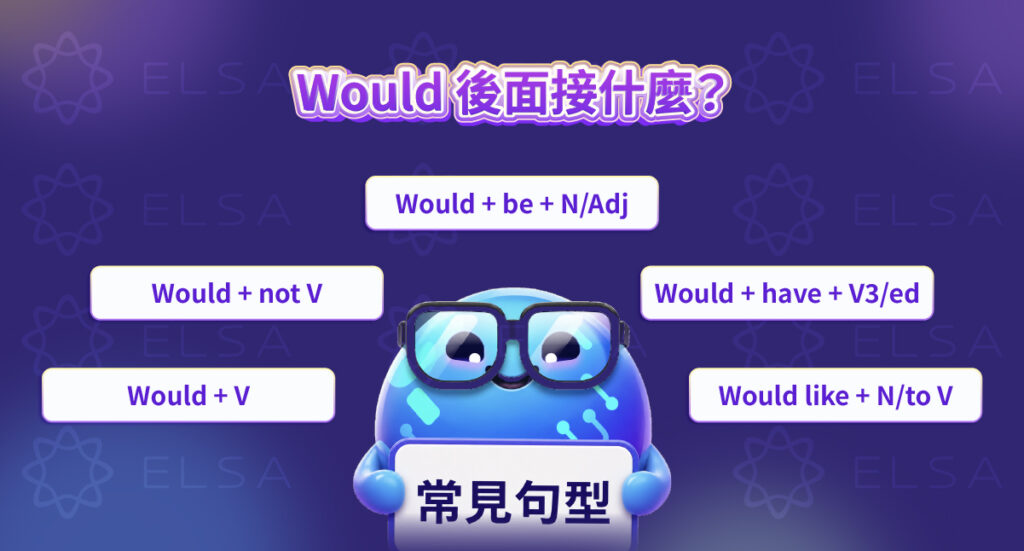
Would 後面必須接不加 to 的原形動詞(bare infinitive)。根據不同語境,would會搭配不同結構,用於表達過去未來式、假設、願望或過去未發生的事情。
把這 11 個項目唸出來,看看你的發音拿幾分。
| 結構 | 用法 |
|---|---|
| Would + V (原形動詞) | 表達過去未來式、假設或禮貌性提議 |
| Would + not + V | would的否定句 |
| Would + be + N/Adj | 在假設或過去未來式情境中表達狀態或職業 |
| Would + have + V3/ed | 表達過去未發生的事(第三條件句、遺憾) |
| Would + like + N/to V | 表達願望或禮貌性邀請 |
注意:would後面不接 to + V或V-ing。一律使用原形動詞(固定結構如 would like to + V 或 would have + V3/ed 除外)。

英文 would 用法
Would是英文中用法最多的情態動詞之一。根據不同語境,would可用於表達過去的未來、條件句、禮貌性提議、願望或過去的習慣。以下是你需要熟練掌握的would常見用法。
Would 作為 will 的過去式 (Future in the Past)
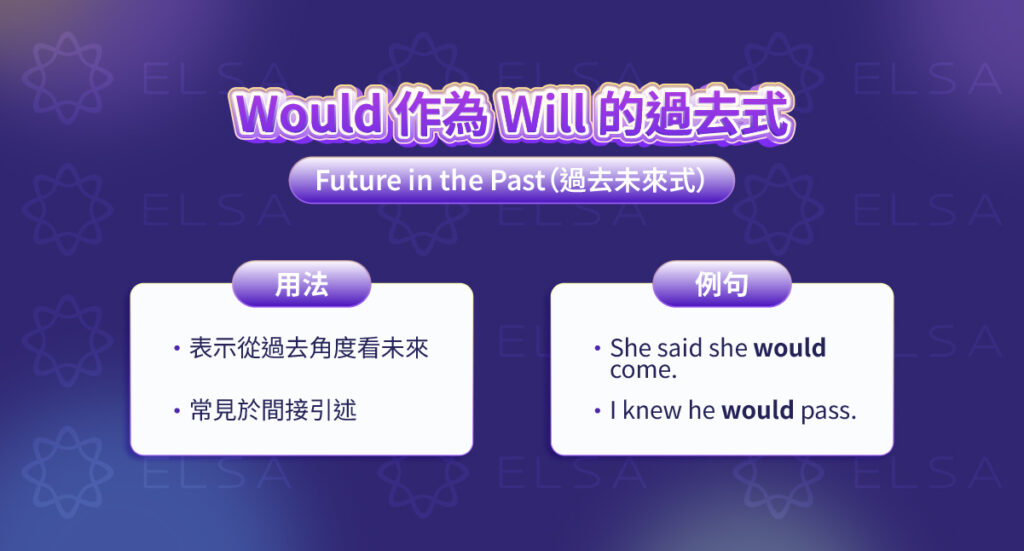
Would用於描述從過去某時間點看來屬於未來的動作或計劃。
句型結構:
| S + would + V (原形動詞) |
例句:
- She said she would come the next day. (她說她隔天會來。)
- I knew he would pass the exam. (我知道他會通過考試。)
Would 表達預測或可能性
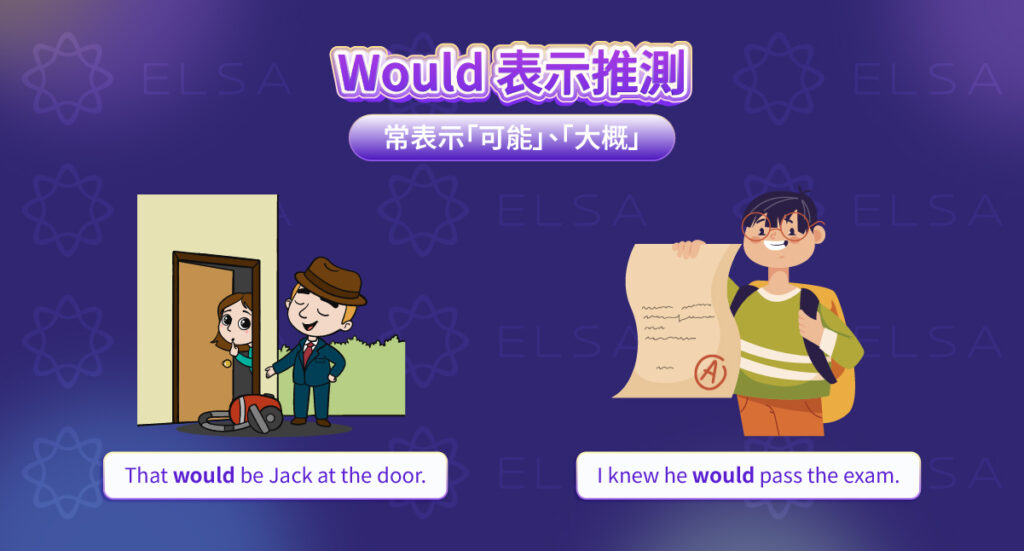
Would 可用於作出預測或推測,確定程度低於 will,通常帶有“或許”、“大概”的含義。
例句:
- That would be Jack at the door. (應該是 Jack 在門外。)
- She would probably agree with you. (她大概會同意你的看法。)
Would 表達過去的習慣
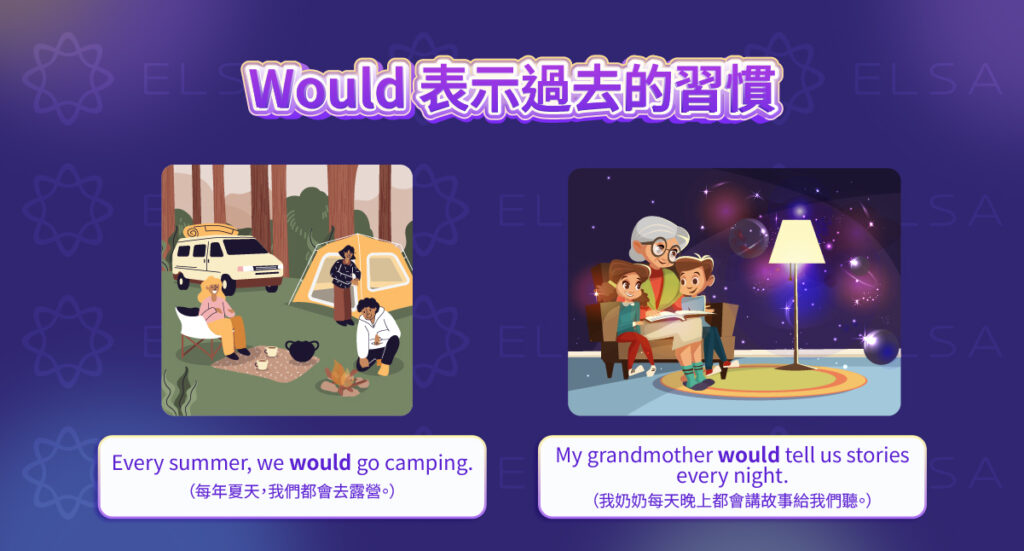
Would可用於表達過去反覆發生的動作,類似 used to 用法。
句型結構:
| S + would + V (原形動詞) |
例句:
- Every summer, we would go camping. (每個夏天,我們通常會去露營。)
- My grandmother would tell us stories every night. (我奶奶每天晚上都會給我們講故事。)
注意:would 僅表達習慣或反覆發生的動作,而 used to 可同時表達過去的習慣與狀態。
Would 用於提出禮貌性提議或請求
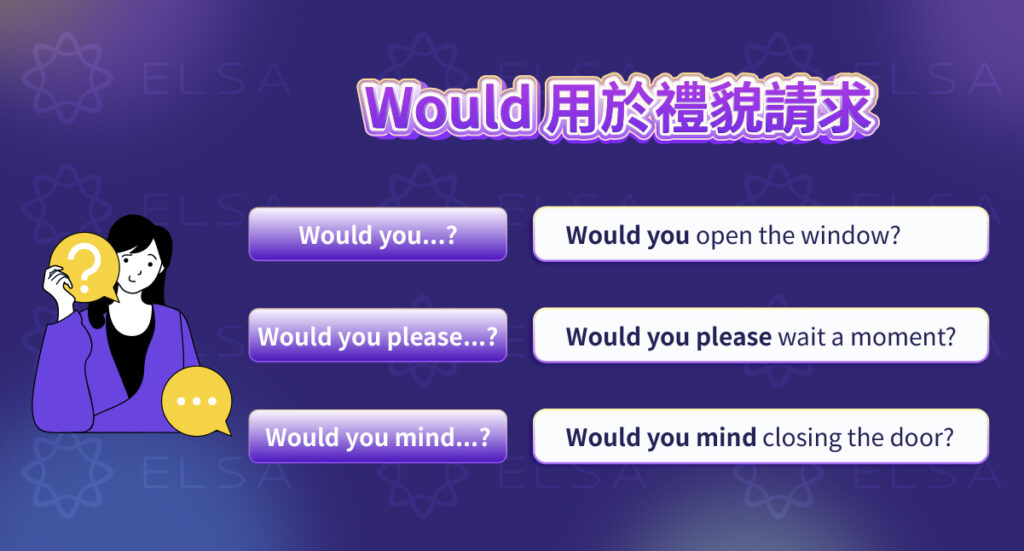
Would you用法是使用 Would you……?結構,以禮貌的方式提出請求、邀請或提議。這在日常溝通與職場環境中都是常見的表達方式。 相較於直接使用動詞原形開頭的祈使句,透過這種結構開口請求會顯得更有禮貌且委婉。
| 句型結構 | 例句 |
|---|---|
| Would you + V…? | Would you open the window? (你能幫我開窗嗎?) |
| Would you mind + V-ing…? | Would you mind closing the door? (你介意幫我關門嗎?) |
| Would you please + V…? | Would you please wait a moment? (你能稍等一下嗎?) |
Would 用於表達願望
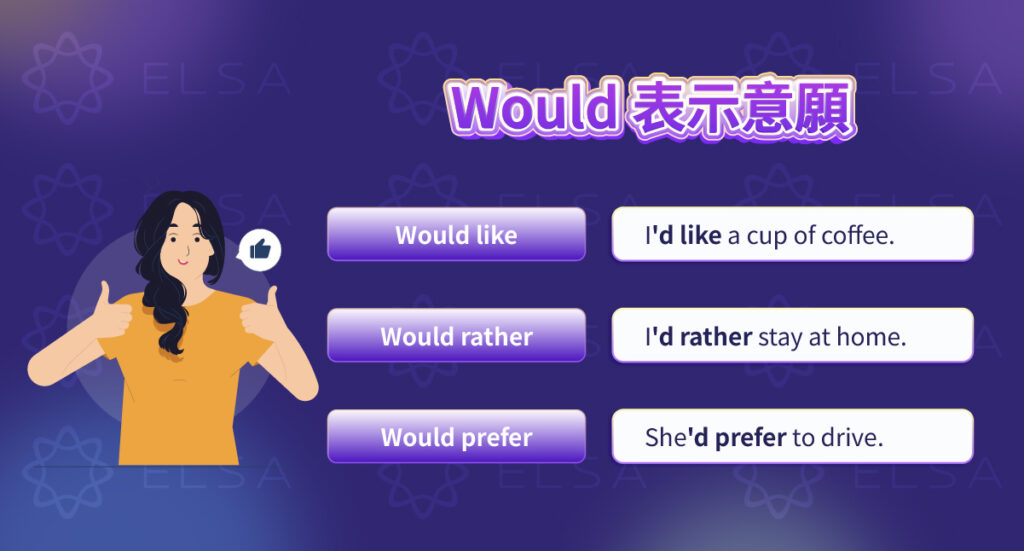
要表達願望或偏好,would 常與多種不同結構搭配使用。以下 ELSA Speak 將說明 would like用法與 would rather用法,並附結構、例句及詳細區分。
| 句型結構 | 用法 | 例句 |
|---|---|---|
| Would like + N | 想要某樣東西 | I’d like a cup of tea. (我想要一杯茶 。) |
| Would like + to V | 想做某事 | We’d like to travel to Japan. (我們想去日本旅遊 。) |
| Would rather + V | 比較喜歡做…… | I’d rather stay at home. (我比較想待在家 。) |
| Would prefer + to V | 想要或偏好…… | She’d prefer to drive. (她比較想自己開車 。) |
10月特別優惠 —— ELSA 大促銷
ELSA PREMIUM 1 年
原價: 5,250
2,199
ELSA PREMIUM 終身
原價: 9,450
4,415
ELSA PRO 1 年
原價: 2,450
1,715
ELSA PRO 終身
原價: 6,150
2,568
Would 在 if條件句中
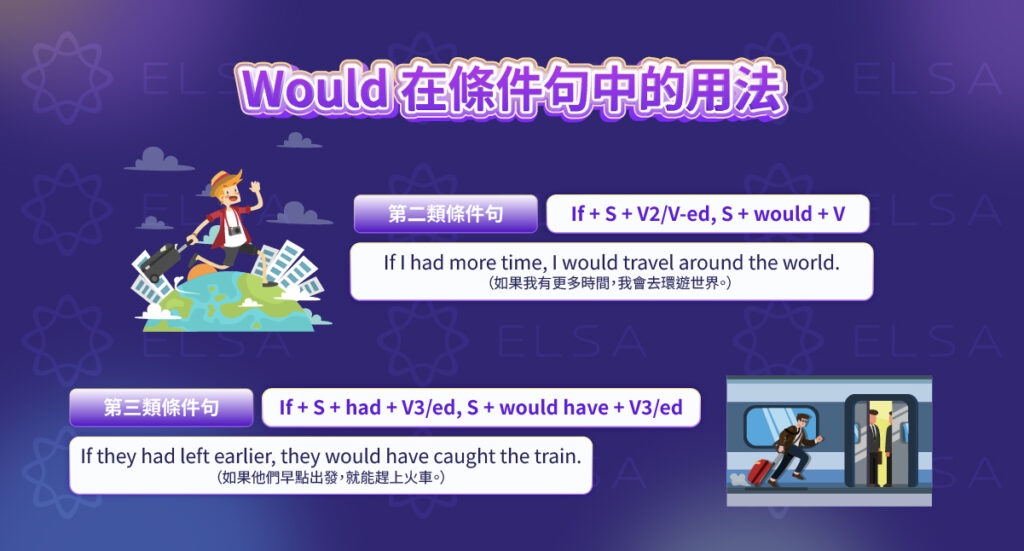
了解 would 的正確位置與使用方法如果出現在 if 用法裏:
If would用法:第二條件句
用於描述現在或未來不真實的情境。
句型結構:
| If + S + V2/V-ed, S + would + V |
例句:If I were you, I would accept the offer. (如果我是你,我會接受這個提議。)
If would用法:第三條件句
用於描述過去未曾發生的事情,if 子句用的就是過去完成式(had + V3)。
句型結構:
| If + S + had + V3/ed, S + would have + V3/ed |
例句:If they had left earlier, they would have caught the train. (如果他們早點離開,就能趕上那班火車了。)
Would 在間接引語中
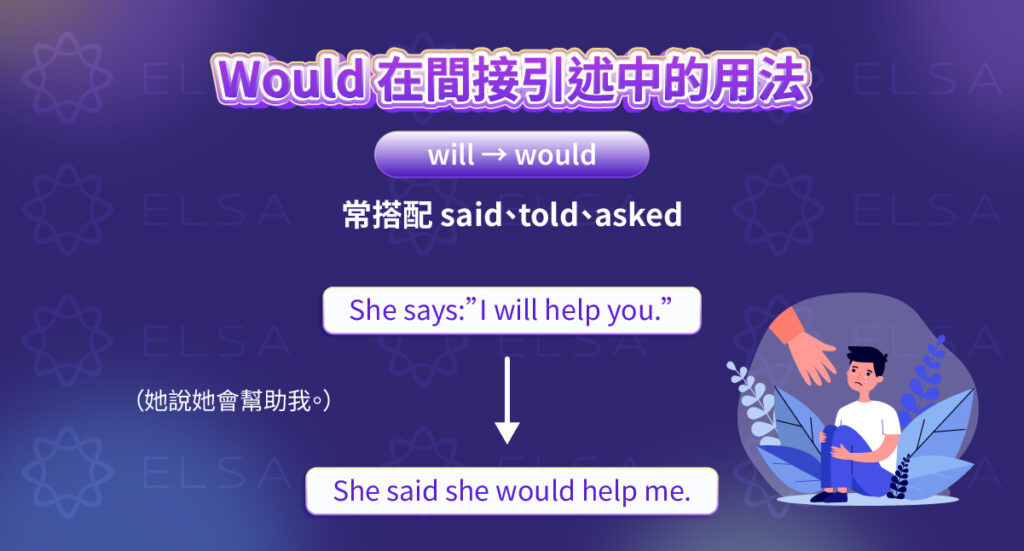
將直接引語轉換為間接引語時,will 通常改為 would。
句型結構:
| S + said (that) + S + would + V |
例句:
- She said she would help me. (她說她會幫我。)
- They told us they would arrive on Friday. (他們告訴我們他們星期五會來。)
Would與其他情態動詞的區分
區分 will would 用法
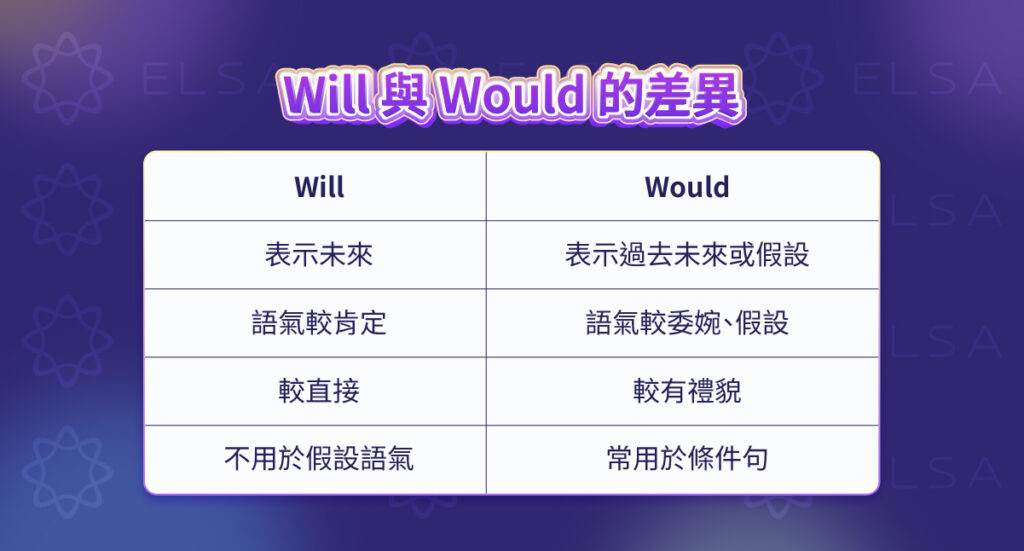
儘管兩者都可用於描述未來,will 與 would 在確定程度、時間與使用語境上有所不同。
| Will | Would | |
|---|---|---|
| 確定程度 | 確定、預測程度高 | 較不確定,帶有假設性 |
| 未來 | 表達未來 | 過去的未來或假設 |
| 過去 | 不使用 | 在間接引語中作為will的過去式 |
| 禮貌程度 | 語氣較直接 | 提出請求或提議時更禮貌 |
| 假設 | 不使用 | 常用於條件句 |
例句:
- I will call you tomorrow. (我明天會打電話給你。)
- I would call you if I had your number. (如果我有你的號碼,我會打電話給你。)
區分 could should would 用法
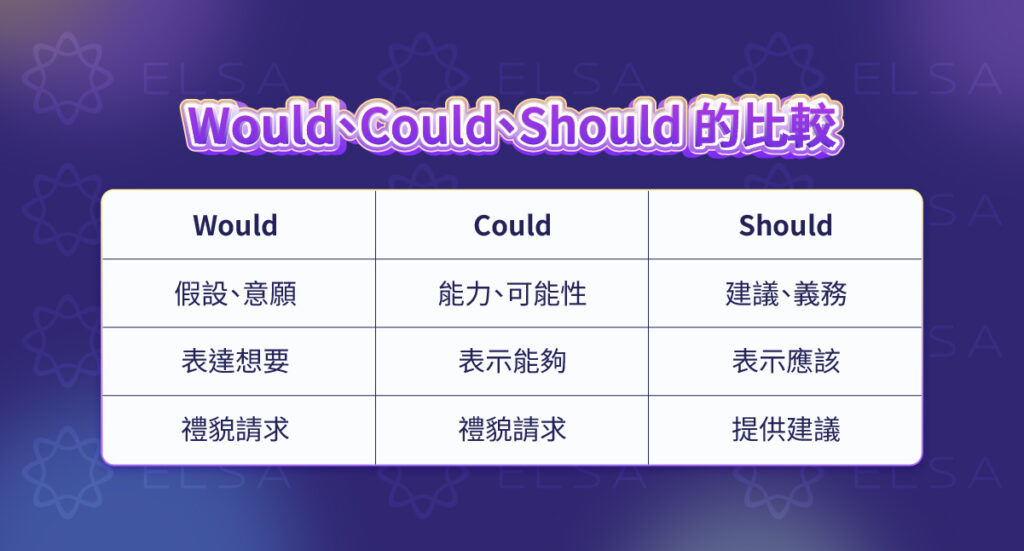
| Would | Could | Should | |
|---|---|---|---|
| 主要意思 | 願望、假設、禮貌 | 能力、可能性 | 建議、義務、期望 |
| 表達願望 | ✔️ | ✖️ | ✖️ |
| 表達可能性 | ✖️ | ✔️ | ✖️ |
| 禮貌性提議/請求 | ✔️ | ✔️ (強調可能性 ) | ✖️ |
| 給予建議 | ✖️ | ✖️ | ✔️ |
| 用於條件句 | ✔️ 常用 | ✔️ 表達可能性 | 較少使用 |
例句:
- I would like some coffee. (我想要一些咖啡。)
- She could speak French when she was young. (她小時候會說法語。)
- You should study harder. (你應該更認真學習。)
區分 used to would用法
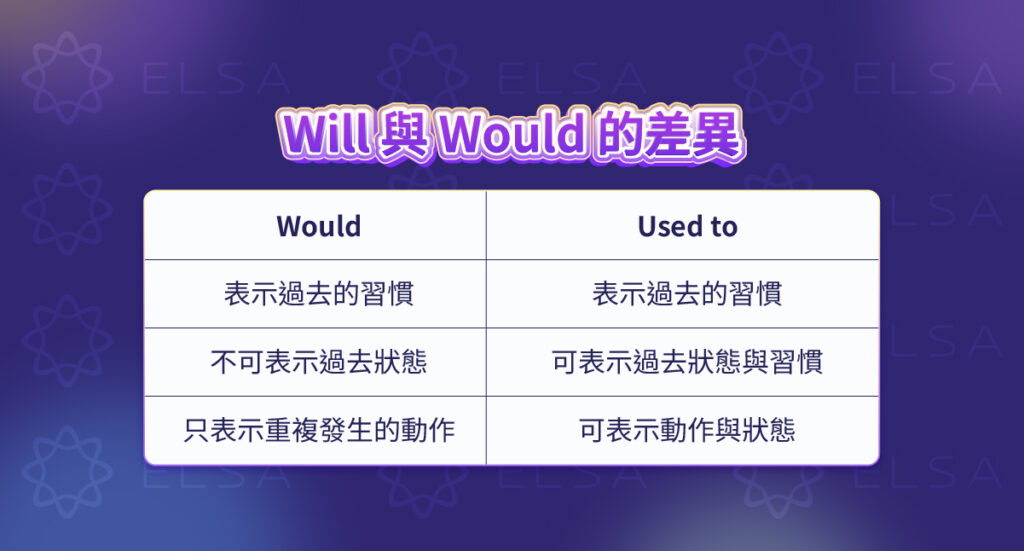
Would 與 used to 都可表達過去的習慣,但用法並不完全相同。
| Would | Used to | |
|---|---|---|
| 過去的習慣 | ✔️ | ✔️ |
| 過去的狀態 | ✖️ | ✔️ |
| 反覆發生的動作 | ✔️ | ✔️ |
注意:Would 僅用於反覆發生的動作,而 used to 可同時用於過去的狀態與習慣。
例句:
- When I was a child, I would play outside every afternoon. (小時候,我每天下午都會在戶外玩耍。)
- My grandfather used to live in the countryside. (我爺爺以前住在鄉村。)
區分 can could will would 用法
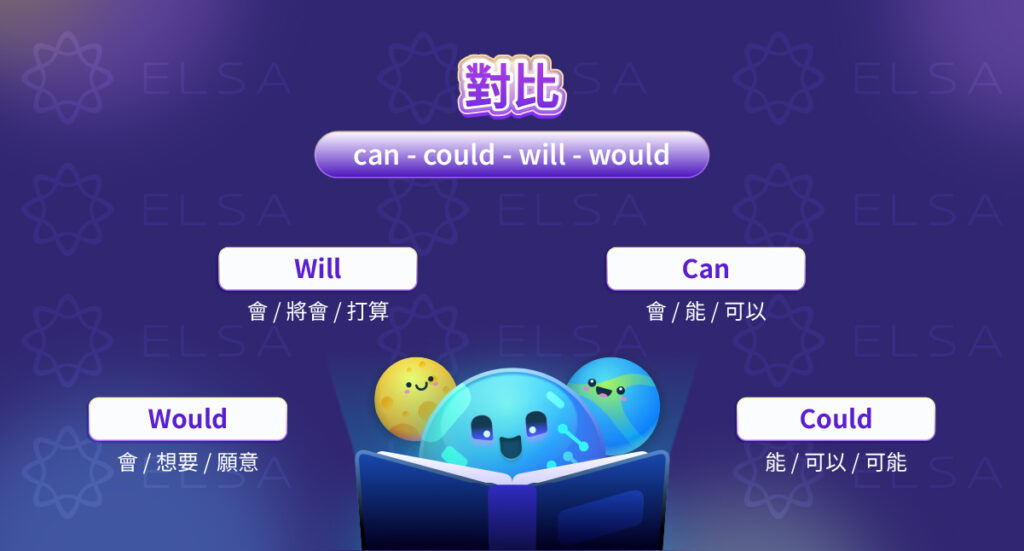
以下表格幫助你依功能與用法區分這四個常用情態動詞。
| 動詞 | 主要意思 | 常見用法 | 例句 |
|---|---|---|---|
| Can | 可以、有能力 | 現在的能力、請求許可 | I can swim. (我會游泳。) |
| Could | 可以(過去)、可能性 | 過去的能力、禮貌性提議 | Could you help me? (你能幫我嗎?) |
| Will | 將會 | 預測、決定、未來 | I will call you later. (我等一下打電話給你。) |
| Would | 將會(假設)、想要 | 條件句、禮貌性邀請、過去的未來 | I would go if I had time. (如果有時間我會去。) |
你可能會感興趣: 附加問句 (Tag Question):結構、用法和應用練習
Would練習題附解答(Multiple Choice)
練習題
題目:選出正確答案完成句子。
1. If I had enough money, I ________ buy a new car.
A. will
B. would
C. can
D. should
2. She said she ________ call me later.
A. will
B. would
C. can
D. could
3. ________ you like a cup of coffee?
A. Will
B. Would
C. Shall
D. Must
4. When we were children, we ________ play football every afternoon.
A. would
B. will
C. should
D. must
5. If they had left earlier, they ________ have caught the train.
A. will
B. would
C. would have
D. had
6. I ________ rather stay at home tonight.
A. would
B. will
C. could
D. can
7. ________ you please close the window?
A. Can
B. Would
C. Shall
D. Must
8. He knew the meeting ________ start at 9 a.m.
A. will
B. would
C. can
D. should
9. If I were you, I ________ apologize to her.
A. will
B. would
C. should have
D. can
10. They ________ often visit their grandparents during summer vacations.
A. would
B. should
C. must
D. may
11. I ________ like to order a pizza.
A. would
B. will
C. shall
D. can
12. She ________ never tell anyone the secret.
A. would
B. had
C. has
D. is
13. If he studied harder, he ________ pass the exam.
A. will
B. would
C. can
D. must
14. My grandmother ________ always tell us bedtime stories.
A. would
B. will
C. could have
D. should
15. ________ you mind opening the door?
A. Will
B. Would
C. Must
D. Shall
16. I thought the weather ________ be sunny today.
A. will
B. would
C. must
D. shall
17. We ________ have gone with you if you had invited us.
A. will
B. would
C. would have
D. had
18. She asked if I ________ help her move house.
A. will
B. would
C. should
D. can
19. If I had more free time, I ________ learn Spanish.
A. will
B. would
C. must
D. am
20. They ________ always sit by the lake after school.
A. would
B. should
C. must
D. have
答案
| 題號 | 1 | 2 | 3 | 4 | 5 |
| 答案 | B | B | B | A | C |
| 題號 | 6 | 7 | 8 | 9 | 10 |
| 答案 | A | B | B | B | A |
| 題號 | 11 | 12 | 13 | 14 | 15 |
| 答案 | A | A | B | A | B |
| 題號 | 16 | 17 | 18 | 19 | 20 |
| 答案 | B | C | B | B | A |
熟練掌握 would 用法後,你將知道 would後面加什麼,正確使用 would like、would you,並避免混淆would 與 will、could 或 used to。請透過例句與練習題勤加練習,讓 would 在口語與英文寫作中都能自然、精準地運用。歡迎在 ELSA Speak 英語文法專區探索更多精彩文章!