 2026年/07月/31日 | 魚丸


代名詞 (Pronouns) 是用來代替名詞或名詞片語的詞,以避免重複。 ELSA Speak 將幫助你理解代名詞是什麼、代名詞 意思,掌握常見的代名詞類型,以及詳細的代名詞用法以便在英語中準確使用它們。
英文的代名詞是什麼?
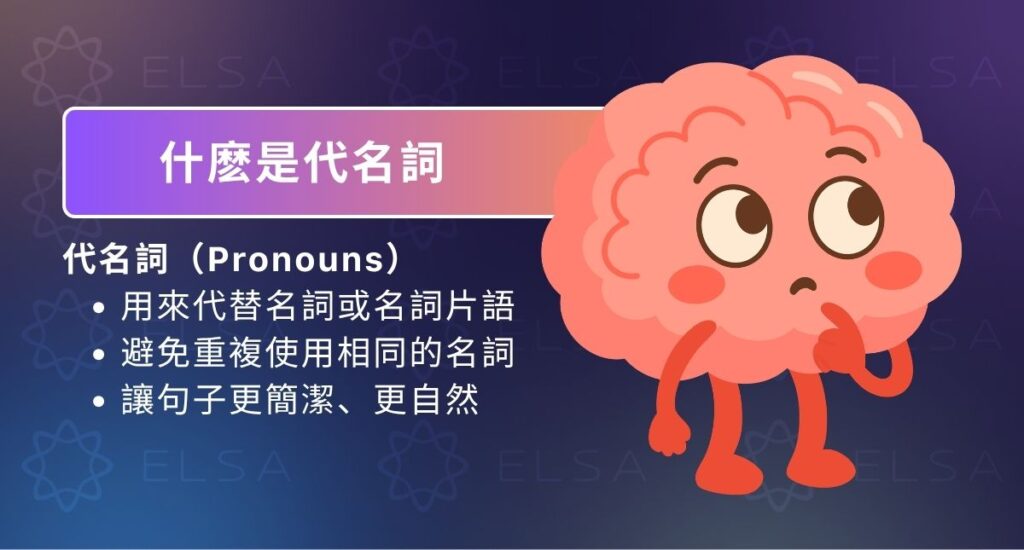
代名詞 英文 (Pronouns) 是用來代替已經提及的名詞或名詞片語的詞,可以避免重複,使句子更簡潔自然。被代名詞取代的名詞稱為先行詞或前綴。
例子:
- Linda is my friend. She is very kind. (Linda 是我的朋友,她人很好。)
- The twins went home because they were tired. (那對雙胞胎因為累了,所以回家了。)
了解更多英文詞性:所有關於八種英文詞性:用法、例子及在句子中的位置
把這 29 個項目唸出來,看看你的發音拿幾分。
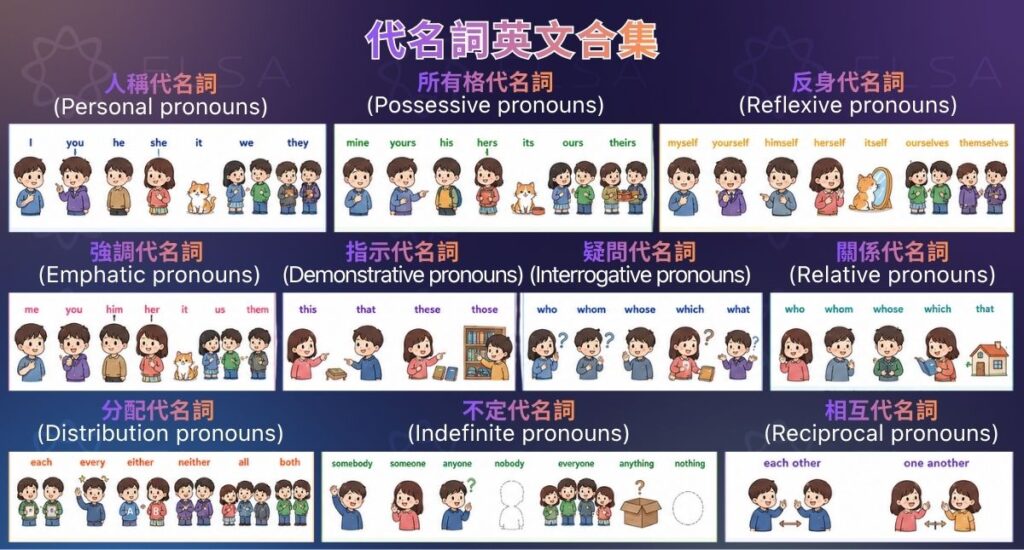
代名詞有哪些?
| 代名詞的類型 | 功能 | 例子 |
|---|---|---|
| 人稱代名詞 (Personal Pronouns) | 用來代替人、事物或概念 | I, you, he, she, it, we, they |
| 所有格代名詞 (Possessive Pronouns) | 指所有權 | mine, yours, his, hers, ours, theirs |
| 反身代名詞 (Reflexive Pronouns) | 表示動作回到主詞本身 | myself, yourself, himself, herself |
| 指示代名詞 (Demonstrative Pronouns) | 指具體的人或事物 | this, that, these, those |
| 疑問代名詞 (Interrogative Pronouns) | 用於提問 | who, whom, what, which, whose |
| 關係代名詞 (Relative Pronouns) | 連接從句並為名詞添加訊息 | who, whom, whose, which, that |
| 不定代名詞 (Indefinite Pronouns) | 指不明確的人或物 | someone, anyone, everyone, nothing |
| 相互代名詞 (Reciprocal Pronouns) | 表示兩個或多個人(或事物)彼此之間的互動 | each other, one another |
英文人稱代名詞
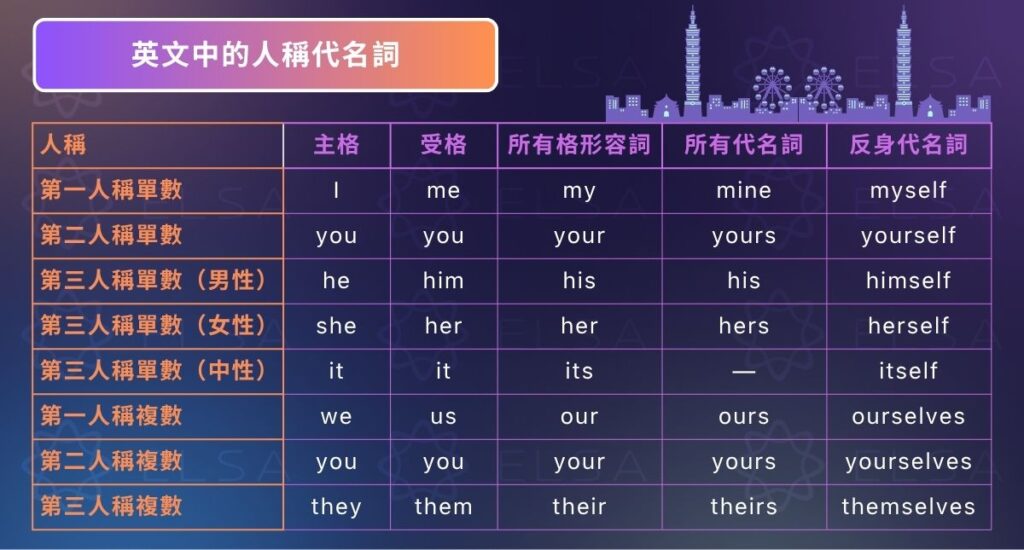
完整的人稱代名詞表
| 類別 | 主格代名詞 | 代名詞受格 | 所有格形容詞 | 所有格代名詞 | 反身代名詞 |
|---|---|---|---|---|---|
| 第一人稱單數 | I | me | my | mine | myself |
| 第二人稱單數 | you | you | your | yours | yourself |
| 第三人稱單數男性 | he | him | his | his | himself |
| 第三人稱單數女性 | she | her | her | hers | herself |
| 第三人稱單數中性 | it | it | its | — | itself |
| 第一人稱複數 | we | us | our | ours | ourselves |
| 第二人稱複數 | you | you | your | yours | yourselves |
| 第三人稱複數 | they | them | their | theirs | themselves |
主格代名詞 (Subject Pronouns)
主格代名詞用作句子的主語,指稱執行動作的人或物。這類代名詞通常位於動詞之前。
主格代名詞包括: I, you, he, she, it, we, they.
例子:
- She speaks English well. (她英語說得很好。)
- They are my classmates. (他們是我的同學。)
受格代名詞 (Object Pronouns)
受格代名詞用作動詞或介詞的受詞,指涉受該動作影響的人或物。這類代名詞通常位於動詞或介詞之後。
受格代名詞包括: me, you, him, her, it, us, them.
例子:
- The teacher called me. (老師打電話給我了。)
- Please talk to him. (請和他聊聊。)
區分主格代名詞和受格代名詞
| 主格代名詞 | 受格代名詞 | |
|---|---|---|
| 位置 | 通常位於動詞之前 | 通常位於動詞或介詞之後 |
| 功能 | 作主語 | 作受詞 |
| 代詞 | I, you, he, she, it, we, they | me, you, him, her, it, us, them |
| 例子 | She likes Tom. (她喜歡湯姆。) | Tom likes her. (湯姆喜歡她。) |
遇到複合關係代名詞的注意事項
複合關係代名詞 (Compound Relative Pronouns) 如 whoever, whomever, whichever, whatever 用來指任何人、物或事件,也可以用來連接從句,而無需在其前面加上名詞。
| 複合關係代名詞 | 意思 | 例子 |
|---|---|---|
| whoever | 任何人 | Whoever arrives first can choose a seat. |
| whomever | 任何人 (受詞) | You can invite whomever you like. |
| whatever | 任何 | Take whatever you need. |
| whichever | 任何哪個 | Choose whichever you prefer. |
句中的 prefer 用來表達個人的選擇與偏好,想進一步了解 prefer 的句型與用法,可以參考 prefer 用法。
注意: 與 who、which 和 that 不同,複合關係代名詞不需要前面有名詞(先行詞),而可以單獨作子句的主詞或受詞。因此,它們常用於表達 “任何…“或“無論…“的意思。
閲讀更多:從屬連接詞 (Subordinating Conjunctions): 常見從屬連接詞與用法
所有格代名詞和所有格形容詞
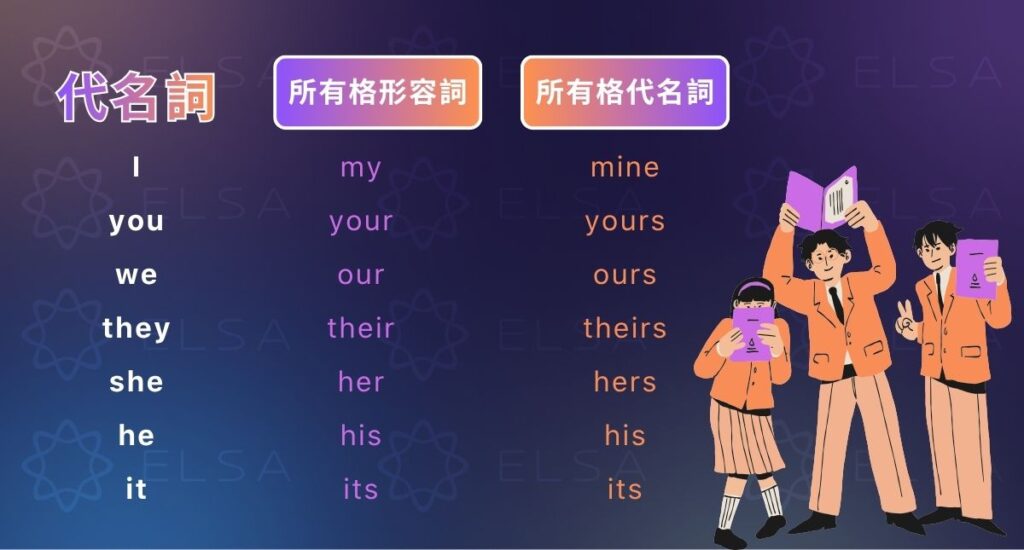
所有格形容詞和所有格代名詞都用來表示所有權,但它們在句子中的用法完全不同。
所有格代名詞(Possessive Pronouns)是什麽?
所有格代名詞 用來表示所有格,可以取代所有格形容詞和名詞,有助於避免句子中的重複。
所有格代名詞 包括: mine, yours, his, hers, ours, theirs.
例子:
- This book is mine. (這本書是我的。)
- That car is theirs. (那輛車是他們的。)
所有格形容詞(Possessive Adjectives)是什麽?
所有格形容詞 用於表示所有權,並且總是位於它所修飾的名詞之前。
所有格形容詞包括: my, your, his, her, its, our, their.
例子:
- This is my book. (這是我的書。)
- Their house is large. (他們的房子很大。)
區分所有格形容詞和所有格代名詞
| 所有格形容詞 | 所有格代名詞 | |
|---|---|---|
| 功能 | 修飾名詞以表示所有權。 | 替換整個所有格名詞片語。 |
| 結構 | 所有格形容詞 + 名詞 | 單獨存在,不與名詞連用。 |
| 例子 | This is my bag. | This bag is mine. |
反身代名詞和強調代名詞
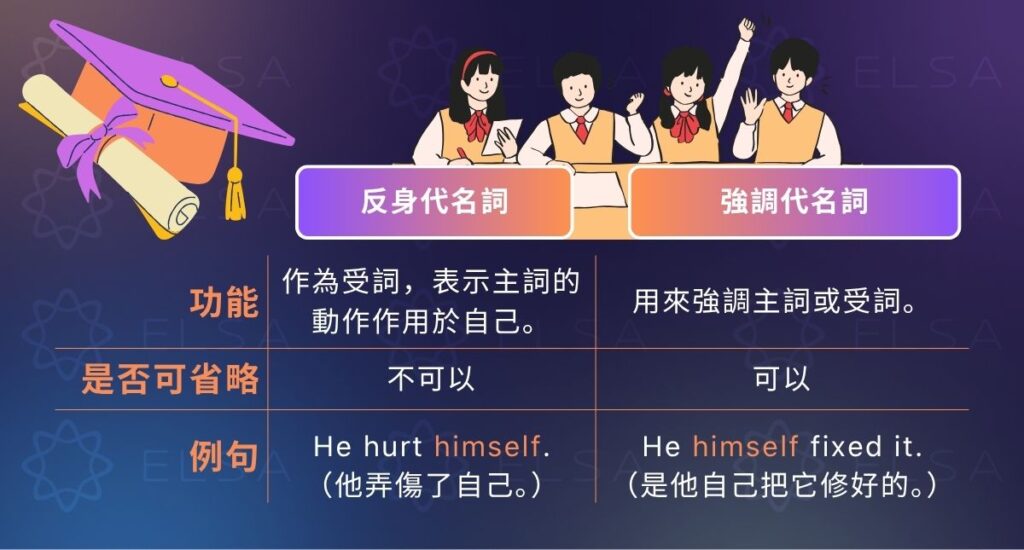
反身代名詞和強調代名詞形式相似(myself、yourself、himself…),但它們在句子中的功能不同。因此,你需要清楚地區分它們,才能在適當的脈絡中正確使用。
反身代名詞 (Reflexive Pronouns)
反身代名詞 用於當主詞和受詞指涉同一人或事物時。它通常作受詞,如果句子需要受詞,則不能省略。
反身代名詞包括: myself, yourself, himself, herself, itself, ourselves, yourselves, themselves.
例子:
- She hurt herself. (她傷害了自己。)
- I taught myself English. (我自學了英文。)
強調代名詞 (Intensive Pronouns)
強調代名詞用於強調句子中的主詞或受詞。與反身代名詞不同,強調代名詞可以省略,而不會影響語法正確性。
例子:
- I made this cake myself. (這個蛋糕是我自己做的。)
- The manager himself called me. (經理親自打電話給我。)
不要錯過具有大量功能的英語學習包
ELSA Premium 終身 – 九月優惠
原價:9,450元 現在 4,705 元
ELSA Premium 還有另外以下的學習包:
ELSA Premium 一年:原價:5,250元 現在 2,192 元
ELSA Premium 三個月:原價:2,100元 現在 1,100 元
區分反身代名詞和強調代名詞
| 反身代名詞 | 強調代名詞 | |
|---|---|---|
| 功能 | 作為受詞,表示主體正在作用於自身。 | 強調主詞或受詞。 |
| 可以省略 | 不可以 | 可以 |
| 例子 | He hurt himself. (他傷害了自己。) | He himself fixed it. (他自己把它修好了。) |
指示代名詞 (Demonstrative Pronouns)
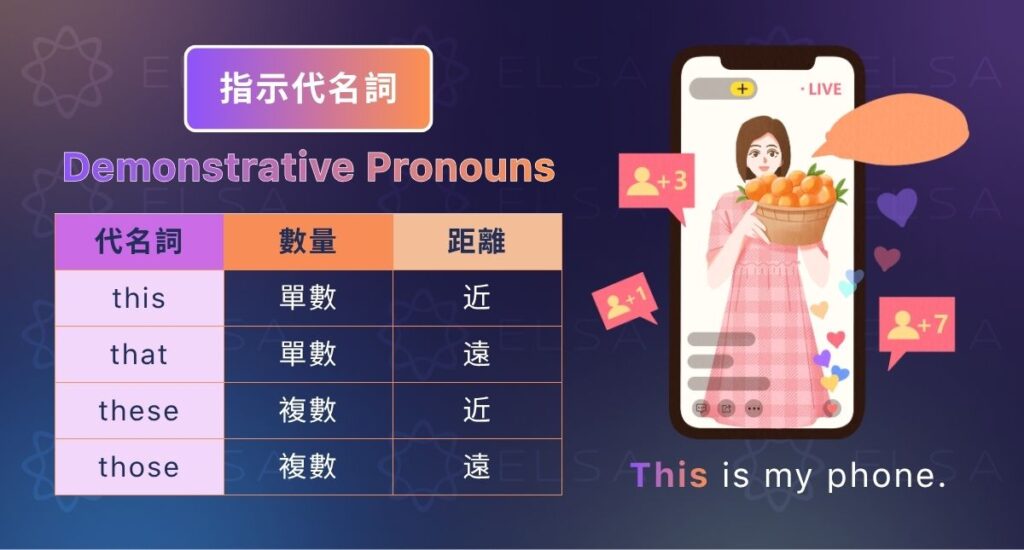
指示代名詞用於根據數量(單數或複數)和與說話者的距離(近或遠)來指具體的人或事物。
指示代名詞包括: this, that, these, those.
| 代名詞 | 數量 | 距離 |
|---|---|---|
| this | 單數 | 近 |
| that | 單數 | 遠 |
| these | 複數 | 近 |
| those | 複數 | 遠 |
例子:
- This is my phone. (這是我的手機。)
- Those are my shoes. (那些是我的鞋子。)
疑問代名詞 (Interrogative Pronouns)
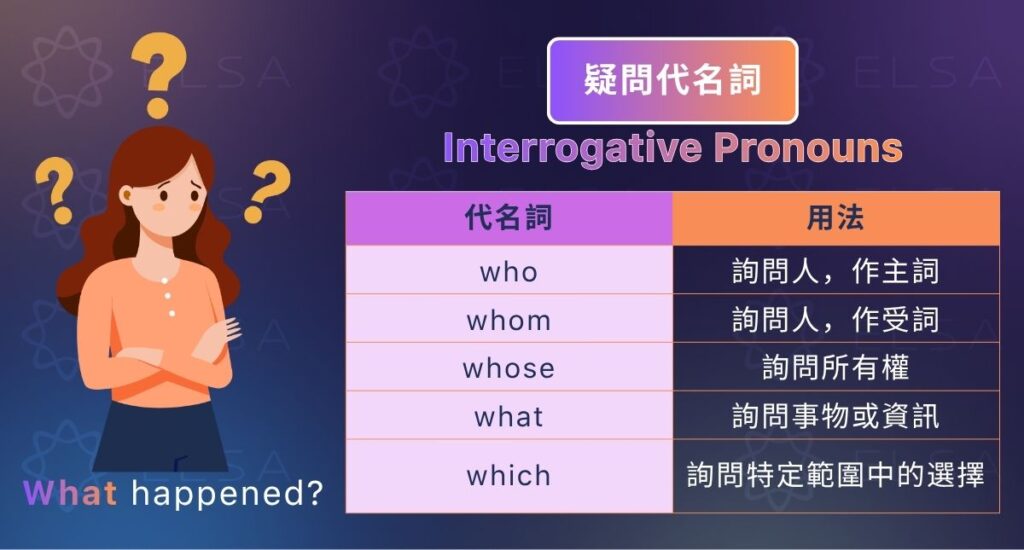
疑問代名詞用於提問有關人、事物、選擇或所有權。常見的疑問代名詞包括:who、whom、whose、what 和 which。
| 代名詞 | 用法 | 例子 |
|---|---|---|
| who | 詢問有關人,作主語 | Who called you? (誰打電話給你?) |
| whom | 詢問有關人,作受詞 | Whom did you meet? (你遇到了誰?) |
| whose | 詢問所有權 | Whose bag is this? (這是誰的包包?) |
| what | 詢問有關事物或訊息 | What happened? (發生了什麼事?) |
| which | 詢問具體群體內的選擇。 | Which do you prefer? (你比較喜歡哪一個?) |
關係代名詞 (Relative Pronouns)
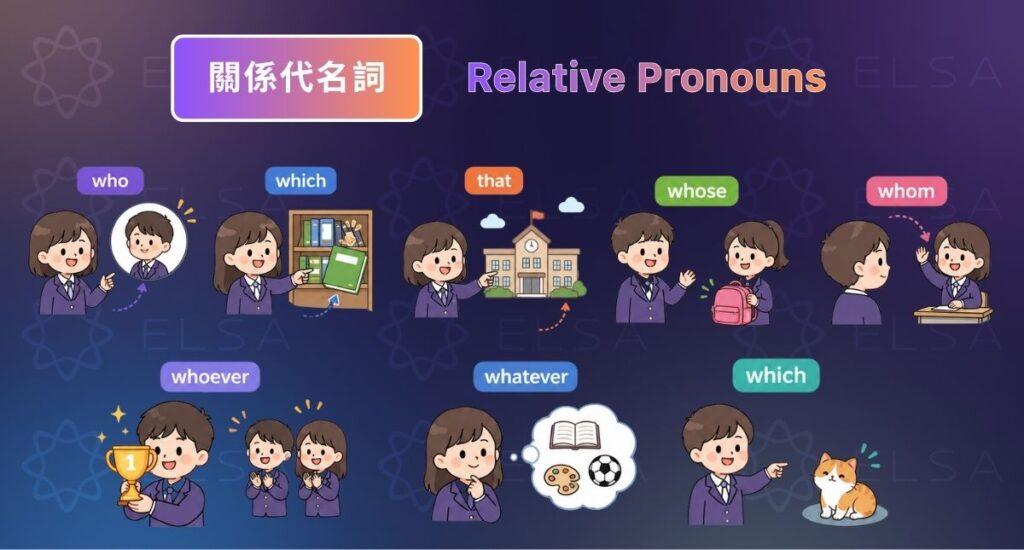
關係代名詞用於將關係子句與前面的名詞連接起來,幫助補充或澄清有關人、事物或事件的資訊。
常用關係代名詞包括: who, whom, whose, which 和 that.
| 代名詞 | 替代為 | 用法 |
|---|---|---|
| who | 人 | 作主語 |
| whom | 人 | 作受詞 |
| whose | 人或物 | 指所有格 |
| which | 事物 | 作主語或者受詞 |
| that | 人或物 | 作主語或者受詞 |
例子:
- The woman who called me is my teacher. (打電話給我的女士是我的老師。)
- This is the book that I bought. (這是我買的那本書。)
更多連接詞:連接詞(Conjunction): 意思、例句與在寫作與溝通中的用法
不定代名詞 (Indefinite Pronouns)
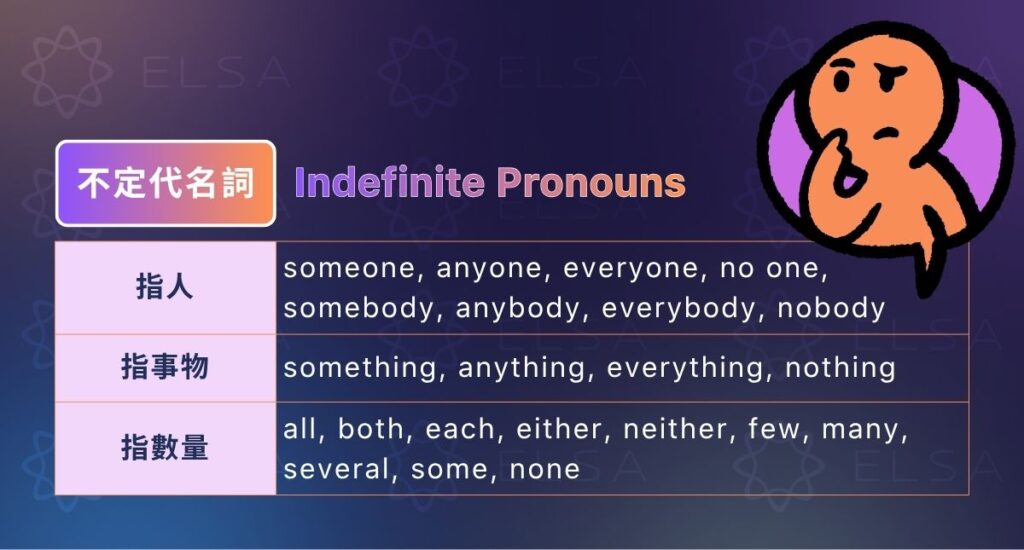
不定代名詞用於指稱未確定的人、物或數量。當無需或不可能精確指明所指物件時,通常使用這種表示方法。
| 不定代名詞分類 | 代名詞 |
|---|---|
| 指人的不定代名詞 | someone, anyone, everyone, no one, somebody, anybody, everybody, nobody |
| 指物的不定代名詞 | something, anything, everything, nothing |
| 指數量不定代名詞 | all, both, each, either, neither, few, many, several, some, none |
例子:
- Everyone is welcome. (歡迎所有人。)
- Nothing is impossible. (沒有什麼是不可能的。)
- Each has a different answer. (每個人都有不同的答案。)
相互代名詞 (Reciprocal Pronouns)
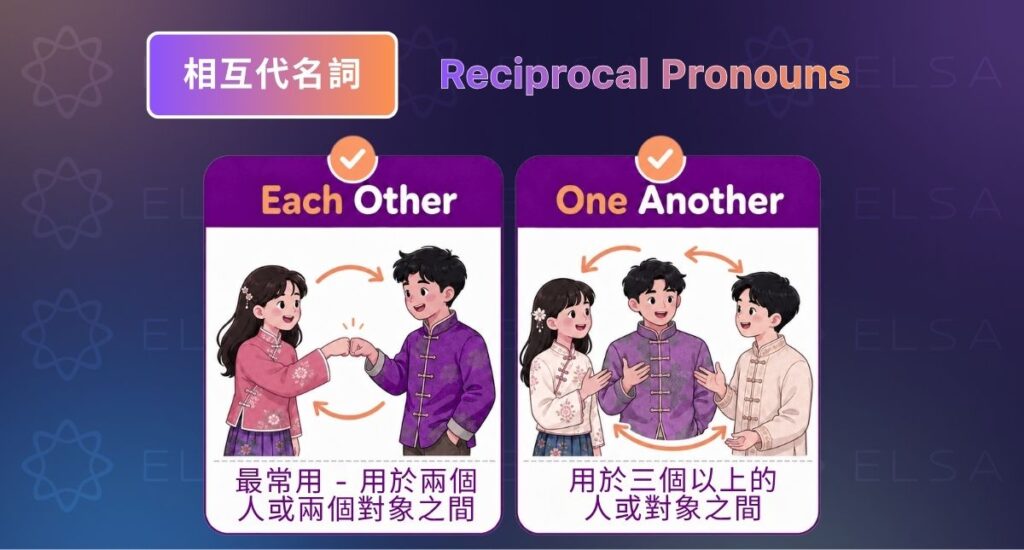
相互代名詞用來描述兩個或多個人或事物之間的相互行為。英文有兩個常用的相互代名詞:each other 和 one another。
| 代名詞 | 用法 |
|---|---|
| each other | 描述兩個人或兩個物體之間的互動(常用) |
| one another | 描述多人或多個對象之間的互動(目前經常與 each other 互換使用)。 |
例子:
- They help each other. (他們互相幫助。)
- The team members respect one another. (團隊成員互相尊重。)
英文代名詞總整理
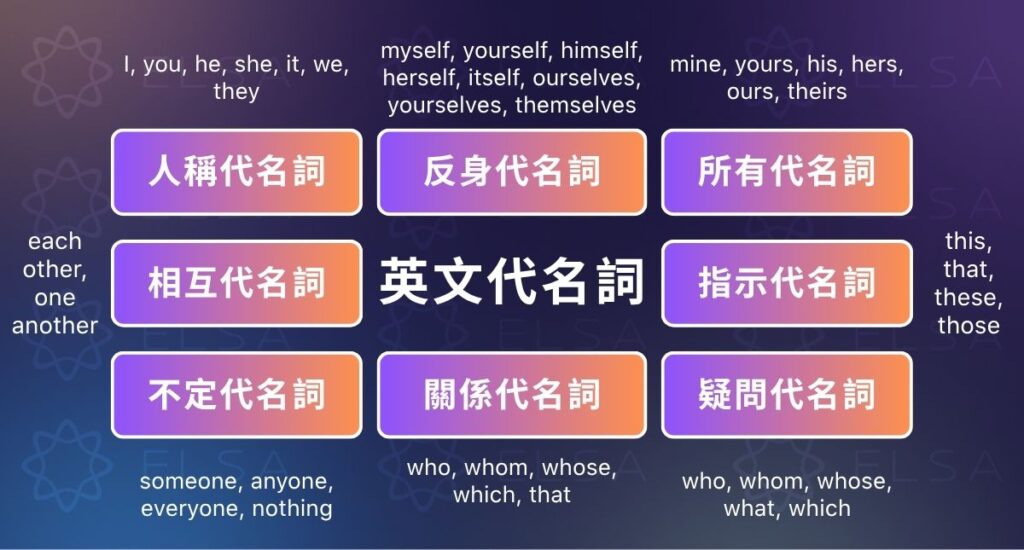
| 代名詞的類型 | 常用詞 |
|---|---|
| 人稱代名詞 | I, you, he, she, it, we, they |
| 所有格代名詞 | mine, yours, his, hers, ours, theirs |
| 反身代名詞 | myself, yourself, himself, herself, itself, ourselves, yourselves, themselves |
| 指示代名詞 | this, that, these, those |
| 疑問代名詞 | who, whom, whose, what, which |
| 關係代名詞 | who, whom, whose, which, that |
| 不定代名詞 | someone, anyone, everyone, nothing |
| 相互代名詞 | each other, one another |
句子中代名詞的位置
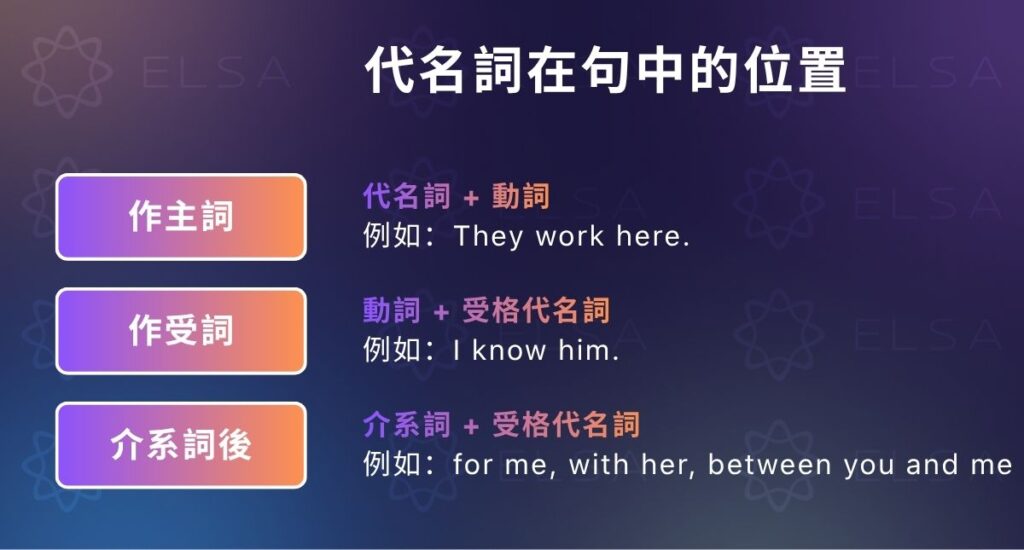
代名詞在句子中可以出現在許多不同的位置,這取決於它們的語法功能。以下是你應該記住的三種常見位置。
| 位置 | 結構 | 例子 |
|---|---|---|
| 代名詞作為主詞 | 代名詞 + 動詞 | They work here. |
| 代名詞作為受詞 | 動詞 + 受詞代名詞 | I know him. |
| 在介詞後 | 介詞 + 受詞代名詞 | for me, with her, between you and me |
代名詞練習及答案
練習
選出正確答案完成句子。
1. ________ is my best friend.
A. Him
B. He
C. Her
D. Me
2. The teacher asked ________ to answer the question.
A. I
B. She
C. Me
D. They
3. This pencil isn’t mine. It is ________.
A. her
B. hers
C. she
D. herself
4. Tom and Jack helped ________ finish the project.
A. themselves
B. ourselves
C. yourselves
D. himself
5. ________ book is this?
A. Who
B. Which
C. Whose
D. Whom
6. The woman ________ lives next door is a doctor.
A. whom
B. which
C. who
D. whose
7. ________ left the lights on before leaving the office.
A. Someone
B. Anyone
C. None
D. Everything
8. These shoes are old, but ________ are still comfortable.
A. it
B. they
C. them
D. their
9. Sarah and Emma always help ________.
A. one another
B. herself
C. himself
D. itself
10. I don’t have a blue pen. Can I borrow ________?
A. it
B. one
C. mine
D. myself
答案
| 句子 | 1 | 2 | 3 | 4 | 5 |
| 答案 | B | C | B | A | C |
| 句子 | 6 | 7 | 8 | 9 | 10 |
| 答案 | C | A | B | A | B |
9月特別優惠 —— ELSA 大促銷
ELSA PREMIUM 1 年
原價: 5,250
2,192
ELSA PREMIUM 終身
原價: 9,450
4,705
ELSA PRO 1 年
原價: 2,450
2,450
ELSA PRO 終身
原價: 6,150
6,150
常見問題
代名詞 “it” 和 “one” 是如何使用的?
- It 用來指稱先前已提及的人、物或事件,也可以指天氣、時間或距離。
- One 用來替代單數可數名詞,以避免重複。
例子:
- I bought a new phone. It is very fast. (我買了一部新手機,它非常快。)
- I need a pen. Do you have one? (我需要一支筆。你有一支嗎?)
性別認同代名詞有哪些?
在現代英語中,除了傳統的男性/女性代名詞(如 he/him 和 she/her)之外,許多人還會使用性別認同代名詞,例如 they/them (中性)、ze/zir 或 xe/xem。其中,they/them 是最常使用的中性代名詞。
例子: Alex said they will join us later. (Alex 表示自己稍後會加入我們。)
代名詞英文縮寫是什麽?
→ 在英語文法中,代名詞 (pronoun) 通常縮寫為 pron。
代名詞是英語中不可或缺的一部分,它能讓句子更簡潔、連貫、自然。掌握各類代名詞英文如人稱代名詞、所有格代名詞、反身代名詞、關係代名詞、不定代名詞和指示代名詞的特點和用法,將有效提升你的溝通技巧以及閱讀和寫作能力。進入 ELSA Speak 網站的英語文法專欄,閱讀更多實用文章吧!